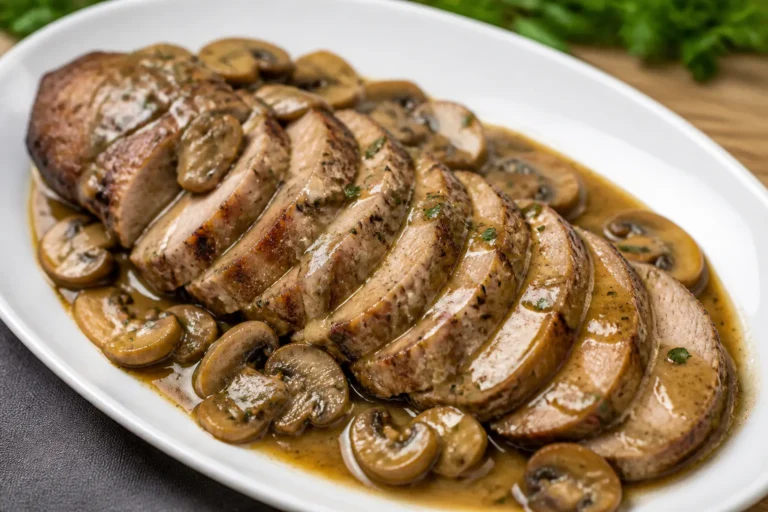
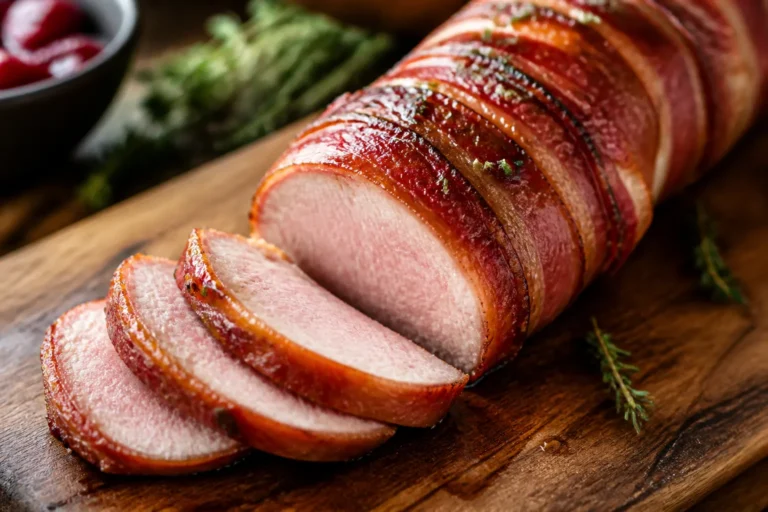
Juicy Oven Baked Pork Tenderloin – Simple, Reliable, and Full of Flavor
Pork tenderloin has a reputation for being lean, quick-cooking, and a little tricky. It can go from perfect to dry in a flash. This method keeps it tender and flavorful without any fancy equipment or complicated steps.
FREE 7-Day Easy Dinner Reset
Save time, eat healthier, and take the stress out of dinner. Get a full week of easy healthy dinners delivered straight to your inbox.
You’ll season it well, give it a quick sear, and finish it in the oven until it’s just right. With a short rest and a buttery pan sauce, you’ll get juicy slices every time.
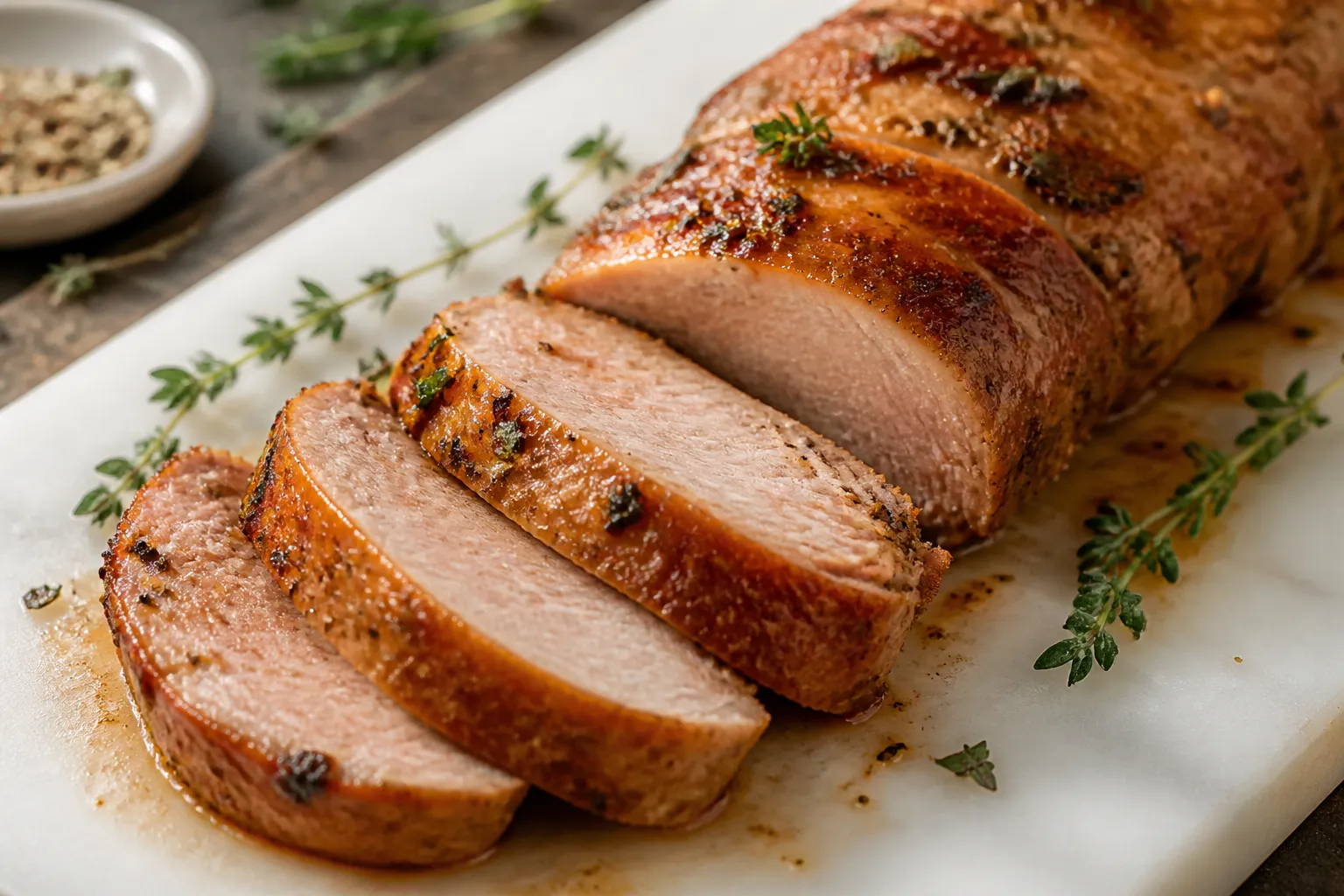
Ingredients
Method
- Preheat and prep: Heat your oven to 400°F (205°C). Pat the pork dry with paper towels to help it brown well.
- Season generously: Sprinkle the tenderloin all over with 1 to 1.5 teaspoons kosher salt, 1 teaspoon black pepper, 1 teaspoon smoked paprika, and 1 teaspoon dried thyme. If using brown sugar, rub 1 teaspoon per tenderloin over the surface.
- Mix a quick glaze: In a small bowl, combine 2 tablespoons softened butter, 1 teaspoon Dijon, and 1 minced garlic clove. Set aside.
- Sear on the stovetop: Heat a large oven-safe skillet over medium-high. Add 1 tablespoon oil. When shimmering, sear the pork on all sides until deep golden, about 6–8 minutes total.
- Glaze and roast: Turn off the heat. Brush the top and sides of the pork with the butter mixture. Transfer the skillet to the oven.
- Roast to temp: Bake 10–14 minutes, depending on thickness, until the center reaches 140–145°F on an instant-read thermometer. Start checking at 10 minutes.
- Rest the meat: Move the pork to a cutting board and tent loosely with foil for 5–8 minutes. The temperature will rise slightly as it rests.
- Make a quick pan sauce: Return the skillet to medium heat. Add 1/3 cup chicken broth and a small squeeze of lemon. Stir, scraping up brown bits. Simmer 2–3 minutes to reduce slightly. Whisk in 1 tablespoon cold butter and the remaining minced garlic clove for a glossy finish. Taste and season with salt and pepper.
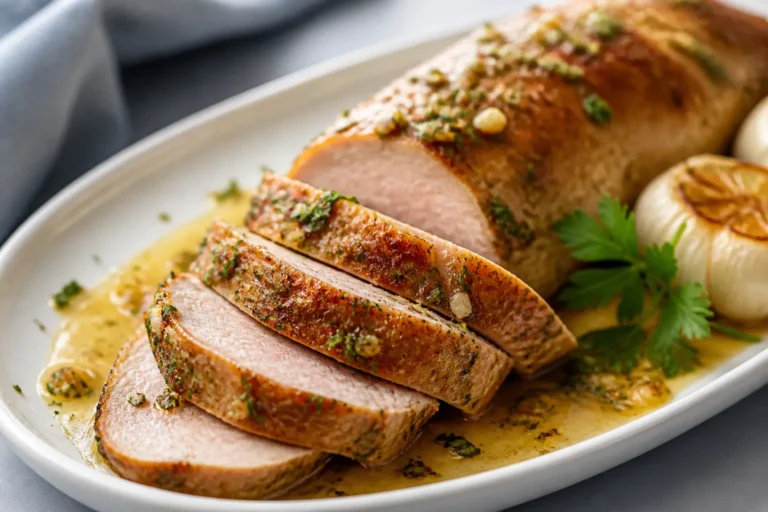
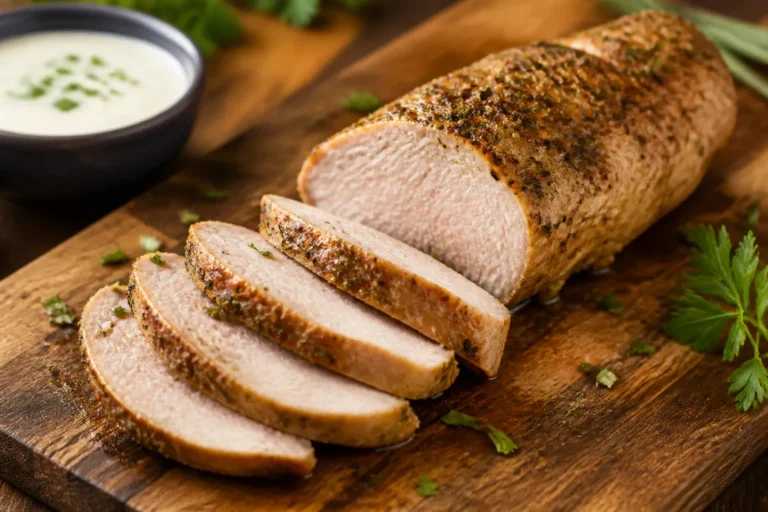
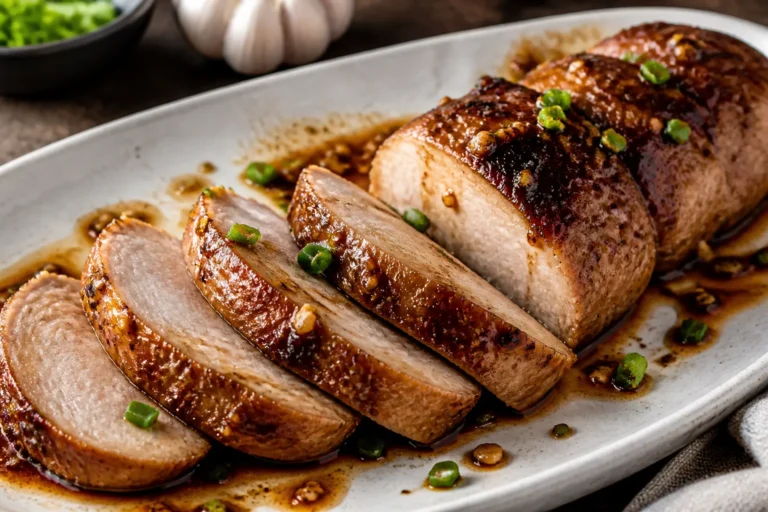
- Slice and serve: Slice the tenderloin into 1/2-inch medallions, spoon over the pan sauce, and serve immediately.
Why This Recipe Works
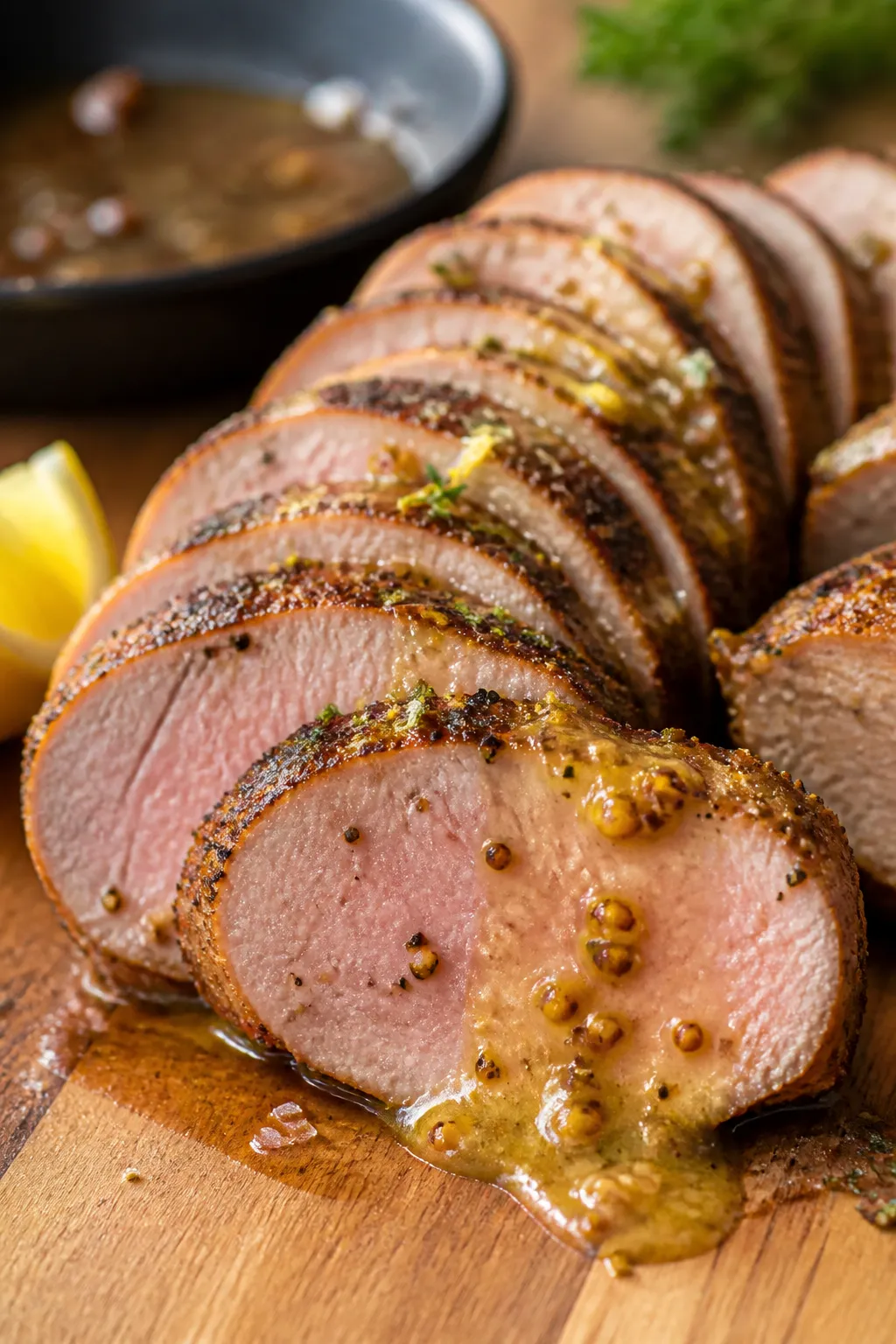
This recipe uses a two-step method: sear first, then roast. The sear builds flavor and color on the outside, while the oven gently cooks the inside.
A quick brush of buttery, garlicky glaze adds richness and keeps the meat moist. Finally, resting the meat allows the juices to redistribute so each slice stays tender. It’s fast, dependable, and perfect for weeknights or company.
Shopping List
- 1–2 pork tenderloins (about 1 to 1.25 pounds each), silver skin trimmed
- Kosher salt and black pepper
- Olive oil (or avocado oil) for searing
- Unsalted butter (2–3 tablespoons)
- Garlic (2–3 cloves), minced
- Smoked paprika (or sweet paprika)
- Dried thyme or Italian seasoning
- Brown sugar or honey (optional, for light caramelization)
- Dijon mustard (optional, for tang in the glaze)
- Low-sodium chicken broth (or water), for deglazing
- Lemon (optional, for a final squeeze)
Step-by-Step Instructions
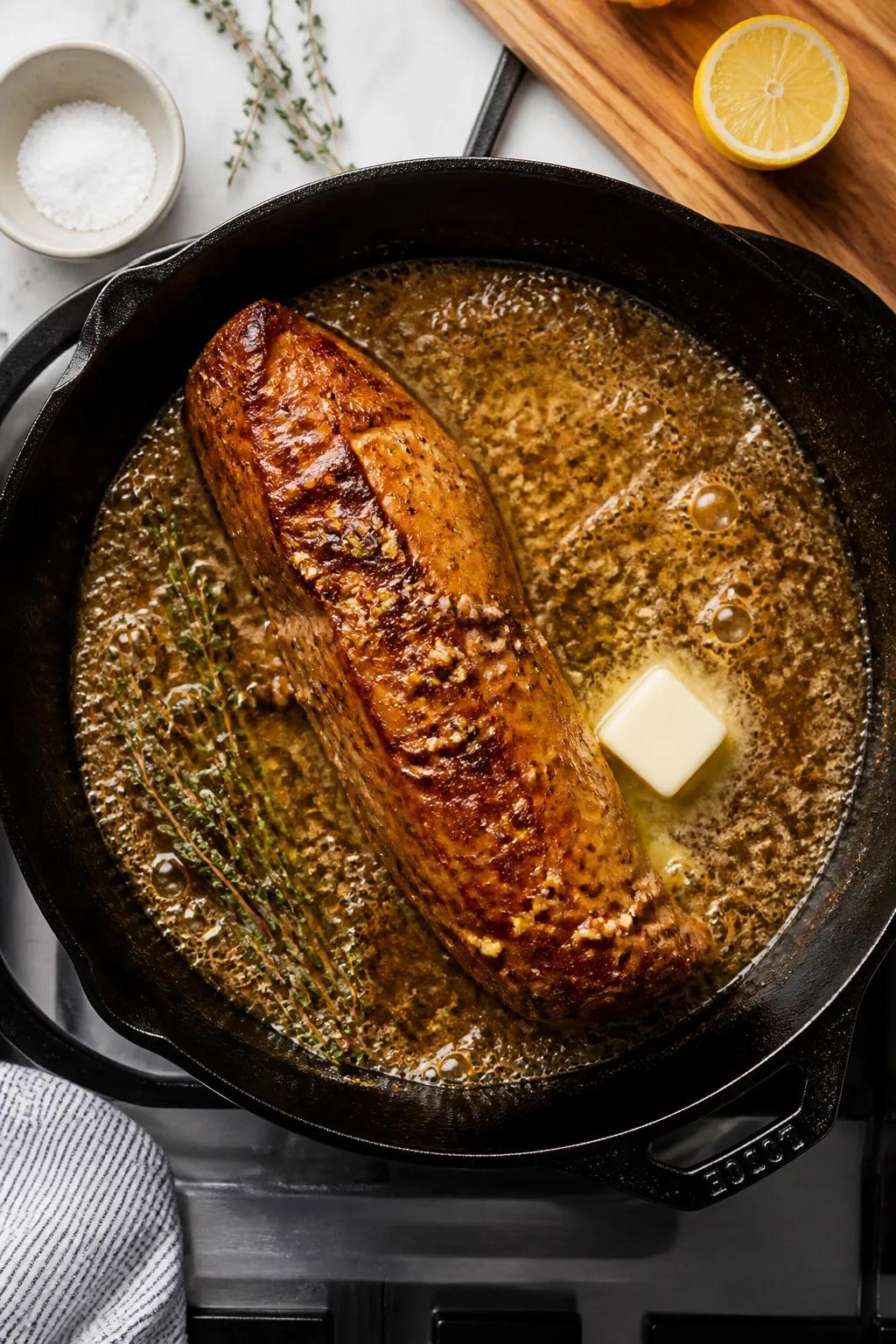
- Preheat and prep: Heat your oven to 400°F (205°C).
Pat the pork dry with paper towels to help it brown well.
- Season generously: Sprinkle the tenderloin all over with 1 to 1.5 teaspoons kosher salt, 1 teaspoon black pepper, 1 teaspoon smoked paprika, and 1 teaspoon dried thyme. If using brown sugar, rub 1 teaspoon per tenderloin over the surface.
- Mix a quick glaze: In a small bowl, combine 2 tablespoons softened butter, 1 teaspoon Dijon, and 1 minced garlic clove. Set aside.
- Sear on the stovetop: Heat a large oven-safe skillet over medium-high.
Add 1 tablespoon oil. When shimmering, sear the pork on all sides until deep golden, about 6–8 minutes total.
- Glaze and roast: Turn off the heat. Brush the top and sides of the pork with the butter mixture.
Transfer the skillet to the oven.
- Roast to temp: Bake 10–14 minutes, depending on thickness, until the center reaches 140–145°F on an instant-read thermometer. Start checking at 10 minutes.
- Rest the meat: Move the pork to a cutting board and tent loosely with foil for 5–8 minutes. The temperature will rise slightly as it rests.
- Make a quick pan sauce: Return the skillet to medium heat.
Add 1/3 cup chicken broth and a small squeeze of lemon. Stir, scraping up brown bits. Simmer 2–3 minutes to reduce slightly.
Whisk in 1 tablespoon cold butter and the remaining minced garlic clove for a glossy finish. Taste and season with salt and pepper.
- Slice and serve: Slice the tenderloin into 1/2-inch medallions, spoon over the pan sauce, and serve immediately.
Keeping It Fresh
Store leftover pork in an airtight container for up to 3–4 days. Keep the sauce in a separate small container if you can.
For reheating, warm slices gently in a skillet with a splash of broth over low heat, just until heated through. Avoid the microwave on high power—it can toughen the meat. Freeze tightly wrapped slices for up to 2 months; thaw overnight in the fridge before reheating.
Why This is Good for You
Pork tenderloin is a lean cut, similar in fat to chicken breast but with a richer flavor.
It’s a solid source of protein, B vitamins (especially B6 and B12), and selenium. Choosing a quick-cook, high-heat method helps avoid excess added fat. Serve it with roasted vegetables, a leafy salad, or whole grains for a balanced meal that’s satisfying without feeling heavy.
Common Mistakes to Avoid
- Skipping the dry-off: If the pork is wet, it steams instead of browns.
Pat it dry for better crust and flavor.
- Overcooking: Going much past 145°F dries it out. Use an instant-read thermometer and pull it at 140–145°F.
- Not resting the meat: Slicing right away lets juices spill out. A short rest keeps every slice juicy.
- Too little seasoning: Tenderloin is mild.
Salt, spice, and a little fat make a big difference.
- High sugar under direct heat: If using sugar or honey, add it in the glaze and keep an eye on browning to prevent burning.
Variations You Can Try
- Herb-crusted: Swap paprika for a mix of rosemary, thyme, and parsley. Add lemon zest to the glaze.
- Maple-mustard: Use 1 tablespoon maple syrup and 2 teaspoons Dijon in the glaze. Finish with a splash of apple cider vinegar in the pan sauce.
- Garlic-chili: Add 1/2 teaspoon chili powder and a pinch of cayenne to the rub.
Stir a little hot sauce into the pan sauce.
- Balsamic glaze: Deglaze the pan with 1/4 cup balsamic vinegar and 1/4 cup broth. Reduce, then whisk in butter.
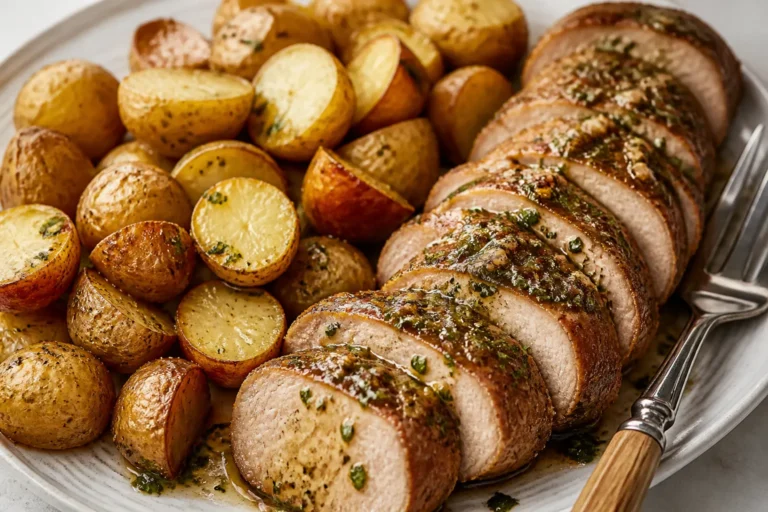
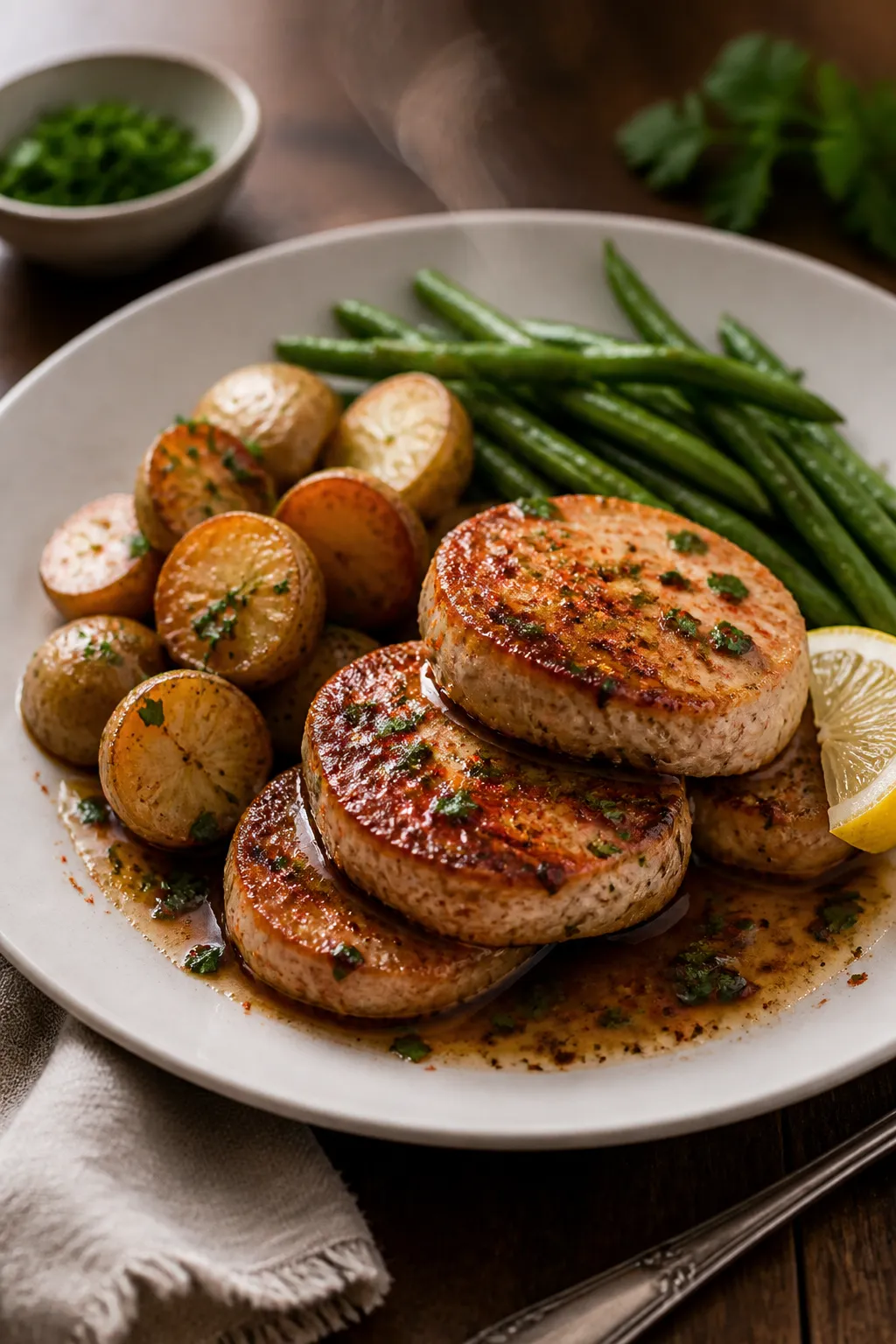
- Sheet-pan dinner: After searing, roast the pork on a sheet pan with halved baby potatoes and green beans tossed in oil, salt, and pepper for a one-pan meal.
FAQ
Need More Easy Dinner Ideas?
Get my FREE 7-Day Easy Dinner Reset and enjoy a full week of healthy dinners without the meal-planning stress.
How do I know when pork tenderloin is done?
Use an instant-read thermometer inserted into the thickest part. Pull it from the oven at 140–145°F.
After resting a few minutes, it will be juicy and slightly rosy at the center, which is safe and ideal.
Can I skip the sear?
You can, but you’ll miss out on flavor and color. If you skip searing, roast at 425°F to encourage browning, and brush on the butter mixture halfway through. Still aim for 140–145°F inside.
What if my tenderloin is different in size?
Thicker pieces may need 15–18 minutes in the oven, while thinner ones can finish in 8–10.
Start checking early and rely on the thermometer. Time is only a guideline; temperature is the truth.
Can I marinate the pork first?
Yes. A simple marinade of olive oil, garlic, Dijon, and herbs for 1–4 hours adds flavor.
Pat the pork dry before searing so it browns properly, and reduce added salt in the rub if your marinade is salty.
Is it okay if the pork is a little pink?
Yes. Slightly pink at 145°F is safe and leads to a juicier result. The key is internal temperature, not color alone.
Can I make this without an oven-safe skillet?
Sear in any skillet, then transfer the pork to a preheated baking sheet or roasting pan to finish in the oven.
Pour the drippings into your pan sauce afterward.
What can I serve with it?
Try roasted carrots and potatoes, creamy polenta, garlicky green beans, or a bright salad with citrus. The pan sauce pairs well with mashed cauliflower or rice too.
How do I prevent the glaze from burning?
Apply the glaze after searing and roast at 400°F. If you see dark spots forming, tent loosely with foil for the last few minutes.
Using butter plus a touch of broth in the pan helps moderate heat.
Final Thoughts
This juicy oven baked pork tenderloin is simple, fast, and built on smart technique. With a solid sear, careful seasoning, and a short rest, you’ll get tender slices and a glossy, flavorful sauce every time. Keep a thermometer handy, and this becomes a no-stress centerpiece for any night of the week.
Once you master the base recipe, the variations make it endlessly useful and never boring. Enjoy it with your favorite sides and call dinner done.
Printable Recipe Card
Want just the essential recipe details without scrolling through the article? Get our printable recipe card with just the ingredients and instructions.
Loved This Recipe?
If you're looking for more simple, healthy dinners your family will actually eat, grab my FREE 7-Day Easy Dinner Reset. You'll get 7 easy dinner recipes, simple grocery lists, and a done-for-you plan that takes the stress out of mealtime.