Healthy Chicken Fried Rice – A Lighter Take on a Takeout Favorite
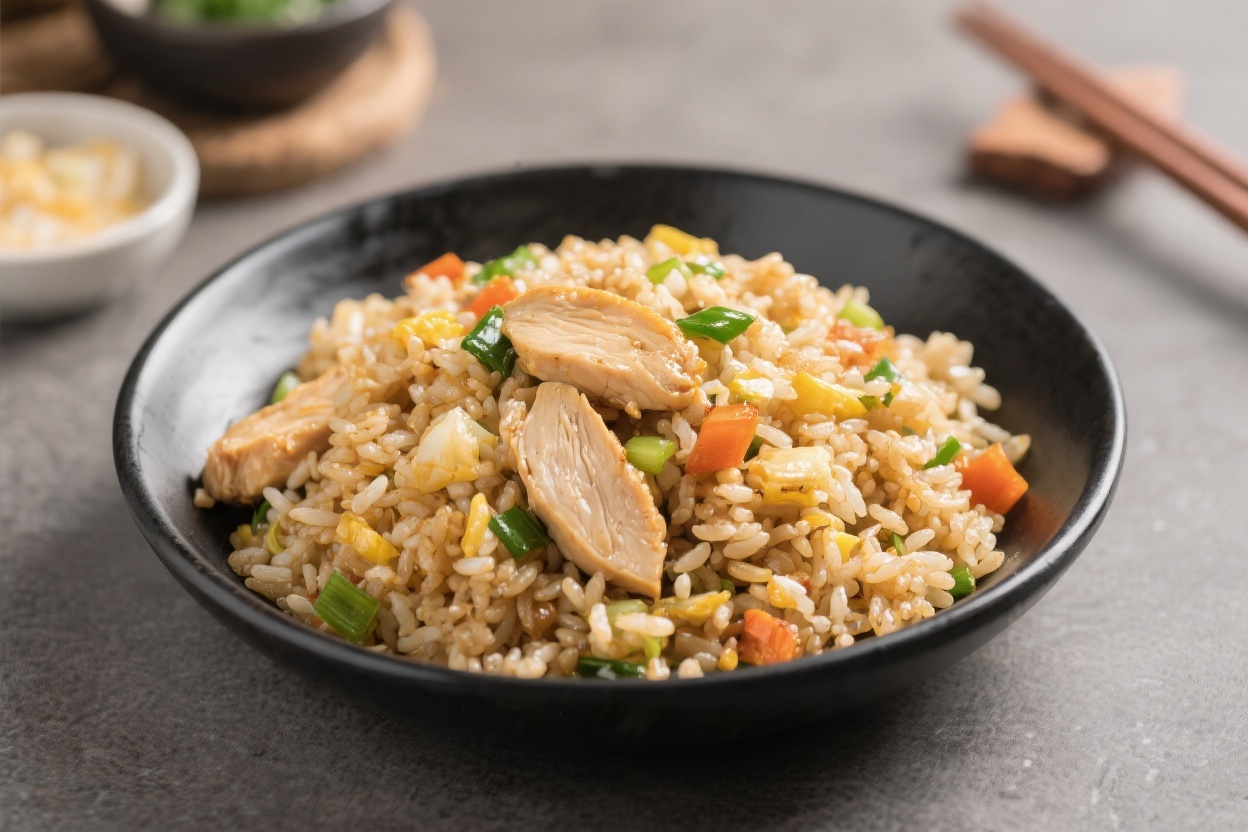
A good fried rice hits all the right notes: savory, comforting, and quick. This version keeps everything you love and trims what you don’t need. It’s loaded with vegetables, uses lean chicken breast, and swaps heavy oils for lighter options without losing flavor.
FREE 7-Day Easy Dinner Reset
Save time, eat healthier, and take the stress out of dinner. Get a full week of easy healthy dinners delivered straight to your inbox.
You’ll get a satisfying weeknight dinner that’s easy to customize. Best of all, it’s a great way to use leftover rice and veggies you already have.
Ingredients
Method
- Prep the rice: If your rice clumps, break it up with your hands so the grains separate. Cold, day-old rice fries best and won’t turn mushy.
- Whisk the eggs: Beat the eggs with a small pinch of salt. Set them by the stove so you can move quickly.
- Season the chicken: Toss the chicken with a pinch of salt and black pepper. Keep pieces small so they cook fast and stay tender.
- Heat the pan: Warm a large nonstick skillet or wok over medium-high heat. Add 1 teaspoon oil and swirl to coat.
- Cook the eggs: Pour in the eggs and scramble just until set. Slide them onto a plate and break into bite-size pieces.
- Stir-fry the chicken: Add another 1 teaspoon oil. Sear the chicken in an even layer. Cook 3–4 minutes, stirring once or twice, until cooked through. Transfer to the plate with the eggs.
- Aromatics and veggies: Add onion, bell pepper, and the whites of the scallions to the pan. If the pan looks dry, add up to 1 more teaspoon oil. Cook 2–3 minutes until slightly softened. Stir in garlic and ginger; cook 30–45 seconds until fragrant.
- Add peas and carrots: Toss them in and stir-fry 1–2 minutes. Keep things moving so nothing burns.
- Fry the rice: Add the cold rice. Press it down into the pan and let it sit for 30–45 seconds to get a little toasty. Then stir and repeat once or twice for lightly crisp edges.
- Season: Pour in soy sauce, rice vinegar, sesame oil, and red pepper flakes if using. Toss well to coat every grain.
- Finish: Return chicken and eggs to the pan along with the scallion greens. Stir to heat through. Taste and adjust with a splash more soy sauce or a squeeze of lime.
- Serve: Plate hot. Garnish with sesame seeds and extra scallions if you like.
What Makes This Special
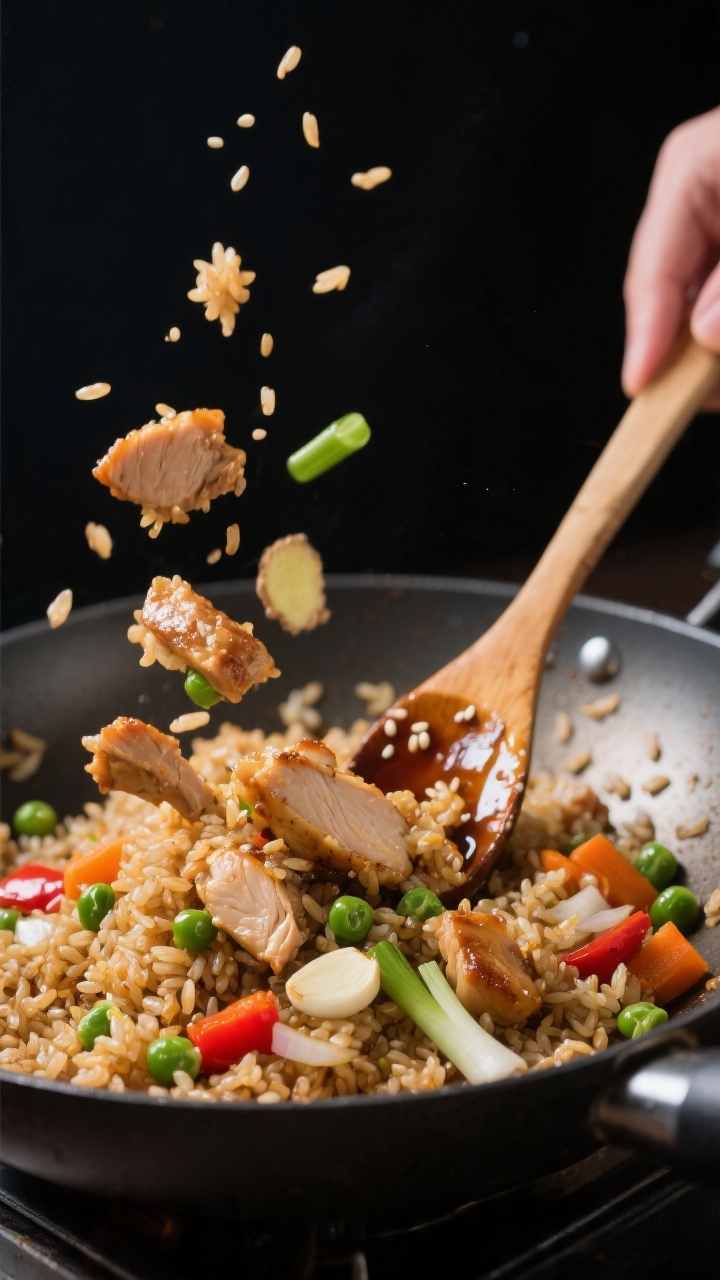
This recipe focuses on big flavor with smart swaps. We use day-old brown rice for better texture and extra fiber, plus a lighter hand with oil to keep calories in check.
A quick ginger-garlic sauté builds a savory base without heavy sauces. Low-sodium soy sauce and a splash of rice vinegar brighten everything up. You’ll also get a generous mix of vegetables so each bite feels hearty, colorful, and fresh.
Ingredients
- 2 cups cooked, chilled brown rice (preferably day-old)
- 12 oz boneless, skinless chicken breast, cut into small bite-size pieces
- 2 teaspoons avocado or light olive oil (plus 1 teaspoon if needed)
- 2 large eggs, lightly beaten
- 1 cup frozen peas and carrots (no need to thaw)
- 1 red bell pepper, diced
- 1 small onion, finely chopped
- 3 cloves garlic, minced
- 1 tablespoon fresh ginger, minced or grated
- 3 scallions, sliced (whites and greens separated)
- 3 tablespoons low-sodium soy sauce or tamari
- 1 tablespoon rice vinegar
- 1–2 teaspoons toasted sesame oil
- 1/4 teaspoon black pepper
- Pinch of red pepper flakes (optional)
- Lime wedges and sesame seeds for serving (optional)
Instructions
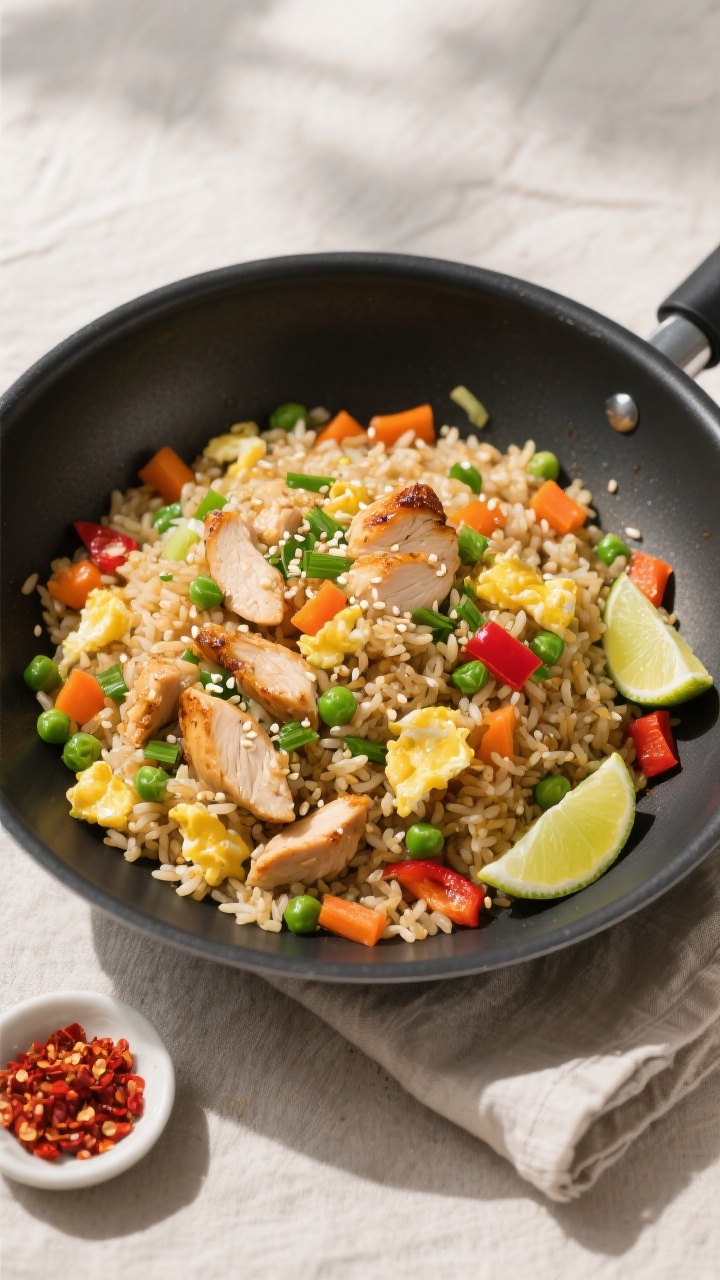
- Prep the rice: If your rice clumps, break it up with your hands so the grains separate.
Cold, day-old rice fries best and won’t turn mushy.
- Whisk the eggs: Beat the eggs with a small pinch of salt. Set them by the stove so you can move quickly.
- Season the chicken: Toss the chicken with a pinch of salt and black pepper. Keep pieces small so they cook fast and stay tender.
- Heat the pan: Warm a large nonstick skillet or wok over medium-high heat.
Add 1 teaspoon oil and swirl to coat.
- Cook the eggs: Pour in the eggs and scramble just until set. Slide them onto a plate and break into bite-size pieces.
- Stir-fry the chicken: Add another 1 teaspoon oil. Sear the chicken in an even layer.
Cook 3–4 minutes, stirring once or twice, until cooked through. Transfer to the plate with the eggs.
- Aromatics and veggies: Add onion, bell pepper, and the whites of the scallions to the pan. If the pan looks dry, add up to 1 more teaspoon oil.
Cook 2–3 minutes until slightly softened. Stir in garlic and ginger; cook 30–45 seconds until fragrant.
- Add peas and carrots: Toss them in and stir-fry 1–2 minutes. Keep things moving so nothing burns.
- Fry the rice: Add the cold rice.
Press it down into the pan and let it sit for 30–45 seconds to get a little toasty. Then stir and repeat once or twice for lightly crisp edges.
- Season: Pour in soy sauce, rice vinegar, sesame oil, and red pepper flakes if using. Toss well to coat every grain.
- Finish: Return chicken and eggs to the pan along with the scallion greens.
Stir to heat through. Taste and adjust with a splash more soy sauce or a squeeze of lime.
- Serve: Plate hot. Garnish with sesame seeds and extra scallions if you like.
Keeping It Fresh
Use day-old rice, stored uncovered in the fridge for a few hours, to keep grains dry.
If cooking fresh rice, spread it on a sheet pan to cool quickly, then chill for at least 1 hour. Don’t overcrowd the pan; if your skillet is small, cook in batches to avoid steaming. Finish with a small splash of sesame oil at the end for a clean, nutty aroma without excess grease.
A squeeze of lime or a touch of vinegar right before serving lifts the flavors so everything tastes bright, not heavy.
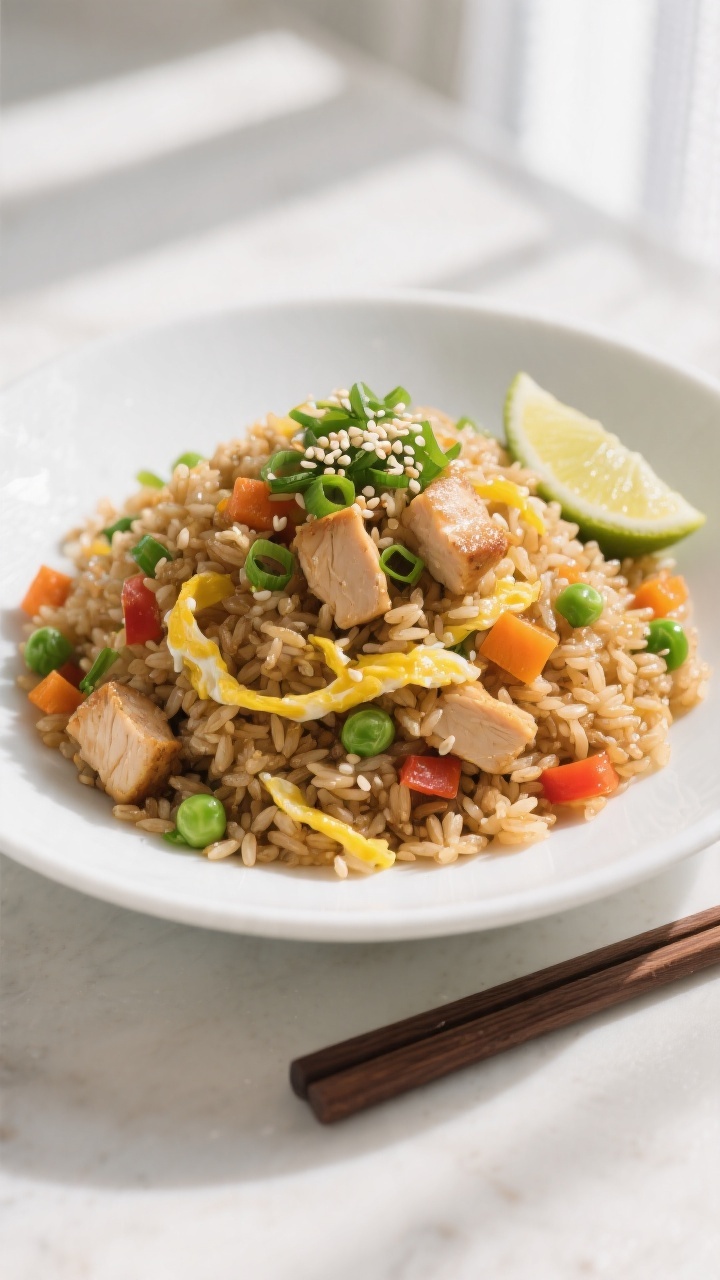
Health Benefits
- Lean protein: Chicken breast provides high-quality protein with minimal saturated fat, helping with muscle repair and satiety.
- Whole grains: Brown rice adds fiber, B vitamins, and minerals. Fiber supports digestion and keeps you full longer.
- Vegetable variety: Peas, carrots, bell pepper, and scallions bring antioxidants, vitamin C, and color—an easy way to boost daily veggie intake.
- Smart sodium control: Low-sodium soy sauce keeps salt in check while still delivering umami. You control how much to add.
- Healthy fats: A measured amount of avocado or olive oil gives you heart-friendly fats without overdoing calories.
Common Mistakes to Avoid
- Using warm rice: Freshly cooked rice turns sticky.
Cool it thoroughly so it fries, not steams.
- Too much liquid: Heavy sauces make soggy rice. Start with modest amounts and add more only if needed.
- Overcrowding the pan: Too many ingredients at once trap moisture. Cook in batches for better browning.
- Skipping aromatics: Garlic and ginger create depth.
Without them, the dish tastes flat.
- Overcooking the eggs: Dry eggs crumble and disappear. Scramble them softly and add them back at the end.
Recipe Variations
- High-protein boost: Add extra egg whites or toss in edamame for more protein and fiber.
- Veg-forward: Swap half the rice for finely chopped cauliflower rice to lower carbs and add volume.
- Spicy: Stir in chili-garlic sauce or a drizzle of sriracha with the soy sauce.
- Gluten-free: Use tamari or coconut aminos in place of soy sauce. Check labels on rice vinegar and sesame oil.
- Different grains: Try quinoa or farro for a nutty twist.
Make sure they’re fully cooled before frying.
- Alternative proteins: Swap chicken for shrimp, turkey, or extra-firm tofu (pressed and cubed) for a plant-based version.
- Flavor extras: A spoonful of miso whisked into the soy sauce or a dash of fish sauce can deepen umami without extra oil.
FAQ
Can I use white rice instead of brown?
Yes. Day-old jasmine or long-grain white rice works well and gives a classic fried rice texture. Just make sure it’s chilled and clump-free before cooking.
Need More Easy Dinner Ideas?
Get my FREE 7-Day Easy Dinner Reset and enjoy a full week of healthy dinners without the meal-planning stress.
How do I keep the rice from sticking to the pan?
Use a well-heated nonstick skillet or a seasoned wok, break up the rice before adding, and avoid stirring constantly.
A small amount of oil and letting the rice sit briefly to sear both help.
Is there a way to make it even lower in sodium?
Use low-sodium soy sauce or tamari, and cut the amount by half to start. Add flavor with garlic, ginger, scallions, lime juice, and a touch of sesame oil instead of more soy.
Can I meal prep this?
Absolutely. Portion into airtight containers and refrigerate for up to 4 days.
Reheat in a skillet over medium heat with a splash of water to revive the texture.
What if I don’t have day-old rice?
Cook rice, spread it on a sheet pan, and refrigerate uncovered for at least an hour. This dries it enough to fry without turning mushy.
How can I add more vegetables?
Stir in shredded cabbage, broccoli florets, mushrooms, or spinach. Cook sturdier veggies first and add tender ones near the end to keep them crisp.
Can I skip the eggs?
Yes.
For similar richness, use a bit more sesame oil at the end or add soft tofu cubes. The dish will still be satisfying and balanced.
What’s the best way to cut the chicken?
Small, even pieces—about 1/2-inch cubes—cook quickly and stay juicy. Pat the chicken dry before searing for better browning.
Why add vinegar at the end?
Rice vinegar brightens the flavors and balances the soy sauce.
Adding it late preserves that clean, tangy lift.
Can I freeze it?
Yes. Cool completely, pack in freezer-safe containers, and freeze up to 2 months. Reheat in a covered skillet with a splash of water or microwave, stirring halfway.
Wrapping Up
Healthy Chicken Fried Rice proves you don’t need heavy sauces or lots of oil to make a craveable bowl.
With smart prep and a hot pan, you get tender chicken, crisp-tender veggies, and flavorful rice in under 30 minutes. It’s flexible, budget-friendly, and perfect for cleaning out the fridge. Keep this method handy, then mix and match ingredients to fit your week and your taste buds.
Printable Recipe Card
Want just the essential recipe details without scrolling through the article? Get our printable recipe card with just the ingredients and instructions.
Loved This Recipe?
If you're looking for more simple, healthy dinners your family will actually eat, grab my FREE 7-Day Easy Dinner Reset. You'll get 7 easy dinner recipes, simple grocery lists, and a done-for-you plan that takes the stress out of mealtime.