Healthy Chicken Pesto Pasta – Bright, Fresh, and Satisfying
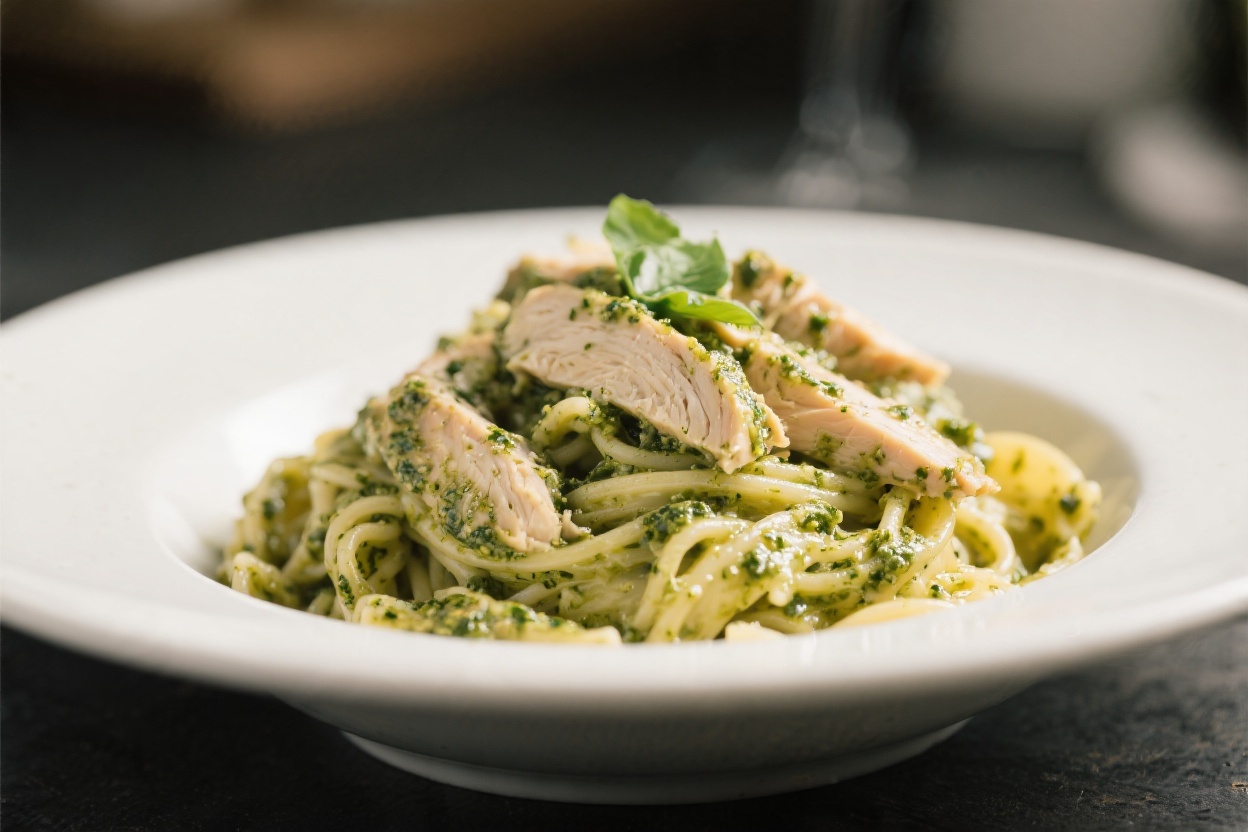
This Healthy Chicken Pesto Pasta keeps things simple: juicy chicken, vibrant basil pesto, and perfectly cooked pasta tossed together for a complete, feel-good meal. It’s easy enough for a busy weeknight but special enough for guests. The flavors are clean and fresh, with lemon and garlic lifting the dish without weighing it down.
FREE 7-Day Easy Dinner Reset
Save time, eat healthier, and take the stress out of dinner. Get a full week of easy healthy dinners delivered straight to your inbox.
If you like meals that taste indulgent but leave you feeling light, this one will earn a regular spot in your rotation.
Ingredients
Method
- Boil the pasta: Bring a large pot of salted water to a rolling boil. Add the pasta and cook until just al dente. Reserve about 1/2 cup of the starchy cooking water before draining.
- Prep the chicken: Pat the chicken dry, then season with salt and pepper. Drying helps it sear nicely without steaming.
- Cook the chicken: Heat 1 tablespoon olive oil in a large skillet over medium-high heat. Add chicken in a single layer. Cook, stirring once or twice, until golden and cooked through, about 5–7 minutes. Transfer to a plate.
- Make the lighter pesto: In a blender or food processor, combine basil, Parmesan, nuts, garlic, lemon zest, lemon juice, and red pepper flakes if using. Pulse to break down. With the motor running, stream in olive oil, then add water 1 tablespoon at a time until the pesto is smooth and spoonable. Season to taste with salt and extra lemon if you like brightness.
- Wilt the greens: Return the skillet to medium heat. Add spinach (or arugula) and a splash of pasta water. Toss until just wilted, 30–60 seconds. This step keeps the greens vibrant instead of mushy.
- Combine: Add the drained pasta and cooked chicken to the skillet. Spoon in the pesto. Toss gently, adding reserved pasta water a little at a time until the sauce clings to the pasta and looks glossy.
- Finish: Fold in cherry tomatoes if using. Taste and adjust with a pinch of salt, extra pepper, or another squeeze of lemon. Serve topped with fresh basil and a light shower of Parmesan.
What Makes This Special
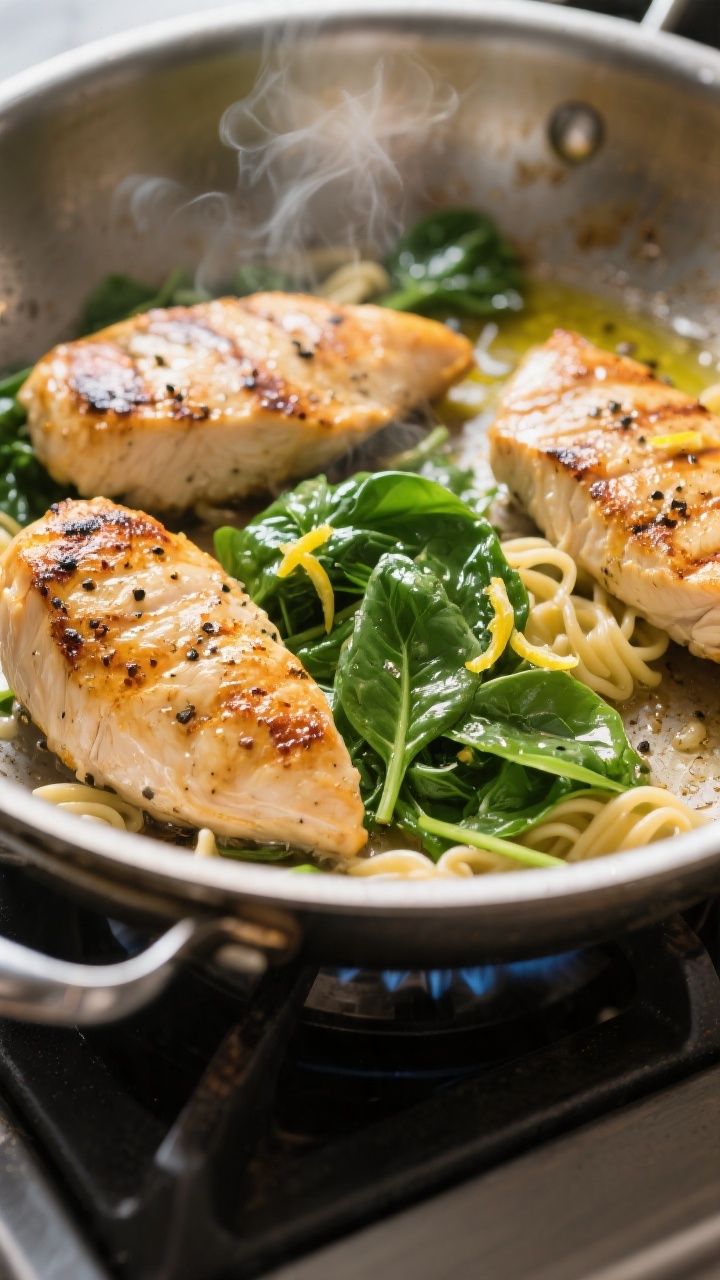
This pasta hits that sweet spot between comfort and freshness. The pesto is made with real ingredients—basil, olive oil, nuts, Parmesan—so you get bright flavor and good fats. Lean chicken breast adds high-quality protein without heavy sauces.
A squeeze of lemon and a handful of spinach or arugula keep it bright and green. Best of all, you can make it in about 30 minutes with pantry staples and a blender or food processor.
Ingredients
- 8 ounces whole wheat or chickpea pasta (penne, fusilli, or rotini)
- 1 pound boneless, skinless chicken breast, cut into 1-inch pieces
- 1 tablespoon extra-virgin olive oil (for cooking chicken)
- 1/2 teaspoon kosher salt, plus more for pasta water
- 1/4 teaspoon black pepper
- 2 cups fresh baby spinach or arugula
- 1 cup cherry tomatoes, halved (optional for color and sweetness)
For the lighter basil pesto:
- 2 packed cups fresh basil leaves
- 1/3 cup grated Parmesan (or Pecorino Romano)
- 1/4 cup toasted pine nuts (or walnuts/almonds for budget-friendly swap)
- 1 small garlic clove
- 1 small lemon (zest and 2–3 teaspoons juice)
- 3 tablespoons extra-virgin olive oil
- 2–4 tablespoons water, to thin as needed
- Pinch of red pepper flakes (optional)
To finish:
- Reserved pasta water (about 1/2 cup)
- Extra Parmesan, for serving
- Fresh basil, for garnish
How to Make It
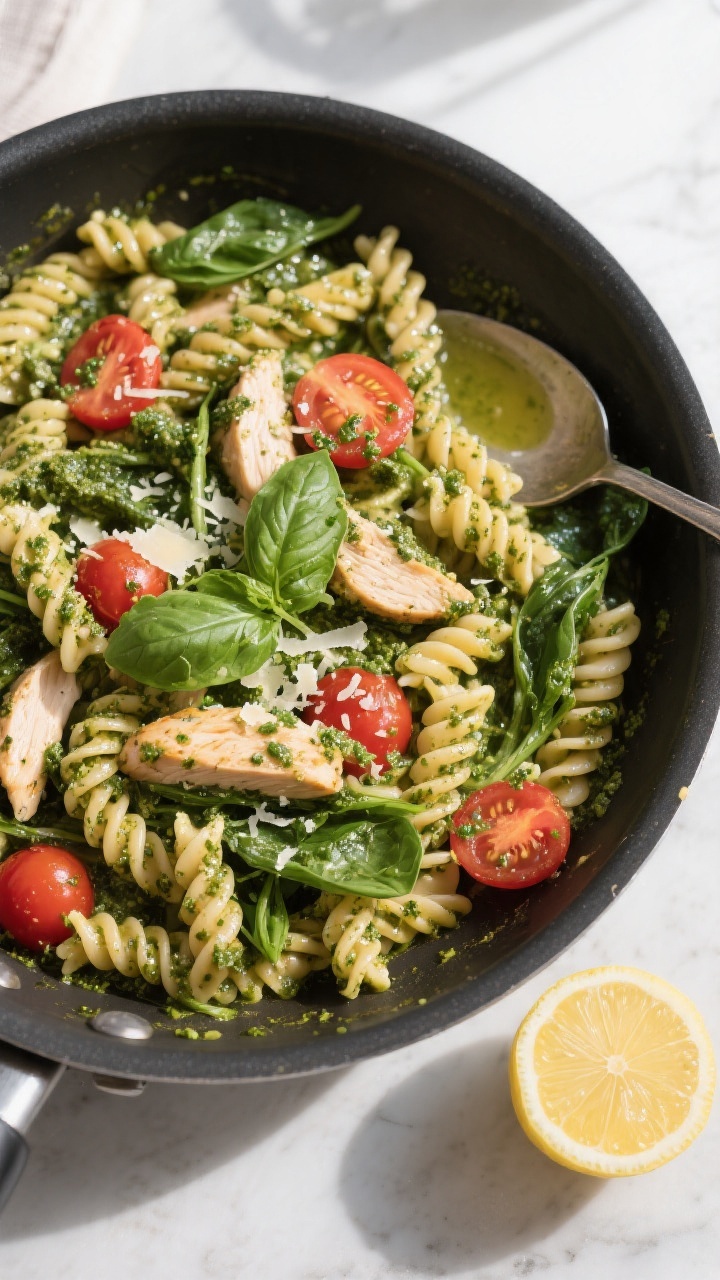
- Boil the pasta: Bring a large pot of salted water to a rolling boil. Add the pasta and cook until just al dente.
Reserve about 1/2 cup of the starchy cooking water before draining.
- Prep the chicken: Pat the chicken dry, then season with salt and pepper. Drying helps it sear nicely without steaming.
- Cook the chicken: Heat 1 tablespoon olive oil in a large skillet over medium-high heat. Add chicken in a single layer.
Cook, stirring once or twice, until golden and cooked through, about 5–7 minutes. Transfer to a plate.
- Make the lighter pesto: In a blender or food processor, combine basil, Parmesan, nuts, garlic, lemon zest, lemon juice, and red pepper flakes if using. Pulse to break down.
With the motor running, stream in olive oil, then add water 1 tablespoon at a time until the pesto is smooth and spoonable. Season to taste with salt and extra lemon if you like brightness.
- Wilt the greens: Return the skillet to medium heat. Add spinach (or arugula) and a splash of pasta water.
Toss until just wilted, 30–60 seconds. This step keeps the greens vibrant instead of mushy.
- Combine: Add the drained pasta and cooked chicken to the skillet. Spoon in the pesto.
Toss gently, adding reserved pasta water a little at a time until the sauce clings to the pasta and looks glossy.
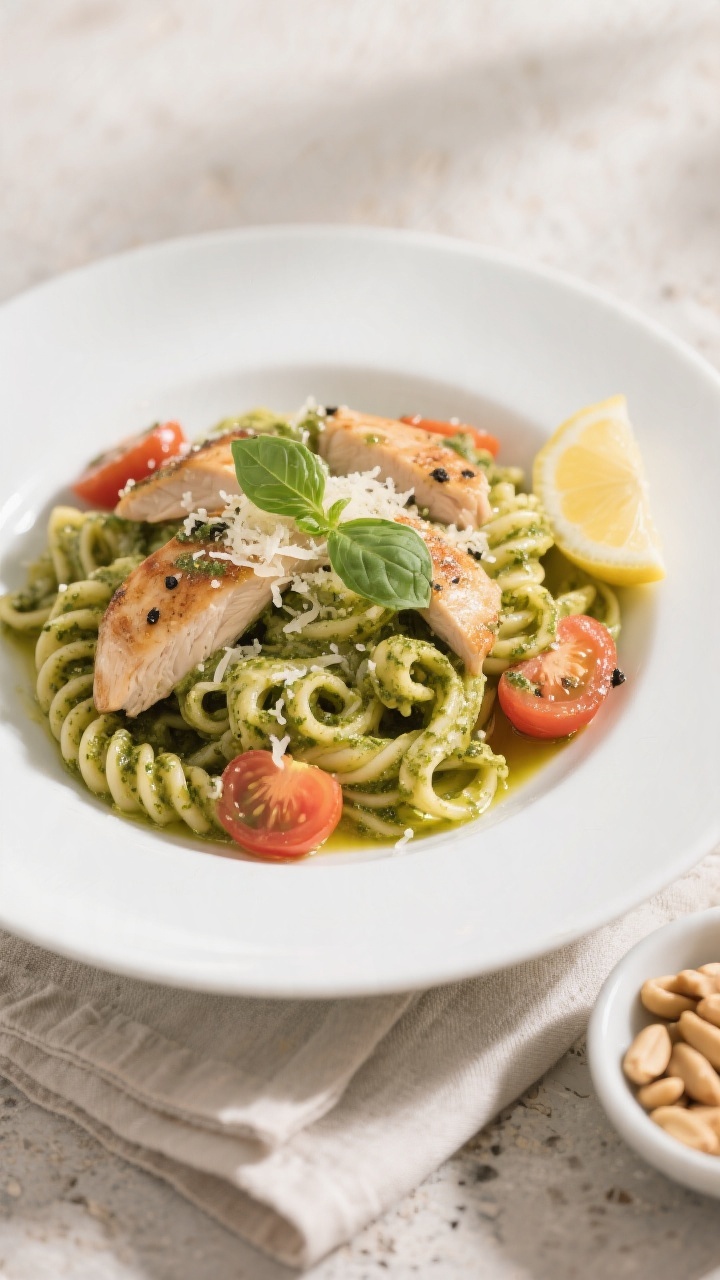
- Finish: Fold in cherry tomatoes if using. Taste and adjust with a pinch of salt, extra pepper, or another squeeze of lemon. Serve topped with fresh basil and a light shower of Parmesan.
Keeping It Fresh
This pasta tastes best right after tossing, when the pesto is bright and aromatic.
If you’re saving leftovers, store them in an airtight container in the fridge for up to 3 days. To reheat, add a splash of water or broth and warm gently over low heat, stirring to revive the sauce.
For meal prep, keep the elements separate: cooked pasta, cooked chicken, and pesto in their own containers. Combine just before eating.
If you’re making pesto ahead, press plastic wrap directly onto its surface or cover with a thin layer of olive oil to prevent browning.
Health Benefits
- Lean protein: Chicken breast supports muscle repair and keeps you fuller longer without excess saturated fat.
- Better-for-you carbs: Whole wheat or chickpea pasta offers fiber and steady energy. Chickpea pasta adds extra protein and is naturally gluten-free.
- Heart-healthy fats: Extra-virgin olive oil and nuts provide monounsaturated fats that support heart health and help your body absorb fat-soluble vitamins.
- Micronutrient boost: Basil and greens deliver vitamin K and antioxidants, while lemon adds vitamin C and brightness without extra calories.
- Sodium smart: Making pesto at home lets you control salt and skip the preservatives often found in jarred sauces.
What Not to Do
- Don’t overcook the pasta: Soft pasta falls apart and soaks up too much sauce. Aim for al dente and save some cooking water.
- Don’t cook pesto: Heating it hard in the pan dulls the basil and can turn it bitter.
Toss off the heat or on very low with pasta water.
- Don’t skip drying the chicken: Moisture prevents browning. Pat dry so you get a quick, flavorful sear.
- Don’t drown the dish in oil: A modest amount of olive oil plus pasta water gives a silky sauce without excess calories.
- Don’t forget acid: Lemon balances the richness of nuts and cheese. Without it, the dish can taste flat.
Alternatives
- Protein swaps: Use turkey breast, shrimp (cook 2–3 minutes per side), or white beans for a plant-based boost.
- Nut-free pesto: Substitute sunflower seeds or pumpkin seeds.
They blend creamy and keep the pesto stable.
- Dairy-free: Replace Parmesan with nutritional yeast and add a pinch of salt to taste. It keeps the umami without dairy.
- Greens to mix in: Try kale (lightly massaged), steamed broccoli florets, or peas for extra fiber and color.
- Pasta options: Use brown rice pasta for gluten-free, or a short whole wheat shape for hearty texture.
- Make it spicier: Add more red pepper flakes or a pinch of Calabrian chili paste to the pesto.
FAQ
Need More Easy Dinner Ideas?
Get my FREE 7-Day Easy Dinner Reset and enjoy a full week of healthy dinners without the meal-planning stress.
Can I use store-bought pesto?
Yes, but choose a high-quality one made with extra-virgin olive oil and real basil. Taste it first and adjust with fresh lemon juice to brighten.
You may also need less salt since jarred versions can be salty.
How do I keep the pesto green?
Use very fresh basil, avoid overheating, and add a bit of lemon juice. Storing with a thin layer of olive oil on top or pressing plastic wrap onto the surface also slows oxidation.
What’s the best way to toast nuts for pesto?
Toast them in a dry skillet over medium heat for 3–5 minutes, shaking often, until fragrant and lightly golden. Let them cool before blending to prevent the pesto from turning greasy.
Can I make this ahead for lunches?
Yes.
Keep pasta, chicken, and pesto separate. Combine with a splash of water just before eating. It reheats well on the stovetop or in the microwave with a bit of added moisture.
How can I lower the calories further?
Use a lighter hand with cheese, swap half the nuts for extra basil or spinach, and choose chickpea pasta for higher protein and fiber.
You can also bulk up with more veggies like zucchini ribbons or roasted tomatoes.
What if I don’t have a blender?
Use a mortar and pestle for classic texture, or mince basil, garlic, and nuts very finely with a sharp knife. Stir in olive oil, lemon, and cheese by hand until it forms a loose paste.
Is dark meat chicken okay?
Absolutely. Thighs are juicier and forgiving.
Trim excess fat, cut into bite-size pieces, and cook until just done. The flavor pairs well with basil and lemon.
Can I serve it cold like a pasta salad?
Yes. Rinse the cooked pasta briefly under cool water to stop cooking, then toss with pesto, chicken, and add-ins.
Add a touch more lemon and olive oil before serving to keep it glossy.
How salty should the pasta water be?
It should taste like the sea. This seasons the pasta from the inside and reduces the need for extra salt later. Aim for about 1–2 tablespoons kosher salt per large pot.
What’s a good side dish?
A simple green salad with lemon vinaigrette, roasted asparagus, or a cup of tomato soup pairs nicely.
For a heartier spread, add crusty whole grain bread.
Final Thoughts
Healthy Chicken Pesto Pasta proves that a balanced meal can be fast, fresh, and full of flavor. With lean protein, smart carbs, and a bright, homemade pesto, it satisfies without feeling heavy. Keep the process simple, lean on good ingredients, and finish with lemon and a little pasta water magic.
You’ll have a weeknight staple that’s just as welcome on a weekend table.
Printable Recipe Card
Want just the essential recipe details without scrolling through the article? Get our printable recipe card with just the ingredients and instructions.
Loved This Recipe?
If you're looking for more simple, healthy dinners your family will actually eat, grab my FREE 7-Day Easy Dinner Reset. You'll get 7 easy dinner recipes, simple grocery lists, and a done-for-you plan that takes the stress out of mealtime.