Prep the pork. If using pork shoulder, partially freeze it for 30 minutes so it’s easier to slice.
Cut into thin bite-size slices, about 1/8–1/4 inch thick.
Make the marinade. In a large bowl, whisk together gochujang, gochugaru, soy sauce, brown sugar (or honey), rice vinegar, sesame oil, garlic, ginger, and grated pear or apple. The mixture should be thick, glossy, and a little spicy-sweet.
Marinate. Add the pork and sliced onion to the bowl. Toss until every piece is coated.
Cover and marinate for at least 30 minutes at room temperature or up to 8 hours in the fridge for deeper flavor.
Prep add-ins. If using carrots, zucchini, or bell pepper, slice them thin so they cook quickly. Keep green onions aside for the finish.
Heat the pan. Set a large skillet or wok over medium-high heat. Add 1 tablespoon oil and let it shimmer.
You want it hot so the pork sears and caramelizes.
Cook in batches. Add a single layer of pork and onions. Don’t crowd the pan. Cook for 2–3 minutes per side, stirring occasionally, until the edges char slightly and the pork is cooked through.
Repeat with remaining pork, adding more oil if needed.
Add veggies (optional). In the last batch, toss in your sliced vegetables and stir-fry for 1–2 minutes until just tender but still crisp.
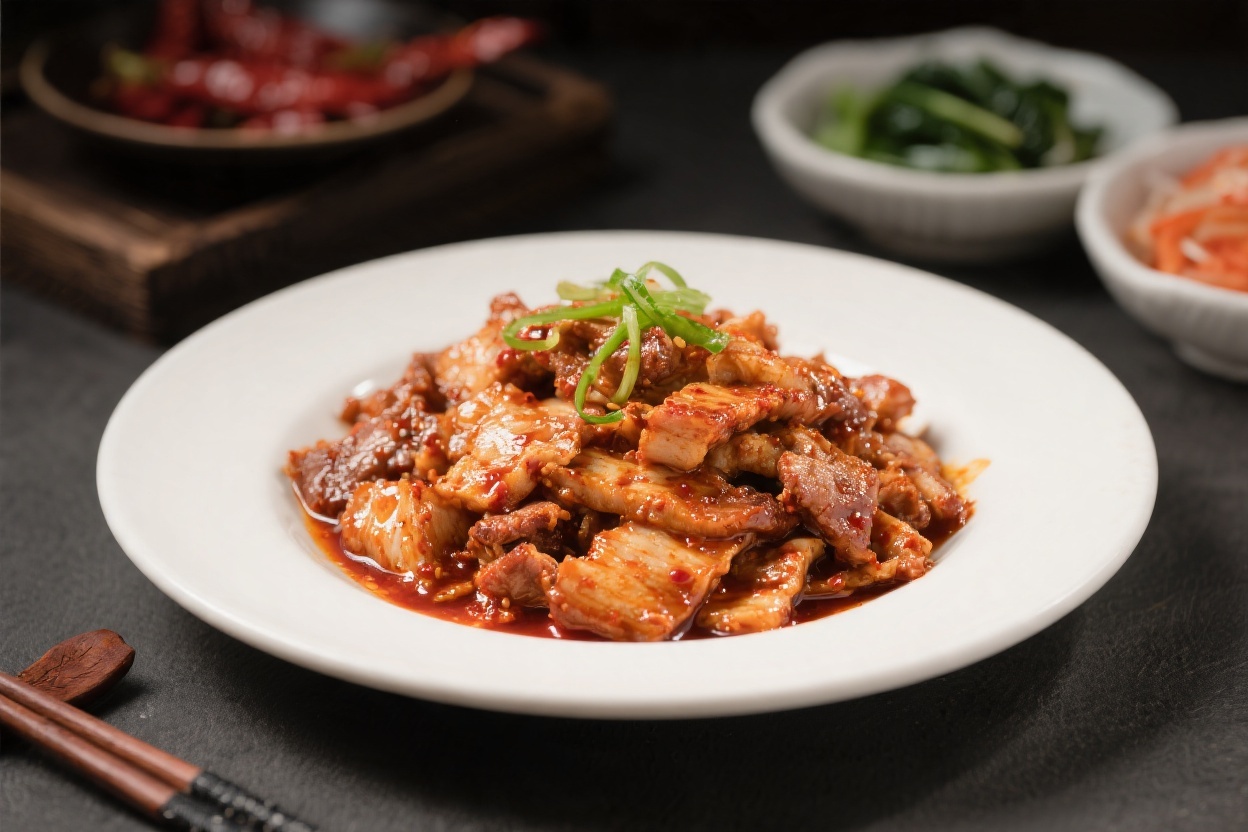
Combine and finish. Return all cooked pork to the pan. Toss with green onions and a sprinkle of sesame seeds. Taste and adjust: add a pinch of sugar for more sweetness, a splash of soy sauce for salt, or more gochugaru for heat.
Serve. Spoon over steamed rice or wrap in lettuce leaves with kimchi and cucumber.
Add a drizzle of sesame oil if you like.