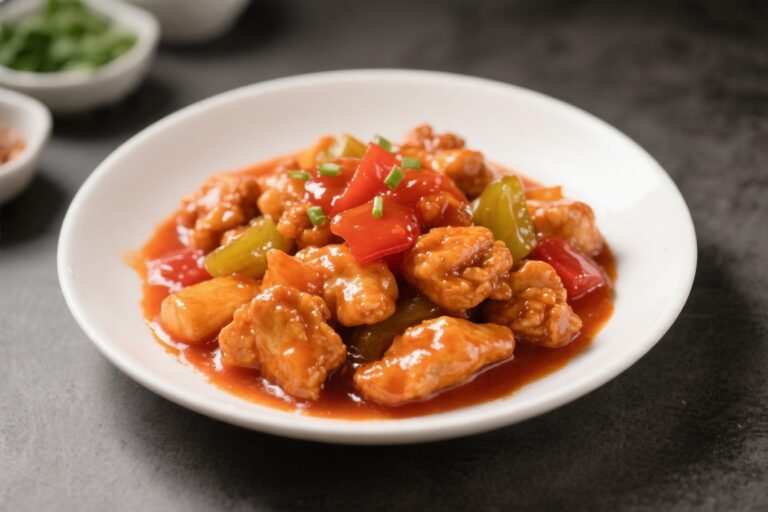
Korean Spicy Pork – A Bold, Savory Weeknight Favorite
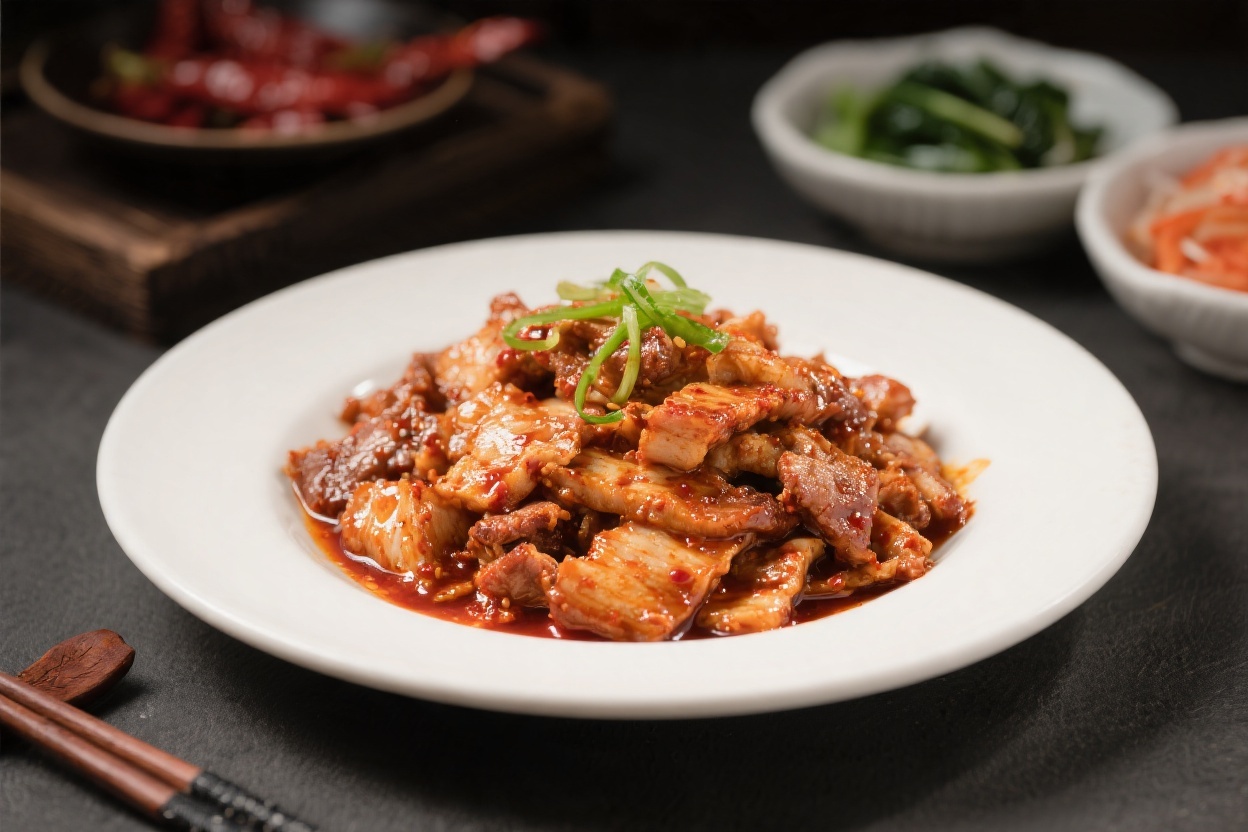
This Korean Spicy Pork is the kind of dish that makes you look forward to dinner. Tender slices of pork soak up a bold, garlicky gochujang marinade, then cook fast and caramelize in the pan. It’s sweet, spicy, and deeply savory, with just enough heat to wake up your taste buds.
FREE 7-Day Easy Dinner Reset
Save time, eat healthier, and take the stress out of dinner. Get a full week of easy healthy dinners delivered straight to your inbox.
Eat it with rice, wrap it in lettuce, or pile it into a bowl with quick-pickled veggies. It’s simple to make, easy to love, and perfect for busy nights.
Ingredients
Method
- Prep the pork. If using pork shoulder, partially freeze it for 30 minutes so it’s easier to slice. Cut into thin bite-size slices, about 1/8–1/4 inch thick.
- Make the marinade. In a large bowl, whisk together gochujang, gochugaru, soy sauce, brown sugar (or honey), rice vinegar, sesame oil, garlic, ginger, and grated pear or apple. The mixture should be thick, glossy, and a little spicy-sweet.
- Marinate. Add the pork and sliced onion to the bowl. Toss until every piece is coated. Cover and marinate for at least 30 minutes at room temperature or up to 8 hours in the fridge for deeper flavor.
- Prep add-ins. If using carrots, zucchini, or bell pepper, slice them thin so they cook quickly. Keep green onions aside for the finish.
- Heat the pan. Set a large skillet or wok over medium-high heat. Add 1 tablespoon oil and let it shimmer. You want it hot so the pork sears and caramelizes.
- Cook in batches. Add a single layer of pork and onions. Don’t crowd the pan. Cook for 2–3 minutes per side, stirring occasionally, until the edges char slightly and the pork is cooked through. Repeat with remaining pork, adding more oil if needed.
- Add veggies (optional). In the last batch, toss in your sliced vegetables and stir-fry for 1–2 minutes until just tender but still crisp.
- Combine and finish. Return all cooked pork to the pan. Toss with green onions and a sprinkle of sesame seeds. Taste and adjust: add a pinch of sugar for more sweetness, a splash of soy sauce for salt, or more gochugaru for heat.
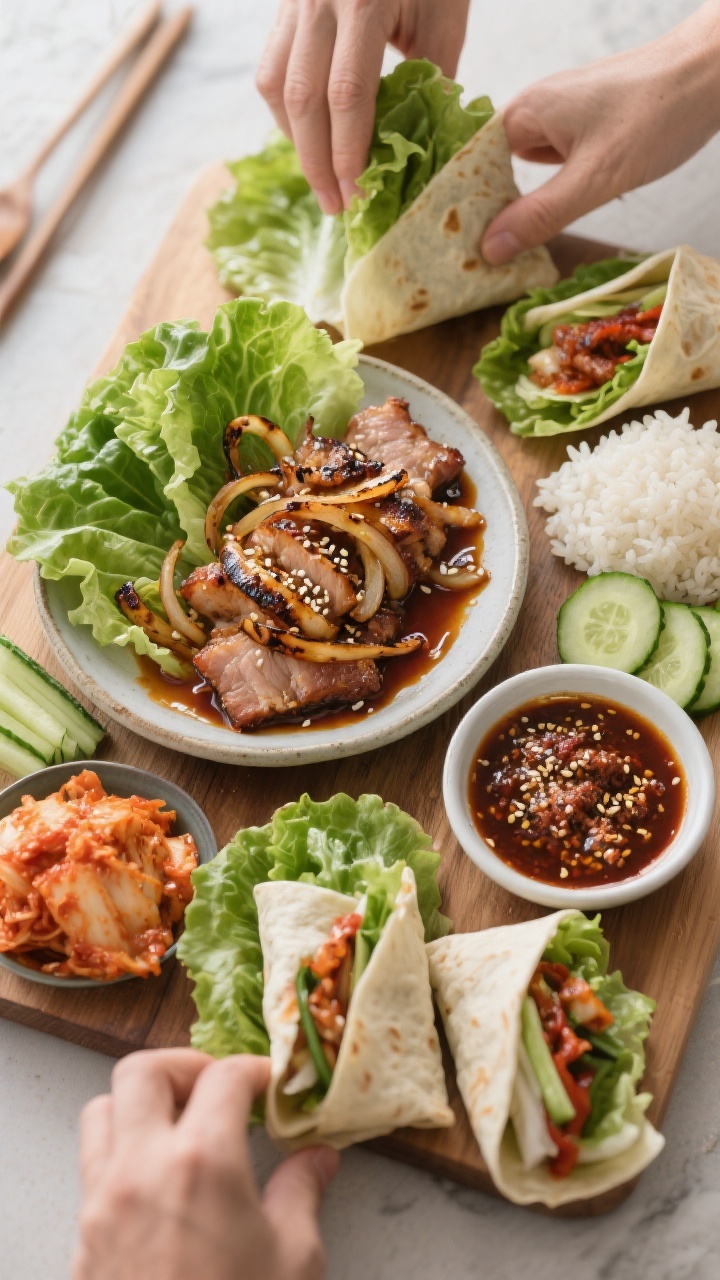
- Serve. Spoon over steamed rice or wrap in lettuce leaves with kimchi and cucumber. Add a drizzle of sesame oil if you like.
What Makes This Special
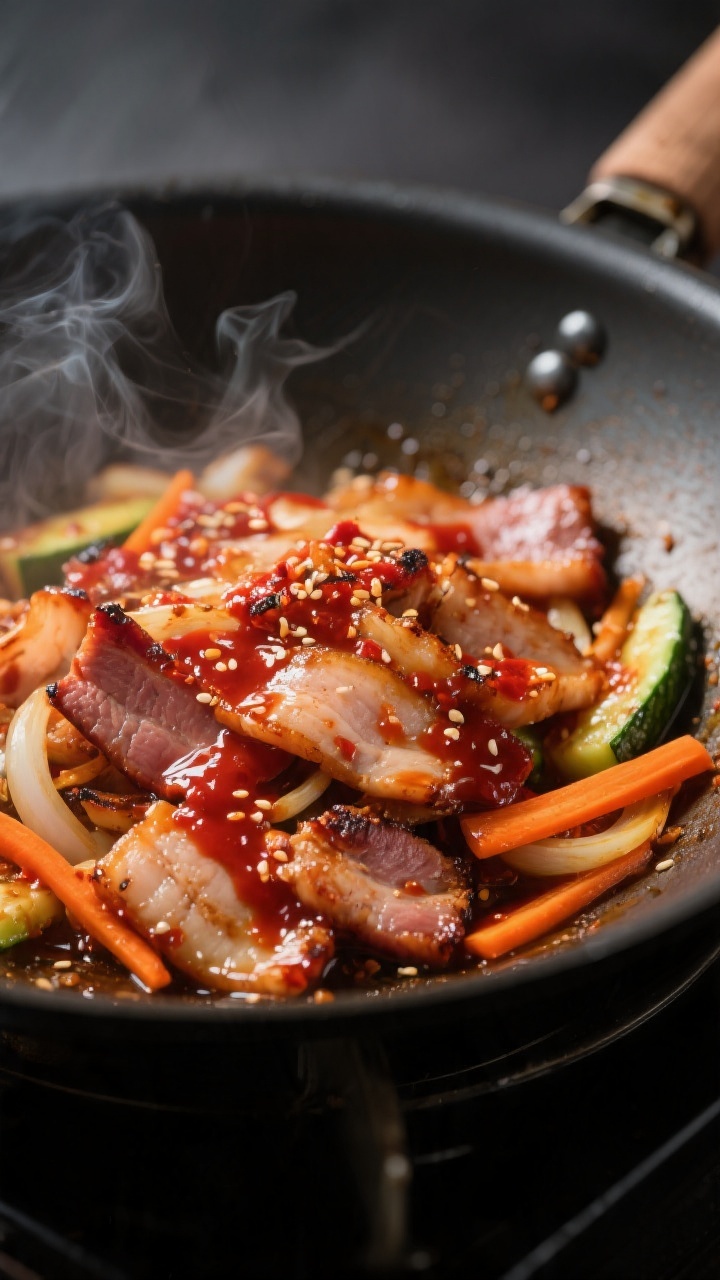
This dish, known as jeyuk bokkeum in Korea, is all about balance. You get heat from gochujang (Korean red chili paste) and gochugaru (Korean chili flakes), sweetness from sugar or honey, and depth from soy sauce and aromatics.
The pork is thinly sliced so it cooks quickly and stays tender. A touch of pear or apple in the marinade adds gentle sweetness and helps with tenderness. Best of all, it’s flexible—great with pork shoulder or pork belly, and easy to tailor to your spice level.
Shopping List
- Pork: 1.5 pounds (680 g) thinly sliced pork shoulder or pork belly
- Gochujang: 3 tablespoons (Korean red chili paste)
- Gochugaru: 1–2 tablespoons (Korean chili flakes), to taste
- Soy sauce: 3 tablespoons
- Brown sugar or honey: 1.5 tablespoons
- Rice vinegar or mirin: 1 tablespoon (or use apple cider vinegar)
- Sesame oil: 1 tablespoon
- Garlic: 5 cloves, minced
- Ginger: 1-inch piece, grated (about 1 teaspoon)
- Onion: 1 medium, thinly sliced
- Green onions: 3, chopped
- Korean pear or apple: 1/2 fruit, grated (optional but recommended)
- Neutral oil: 1–2 tablespoons (canola or avocado oil)
- Sesame seeds: 1 teaspoon, for garnish
- Optional veggies: 1 small carrot (julienned), 1/2 zucchini (thinly sliced), or 1/2 bell pepper (sliced)
- To serve: Steamed rice, lettuce leaves (like romaine or butter lettuce), kimchi, and cucumber
Instructions
- Prep the pork. If using pork shoulder, partially freeze it for 30 minutes so it’s easier to slice.
Cut into thin bite-size slices, about 1/8–1/4 inch thick.
- Make the marinade. In a large bowl, whisk together gochujang, gochugaru, soy sauce, brown sugar (or honey), rice vinegar, sesame oil, garlic, ginger, and grated pear or apple. The mixture should be thick, glossy, and a little spicy-sweet.
- Marinate. Add the pork and sliced onion to the bowl. Toss until every piece is coated.
Cover and marinate for at least 30 minutes at room temperature or up to 8 hours in the fridge for deeper flavor.
- Prep add-ins. If using carrots, zucchini, or bell pepper, slice them thin so they cook quickly. Keep green onions aside for the finish.
- Heat the pan. Set a large skillet or wok over medium-high heat. Add 1 tablespoon oil and let it shimmer.
You want it hot so the pork sears and caramelizes.
- Cook in batches. Add a single layer of pork and onions. Don’t crowd the pan. Cook for 2–3 minutes per side, stirring occasionally, until the edges char slightly and the pork is cooked through.
Repeat with remaining pork, adding more oil if needed.
- Add veggies (optional). In the last batch, toss in your sliced vegetables and stir-fry for 1–2 minutes until just tender but still crisp.
- Combine and finish. Return all cooked pork to the pan. Toss with green onions and a sprinkle of sesame seeds. Taste and adjust: add a pinch of sugar for more sweetness, a splash of soy sauce for salt, or more gochugaru for heat.
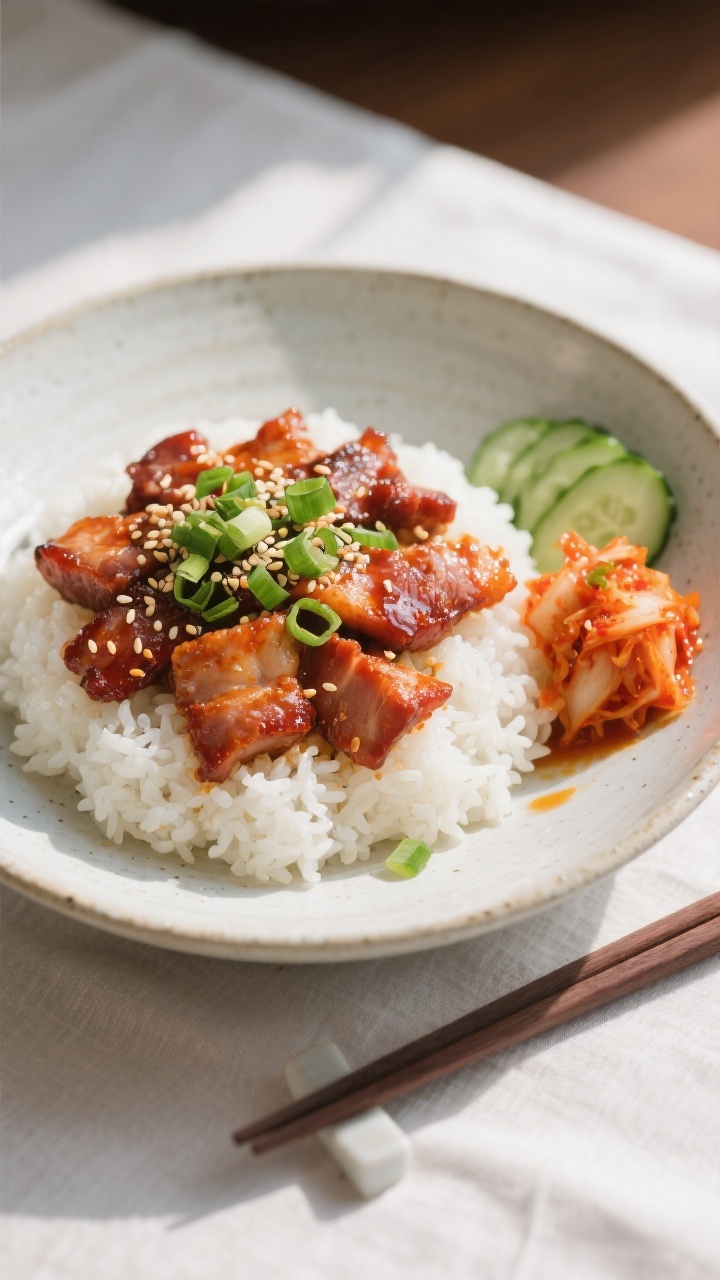
- Serve. Spoon over steamed rice or wrap in lettuce leaves with kimchi and cucumber.
Add a drizzle of sesame oil if you like.
How to Store
- Fridge: Store leftovers in an airtight container for up to 4 days. Reheat in a skillet over medium heat with a splash of water to loosen the sauce.
- Freezer: Freeze the raw marinated pork for up to 2 months. Thaw overnight in the fridge, then cook as directed.
- Meal prep tip: Portion cooked pork over rice and veggies in containers.
Add fresh toppings (lettuce, cucumbers) the day you eat.
Why This is Good for You
- Protein-rich: Pork shoulder provides satisfying protein to keep you full.
- Fermented flavor boost: Gochujang is fermented, adding depth and a small dose of beneficial compounds.
- Veggie-friendly: Onions, garlic, and optional vegetables bring fiber and antioxidants.
- Customizable spice: You control the heat and sugar levels, making it fit your needs.
What Not to Do
- Don’t skip the marinade time. Even 30 minutes makes a big difference in flavor and tenderness.
- Don’t overcrowd the pan. Overcrowding steams the pork and prevents caramelization. Cook in batches.
- Don’t use thick pork chunks. Thin slices cook fast and stay tender. Thick pieces can turn tough.
- Don’t crank the heat too high. The sugars in the sauce can burn.
Aim for medium-high, not max flame.
- Don’t forget to taste and adjust. A pinch more salt, sugar, or heat can balance everything.
Variations You Can Try
- Extra garlicky: Add 2 more cloves for a punchier bite.
- Milder version: Halve the gochugaru and add 1 extra tablespoon of grated pear or apple.
- Crispy pork belly: Use pork belly and render it longer for a slightly crispy edge before adding veggies.
- Veggie-forward: Bulk it up with mushrooms, cabbage, or bean sprouts for more texture.
- Gluten-free: Swap soy sauce for tamari or gluten-free soy sauce; check your gochujang label.
- No pear on hand: Use a splash of pineapple juice or a teaspoon of sugar instead.
- BBQ-style: Grill marinated slices on a hot grate or grill pan for a smoky edge.
FAQ
What cut of pork is best?
Pork shoulder is ideal because it’s well-marbled and stays juicy. Pork belly works too and gives a richer, fattier result. If you prefer leaner meat, use pork loin, but slice it very thin and don’t overcook.
How spicy is this?
Need More Easy Dinner Ideas?
Get my FREE 7-Day Easy Dinner Reset and enjoy a full week of healthy dinners without the meal-planning stress.
Medium spicy by default.
Reduce gochugaru to 1 teaspoon for mild heat, or increase to 2 tablespoons for a kick. Keep the gochujang as the base for flavor and adjust the flakes to control the burn.
Can I make it ahead?
Yes. Marinate the pork up to 8 hours ahead, or freeze the marinated pork for later.
Cooked leftovers also reheat well for quick lunches.
What can I use instead of gochujang?
There’s no perfect substitute, but you can mix miso paste with a little chili paste and honey in a pinch. Still, for the most authentic taste, try to use real gochujang.
Do I need the pear or apple?
It’s optional but helpful. It adds gentle sweetness and helps tenderize the meat.
If you skip it, add a touch more sugar or honey and don’t overcook the pork.
How do I serve it traditionally?
Serve with steamed rice, kimchi, and lettuce leaves to make wraps (ssam). A dab of ssamjang (a savory bean and chili paste) and a slice of raw garlic in the wrap are classic touches.
Why is my pork watery?
The pan was crowded or not hot enough. Cook in batches over medium-high heat so the marinade reduces and the meat sears rather than steams.
Can I use chicken or beef?
Yes.
Thinly sliced chicken thighs or beef chuck/short rib work well. Adjust cooking time to avoid drying out lean cuts.
What sides go well with it?
Quick cucumber salad, sautéed spinach, kimchi, pickled radish, or a simple miso soup pair nicely. Keep sides fresh and crunchy to balance the rich, spicy pork.
How do I keep it from burning?
Use medium-high heat, not maximum.
Stir frequently toward the end, and add a splash of water if the sauce thickens too quickly.
Final Thoughts
Korean Spicy Pork is bold, fast, and incredibly satisfying. With a handful of pantry staples and a short marinade, you get a weeknight dinner that tastes like it took hours. Make it as spicy or as mild as you like, and build your plate with rice, lettuce, and crunchy sides.
Once you’ve tried it, it’ll be part of your regular rotation.
Printable Recipe Card
Want just the essential recipe details without scrolling through the article? Get our printable recipe card with just the ingredients and instructions.
Loved This Recipe?
If you're looking for more simple, healthy dinners your family will actually eat, grab my FREE 7-Day Easy Dinner Reset. You'll get 7 easy dinner recipes, simple grocery lists, and a done-for-you plan that takes the stress out of mealtime.