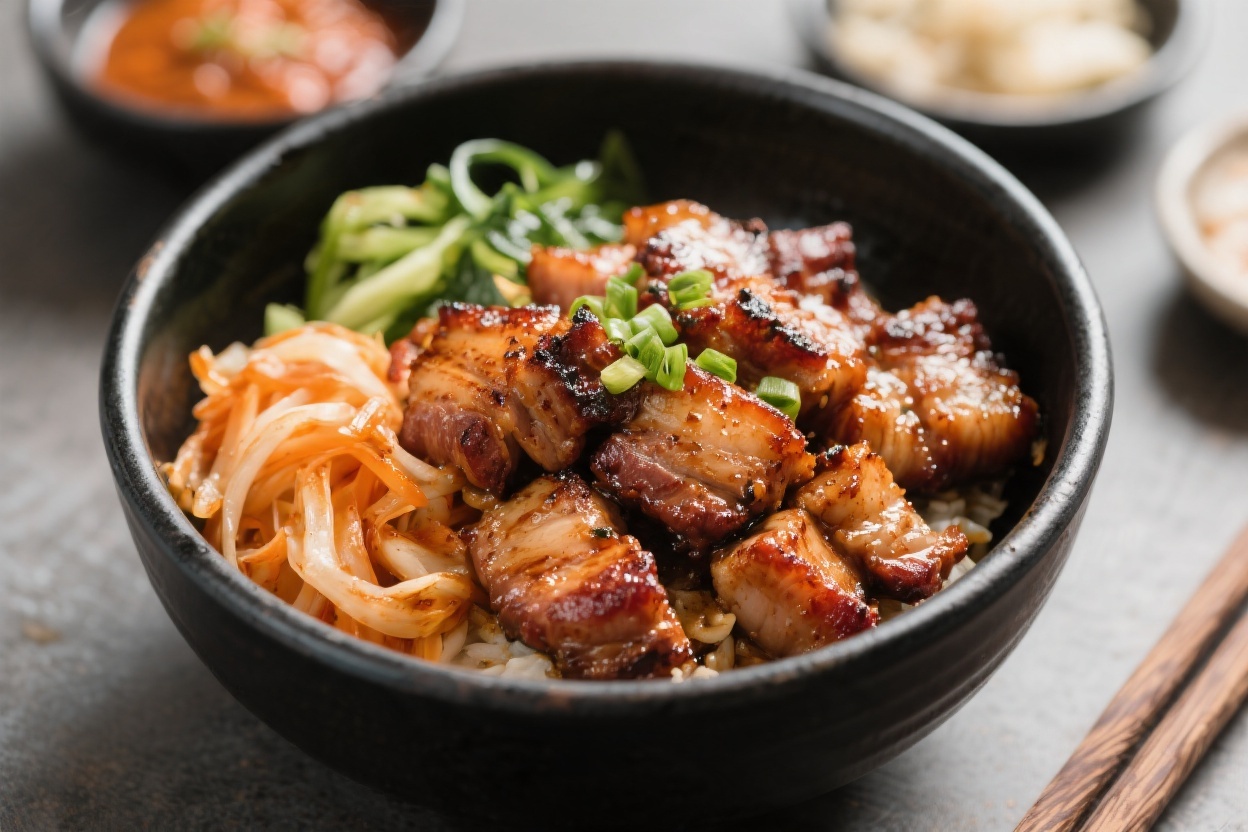
Cook the rice. Rinse until the water runs clear. Cook per package directions. Fluff and keep warm.
Rice can be made ahead and reheated.
Make the sauce. In a bowl, whisk soy sauce, brown sugar, honey, rice vinegar, gochujang (or gochugaru), and 1 teaspoon sesame oil. Taste and adjust heat and sweetness. You want a sweet-salty-spicy balance.
Prep aromatics and veggies. Mince garlic and ginger.
Slice scallions. Shred cabbage, julienne carrots, and slice cucumber thin. If you like pickles, toss carrots with 1 tablespoon rice vinegar, 1/2 teaspoon sugar, and a pinch of salt; let sit.
Marinate the pork (optional but great). If using thinly sliced pork shoulder, toss with half the sauce and let sit 10–20 minutes.
For ground pork, you can skip marinating.
Heat the pan. Use a large skillet or wok over medium-high heat. Add neutral oil until shimmering.
Cook the pork. Add ground pork, breaking it up, or lay slices in a single layer. Cook until browned and slightly crisp at the edges.
For ground pork, let it sear before stirring to build caramelization.
Add aromatics. Stir in garlic and ginger. Cook 30–60 seconds until fragrant. Avoid burning.
Sauce it. Pour in the remaining sauce (or the rest if you didn’t marinate).
Stir and let it bubble and thicken 1–2 minutes until glossy and lightly caramelized. Finish with a drizzle of sesame oil.
Assemble bowls. Add warm rice to bowls. Top with pork, cabbage, carrots, cucumber, and scallions.
Sprinkle sesame seeds. Add kimchi or a fried egg if you want extra richness.
Serve. Squeeze a little citrus over the top if using. Taste and add more gochujang or soy at the table if needed.