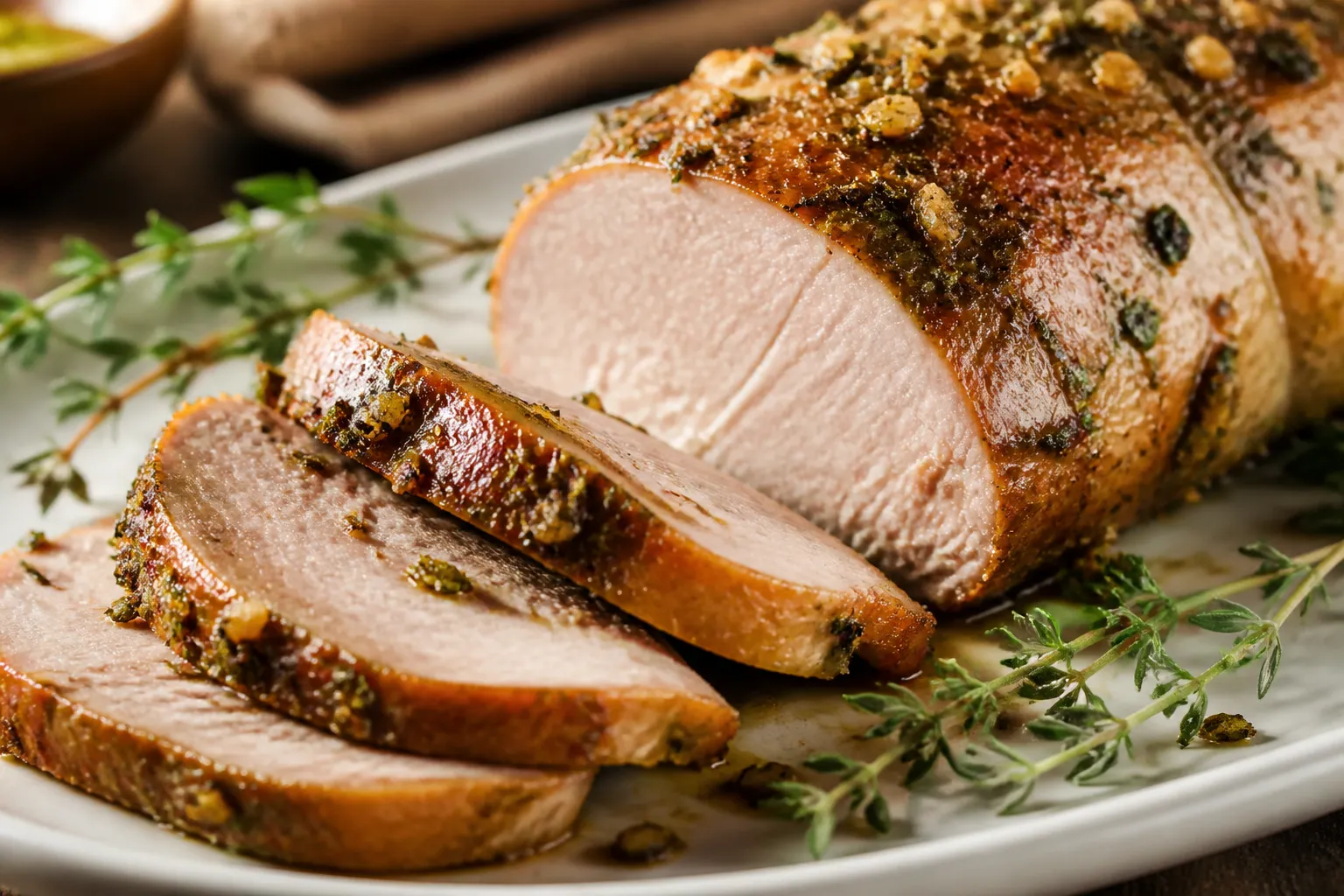
Preheat the oven: Set your oven to 425°F (220°C).
Place a rack in the center. Line a sheet pan with foil and set a wire rack on top if you have one. This helps air circulate and browns the pork evenly.
Pat the pork dry: Use paper towels to remove surface moisture. Dry meat browns better and helps the herb paste stick.
Make the herb paste: In a small bowl, combine garlic, rosemary, thyme, parsley, onion powder, salt, pepper, smoked paprika, lemon zest, olive oil, and Dijon.
Stir into a thick paste.
Season the tenderloins: Rub the herb paste all over the pork, coating every side. Tuck the thin tail end under itself so the meat is a more even thickness for cooking.
Sear for a head start (optional but recommended): Heat a large oven-safe skillet over medium-high heat. Add a thin film of oil and sear the tenderloins for 1–2 minutes per side until lightly browned.
This builds flavor. If skipping this step, go straight to roasting.
Roast: Transfer the pork to the oven (in the skillet or on the prepared rack). Roast for 18–22 minutes total, flipping once halfway if not using a rack.
Start checking temperature at 15 minutes.
Check doneness: Use an instant-read thermometer in the thickest part. Pull the pork at 140–145°F (60–63°C). The temp will rise a little as it rests.
Rest the meat: Transfer to a cutting board and tent loosely with foil.
Rest for 5–10 minutes. This keeps the juices inside where they belong.
Make a quick pan sauce (optional): Set the skillet over medium heat. Add butter and a splash of lemon juice or white wine.
Scrape up browned bits and simmer for 1–2 minutes. Taste and season with salt and pepper.
Slice and serve: Cut into 1/2-inch medallions. Spoon sauce over the top and serve with lemon wedges.
Great with roasted potatoes, green beans, or a crisp salad.