Preheat and prep: Heat your oven to 400°F (205°C). Pat the pork dry with paper towels so it sears instead of steams.
Mix the rub: In a small bowl, combine brown sugar, salt, pepper, smoked paprika, onion powder, red pepper flakes (if using), and Dijon mustard.
Stir in 1 tablespoon olive oil to make a paste. Fold in the minced garlic last so it stays chunky and aromatic.
Season the pork: Rub the paste all over the tenderloins, pressing it in so it adheres. Let them sit at room temperature for 10–15 minutes while you heat the pan.
This takes off the chill and promotes even cooking.
Heat the skillet: Place a large oven-safe skillet (cast iron is ideal) over medium-high heat. Add the remaining 1 tablespoon olive oil and swirl to coat.
Sear: Add the pork and sear for 2–3 minutes per side until nicely browned, about 6–8 minutes total. Don’t move the meat too much—let it develop color before turning.
Deglaze: Pour in the chicken broth and apple cider vinegar.
Scrape up the browned bits with a wooden spoon. Those bits are pure flavor and help form the glaze.
Roast: Transfer the skillet to the oven. Roast for 10–15 minutes, or until the thickest part reaches 140–145°F (60–63°C) with an instant-read thermometer.
Time varies by size and your oven, so check early.
Rest: Move the pork to a cutting board and tent loosely with foil. Rest for 5–10 minutes. Carryover heat will finish the cook, and the juices will settle back into the meat.
Finish the glaze: While the pork rests, place the skillet back on medium heat.
Simmer the pan juices for 2–3 minutes until glossy and slightly thickened. Whisk in the butter at the end for a silky finish. Taste and adjust salt or vinegar as needed.
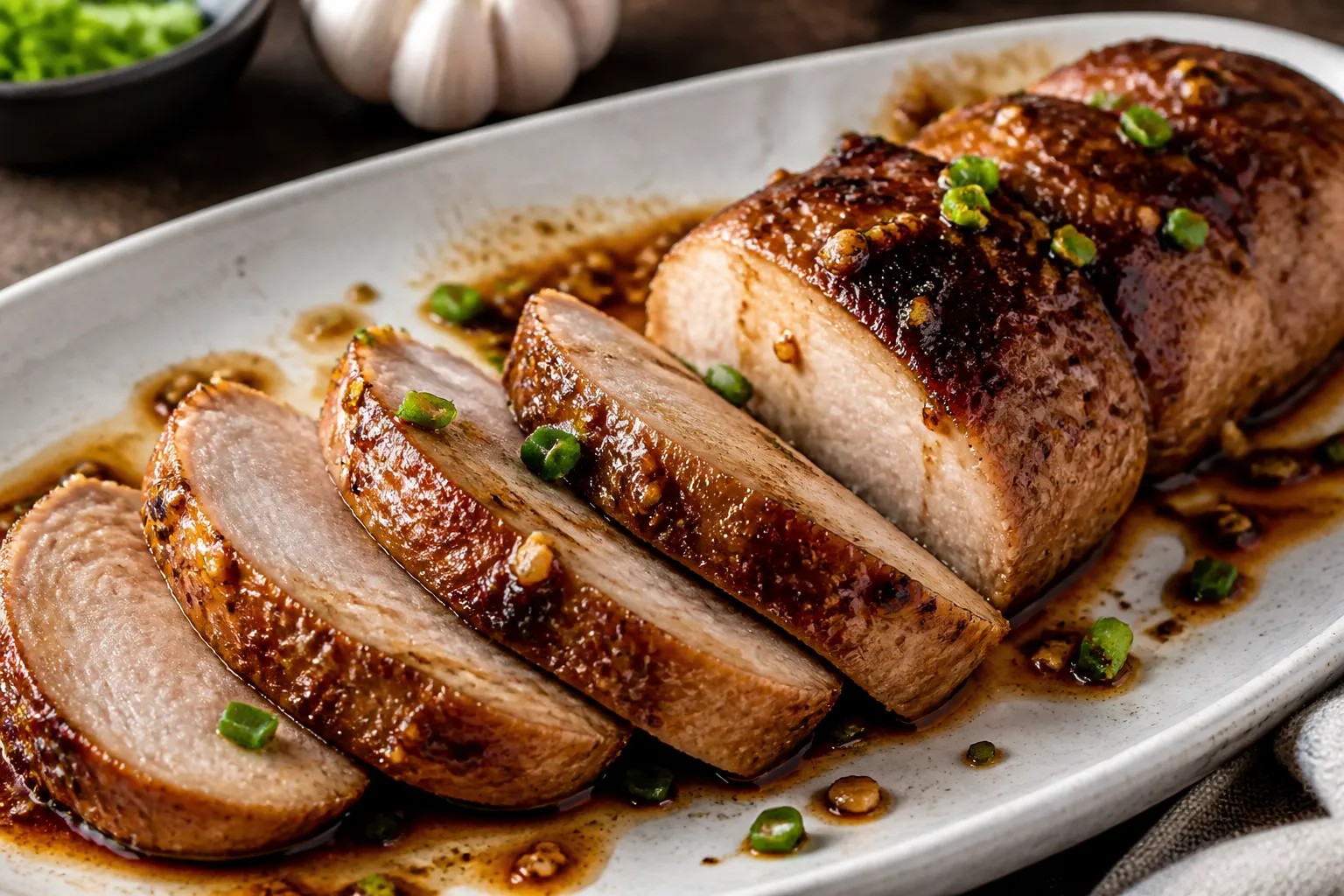
Slice and serve: Slice the pork into 1/2-inch medallions, spoon the glaze over the top, and garnish with parsley if you like.
Serve with roasted vegetables, mashed potatoes, rice, or a simple salad.