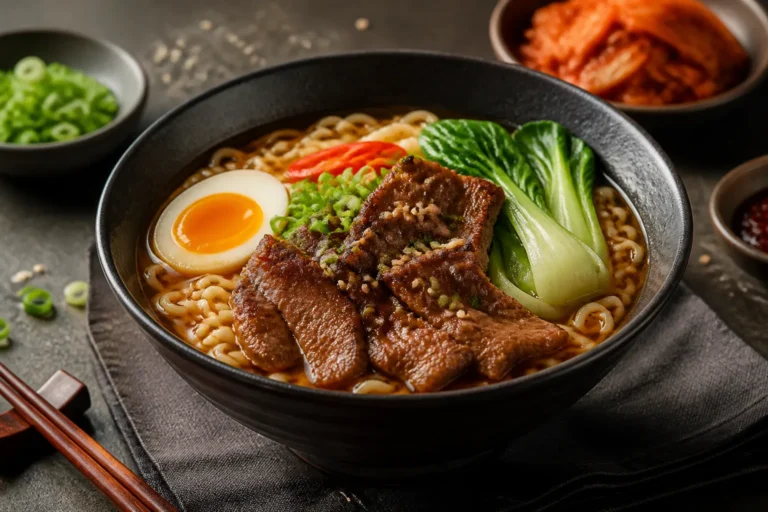
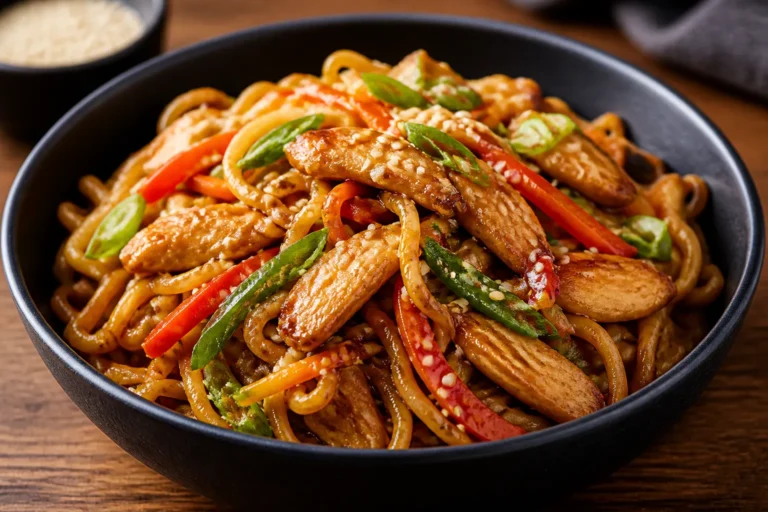
Mongolian Beef Ramen – A Comforting, Saucy Noodle Bowl
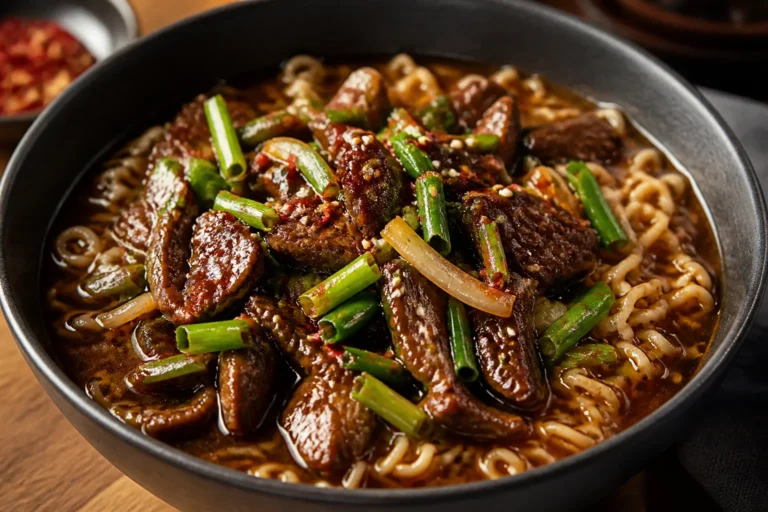
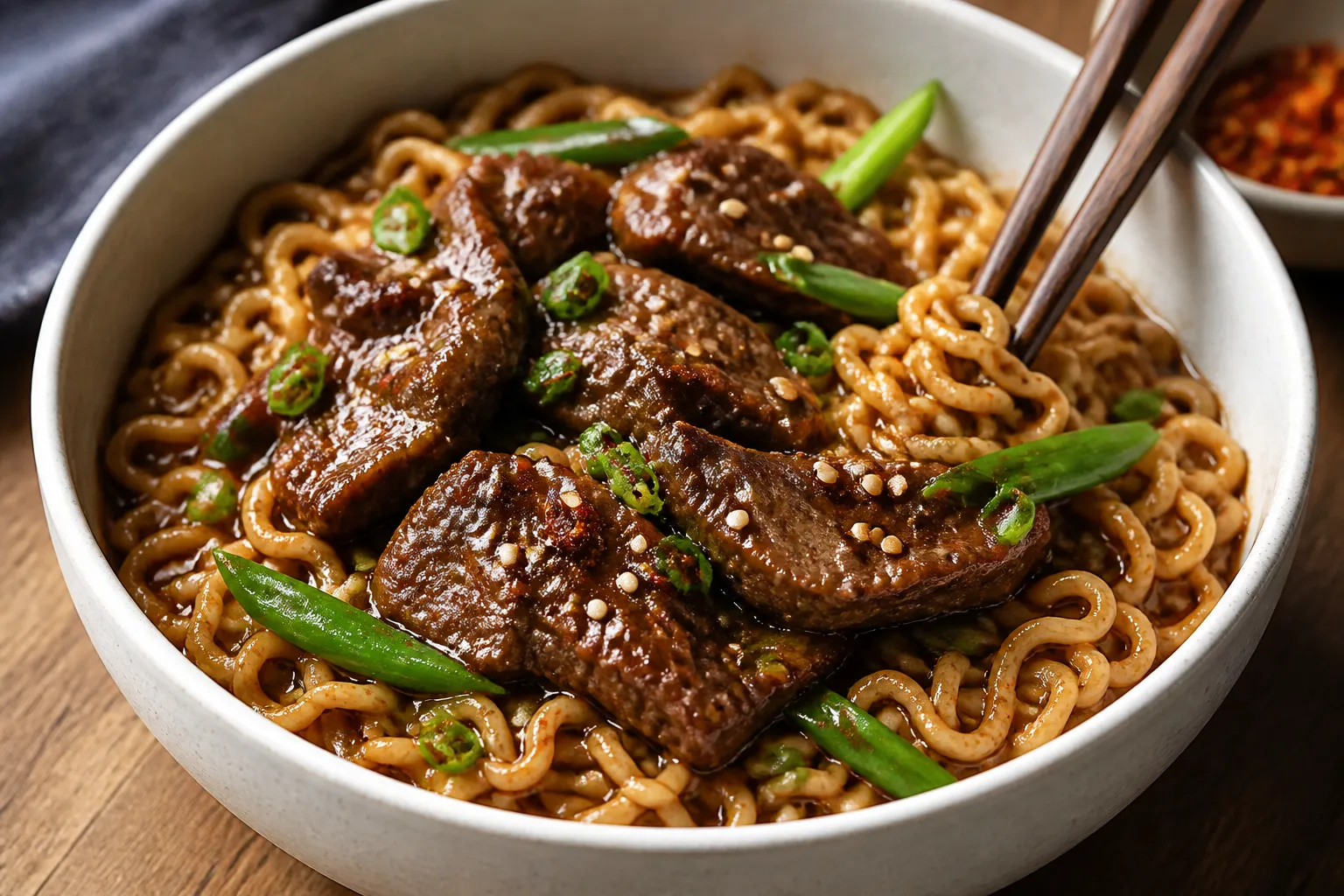
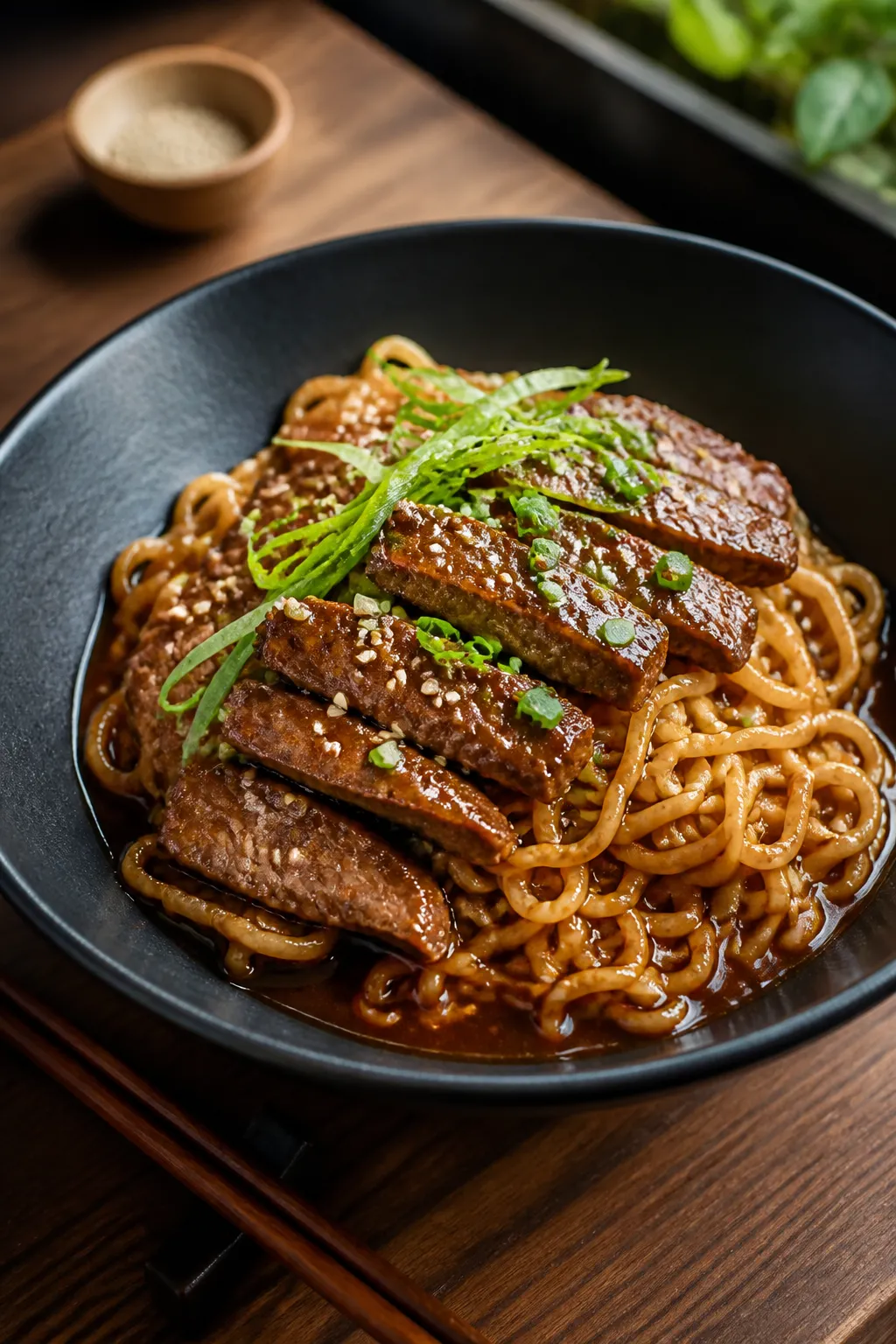
Mongolian Beef Ramen brings together tender slices of beef, a glossy sweet-savory sauce, and springy noodles that soak up every drop. It’s the kind of bowl that satisfies on a busy weeknight but still feels special enough for a cozy weekend dinner. The flavors are bold but friendly: soy, brown sugar, garlic, and ginger, finished with a quick hit of heat.
FREE 7-Day Easy Dinner Reset
Save time, eat healthier, and take the stress out of dinner. Get a full week of easy healthy dinners delivered straight to your inbox.
No deep-frying, no fuss—just a hot pan and a few pantry staples. If you love takeout-style Mongolian beef, this version gives you all the taste with the slurpable comfort of ramen.
Ingredients
Method
- Prep the beef. Freeze the steak for 20–30 minutes to firm it up, then slice thinly against the grain. Toss with 2 tbsp cornstarch until lightly coated. This helps the meat sear and the sauce cling.
- Whisk the sauce. In a bowl, mix soy sauce, brown sugar, beef broth, vinegar, hoisin, sesame oil, and 1 tbsp cornstarch. Stir until smooth. Taste and adjust sweetness or saltiness if needed.
- Cook the ramen. Boil noodles according to package directions until just shy of done (al dente). Drain and rinse quickly under hot water to stop cooking. Toss with a little oil to prevent sticking.
- Sear the beef. Heat 1–2 tbsp oil in a large skillet or wok over high heat. Add beef in a single layer without crowding. Sear 30–60 seconds per side until browned but still tender. Work in batches, adding oil as needed. Transfer cooked beef to a plate.
- Sauté aromatics. Lower heat to medium. Add a splash of oil if the pan is dry. Stir in garlic, ginger, red pepper flakes, and the white parts of the green onions. Cook 30–45 seconds until fragrant, not browned.
- Add veggies (optional). Toss in broccoli or snow peas. Stir-fry 2–3 minutes until crisp-tender. If using broccoli, add a tablespoon of water and cover for a minute to help it steam.
- Pour in the sauce. Return heat to medium-high. Stir sauce to recombine, then pour into the pan. Simmer 1–2 minutes, stirring, until glossy and slightly thickened.
- Combine. Add the beef (and any juices) back to the pan. Fold in the cooked ramen. Toss for 1–2 minutes until the noodles are coated and the beef is warmed through. If it looks too thick, splash in a little broth or water.
- Finish and serve. Turn off heat. Stir in the green parts of the onions. Top with sesame seeds. Taste and adjust seasoning—more soy for salt, a pinch of sugar for balance, or a drizzle of sesame oil for aroma.
What Makes This Special
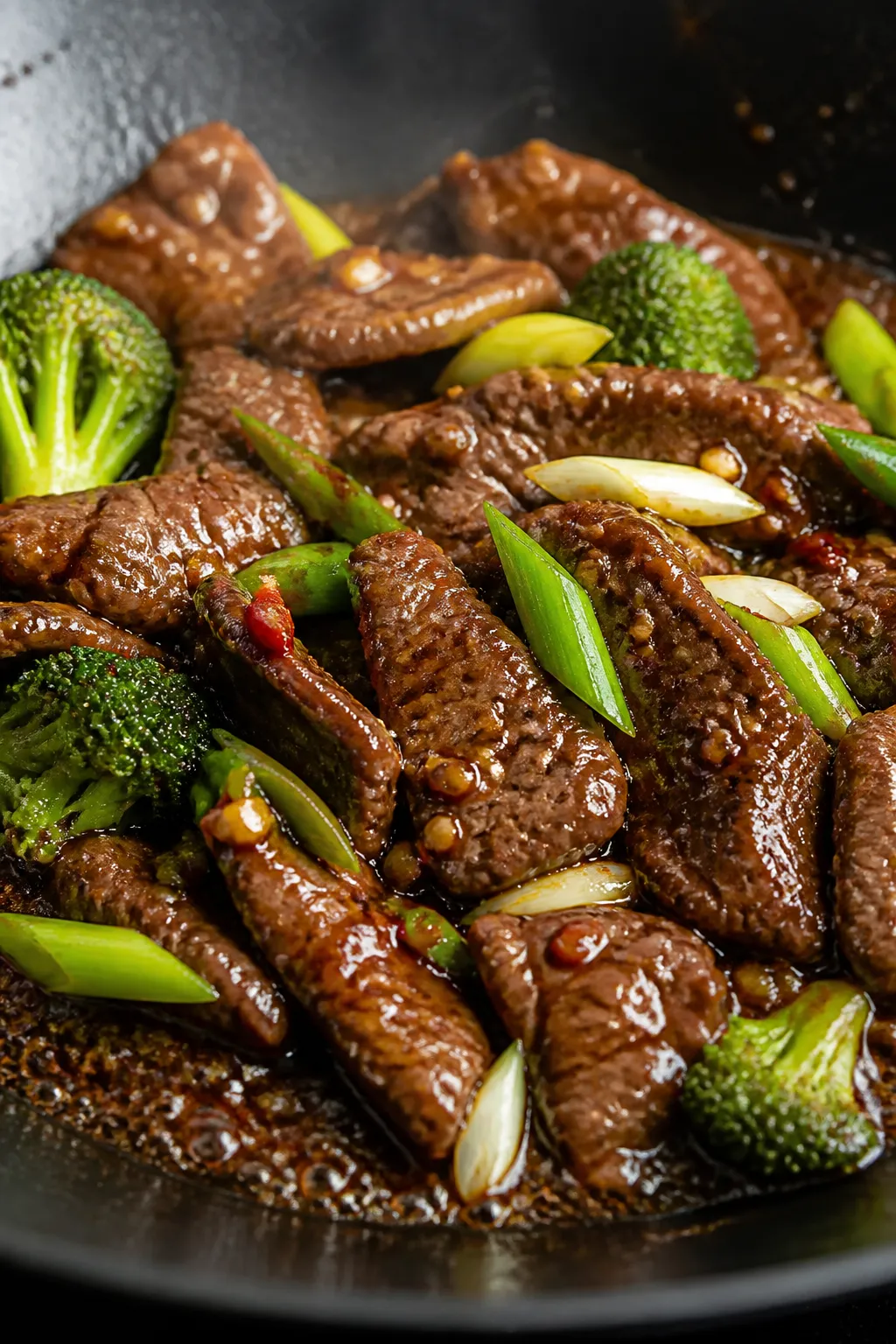
This recipe is all about balance: sweet, salty, and umami in a sauce that clings to every noodle. Thinly sliced beef cooks in minutes, so dinner moves fast without sacrificing tenderness.
You get the familiar flavors of Mongolian beef with extra body and texture thanks to ramen and crisp veggies. It’s flexible, too—toss in what you have, adjust the heat, and make it your own. Best of all, the whole thing comes together in one skillet plus a pot for noodles.
Ingredients
- 12 oz (340 g) ramen noodles (fresh or dried; discard seasoning packets if using instant)
- 1 lb (450 g) flank steak or sirloin, thinly sliced against the grain
- 2 tbsp cornstarch (for coating the beef)
- 2–3 tbsp neutral oil (canola, avocado, or peanut)
- 4 cloves garlic, minced
- 1 tbsp fresh ginger, grated
- 1/2 tsp red pepper flakes or 1 tsp chili-garlic sauce (optional)
- 4 green onions, sliced (whites and greens separated)
- 2 cups broccoli florets or snow peas (optional vegetable add-in)
- Sesame seeds, for garnish
Sauce
- 1/2 cup low-sodium soy sauce
- 1/3 cup brown sugar, packed
- 1/2 cup beef broth or water
- 1 tbsp rice vinegar or apple cider vinegar
- 1 tbsp hoisin sauce (optional, adds depth)
- 1–2 tsp toasted sesame oil
- 1 tbsp cornstarch (to thicken)
How to Make It
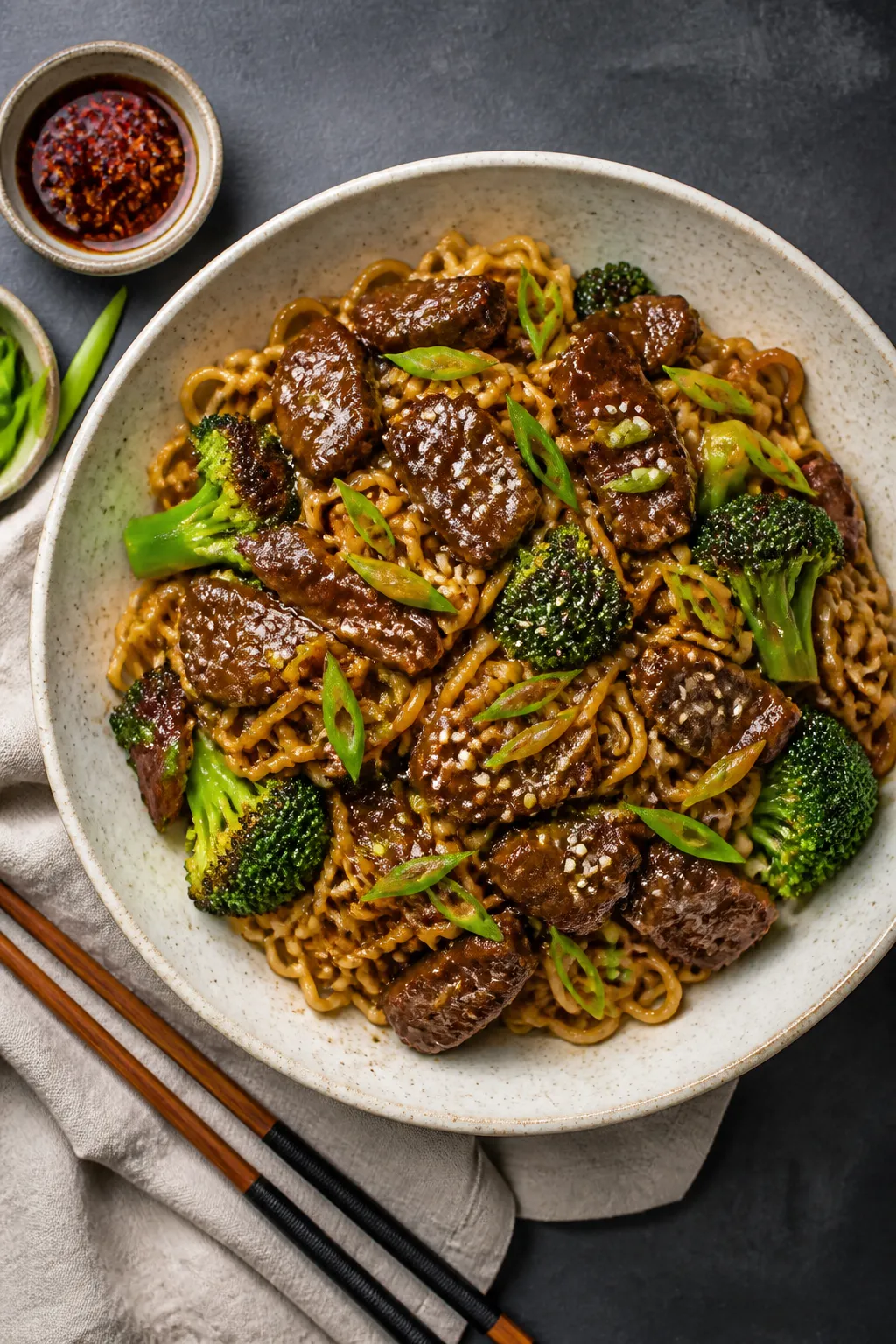
- Prep the beef. Freeze the steak for 20–30 minutes to firm it up, then slice thinly against the grain.
Toss with 2 tbsp cornstarch until lightly coated. This helps the meat sear and the sauce cling.
- Whisk the sauce. In a bowl, mix soy sauce, brown sugar, beef broth, vinegar, hoisin, sesame oil, and 1 tbsp cornstarch. Stir until smooth.
Taste and adjust sweetness or saltiness if needed.
- Cook the ramen. Boil noodles according to package directions until just shy of done (al dente). Drain and rinse quickly under hot water to stop cooking. Toss with a little oil to prevent sticking.
- Sear the beef. Heat 1–2 tbsp oil in a large skillet or wok over high heat.
Add beef in a single layer without crowding. Sear 30–60 seconds per side until browned but still tender. Work in batches, adding oil as needed.
Transfer cooked beef to a plate.
- Sauté aromatics. Lower heat to medium. Add a splash of oil if the pan is dry. Stir in garlic, ginger, red pepper flakes, and the white parts of the green onions.
Cook 30–45 seconds until fragrant, not browned.
- Add veggies (optional). Toss in broccoli or snow peas. Stir-fry 2–3 minutes until crisp-tender. If using broccoli, add a tablespoon of water and cover for a minute to help it steam.
- Pour in the sauce. Return heat to medium-high.
Stir sauce to recombine, then pour into the pan. Simmer 1–2 minutes, stirring, until glossy and slightly thickened.
- Combine. Add the beef (and any juices) back to the pan. Fold in the cooked ramen.
Toss for 1–2 minutes until the noodles are coated and the beef is warmed through. If it looks too thick, splash in a little broth or water.
- Finish and serve. Turn off heat. Stir in the green parts of the onions.
Top with sesame seeds. Taste and adjust seasoning—more soy for salt, a pinch of sugar for balance, or a drizzle of sesame oil for aroma.
Keeping It Fresh
Use thinly sliced beef and high heat for a quick sear; this keeps the meat tender and juicy. Don’t overcook the noodles—slightly underdone is perfect, since they’ll finish in the sauce.
Store leftovers in an airtight container for up to 3 days. Reheat gently with a splash of water or broth to loosen the sauce. For meal prep, keep noodles and beef-sauce mixture separate until serving to maintain texture.
Benefits of This Recipe
- Fast and flexible: From start to table in about 30 minutes, with easy swaps for veggies and spice level.
- Budget-friendly: Flank or sirloin stretches well when sliced thin, and pantry sauces do the heavy lifting.
- Balanced flavors: Sweet, savory, and umami play nicely, and you control the heat and salt.
- Great for leftovers: The sauce keeps noodles moist, and flavors deepen overnight.
- One-pan ease: Aside from the noodle pot, it’s mostly a single-skillet situation with minimal cleanup.
What Not to Do
- Don’t crowd the pan. Overcrowding steams the beef and turns it gray.
Sear in batches for good color and flavor.
- Don’t skip cornstarch on the beef. It protects the meat and helps the sauce coat every strand of noodle.
- Don’t overcook the noodles. Soft noodles fall apart and soak up too much sauce.
- Don’t burn the aromatics. Garlic and ginger cook fast; keep the heat moderate when sautéing them.
- Don’t forget to taste. Balance is key; a small splash of soy, vinegar, or a pinch of sugar can fix a flat sauce.
Alternatives
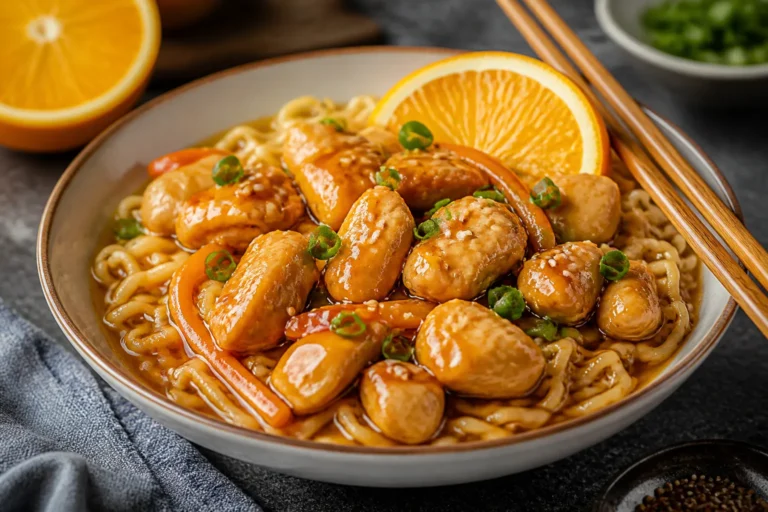
- Protein swaps: Try thinly sliced chicken thigh, pork tenderloin, or tofu pressed and pan-fried until golden.
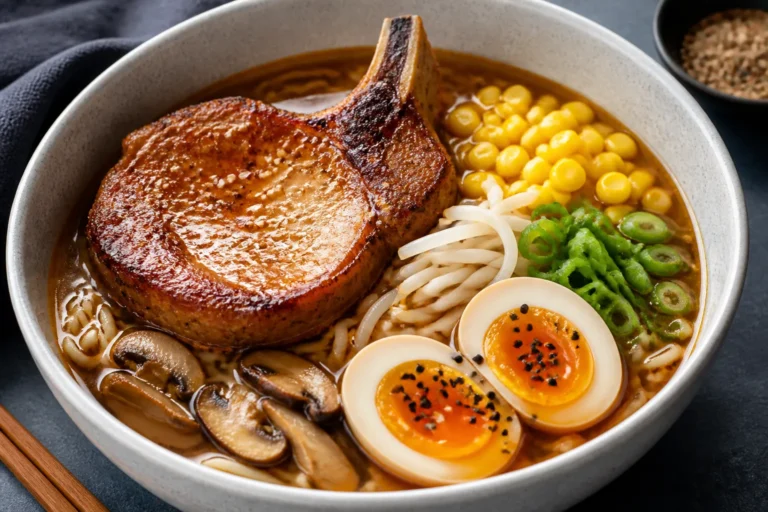
- Noodle options: Use udon, rice noodles, or even spaghetti in a pinch. Cook to al dente and finish in the sauce.
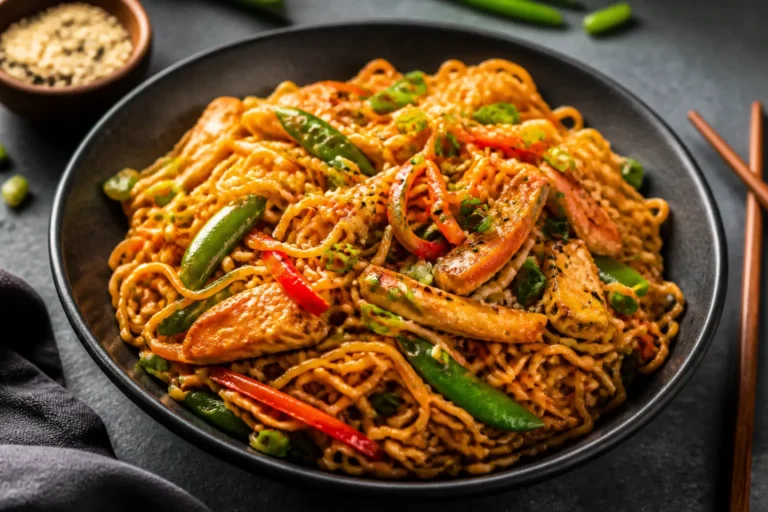
- Vegetable boosts: Bell peppers, carrots, bok choy, mushrooms, or baby spinach all fit right in.
- Gluten-free path: Choose tamari instead of soy sauce and use gluten-free rice noodles.
- Lower sugar: Reduce brown sugar to 2–3 tbsp and add 1–2 tsp molasses for depth without extra sweetness.
- Extra heat: Add chili oil, gochujang, or sliced fresh chilies when sautéing the aromatics.
Need More Easy Dinner Ideas?
Get my FREE 7-Day Easy Dinner Reset and enjoy a full week of healthy dinners without the meal-planning stress.
FAQ
What cut of beef works best?
Flank steak is classic for its flavor and texture, but sirloin or top round also work well. The key is slicing thinly against the grain so the meat stays tender.
If your knife struggles, partially freeze the beef to make clean cuts.
Can I use instant ramen?
Yes. Discard the seasoning packets and cook the noodles just until they separate and are slightly firm. They’ll finish in the sauce and soak up flavor without turning mushy.
How do I keep the sauce from getting too salty?
Use low-sodium soy sauce and taste as you go.
If the sauce reduces too much, loosen it with a splash of broth or water. A touch of brown sugar or vinegar can also rebalance saltiness.
What if my sauce isn’t thickening?
Make sure you included the cornstarch in the sauce mix and that the pan is at a simmer. If needed, whisk 1 tsp cornstarch with 1 tbsp cold water and stir it into the simmering sauce, cooking for 30–60 seconds more.
Can I make this ahead?
Cook the beef and sauce, cool, and store separately from the noodles.
Reheat the sauce and beef in a skillet, then toss with freshly cooked noodles right before serving for the best texture.
Is there a good vegetarian version?
Absolutely. Use extra-firm tofu or tempeh, pan-fried until crisp, and swap beef broth for vegetable broth. Add mushrooms for savory depth and keep the same sauce ratios.
How spicy is this?
Mild by default.
The red pepper flakes add gentle warmth, but you can leave them out or turn up the heat with chili oil, sriracha, or fresh chilies.
Can I double the recipe?
Yes, but sear the beef in multiple batches to avoid crowding. Use a large wok or Dutch oven so the noodles can toss freely and coat evenly with sauce.
Wrapping Up
Mongolian Beef Ramen gives you saucy, slurpable comfort with fast-cooking convenience. The beef sears in minutes, the sauce comes from pantry staples, and the noodles tie everything together.
Keep the heat high, the slices thin, and the sauce balanced, and you’ll have a reliable go-to that tastes like a treat every time. Garnish with green onions and sesame seeds, grab your chopsticks or a fork, and enjoy a bowl that never gets old.
Printable Recipe Card
Want just the essential recipe details without scrolling through the article? Get our printable recipe card with just the ingredients and instructions.
Loved This Recipe?
If you're looking for more simple, healthy dinners your family will actually eat, grab my FREE 7-Day Easy Dinner Reset. You'll get 7 easy dinner recipes, simple grocery lists, and a done-for-you plan that takes the stress out of mealtime.