Korean Ground Beef Ramen – A Fast, Flavor-Packed Weeknight Bowl
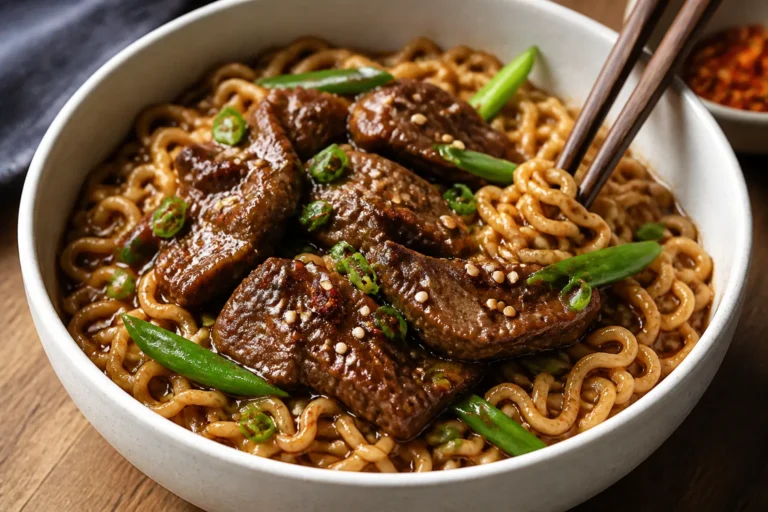
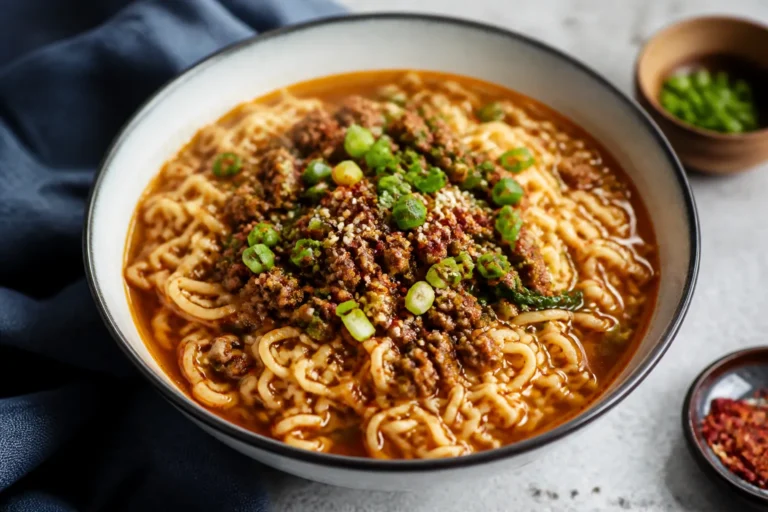
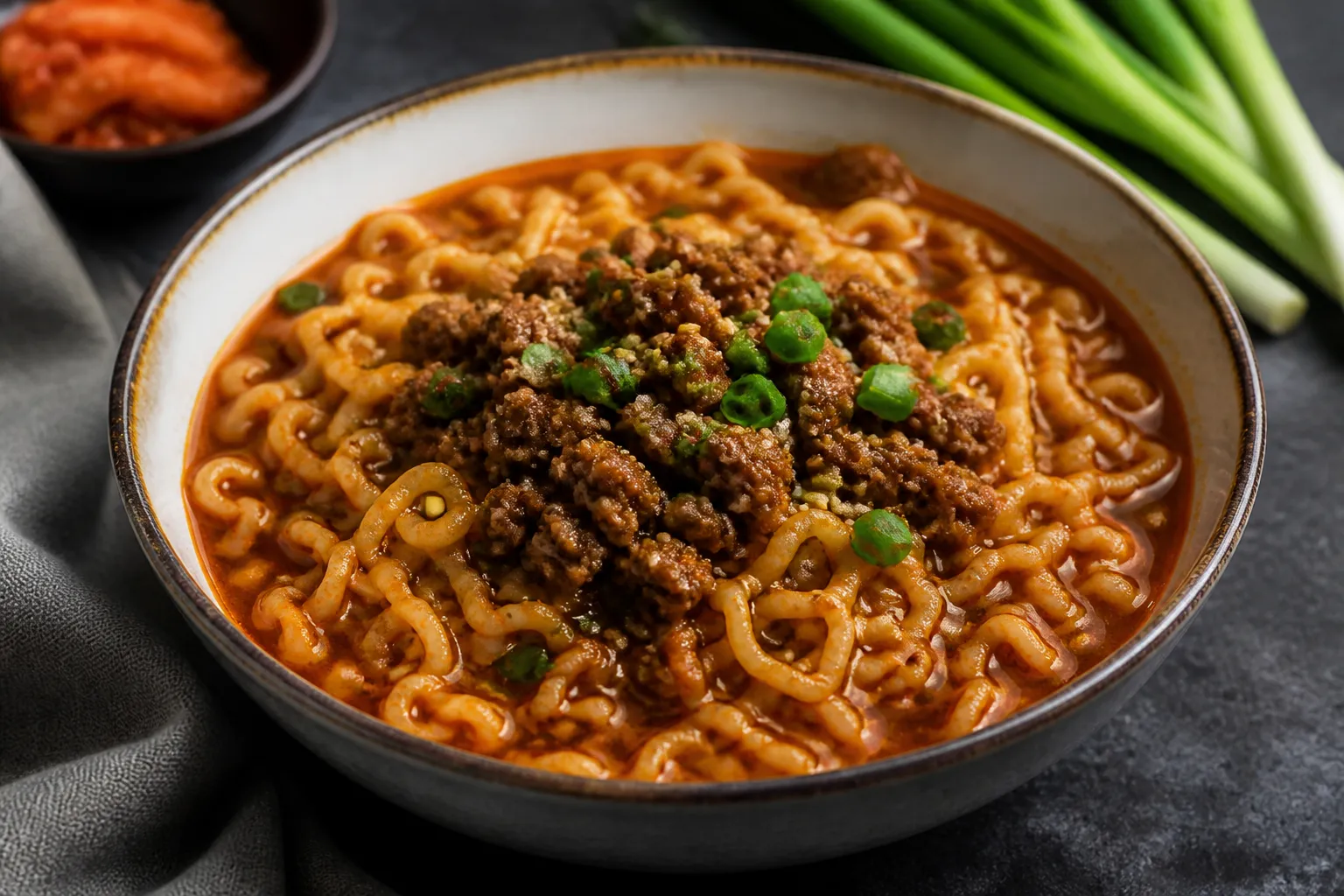
Craving big, comforting flavor without spending all night in the kitchen? This Korean Ground Beef Ramen delivers deep, savory-sweet goodness in under 30 minutes. It pairs juicy, caramelized ground beef with springy noodles, a glossy sauce, and fresh toppings that bring crunch and heat.
FREE 7-Day Easy Dinner Reset
Save time, eat healthier, and take the stress out of dinner. Get a full week of easy healthy dinners delivered straight to your inbox.
The result tastes like takeout but uses pantry staples and one pan. It’s affordable, flexible, and perfect for busy weeknights or low-key weekends.
Ingredients
Method
- Make the sauce: In a small bowl, whisk soy sauce, brown sugar, gochujang, rice vinegar, sesame oil, and 1/4 cup broth. Set aside. This ensures a smooth, glossy finish.
- Start the aromatics: Heat the oil in a large skillet or wok over medium-high heat. Add garlic, ginger, and the white parts of the green onions. Stir for 30–45 seconds until fragrant.
- Brown the beef: Add ground beef, breaking it up with a spatula. Cook 4–6 minutes until well browned with crisp edges. Season with a pinch of salt and pepper if desired. Drain excess fat if needed.
- Caramelize and coat: Pour in the sauce. Stir and simmer 1–2 minutes until slightly thickened and beef is shiny and glazed.
- Add vegetables: Stir in carrots and spinach (or bok choy). Cook 1–2 minutes until the greens wilt and carrots soften slightly but keep some crunch.
- Cook the noodles: Add the remaining broth and bring to a gentle simmer. Drop in the ramen, pressing to submerge. Cook 2–3 minutes, tossing often, until the noodles are just tender and coated. Add a splash of water if the pan gets too dry.
- Adjust and finish: Taste. Add more gochujang for heat, a pinch of sugar for balance, or a drizzle of soy for salt. Toss in the green parts of the onions and sprinkle sesame seeds.
- Serve: Portion into bowls. Top with cucumber matchsticks, a fried egg, extra chili flakes, or kimchi for brightness and heat.
Why This Recipe Works
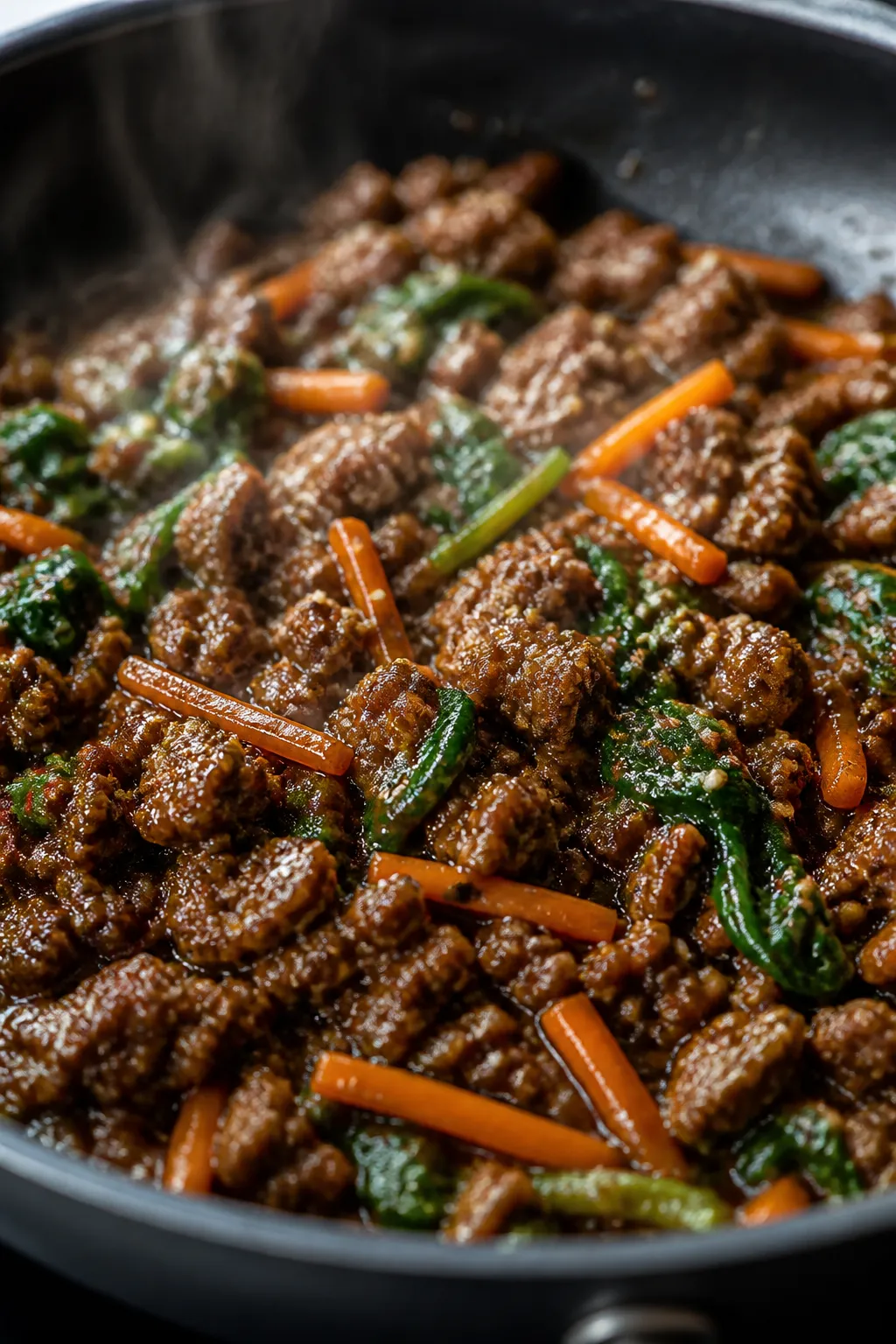
- Bold, balanced sauce: A mix of soy sauce, brown sugar, gochujang, and sesame oil creates the classic Korean-inspired sweet, salty, and spicy profile.
- Quick caramelization: Browning the ground beef with garlic and ginger builds deep flavor fast.
- One-pan convenience: Cooking the noodles in the same skillet soaks them in the sauce and keeps cleanup simple.
- Texture contrast: Crisp veggies and fresh garnishes add crunch against the tender noodles.
- Easy to customize: Swap proteins, adjust heat, or add vegetables you already have.
What You’ll Need
- Ground beef: 1 pound (80–90% lean is ideal)
- Ramen noodles: 3 packets (discard seasoning) or about 9–10 ounces of dried ramen
- Soy sauce: 1/4 cup (use low-sodium if preferred)
- Brown sugar: 2–3 tablespoons (light or dark)
- Gochujang: 1–2 tablespoons (Korean chili paste; adjust for heat)
- Rice vinegar: 1 tablespoon
- Sesame oil: 1–2 teaspoons
- Garlic: 3–4 cloves, minced
- Fresh ginger: 1 tablespoon, grated (or 1 teaspoon ground ginger in a pinch)
- Green onions: 4–5, thinly sliced (separate whites and greens)
- Carrots: 1 cup, matchsticks or shredded
- Baby spinach or bok choy: 2 cups, loosely packed
- Beef or chicken broth: 1 cup (or water)
- Neutral oil: 1 tablespoon (canola, avocado, or vegetable)
- Sesame seeds: 1–2 teaspoons, for garnish
- Optional heat: Gochugaru (Korean chili flakes) or red pepper flakes, to taste
- Optional toppings: Cucumber matchsticks, kimchi, lime wedges, fried egg
How to Make It
- Make the sauce: In a small bowl, whisk soy sauce, brown sugar, gochujang, rice vinegar, sesame oil, and 1/4 cup broth. Set aside.
This ensures a smooth, glossy finish.
- Start the aromatics: Heat the oil in a large skillet or wok over medium-high heat. Add garlic, ginger, and the white parts of the green onions. Stir for 30–45 seconds until fragrant.
- Brown the beef: Add ground beef, breaking it up with a spatula.
Cook 4–6 minutes until well browned with crisp edges. Season with a pinch of salt and pepper if desired. Drain excess fat if needed.
- Caramelize and coat: Pour in the sauce.
Stir and simmer 1–2 minutes until slightly thickened and beef is shiny and glazed.
- Add vegetables: Stir in carrots and spinach (or bok choy). Cook 1–2 minutes until the greens wilt and carrots soften slightly but keep some crunch.
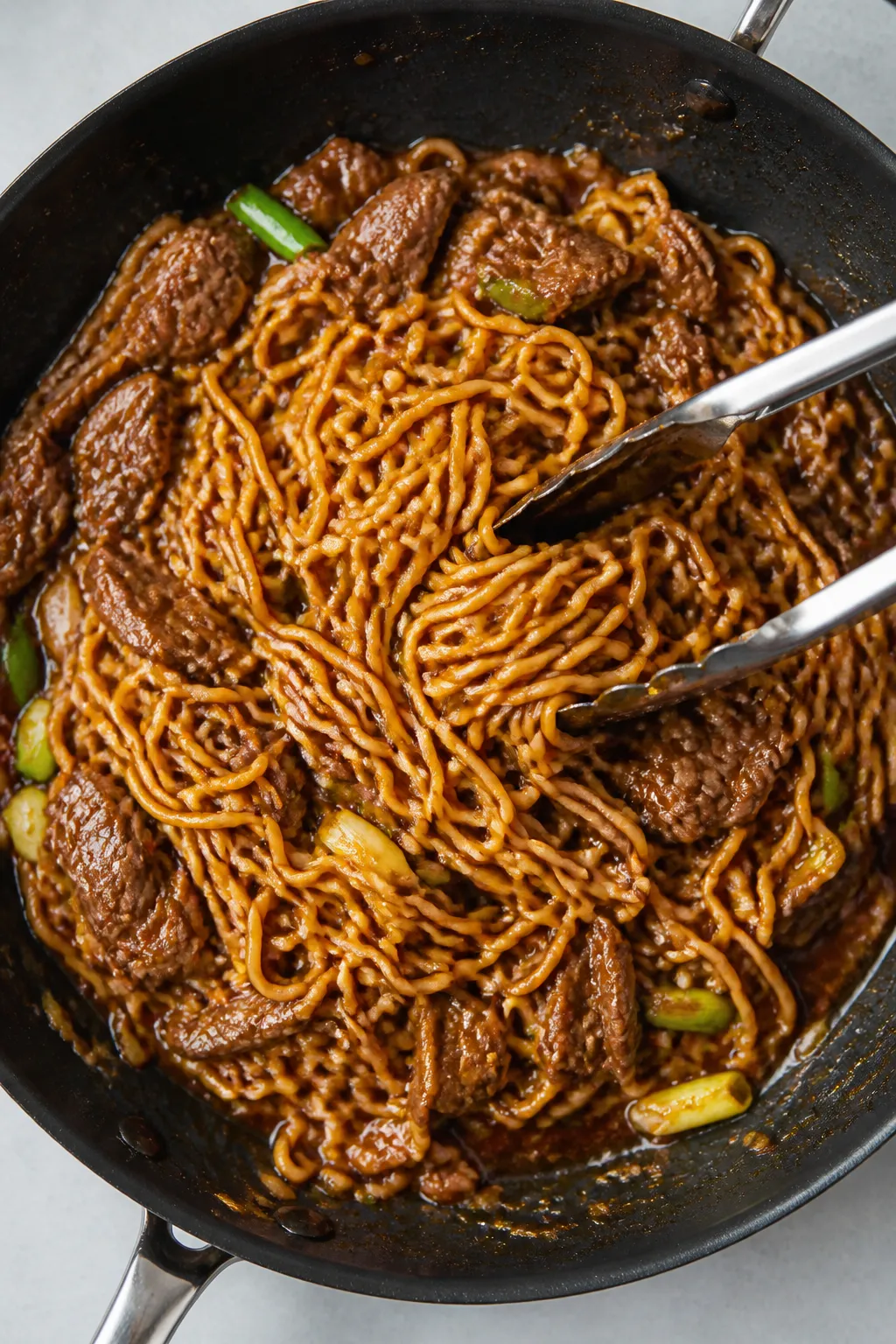
- Cook the noodles: Add the remaining broth and bring to a gentle simmer. Drop in the ramen, pressing to submerge.
Cook 2–3 minutes, tossing often, until the noodles are just tender and coated. Add a splash of water if the pan gets too dry.
- Adjust and finish: Taste. Add more gochujang for heat, a pinch of sugar for balance, or a drizzle of soy for salt.
Toss in the green parts of the onions and sprinkle sesame seeds.
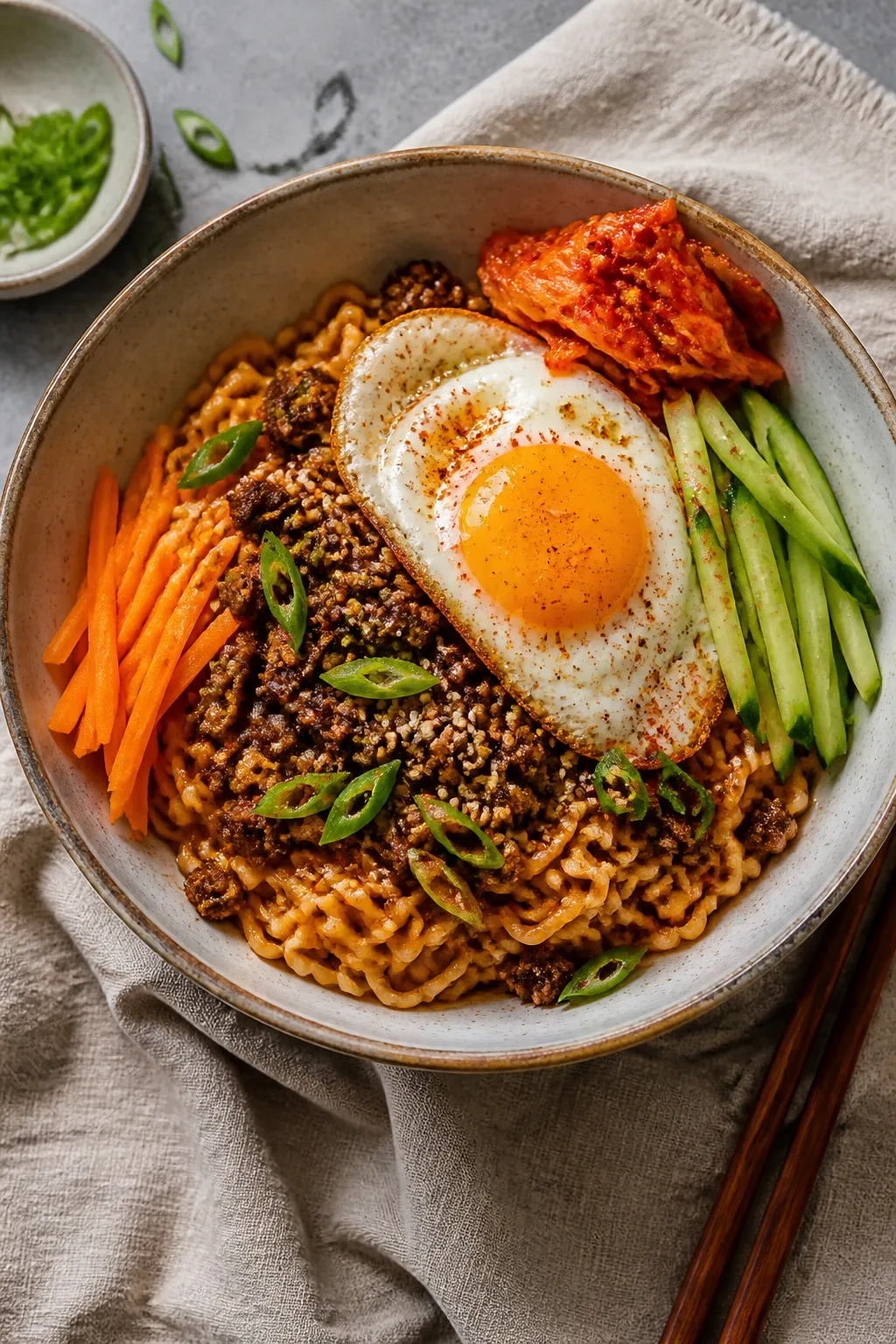
- Serve: Portion into bowls. Top with cucumber matchsticks, a fried egg, extra chili flakes, or kimchi for brightness and heat.
Storage Instructions
- Refrigerator: Cool completely, then store in an airtight container for up to 3 days.
- Reheating: Warm gently in a skillet over medium heat with a splash of water or broth to loosen the sauce. Microwave in short bursts, stirring between intervals.
- Freezing: Best to freeze the beef and sauce without the noodles for up to 2 months.
Cook fresh noodles when ready to serve for the best texture.
Benefits of This Recipe
- Quick and budget-friendly: Ground beef and ramen are affordable, and the dish comes together fast.
- High flavor payoff: Minimal ingredients deliver a complex, restaurant-style taste.
- Flexible and forgiving: Works with different proteins and veggies you already have.
- Kid-friendly with options: Keep it mild, then let spice lovers add heat at the table.
- Perfect for meal prep: Holds up well for next-day lunches.
Common Mistakes to Avoid
- Not browning the beef enough: Pale meat means less flavor. Let it sear and develop crispy bits before adding the sauce.
- Overcooking the noodles: Ramen cooks fast. Pull them when just tender so they don’t turn mushy as they sit in the sauce.
- Skipping the sugar: Even a small amount balances the gochujang and soy.
The dish won’t taste sweet—just round and savory.
- Forgotten acidity: Rice vinegar or a squeeze of lime brightens the whole bowl. Don’t leave it out.
- Too much liquid: Add broth gradually. You want a glossy coating sauce, not soup.
Alternatives
- Protein swaps: Ground turkey, chicken, pork, or crumbled tofu all work.
For tofu, press it well and sear for color before saucing.
- Noodle options: Use udon, soba, or even spaghetti in a pinch. Fresh ramen will cook even faster.
- Veggie add-ins: Bell peppers, mushrooms, zucchini, snap peas, or shredded cabbage are great. Add sturdy veggies earlier; tender ones later.
- Sauce tweaks: Add a teaspoon of fish sauce for depth, a touch of honey instead of brown sugar, or a bit of gochugaru for a different heat profile.
- Gluten-free: Use tamari or coconut aminos and gluten-free ramen or rice noodles.
- Lighter version: Use lean ground meat, reduce sugar slightly, and load up on veggies.
FAQ
Need More Easy Dinner Ideas?
Get my FREE 7-Day Easy Dinner Reset and enjoy a full week of healthy dinners without the meal-planning stress.
What is gochujang and can I substitute it?
Gochujang is a Korean fermented chili paste that’s spicy, savory, and slightly sweet.
It gives the sauce body and depth. If you can’t find it, mix chili paste or sriracha with a little miso or soy sauce and a touch of honey. The flavor won’t be identical, but it gets close.
Do I need to boil the ramen separately?
No.
Cooking the noodles in the skillet lets them absorb the sauce and reduces dishes. Just watch the liquid and add small splashes of broth or water if things get too dry.
How spicy is this recipe?
With 1 tablespoon of gochujang, it’s gently spicy. Go up to 2 tablespoons for medium heat.
For very mild, start with 1 to 2 teaspoons and offer chili flakes at the table.
Can I make this ahead?
Yes. Cook the beef and sauce, then cool and refrigerate. Reheat and add freshly cooked noodles right before serving to maintain the best texture, or reheat the full dish with a splash of water.
What can I use instead of brown sugar?
Honey, maple syrup, or white sugar all work.
Start with a little less than the recipe calls for, then adjust to taste.
How do I keep the noodles from clumping?
Toss constantly as they cook and add small splashes of liquid as needed. A drizzle of sesame oil at the end also helps separate strands.
Is this dish authentic Korean?
It’s a Korean-inspired, weeknight-friendly mashup. It borrows flavors like gochujang, soy, sesame, and scallions, applied to a simple ground beef and ramen format for speed and convenience.
Final Thoughts
Korean Ground Beef Ramen hits that sweet spot of quick, comforting, and big on flavor.
With a handful of staples and one pan, you get a glossy, satisfying bowl that tastes like you planned ahead—even if you didn’t. Keep the base recipe handy, then riff with whatever veggies and proteins you have. Simple, flexible, and reliably delicious, it’s a weeknight winner you’ll make again and again.
Printable Recipe Card
Want just the essential recipe details without scrolling through the article? Get our printable recipe card with just the ingredients and instructions.
Loved This Recipe?
If you're looking for more simple, healthy dinners your family will actually eat, grab my FREE 7-Day Easy Dinner Reset. You'll get 7 easy dinner recipes, simple grocery lists, and a done-for-you plan that takes the stress out of mealtime.