Korean Creamy Kimchi Pasta – Tangy, Spicy, and Comforting
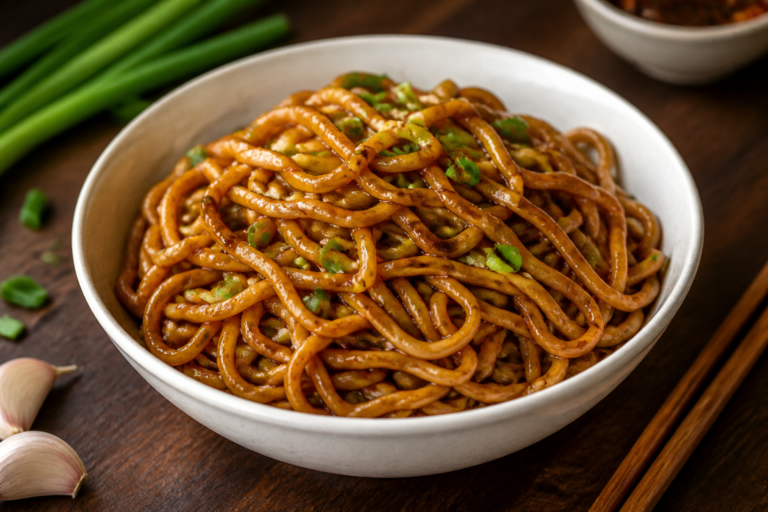
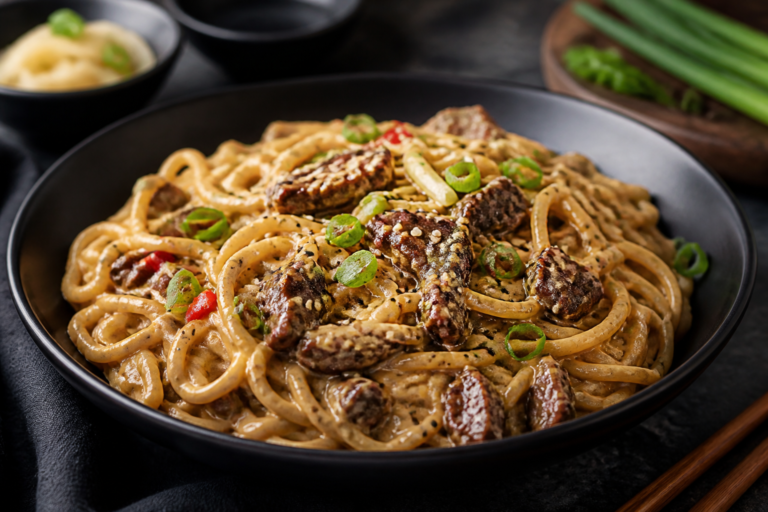
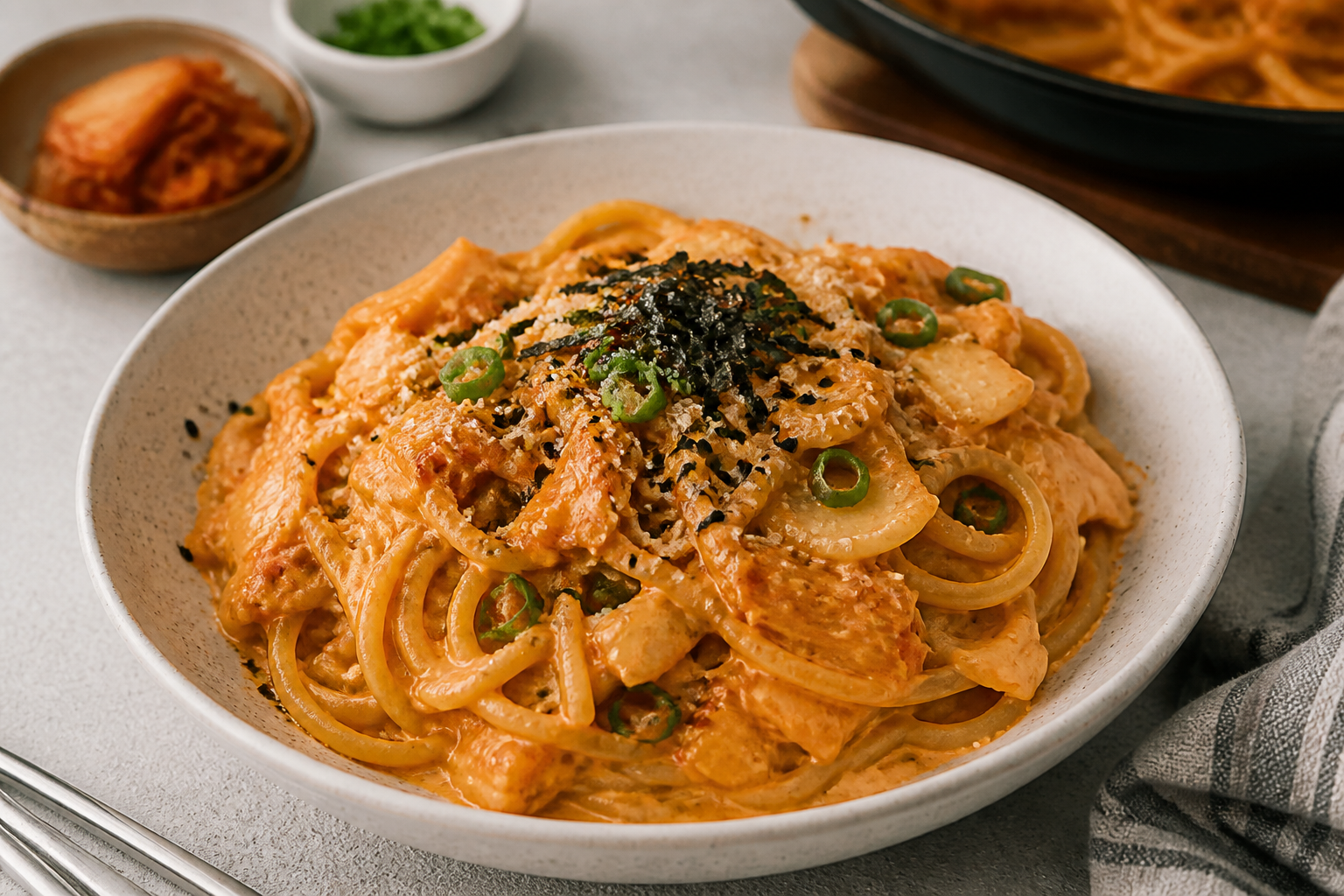
If you love the cozy comfort of creamy pasta and the bright, tangy bite of kimchi, this dish brings them together in a way that just makes sense. It’s rich without being heavy, spicy without overwhelming, and full of savory depth. The sauce clings to each noodle with a silky finish, and every forkful has a little crunch from the kimchi.
FREE 7-Day Easy Dinner Reset
Save time, eat healthier, and take the stress out of dinner. Get a full week of easy healthy dinners delivered straight to your inbox.
It’s fast enough for a weeknight and special enough to make for friends. Let’s make a bowl that hits all the right notes.
Ingredients
Method
- Prep the kimchi and aromatics. Chop the kimchi into small bite-size pieces. Mince the garlic and finely chop the shallot or onion. Slice the scallions and set aside for garnish.
- Boil the pasta. Bring a large pot of well-salted water to a boil. Cook pasta until just shy of al dente. Reserve 1 cup of pasta water, then drain.
- Build the flavor base. In a large skillet over medium heat, warm the oil and add butter. Sauté the shallot until translucent, 2–3 minutes. Add garlic and cook 30 seconds until fragrant.
- Add kimchi and caramelize slightly. Stir in the chopped kimchi and cook 2–3 minutes. Let some edges sizzle and brown—this deepens the flavor.
- Stir in gochujang. Add 1 tablespoon gochujang first and cook it into the kimchi for 1 minute. If you like more heat and color, add the second tablespoon.
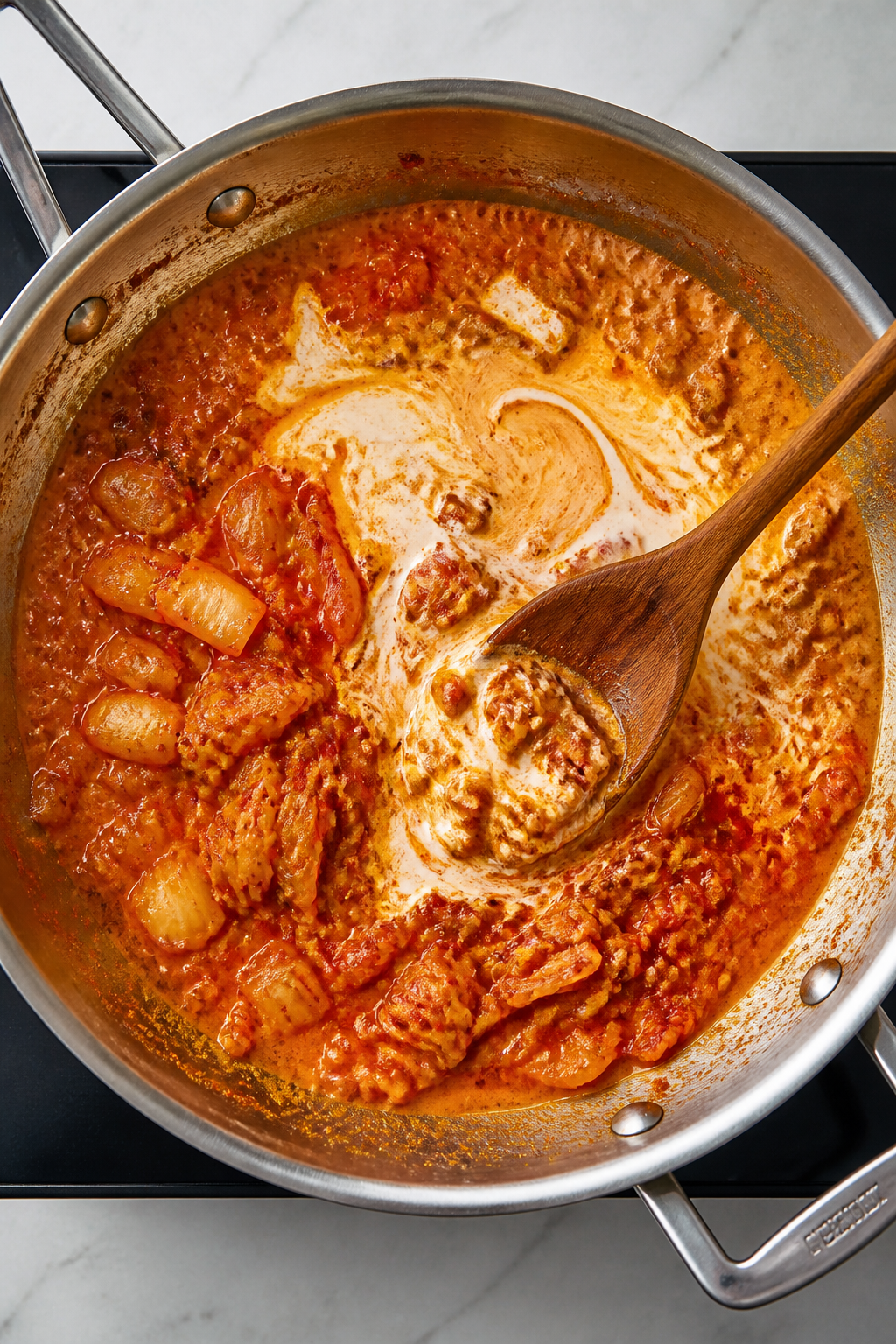
- Deglaze and enrich. Pour in the kimchi juice and a splash (1/4 cup) of pasta water to loosen. Stir in the heavy cream, soy sauce, and fish sauce (if using). Reduce heat to medium-low and let it gently simmer 2–3 minutes until slightly thickened.
- Taste and balance. The sauce should be creamy, savory, and tangy. If it’s too sharp, add 1 teaspoon sugar or honey. If it feels heavy, brighten with 1 teaspoon rice vinegar. Adjust salt and pepper.
- Toss the pasta. Add the drained pasta to the skillet. Toss vigorously, adding splashes of pasta water as needed to create a silky, glossy coating. Cook 1–2 minutes until the pasta finishes in the sauce.
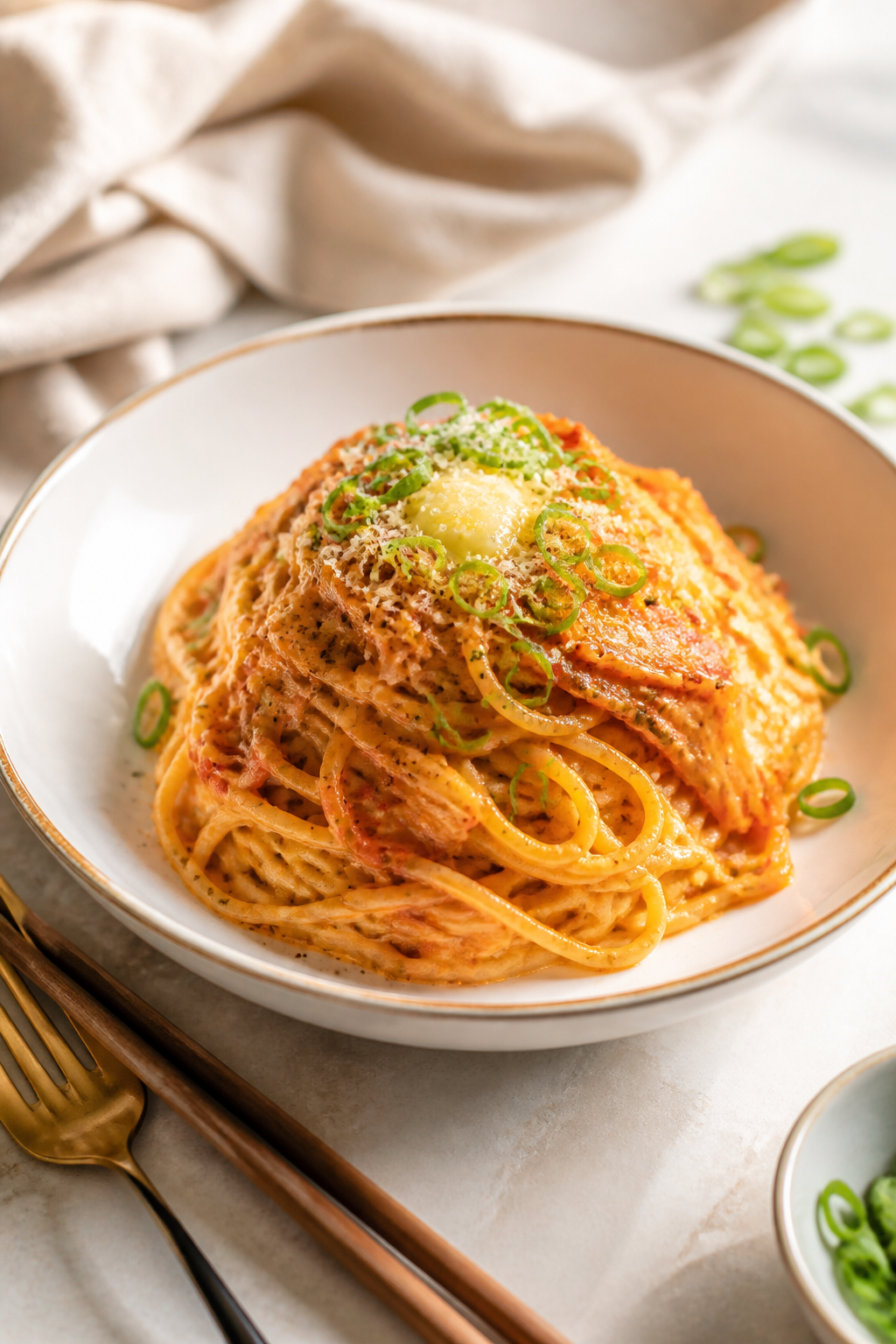
- Finish and garnish. Off the heat, swirl in a small pat of butter for shine. Sprinkle with scallions. Add grated Parmesan if you like a saltier, cheesier finish.
- Serve hot. Plate immediately. The sauce tightens as it cools, so enjoy it right away.
What Makes This Special
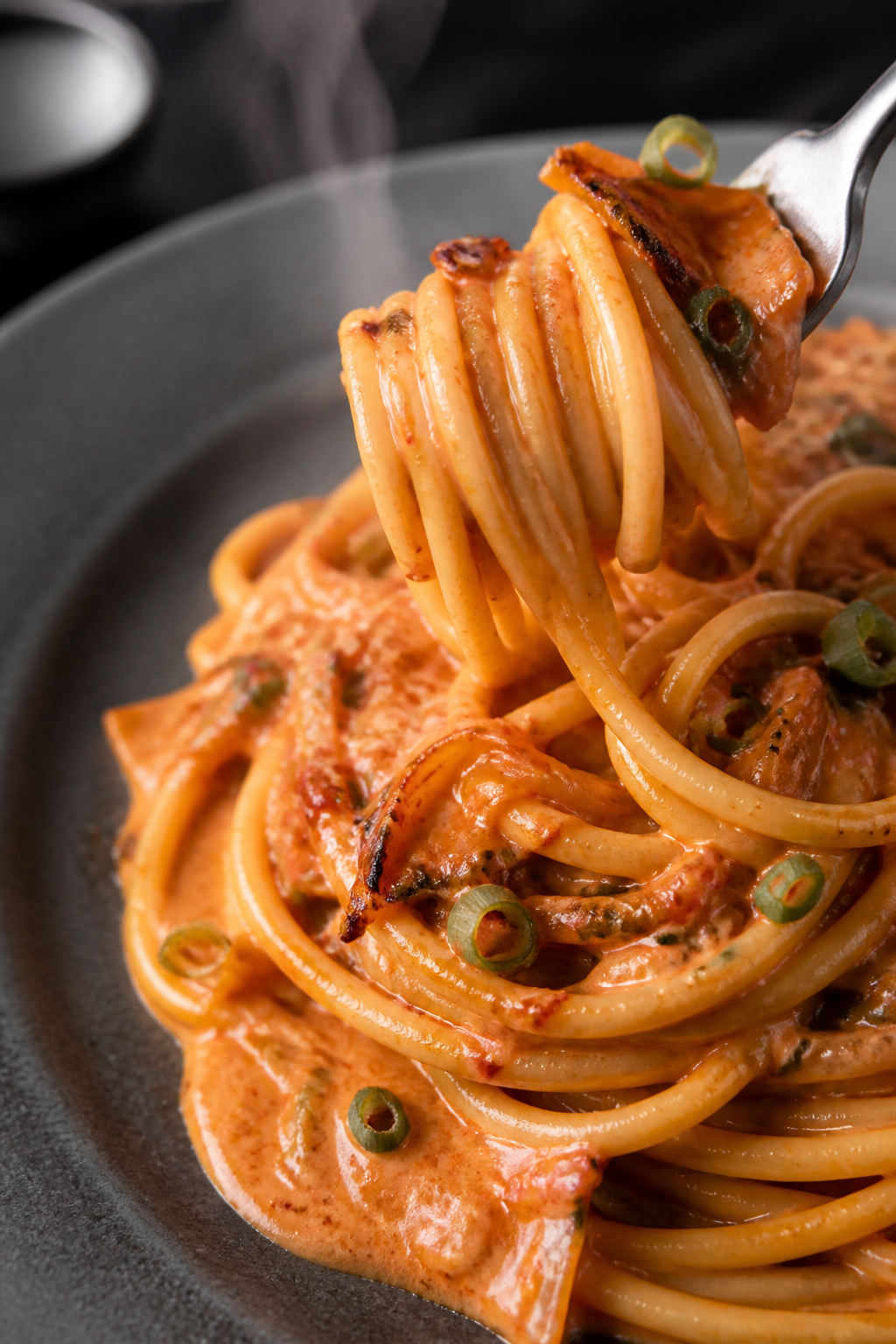
This pasta shines because it layers contrasting flavors in a balanced way. Kimchi brings tangy heat and fermented umami, while cream softens the edges and turns it luscious. Gochujang, a Korean chili paste, adds gentle spice and sweetness that ties everything together. A touch of butter gives the sauce body, and a little pasta water makes it glossy.
It’s fusion that respects both sides: Italian technique meets Korean pantry staples.
Shopping List
- Pasta: 12 oz spaghetti, bucatini, or fettuccine
- Kimchi: 1 to 1 1/2 cups well-fermented napa cabbage kimchi, chopped, plus 2 tablespoons kimchi juice
- Aromatics: 3 cloves garlic (minced), 1 small shallot or 1/2 small onion (finely chopped)
- Fat: 2 tablespoons unsalted butter, 1 tablespoon neutral oil (or sesame oil for more nuttiness)
- Heat and depth: 1 to 2 tablespoons gochujang (adjust to spice level)
- Creamy base: 1 cup heavy cream (or 3/4 cup heavy cream + 1/4 cup milk)
- Umami boosters: 1 teaspoon soy sauce, 1 teaspoon fish sauce (optional but recommended)
- Seasoning: Salt and freshly ground black pepper
- Finishers: 1 teaspoon sugar or honey (optional, to balance acidity), 1 teaspoon rice vinegar or apple cider vinegar (optional), 2 scallions (thinly sliced)
- Cheese (optional): Grated Parmesan or Pecorino, to taste
- Protein add-ins (optional): Bacon or pancetta (3–4 strips), shrimp (8–10 medium), or sliced mushrooms (1 cup)
Instructions
- Prep the kimchi and aromatics. Chop the kimchi into small bite-size pieces. Mince the garlic and finely chop the shallot or onion. Slice the scallions and set aside for garnish.
- Boil the pasta. Bring a large pot of well-salted water to a boil.
Cook pasta until just shy of al dente. Reserve 1 cup of pasta water, then drain.
- Build the flavor base. In a large skillet over medium heat, warm the oil and add butter. Sauté the shallot until translucent, 2–3 minutes. Add garlic and cook 30 seconds until fragrant.
- Add kimchi and caramelize slightly. Stir in the chopped kimchi and cook 2–3 minutes.
Let some edges sizzle and brown—this deepens the flavor.
- Stir in gochujang. Add 1 tablespoon gochujang first and cook it into the kimchi for 1 minute. If you like more heat and color, add the second tablespoon.
- Deglaze and enrich. Pour in the kimchi juice and a splash (1/4 cup) of pasta water to loosen. Stir in the heavy cream, soy sauce, and fish sauce (if using).
Reduce heat to medium-low and let it gently simmer 2–3 minutes until slightly thickened.
- Taste and balance. The sauce should be creamy, savory, and tangy. If it’s too sharp, add 1 teaspoon sugar or honey. If it feels heavy, brighten with 1 teaspoon rice vinegar.
Adjust salt and pepper.
- Toss the pasta. Add the drained pasta to the skillet. Toss vigorously, adding splashes of pasta water as needed to create a silky, glossy coating. Cook 1–2 minutes until the pasta finishes in the sauce.
- Finish and garnish. Off the heat, swirl in a small pat of butter for shine.
Sprinkle with scallions. Add grated Parmesan if you like a saltier, cheesier finish.
- Serve hot. Plate immediately. The sauce tightens as it cools, so enjoy it right away.
Storage Instructions
Refrigerate: Store leftovers in an airtight container for up to 2 days.
The pasta will absorb sauce over time, so expect a thicker texture.
Reheat: Warm gently on the stovetop with a splash of milk, cream, or water to loosen. Avoid high heat to prevent splitting.
Freezing: Not recommended. Cream sauces tend to separate after thawing, and pasta gets mushy.
Why This is Good for You
Kimchi offers probiotics that support gut health, along with vitamins A and C from the fermented vegetables. Garlic and onions bring prebiotic fibers that feed good bacteria. Gochujang contains capsaicin, which may gently boost metabolism and circulation.
While the dish is creamy, you can control richness by using lighter dairy or adding more veggies like mushrooms or spinach. Balance is the goal: flavor-forward, satisfying, and still thoughtful about ingredients.
Pitfalls to Watch Out For
- Sauce splitting: Boiling cream too hard can cause it to break. Keep heat at a gentle simmer.
- Underseasoning: Cream dulls flavors.
Taste often and adjust salt, gochujang, and acidity.
- Overcooked pasta: Stop just shy of al dente. It finishes cooking in the sauce.
- Watery sauce: Add cream slowly and reduce briefly. Use reserved pasta water in small splashes for control.
- Bland kimchi: Young kimchi can be mild.
If your kimchi isn’t very tangy, add a bit more kimchi juice, vinegar, or a pinch of sugar for contrast.
Alternatives
Need More Easy Dinner Ideas?
Get my FREE 7-Day Easy Dinner Reset and enjoy a full week of healthy dinners without the meal-planning stress.
- Dairy-light version: Swap half the cream for unsweetened oat milk or chicken stock. Thicken with a small knob of cream cheese or a spoon of grated Parmesan.
- Gluten-free: Use gluten-free pasta and tamari instead of soy sauce. Check your gochujang for wheat-free labeling.
- Vegetarian: Skip fish sauce; add a splash of mushroom soy or an extra pinch of Parmesan for umami.
- Vegan: Use plant cream (oat or cashew), vegan butter, and vegan Parmesan.
Replace fish sauce with a dash of kombu dashi concentrate or extra soy sauce.
- Protein add-ins: Crisped bacon or pancetta for smokiness; sautéed shrimp for sweetness; or seared tofu cubes for plant protein.
- Extra veg: Mushrooms, spinach, or peas fold in easily without changing the sauce balance.
- Noodle swap: Try udon or rice cakes (tteok) for a chewier, heartier twist.
Can I make it without gochujang?
Yes. Use an extra spoon of kimchi and a pinch of Korean red pepper flakes (gochugaru) for heat, plus 1/2 teaspoon sugar to mimic gochujang’s sweetness. The flavor will be a bit less rounded but still delicious.
Will Parmesan clash with kimchi?
Not if used lightly.
A small amount adds salt and umami that complements the sauce. Start with a tablespoon or two and adjust to taste.
How spicy is this?
Medium heat with 1 tablespoon gochujang and well-fermented kimchi. For mild, use 1/2 tablespoon gochujang and rinse the kimchi quickly.
For hot, use the full 2 tablespoons and add a pinch of gochugaru.
What pasta shape works best?
Long strands like spaghetti or bucatini are great for a creamy cling. Short shapes like rigatoni or shells also work and hold bits of kimchi in the ridges.
Can I cook the pasta ahead?
Cook it 1 to 2 minutes short of al dente, toss with a little oil, and chill up to 24 hours. Reheat directly in the sauce with extra pasta water to bring back the silky texture.
My sauce tastes too tangy.
How do I fix it?
Stir in a bit more cream, a small knob of butter, and 1/2 to 1 teaspoon sugar or honey. Simmer briefly and taste again. A pinch of Parmesan can also round out sharp edges.
Can I use bacon instead of fish sauce?
Yes.
Render bacon first, then use the fat to sauté aromatics. The smoky, salty flavor stands in nicely for fish sauce’s depth.
Is there a non-dairy creamy option that still feels rich?
Blend 3/4 cup cashews (soaked) with 1 cup hot water until silky, then use in place of cream. Add a teaspoon of nutritional yeast for extra body.
Final Thoughts
Korean Creamy Kimchi Pasta brings comfort and character to the same plate.
It’s bold, cozy, and easy to adapt to your pantry. Keep the heat low, taste as you go, and let the pasta finish in the sauce for that restaurant-style gloss. Whether you go classic or tweak it with your favorite add-ins, you’ll get a bowl that’s lively, satisfying, and unforgettable.
Printable Recipe Card
Want just the essential recipe details without scrolling through the article? Get our printable recipe card with just the ingredients and instructions.
Loved This Recipe?
If you're looking for more simple, healthy dinners your family will actually eat, grab my FREE 7-Day Easy Dinner Reset. You'll get 7 easy dinner recipes, simple grocery lists, and a done-for-you plan that takes the stress out of mealtime.