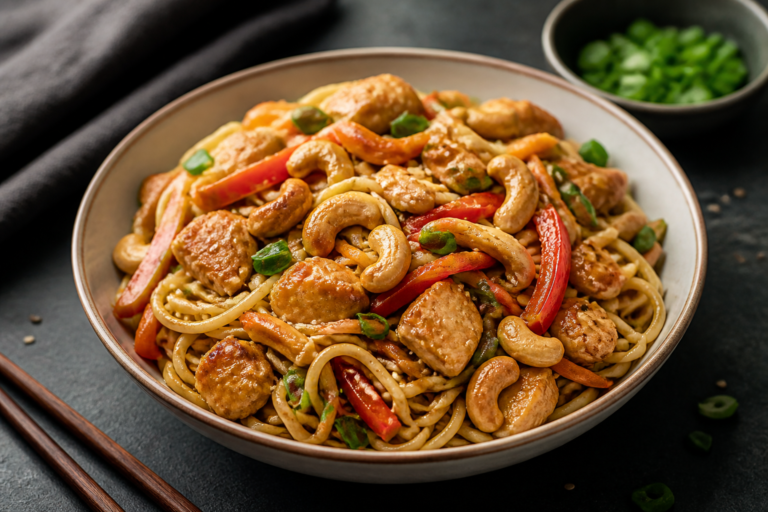
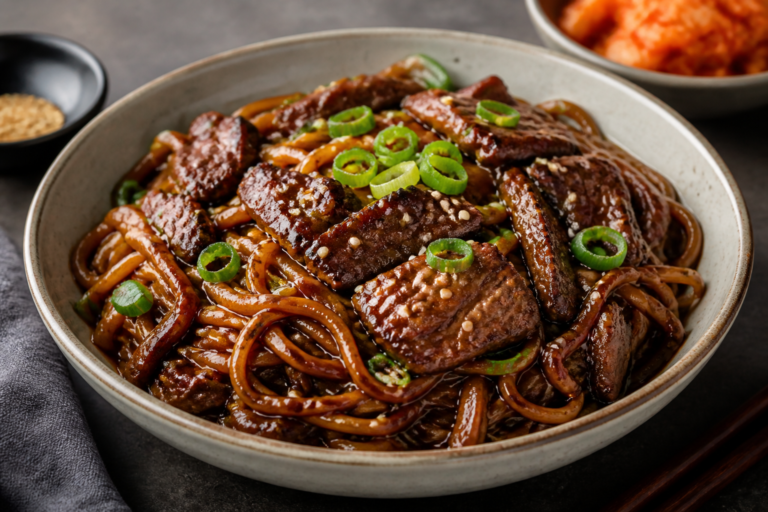
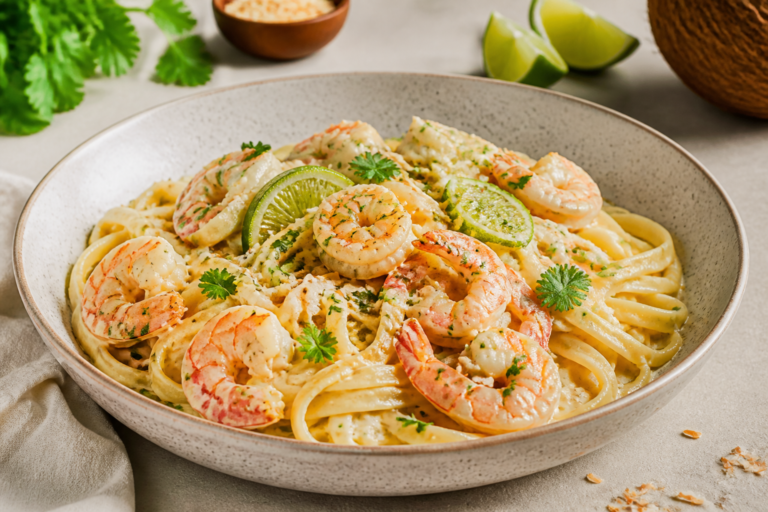
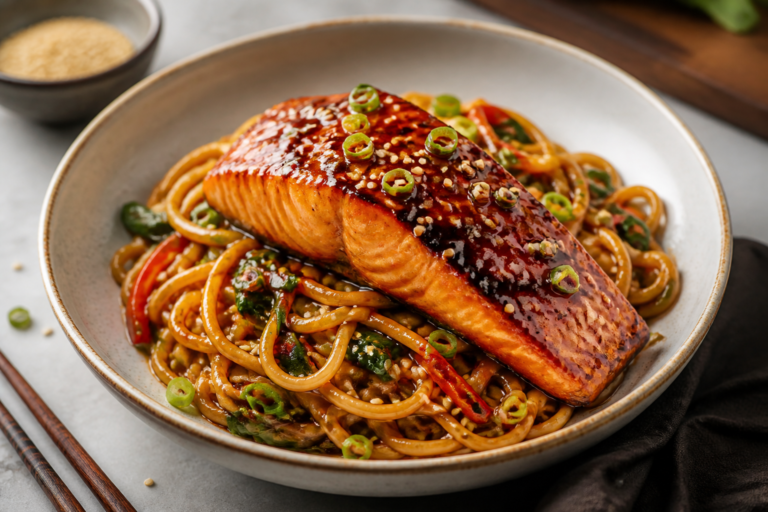
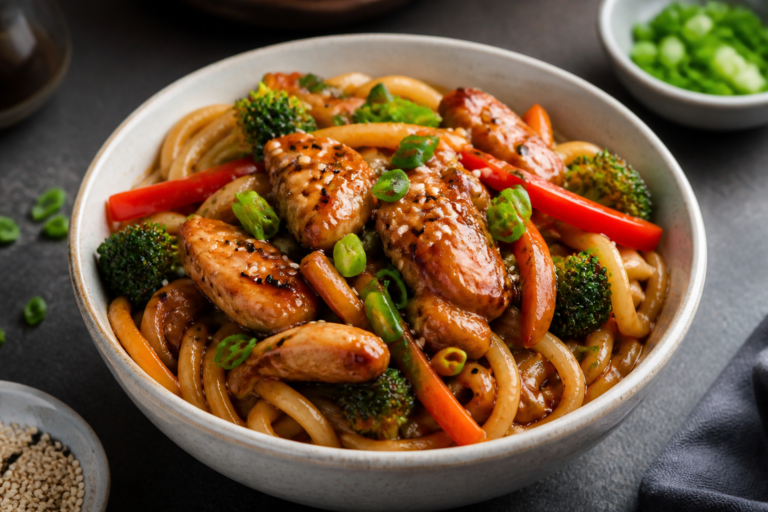
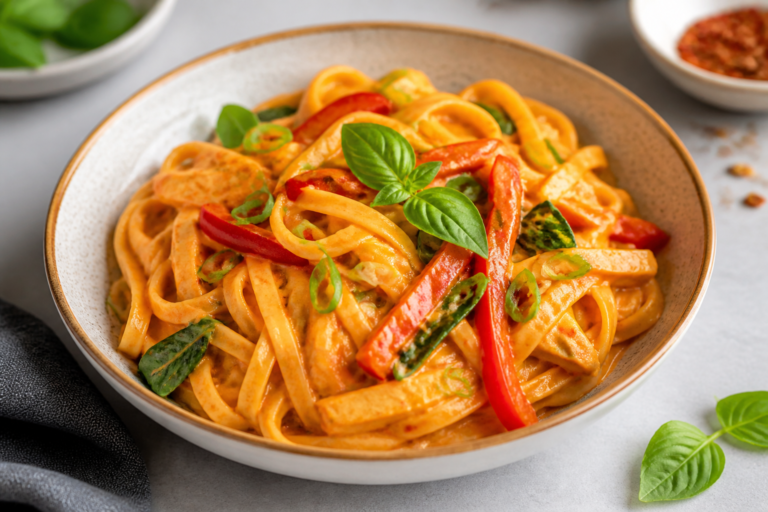
Creamy Coconut Curry Pasta – Cozy, Flavorful, and Weeknight-Friendly
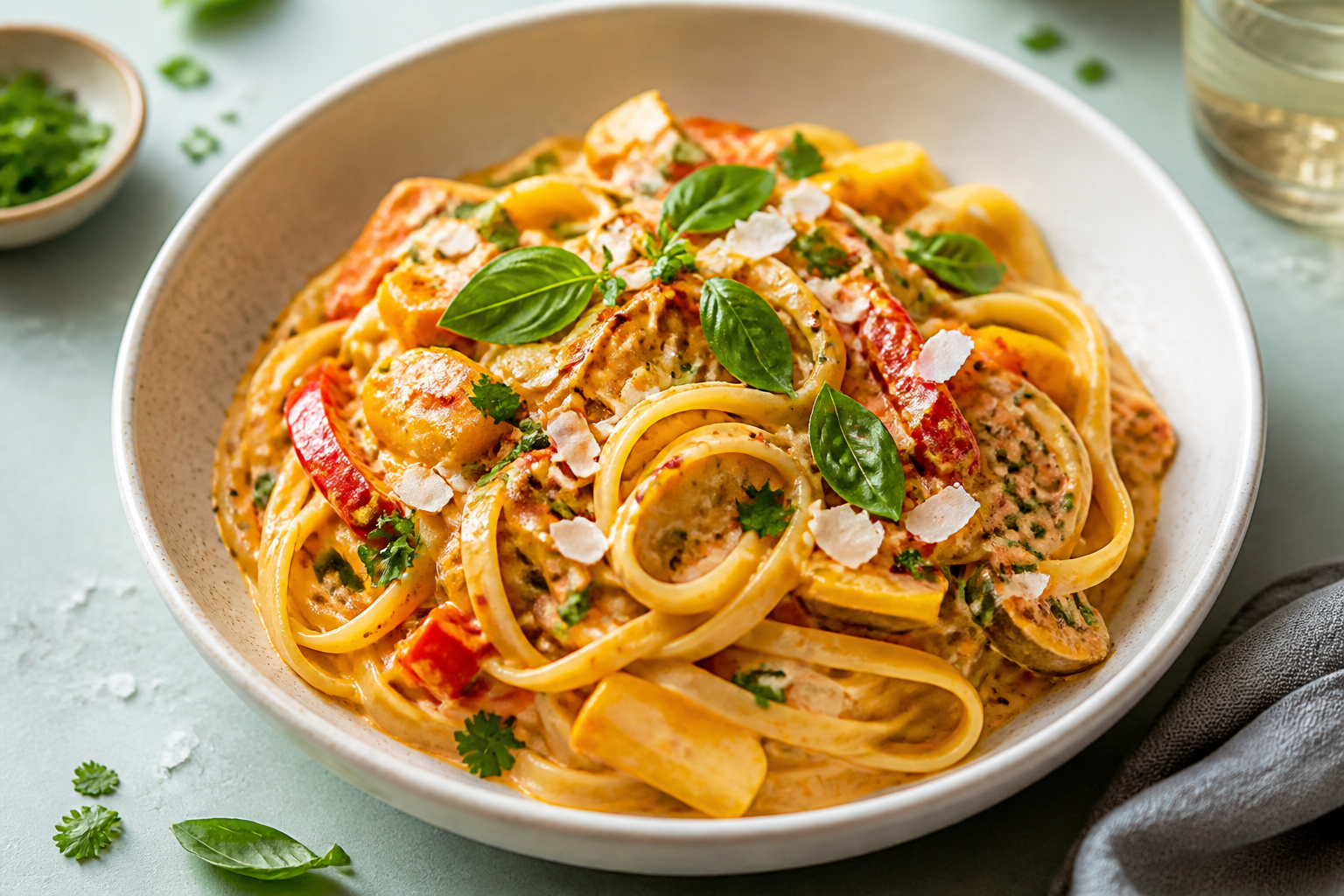
This Creamy Coconut Curry Pasta brings together the comfort of a silky pasta and the warm spice of a good curry. It’s the kind of dish that fills the kitchen with a cozy aroma and comes together without much fuss. The sauce is rich but not heavy, thanks to coconut milk, tomato, and bright lime.
FREE 7-Day Easy Dinner Reset
Save time, eat healthier, and take the stress out of dinner. Get a full week of easy healthy dinners delivered straight to your inbox.
You get a gentle kick of heat, a hint of sweetness, and a ton of depth. It’s easy to make, flexible with add-ins, and feels special enough for a relaxed dinner with friends.
Ingredients
Method
- Boil the pasta. Bring a large pot of salted water to a rolling boil. Cook pasta until just shy of al dente. Reserve 1 cup of pasta water, then drain.
- Prep your add-ins. Slice vegetables into bite-size pieces. If using protein, pat dry and season with salt and pepper. Mince garlic, finely chop onion, and grate the ginger.
- Sauté the aromatics. In a large skillet, heat oil over medium. Add onion with a pinch of salt and cook 3–4 minutes until softened. Stir in garlic and ginger for 30 seconds until fragrant.
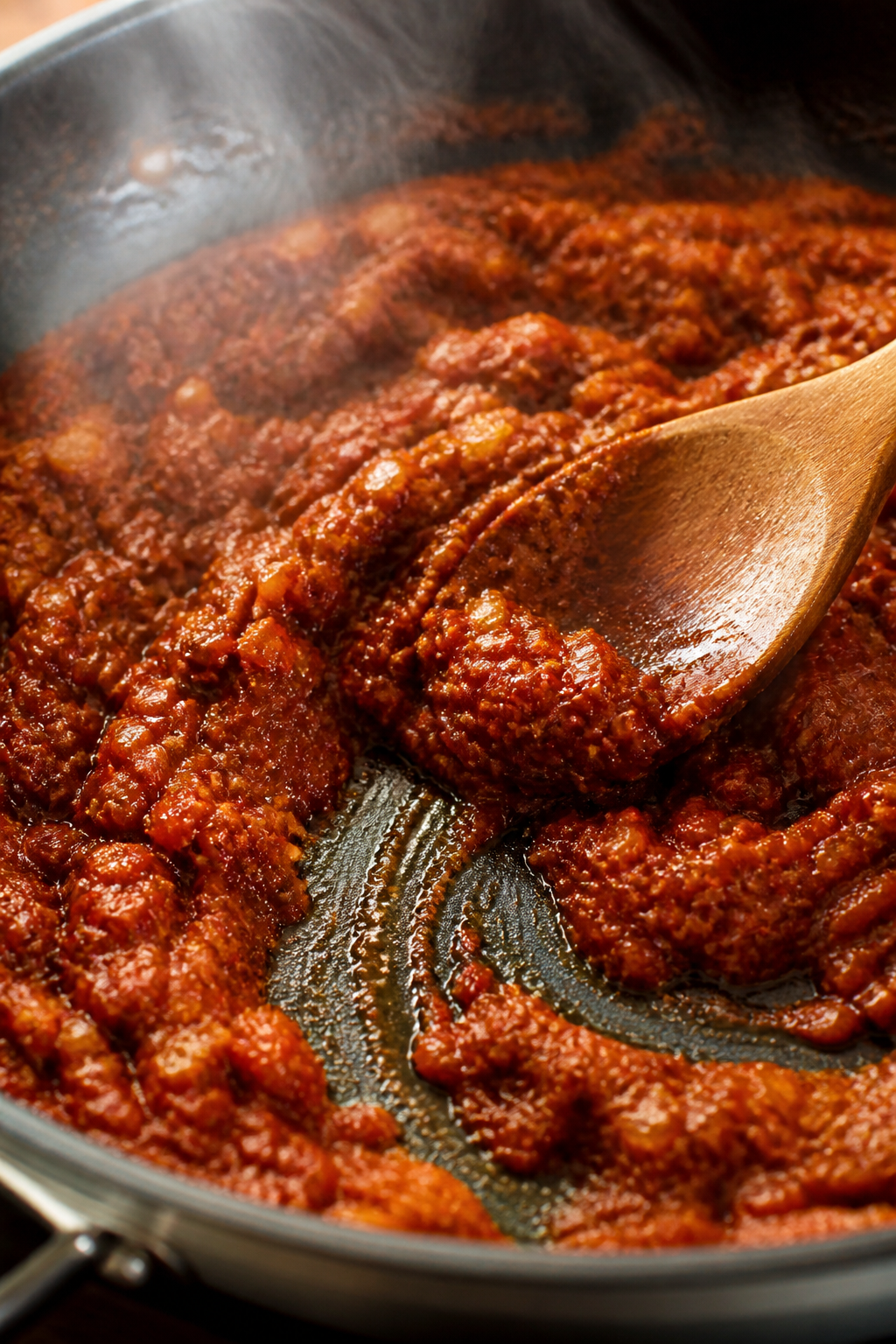
- Bloom the curry paste. Add the curry paste to the pan. Cook 1–2 minutes, stirring, until it darkens slightly and smells toasty. This step deepens flavor.
- Add tomato. Stir in tomato paste (or crushed tomatoes) and cook 1 minute. This builds body and balances the coconut milk.
- Pour in coconut milk. Shake the can well, then add it to the pan. Bring to a gentle simmer. Add 1 teaspoon brown sugar and a splash of soy or fish sauce if using. Taste and adjust salt.
- Cook the vegetables. Add firm veggies first (like broccoli or peppers) and simmer 3–4 minutes. Add delicate veggies (like spinach or snap peas) in the last minute so they stay bright.
- Cook the protein (if using). If using shrimp, add directly to the simmering sauce and cook 2–3 minutes until pink. For chicken or tofu, you can pan-sear in a separate skillet for browning, then fold into the sauce.
- Toss with pasta. Add the drained pasta to the skillet. Toss until coated, loosening with reserved pasta water a splash at a time to get a silky, glossy sauce that clings.
- Finish with brightness. Turn off the heat. Add lime zest and juice to taste. Adjust seasoning: more salt, a pinch more sugar, or a squeeze more lime as needed. For heat, sprinkle red pepper flakes.
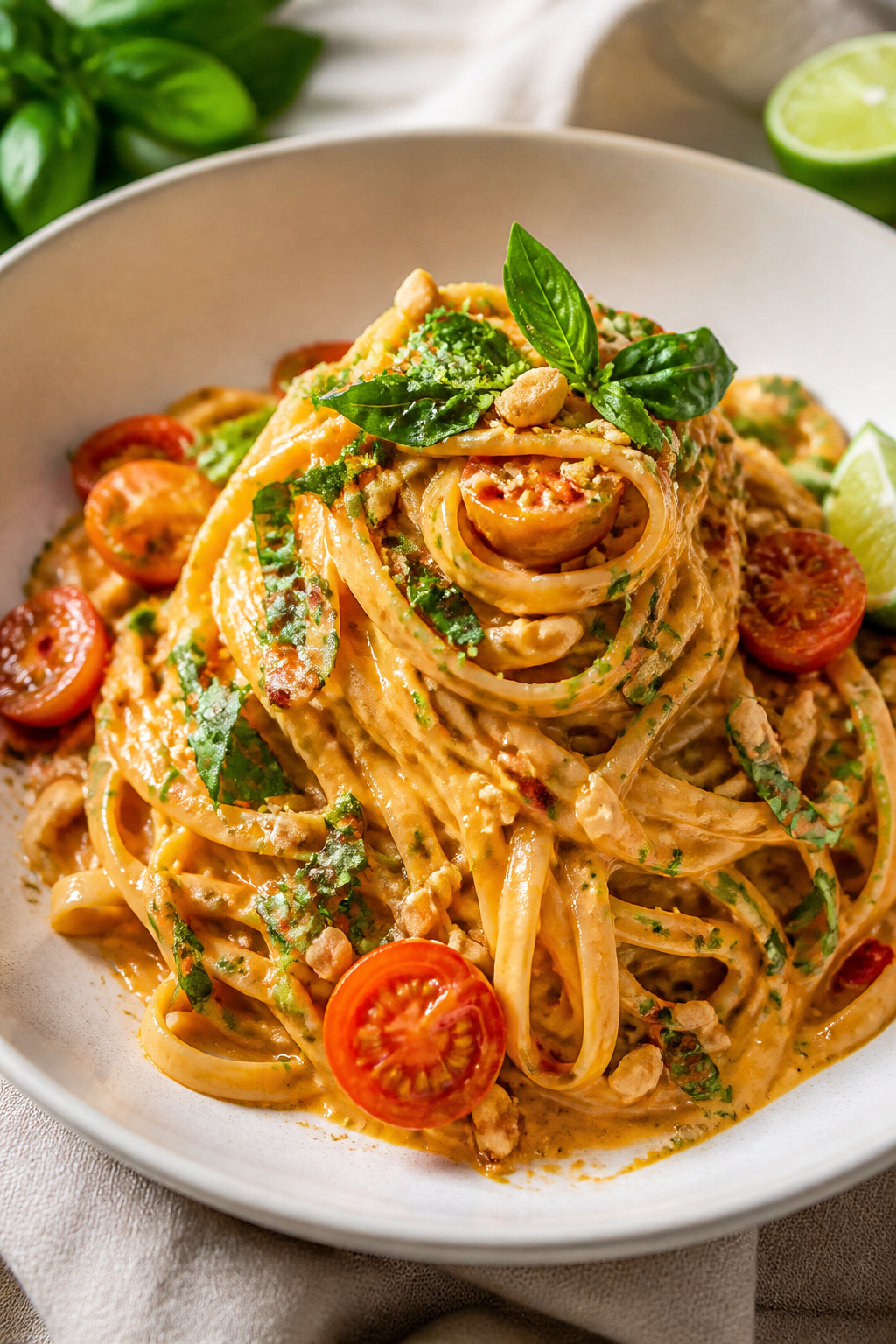
- Garnish and serve. Top with chopped cilantro or basil and toasted nuts for crunch. Serve hot, with lime wedges on the side.
What Makes This Special
This isn’t your usual tomato or Alfredo pasta. It’s a fusion-style bowl that blends pantry staples with bold, balanced flavor.
The curry paste brings fragrance, the coconut milk adds creaminess, and the lime lifts everything at the end. Roasted veggies or quick-seared shrimp slide right in, and the sauce clings beautifully to short or long noodles. Best of all, it’s fast—most of the work is done while the pasta boils.
Shopping List
- Pasta: 12 ounces spaghetti, linguine, or short pasta like rigatoni or fusilli
- Coconut milk: 1 can (13.5–14 oz) full-fat, well-shaken
- Curry paste: 2–3 tablespoons red curry paste (or yellow for milder, green for spicier)
- Aromatics: 1 small onion (or 2 shallots), 3 cloves garlic, 1 tablespoon grated fresh ginger
- Tomato element: 2 tablespoons tomato paste or 1 cup crushed tomatoes
- Vegetables: 2 cups mixed veg (bell peppers, snap peas, spinach, cherry tomatoes, or broccoli)
- Protein (optional): 12 oz shrimp, chicken breast/thighs, or firm tofu
- Fat: 2 tablespoons olive oil or neutral oil
- Acid and sweet: 1 lime (zest + juice), 1–2 teaspoons brown sugar or maple syrup
- Salt + pepper: Kosher salt and black pepper, to taste
- Heat (optional): Red pepper flakes or fresh chili
- Fresh herbs: Cilantro or basil for garnish
- Extras (optional): 1/4 cup toasted peanuts or cashews; 1–2 teaspoons soy sauce or fish sauce for depth
Step-by-Step Instructions
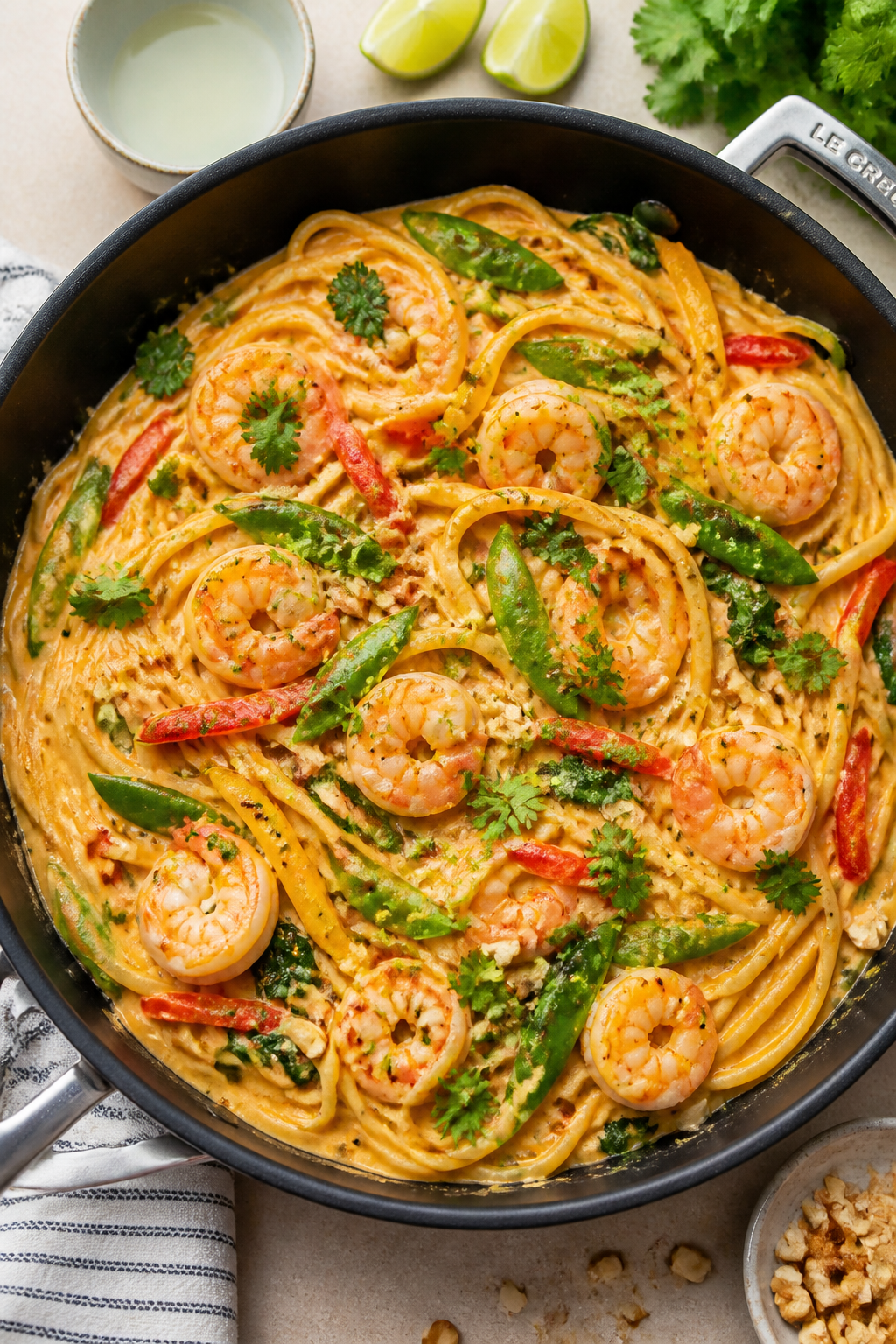
- Boil the pasta. Bring a large pot of salted water to a rolling boil.
Cook pasta until just shy of al dente. Reserve 1 cup of pasta water, then drain.
- Prep your add-ins. Slice vegetables into bite-size pieces. If using protein, pat dry and season with salt and pepper. Mince garlic, finely chop onion, and grate the ginger.
- Sauté the aromatics. In a large skillet, heat oil over medium.
Add onion with a pinch of salt and cook 3–4 minutes until softened. Stir in garlic and ginger for 30 seconds until fragrant.
- Bloom the curry paste. Add the curry paste to the pan. Cook 1–2 minutes, stirring, until it darkens slightly and smells toasty.
This step deepens flavor.
- Add tomato. Stir in tomato paste (or crushed tomatoes) and cook 1 minute. This builds body and balances the coconut milk.
- Pour in coconut milk. Shake the can well, then add it to the pan. Bring to a gentle simmer.
Add 1 teaspoon brown sugar and a splash of soy or fish sauce if using. Taste and adjust salt.
- Cook the vegetables. Add firm veggies first (like broccoli or peppers) and simmer 3–4 minutes. Add delicate veggies (like spinach or snap peas) in the last minute so they stay bright.
- Cook the protein (if using). If using shrimp, add directly to the simmering sauce and cook 2–3 minutes until pink.
For chicken or tofu, you can pan-sear in a separate skillet for browning, then fold into the sauce.
- Toss with pasta. Add the drained pasta to the skillet. Toss until coated, loosening with reserved pasta water a splash at a time to get a silky, glossy sauce that clings.
- Finish with brightness. Turn off the heat. Add lime zest and juice to taste.
Adjust seasoning: more salt, a pinch more sugar, or a squeeze more lime as needed. For heat, sprinkle red pepper flakes.
- Garnish and serve. Top with chopped cilantro or basil and toasted nuts for crunch. Serve hot, with lime wedges on the side.
Keeping It Fresh
This pasta keeps well for up to 3 days in the fridge in an airtight container.
The sauce will thicken, so add a splash of water or coconut milk when reheating. Warm gently over low heat on the stovetop to keep the sauce smooth. If you plan ahead for leftovers, undercook the pasta by 1 minute so it stays pleasantly firm on day two.
Why This is Good for You
- Coconut milk provides satisfying fats that help you feel full and carry the spices’ flavors.
- Ginger and garlic bring antioxidants and a gentle boost for your immune system.
- Vegetables add fiber, vitamins, and color—load them in without overthinking it.
- Customizable protein means you can keep it lean with shrimp or chicken, or plant-based with tofu or chickpeas.
- Lime and herbs brighten the dish, balancing richness so you get big flavor without heaviness.
Pitfalls to Watch Out For
- Boiling the sauce too hard: A rapid boil can split coconut milk.
Keep it to a gentle simmer.
- Overcooking pasta: Remember it finishes in the sauce. Stop at just shy of al dente.
- Skipping the curry bloom: Cooking the paste in oil unlocks depth. Don’t rush this step.
- Under-seasoning: Taste for salt, acid, and a hint of sweetness.
A squeeze of lime at the end can transform the dish.
- Adding delicate greens too early: Spinach and snap peas turn dull if simmered too long. Stir them in at the end.
Alternatives
- Pasta swap: Use rice noodles, gluten-free pasta, or whole-wheat linguine. Short pasta like rigatoni holds sauce in every groove.
- Curry style: Red is classic here.
Yellow is milder and a bit sweeter. Green is herbaceous and spicier—balance with extra lime and a pinch of sugar.
- Protein options: Chickpeas, crispy tofu, shredded rotisserie chicken, or pan-seared salmon all work. Keep cooking times in mind.
- Veg variations: Roasted cauliflower, zucchini, mushrooms, or kale.
Roast heartier veg in the oven first for caramelized edges.
- Extra depth: A teaspoon of fish sauce or soy sauce adds umami. A dab of peanut butter can make it even creamier and nutty.
- Heat control: Use less curry paste for mild, add fresh chili or chili crisp for bold heat.
FAQ
Can I use light coconut milk?
Need More Easy Dinner Ideas?
Get my FREE 7-Day Easy Dinner Reset and enjoy a full week of healthy dinners without the meal-planning stress.
Yes, but the sauce will be thinner and less velvety. To compensate, reduce the sauce a little longer over a gentle simmer, and consider adding a small knob of butter or a teaspoon of peanut butter for extra body.
What if I don’t have curry paste?
You can use curry powder in a pinch.
Start with 1.5 tablespoons, bloom it in oil with the aromatics and tomato paste, and adjust to taste. The flavor will be different—less aromatic—but still delicious.
How do I prevent the sauce from curdling?
Keep the heat moderate and avoid aggressive boiling once the coconut milk is in. Add lime juice off the heat at the end.
If it starts to separate, whisk in a splash of pasta water and lower the heat.
Is this dish vegan?
It can be. Use tofu or chickpeas for protein, skip fish sauce (use soy sauce or tamari instead), and check that your curry paste is vegan-friendly.
Can I make it ahead?
You can make the sauce up to 2 days ahead and store it in the fridge. Reheat gently and toss with freshly cooked pasta.
This keeps the pasta from getting soggy.
What pasta shape works best?
Long noodles like linguine feel luxurious with a creamy sauce, while short shapes like fusilli or rigatoni grab onto it. Use what you love; just cook to just shy of al dente.
How spicy is it?
That depends on your curry paste and how much you use. Start with 2 tablespoons, taste, and add more if you like it hotter.
Balance with a touch of sugar and extra lime.
Can I freeze it?
The sauce freezes well for up to 2 months. Pasta does not freeze as nicely. Freeze the sauce alone, then thaw, reheat gently, and toss with fresh pasta.
Final Thoughts
Creamy Coconut Curry Pasta is a comfort dish with a bright, modern twist.
It’s quick enough for a weeknight but layered enough to feel special. Keep the technique simple: bloom the paste, simmer gently, and finish with lime. From there, make it yours with whatever veggies and protein you have on hand.
A bowl of this is warm, cozy, and just the right kind of memorable.
Printable Recipe Card
Want just the essential recipe details without scrolling through the article? Get our printable recipe card with just the ingredients and instructions.
Loved This Recipe?
If you're looking for more simple, healthy dinners your family will actually eat, grab my FREE 7-Day Easy Dinner Reset. You'll get 7 easy dinner recipes, simple grocery lists, and a done-for-you plan that takes the stress out of mealtime.