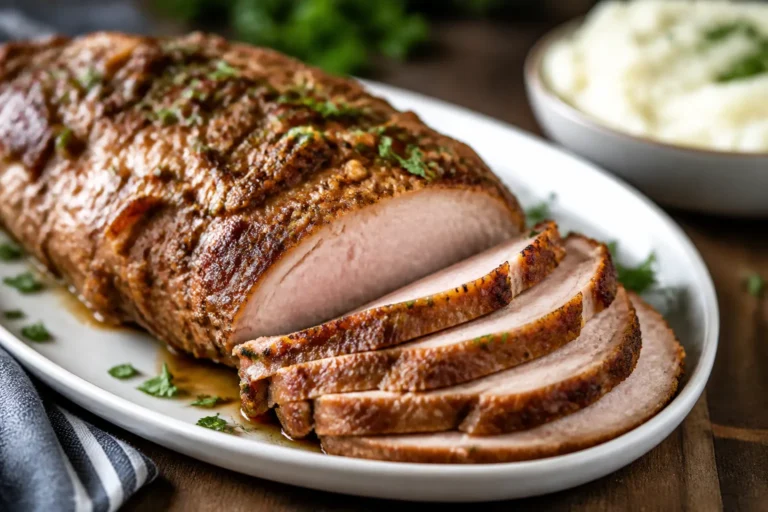
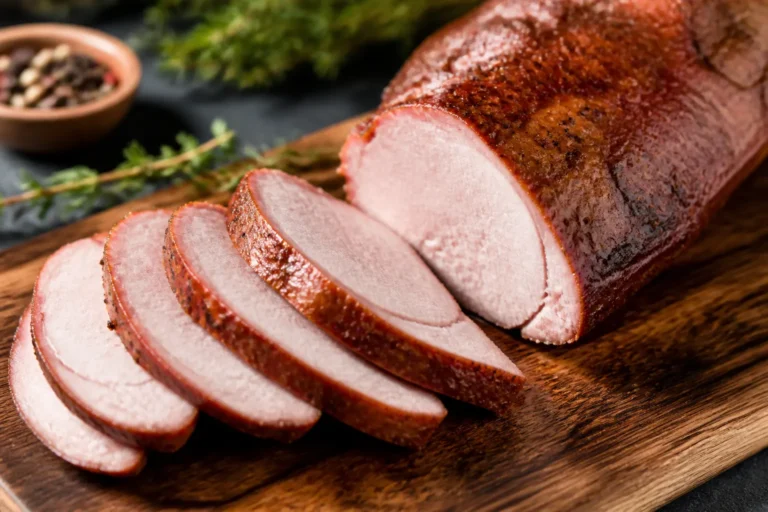
Bacon Wrapped Pork Tenderloin – Juicy, Savory, and Weeknight-Friendly
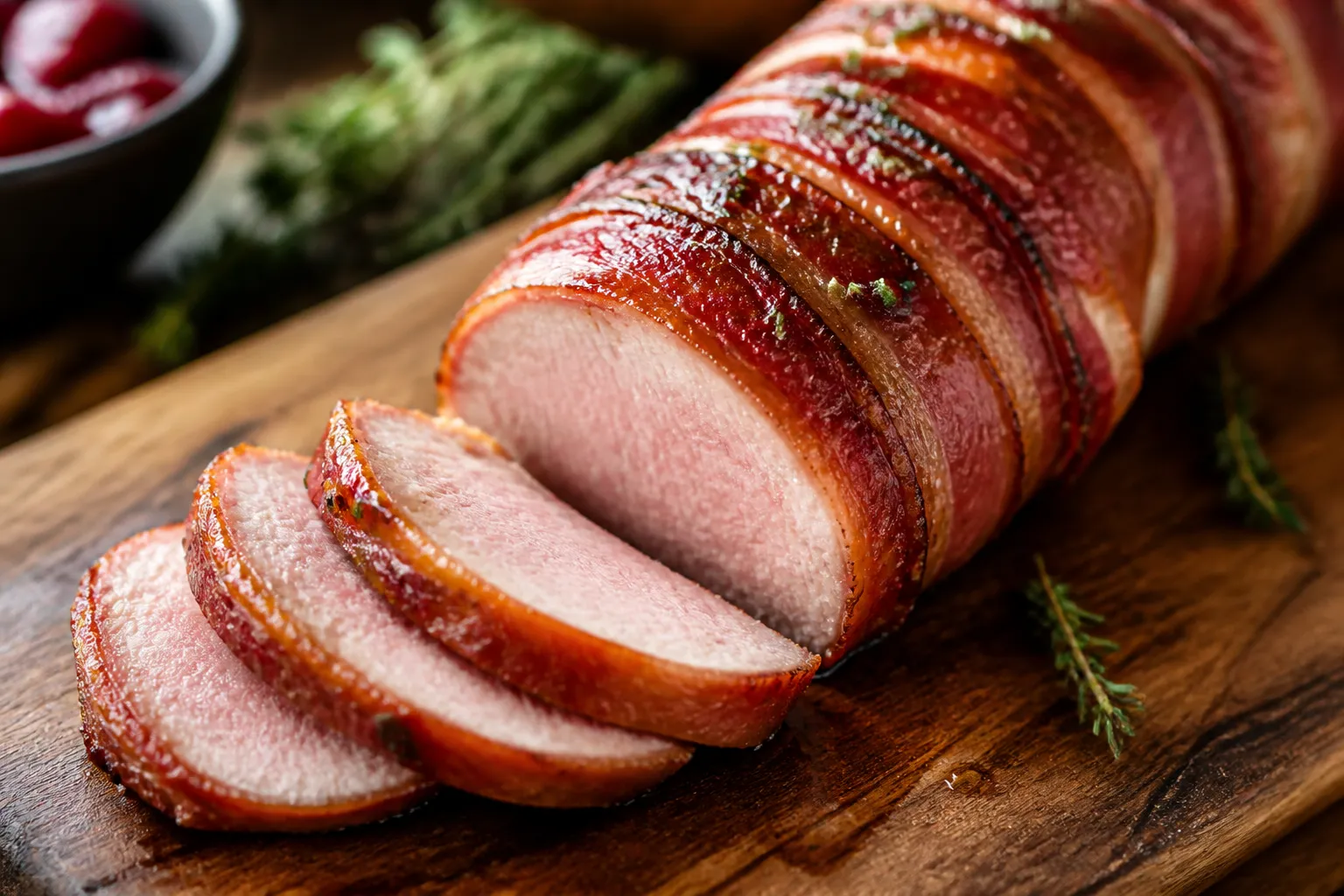
Pork tenderloin is one of those cuts that feels special without asking much from you. Wrap it in smoky bacon, brush on a simple glaze, and you get crisp edges, juicy slices, and big flavor with very little fuss. This is the kind of dinner that works for a quiet weeknight or a small gathering with friends.
FREE 7-Day Easy Dinner Reset
Save time, eat healthier, and take the stress out of dinner. Get a full week of easy healthy dinners delivered straight to your inbox.
The prep is straightforward, the cook time is short, and the results feel restaurant-worthy. If you love balanced flavors—salty, sweet, garlicky—this one hits all the right notes.
Ingredients
Method
- Preheat your oven to 400°F (205°C). Pat the pork tenderloin dry with paper towels. Dry meat sears better and helps the bacon crisp.
- Trim any silver skin from the tenderloin if needed. Season the pork with salt, pepper, smoked paprika, and garlic powder on all sides.
- Lay the bacon strips slightly overlapping on a cutting board to form a rectangle about the length of the tenderloin. Place the pork at one end and roll it up, wrapping the bacon around as you go. Tuck the ends under. Use a couple of toothpicks if needed to keep the seams secure.
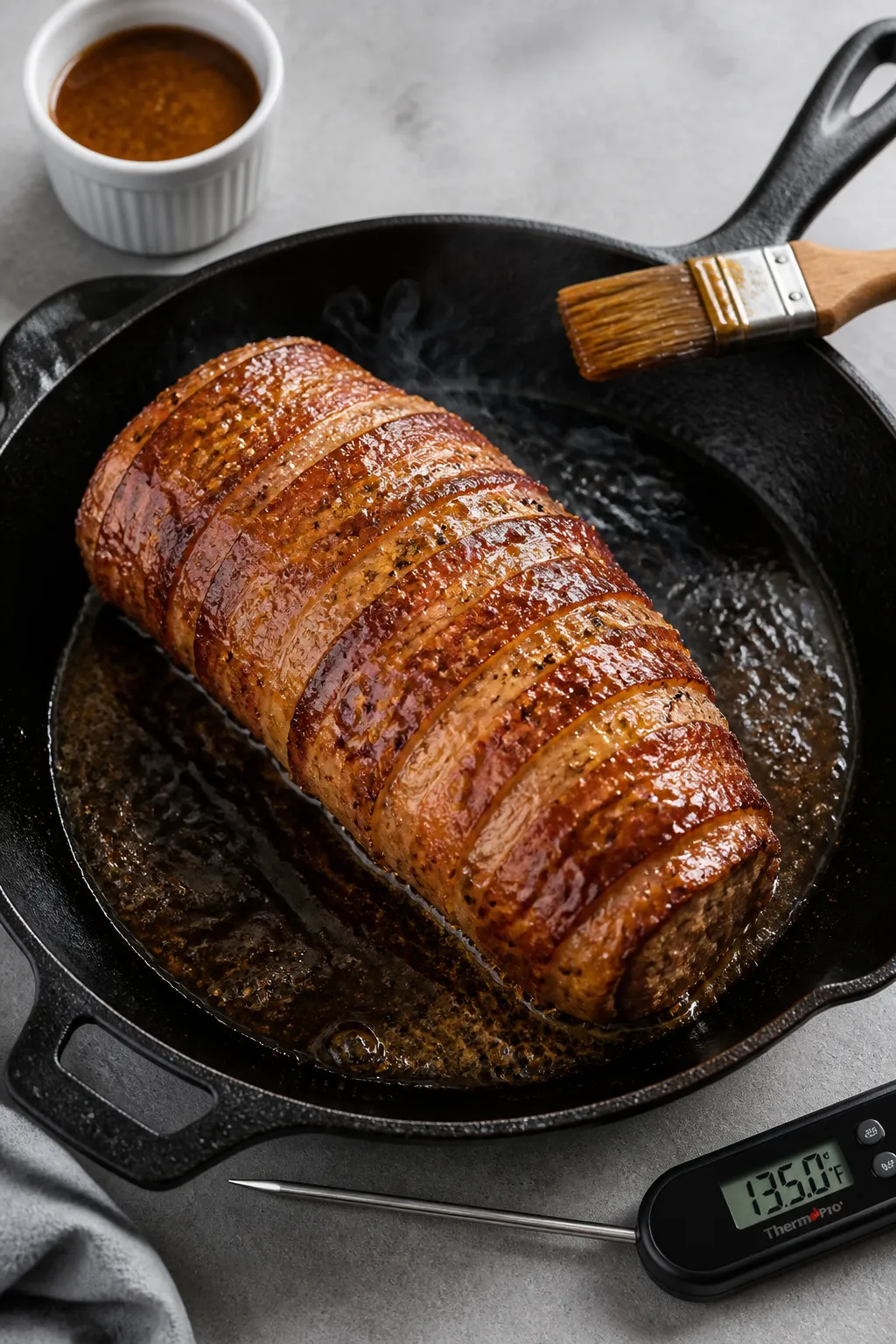
- In an oven-safe skillet, heat the olive oil over medium-high. When it’s hot and shimmering, place the bacon-wrapped tenderloin seam-side down. Sear for 2–3 minutes per side until the bacon begins to brown. Rotate to sear all around.
- Whisk together the glaze ingredients: maple syrup, Dijon, minced garlic, and vinegar. Brush a thin layer over the bacon after searing.
- Transfer the skillet to the oven. Roast for 12–18 minutes, depending on thickness, brushing once more with glaze halfway through. Start checking early.
- Use an instant-read thermometer to check for doneness. For juicy, slightly pink pork, pull it at 140–145°F (60–63°C). The bacon should be browned and slightly crisp.
- Move the tenderloin to a cutting board and let it rest 5–10 minutes. Resting keeps the juices in the meat instead of on the board.
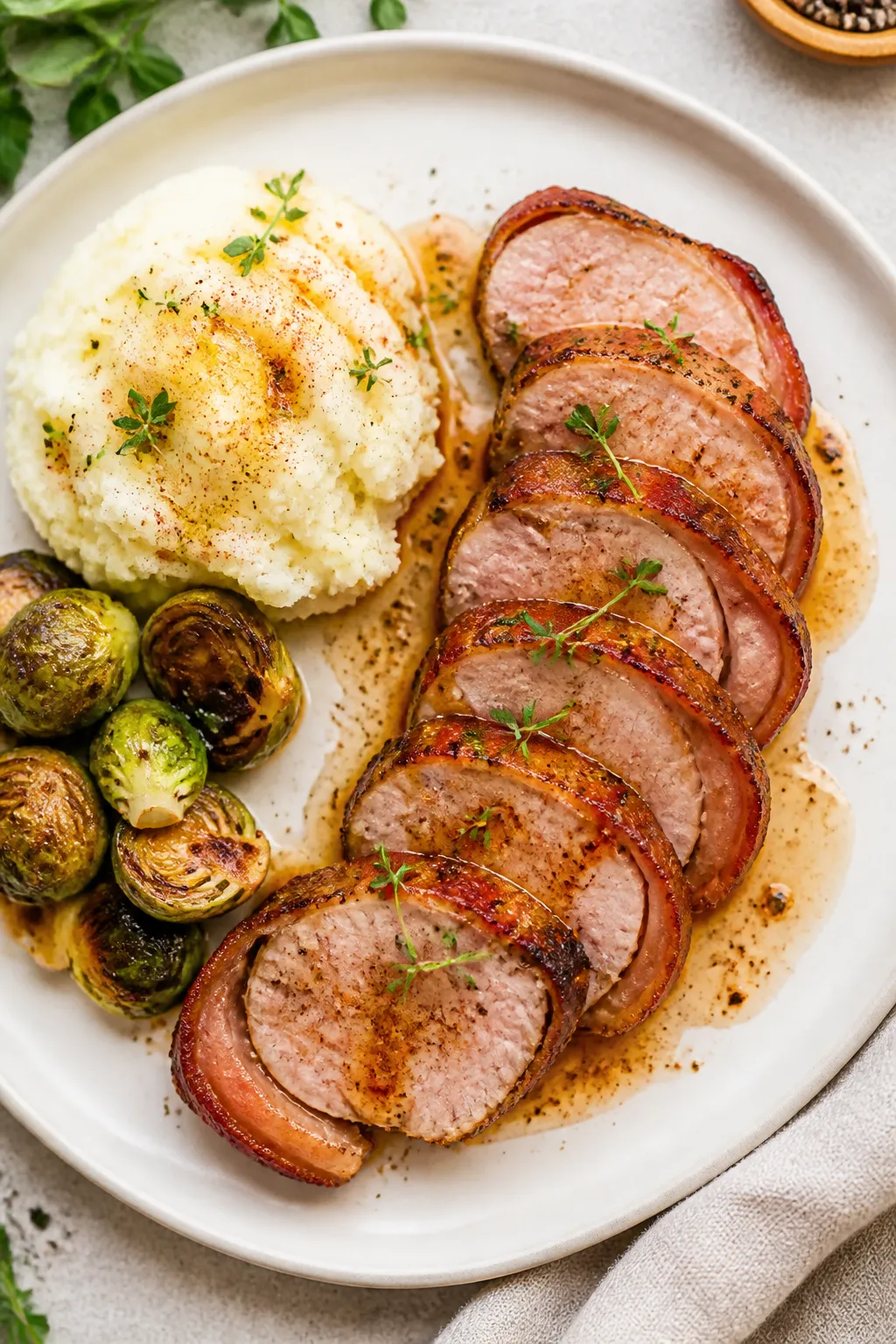
- Slice into 1/2- to 3/4-inch medallions. Spoon any pan juices over the top. Serve with roasted vegetables, mashed potatoes, or a crisp salad.
What Makes This Special
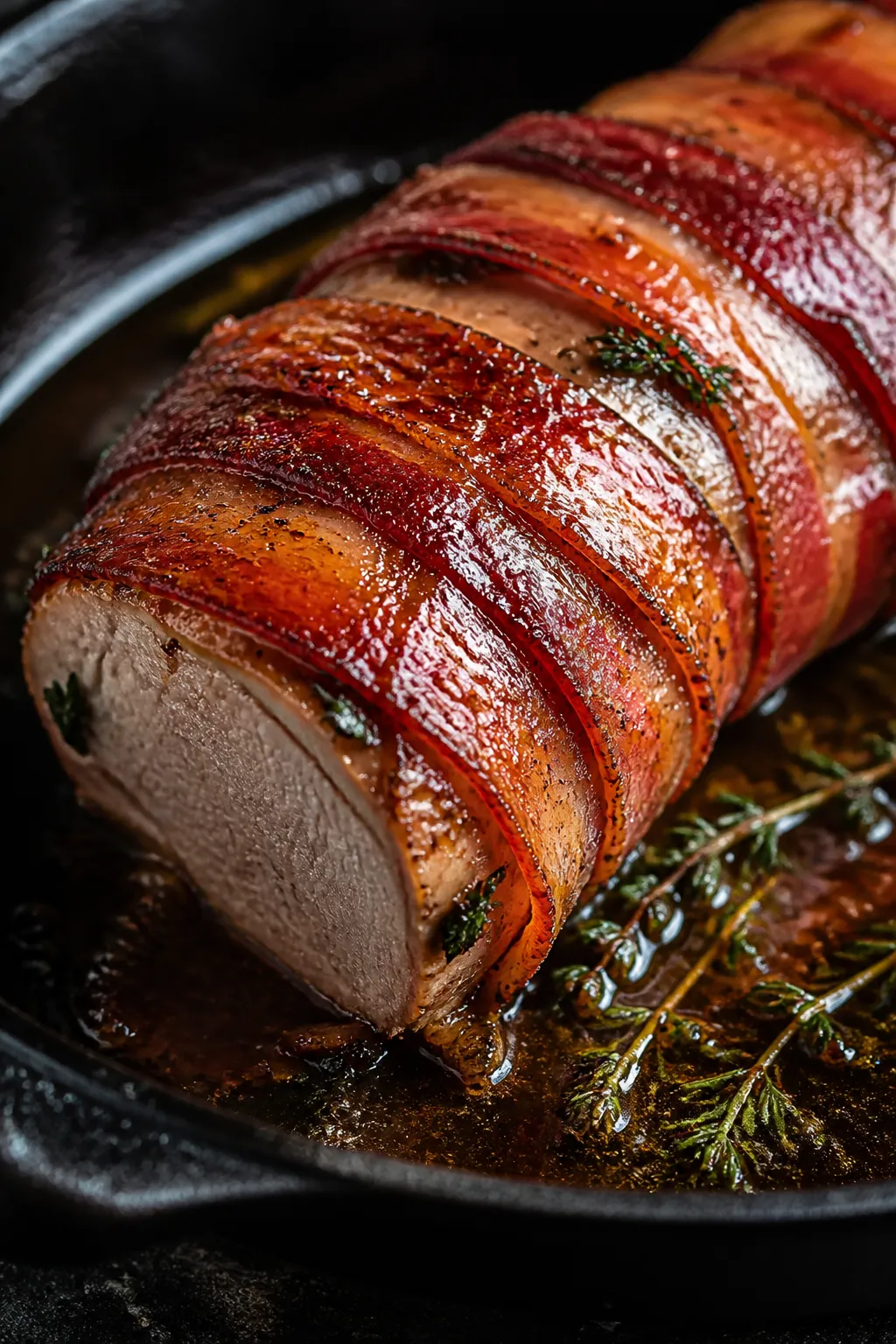
Bacon wrapped pork tenderloin brings together two great textures: crisp bacon on the outside and tender, lean pork inside. A quick sear helps the bacon render and brown, while the oven finishes the pork without drying it out.
The glaze is simple but smart.
A mix of maple (or honey), mustard, and garlic caramelizes on the bacon and adds a gentle sweetness that balances the salt and smoke. It’s a minimal-ingredient meal that still tastes like you planned ahead.
Best of all, it’s flexible. You can use different spice rubs, swap the sweetener, and adjust the heat level.
It’s a great “base recipe” you’ll keep coming back to.
What You’ll Need
- 1 pork tenderloin (about 1 to 1.5 pounds), silver skin trimmed
- 8–10 slices of bacon (thin-cut works best for even wrapping)
- 1 tablespoon olive oil (for searing)
- 1 teaspoon kosher salt
- 1/2 teaspoon black pepper
- 1 teaspoon smoked paprika (or sweet paprika)
- 1/2 teaspoon garlic powder
- Glaze:
- 2 tablespoons maple syrup (or honey)
- 1 tablespoon Dijon mustard
- 1 clove garlic, finely minced (or 1/4 teaspoon garlic powder)
- 1 teaspoon apple cider vinegar (optional, for brightness)
- Toothpicks or kitchen twine (optional, to secure the bacon)
- Heavy oven-safe skillet (cast iron is ideal)
- Instant-read thermometer (for best results)
Instructions
- Preheat your oven to 400°F (205°C). Pat the pork tenderloin dry with paper towels. Dry meat sears better and helps the bacon crisp.
- Trim any silver skin from the tenderloin if needed.
Season the pork with salt, pepper, smoked paprika, and garlic powder on all sides.
- Lay the bacon strips slightly overlapping on a cutting board to form a rectangle about the length of the tenderloin. Place the pork at one end and roll it up, wrapping the bacon around as you go. Tuck the ends under.
Use a couple of toothpicks if needed to keep the seams secure.
- In an oven-safe skillet, heat the olive oil over medium-high. When it’s hot and shimmering, place the bacon-wrapped tenderloin seam-side down. Sear for 2–3 minutes per side until the bacon begins to brown. Rotate to sear all around.
- Whisk together the glaze ingredients: maple syrup, Dijon, minced garlic, and vinegar.
Brush a thin layer over the bacon after searing.
- Transfer the skillet to the oven. Roast for 12–18 minutes, depending on thickness, brushing once more with glaze halfway through. Start checking early.
- Use an instant-read thermometer to check for doneness.
For juicy, slightly pink pork, pull it at 140–145°F (60–63°C). The bacon should be browned and slightly crisp.
- Move the tenderloin to a cutting board and let it rest 5–10 minutes. Resting keeps the juices in the meat instead of on the board.
- Slice into 1/2- to 3/4-inch medallions.
Spoon any pan juices over the top. Serve with roasted vegetables, mashed potatoes, or a crisp salad.
Storage Instructions
Store leftovers in an airtight container in the fridge for up to 3–4 days. Reheat gently in a 300°F (150°C) oven, covered with foil, until warmed through.
This helps keep the pork moist and the bacon from over-browning.
You can also freeze sliced portions for up to 2 months. Thaw overnight in the fridge and reheat in a covered skillet over low heat with a splash of broth.
Why This is Good for You
Pork tenderloin is a lean protein with important nutrients like B vitamins and selenium. While bacon adds fat and sodium, you’re not using a huge amount, and the result is more satisfying, which can help with portion control.
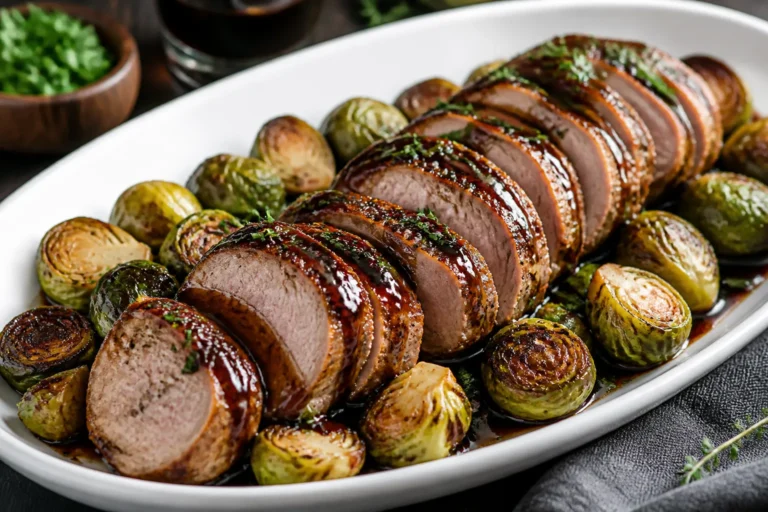
Pair it with high-fiber sides—think roasted Brussels sprouts, sweet potatoes, or a grain salad—and you get a balanced, hearty meal.
If you’re watching sodium, choose lower-sodium bacon and season the pork lightly.
Common Mistakes to Avoid
- Skipping the sear: This step jump-starts browning and helps the bacon render. Without it, the bacon can end up rubbery.
- Overcooking the pork: Pork tenderloin is lean and cooks fast. Use a thermometer and pull it at 140–145°F, then rest.
- Using thick-cut bacon: It looks great, but it’s harder to crisp before the pork overcooks.
Thin-cut is safer.
- Not trimming silver skin: That membrane tightens and can cause uneven cooking. Trim it off for better texture.
- Too much glaze too early: Sugar burns quickly. Brush lightly before the oven, then again midway.
Variations You Can Try
- Spicy-Sweet: Add 1/2 teaspoon crushed red pepper or a dash of hot sauce to the glaze.
- Herb and Garlic: Slip fresh thyme or rosemary sprigs under the bacon or mix chopped herbs into the rub.
- BBQ Twist: Swap the glaze for your favorite BBQ sauce.
Brush lightly so it doesn’t scorch.
- Mustard-Crusted: Spread a thin layer of Dijon directly on the pork before wrapping for extra tang.
- Apple and Onion Bed: Roast the tenderloin on a layer of sliced apples and onions. The drippings create a built-in side.
- Smoky Maple: Use maple bacon and add a pinch of chipotle powder to the rub.
Need More Easy Dinner Ideas?
Get my FREE 7-Day Easy Dinner Reset and enjoy a full week of healthy dinners without the meal-planning stress.
FAQ
Can I make this ahead of time?
Yes. You can season and wrap the pork up to a day in advance.
Keep it covered in the fridge. For best texture, sear and roast right before serving.
What if I don’t have an oven-safe skillet?
Sear the wrapped tenderloin in a regular skillet, then transfer it to a rimmed baking sheet or roasting pan to finish in the oven.
How do I keep the bacon from unwrapping?
Place the seam side down when searing, and use a few toothpicks or short lengths of kitchen twine. Remove them before slicing and serving.
What temperature should pork be cooked to?
The USDA recommends 145°F (63°C) with a 3-minute rest.
Pulling the pork at 140°F and letting it rest will usually land you right in that range with a juicy interior.
Can I use pork loin instead of tenderloin?
Pork loin is larger and cooks longer, so the timing changes a lot. For this method, stick to tenderloin. If you use loin, expect a lower oven temp and longer roast time to avoid drying it out.
What sides go well with this?
Roasted green beans, garlic mashed potatoes, maple-glazed carrots, apple slaw, or a simple arugula salad all pair nicely with the sweet-savory flavors.
Can I grill it instead of roasting?
Yes.
Sear over direct heat to crisp the bacon, then move to indirect heat and close the lid. Cook until it reaches 140–145°F, brushing with glaze along the way.
My bacon isn’t crisp—what now?
After roasting, pop the skillet under the broiler for 1–2 minutes, watching closely. This will crisp the bacon without overcooking the pork.
Is there a sugar-free option?
Use a sugar-free maple-style syrup or skip the glaze and rely on the spice rub.
You can also brush with a little olive oil and mustard for flavor.
How do I slice it neatly?
Let it rest fully, then use a sharp slicing knife. Cut across the grain into medallions, wiping the blade as needed for clean cuts.
Wrapping Up
Bacon wrapped pork tenderloin delivers big flavor with little effort. With a quick sear, a short roast, and a simple glaze, you get tender slices wrapped in crispy, smoky goodness.
Keep an eye on temperature, let it rest, and you’ll have a reliable, crowd-pleasing main you’ll make again and again. Serve it with your favorite sides and enjoy a dinner that feels special any night of the week.
Printable Recipe Card
Want just the essential recipe details without scrolling through the article? Get our printable recipe card with just the ingredients and instructions.
Loved This Recipe?
If you're looking for more simple, healthy dinners your family will actually eat, grab my FREE 7-Day Easy Dinner Reset. You'll get 7 easy dinner recipes, simple grocery lists, and a done-for-you plan that takes the stress out of mealtime.