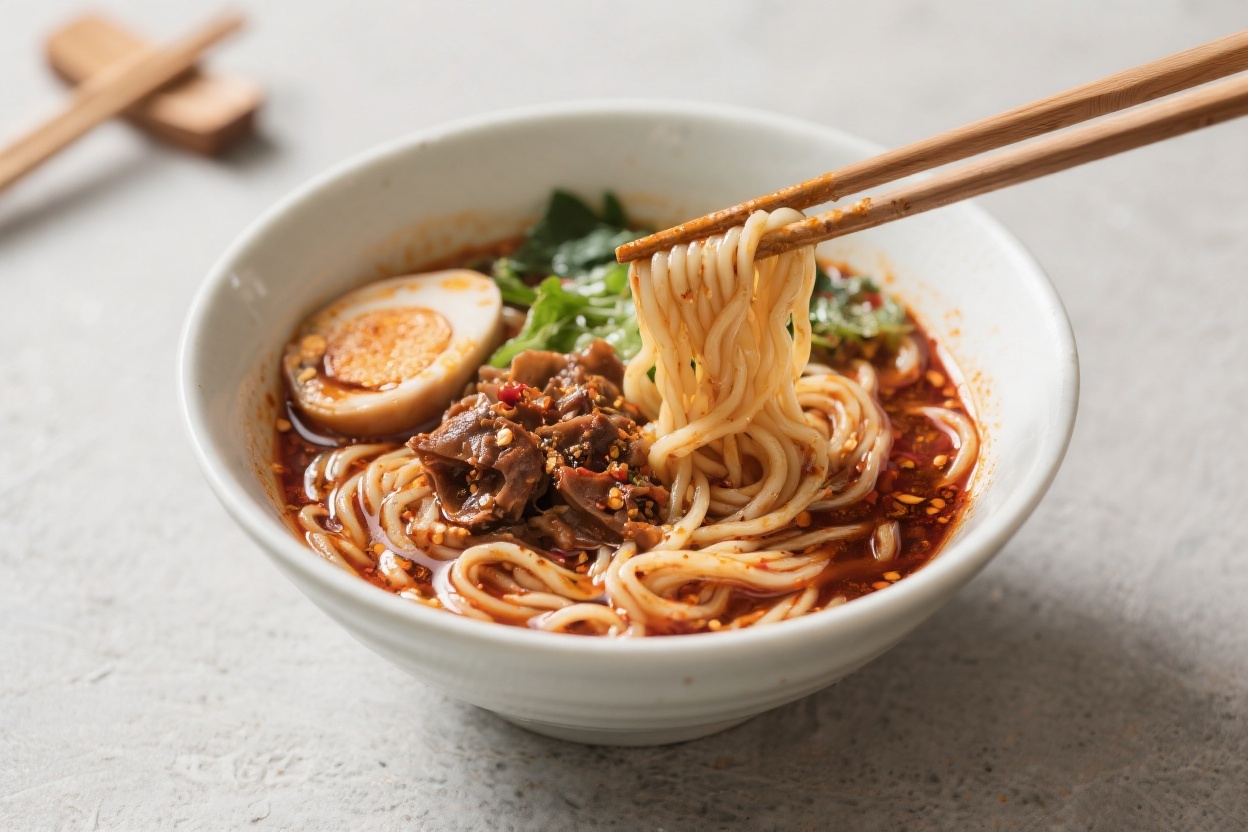
Spicy Miso Ramen – A Cozy, Flavor-Packed Bowl
Spicy miso ramen brings deep, savory comfort with a kick of heat and a silky, rich broth. It’s the kind of bowl that warms you from the inside out, layering umami flavors with a gentle burn. You don’t need a restaurant setup to make it at home—just a few pantry staples and a bit of patience.
FREE 7-Day Easy Dinner Reset
Save time, eat healthier, and take the stress out of dinner. Get a full week of easy healthy dinners delivered straight to your inbox.
The payoff is huge: bouncy noodles, a creamy miso broth, and toppings that feel special without being fussy. If you love big flavor and simple cooking, this bowl is your next weeknight win.
Ingredients
Method
- Prep your toppings first. Soft-boil eggs (6.5 minutes, then ice bath), slice scallions, rinse greens, and drain corn or bean sprouts. If using tofu, press and cube it. Getting these ready now makes assembly fast.
- Cook the protein. In a wide pot, heat 1 tablespoon neutral oil over medium. Add ground pork or sliced chicken and a pinch of salt. Cook until browned. If using tofu or mushrooms, sear until golden on edges. Transfer to a plate and keep warm.
- Build the flavor base. In the same pot, add 1 tablespoon sesame oil. Sauté 3 minced garlic cloves and 1 tablespoon grated ginger until fragrant, about 30 seconds. Stir in 1–2 tablespoons chili paste (gochujang or doubanjiang) and cook another 30 seconds to bloom the spices.
- Make the broth. Pour in 4 cups low-sodium stock. Add a small piece of kombu if you have it, and remove just before the broth boils. Stir in 1–2 tablespoons soy sauce and 1 tablespoon mirin. Simmer gently for 5–7 minutes to marry the flavors.
- Whisk in the miso. Turn the heat to low. In a small bowl, whisk 3 tablespoons miso with a ladle of hot broth until smooth, then return it to the pot. Add 1 tablespoon unsalted butter for body. Keep the broth below a boil to protect the miso’s aroma.
- Adjust heat and seasoning. Taste and fine-tune with more soy sauce for salt, miso for depth, or a splash of rice vinegar for brightness. Add chili oil or chili crisp to reach your ideal spice level.
- Cook the noodles. In a separate pot, boil ramen noodles according to package directions (usually 2–3 minutes). Drain well. Cooking separately keeps the broth clear and the noodles bouncy.
- Blanch the greens. In the noodle pot’s hot water, quickly blanch bok choy or spinach for 30–60 seconds. Drain and set aside.
- Assemble the bowls. Divide noodles into bowls. Ladle the hot miso broth over them. Top with your protein, halved soft-boiled eggs, greens, corn, and bean sprouts. Finish with scallions, nori, sesame seeds, and a drizzle of chili oil.
- Finish and serve. Add a squeeze of lime or a splash of vinegar if you like contrast. Serve immediately while the noodles are springy and the broth is steaming.
What Makes This Special
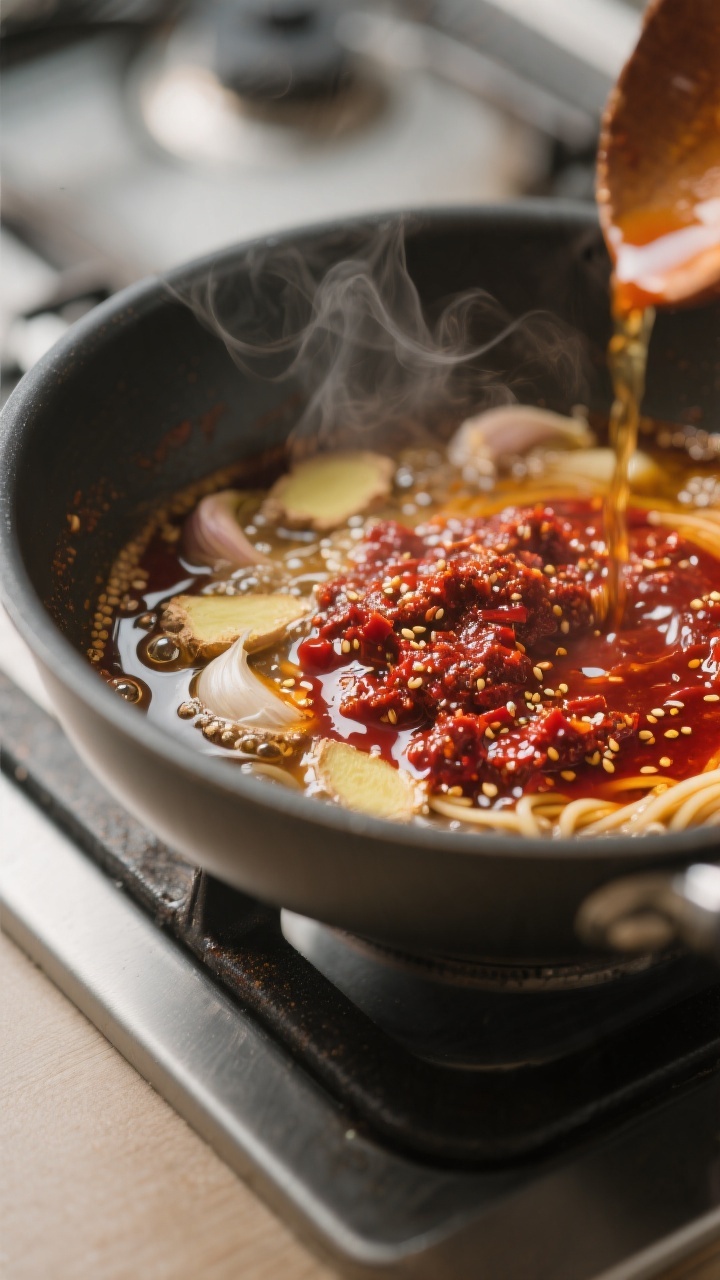
This recipe leans on a smart shortcut: a quick, creamy miso base boosted with chili paste and sesame. It delivers complexity without hours of simmering bones.
A touch of butter blends the miso into the broth, giving you that ramen-shop sheen. We build heat in layers—chili paste, chili oil, and optional fresh chili—so you can dial it up or down. The toppings stay flexible: soft-yolk eggs, sautéed mushrooms, corn, or greens, depending on what you have.
The result is a restaurant-style bowl that still feels doable on a busy night.
Shopping List
- Noodles: Fresh ramen noodles or dried ramen (not instant seasoning packets)
- Miso paste: Red or mixed (aka miso) for deeper flavor; white miso works if you prefer mild
- Aromatics: Garlic, ginger, scallions
- Chili components: Gochujang or doubanjiang (chili bean paste), plus chili oil or chili crisp
- Broth base: Low-sodium chicken or vegetable stock
- Umami boosters: Soy sauce, mirin, and a small piece of kombu (optional)
- Fat for richness: Sesame oil and unsalted butter (or vegan butter)
- Protein (choose one): Ground pork, chicken thighs, firm tofu, or mushrooms
- Toppings: Soft-boiled eggs, corn, bean sprouts, bok choy or spinach, nori sheets, sesame seeds
- Optional heat: Fresh red chili or crushed red pepper
- Acids and finishing: Rice vinegar and a squeeze of lime (optional)
Step-by-Step Instructions
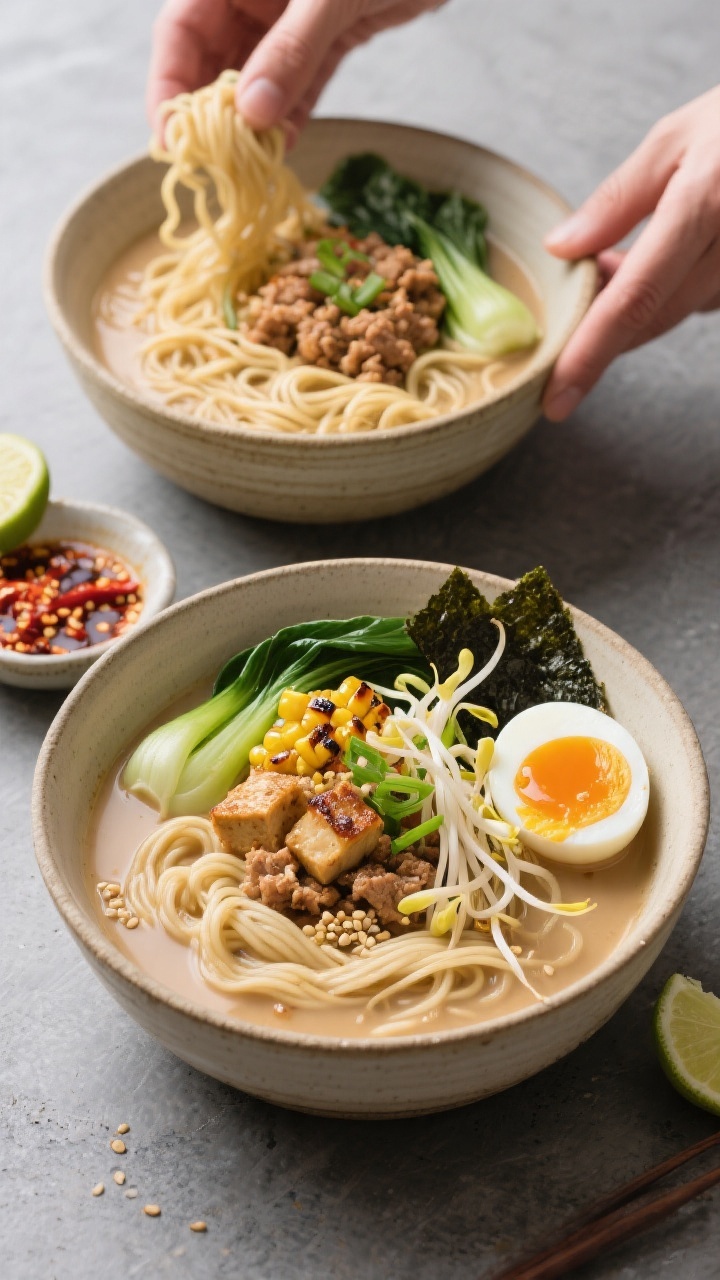
- Prep your toppings first. Soft-boil eggs (6.5 minutes, then ice bath), slice scallions, rinse greens, and drain corn or bean sprouts. If using tofu, press and cube it. Getting these ready now makes assembly fast.
- Cook the protein. In a wide pot, heat 1 tablespoon neutral oil over medium.
Add ground pork or sliced chicken and a pinch of salt. Cook until browned. If using tofu or mushrooms, sear until golden on edges.
Transfer to a plate and keep warm.
- Build the flavor base. In the same pot, add 1 tablespoon sesame oil. Sauté 3 minced garlic cloves and 1 tablespoon grated ginger until fragrant, about 30 seconds. Stir in 1–2 tablespoons chili paste (gochujang or doubanjiang) and cook another 30 seconds to bloom the spices.
- Make the broth. Pour in 4 cups low-sodium stock.
Add a small piece of kombu if you have it, and remove just before the broth boils. Stir in 1–2 tablespoons soy sauce and 1 tablespoon mirin. Simmer gently for 5–7 minutes to marry the flavors.
- Whisk in the miso. Turn the heat to low.
In a small bowl, whisk 3 tablespoons miso with a ladle of hot broth until smooth, then return it to the pot. Add 1 tablespoon unsalted butter for body. Keep the broth below a boil to protect the miso’s aroma.
- Adjust heat and seasoning. Taste and fine-tune with more soy sauce for salt, miso for depth, or a splash of rice vinegar for brightness.
Add chili oil or chili crisp to reach your ideal spice level.
- Cook the noodles. In a separate pot, boil ramen noodles according to package directions (usually 2–3 minutes). Drain well. Cooking separately keeps the broth clear and the noodles bouncy.
- Blanch the greens. In the noodle pot’s hot water, quickly blanch bok choy or spinach for 30–60 seconds.
Drain and set aside.
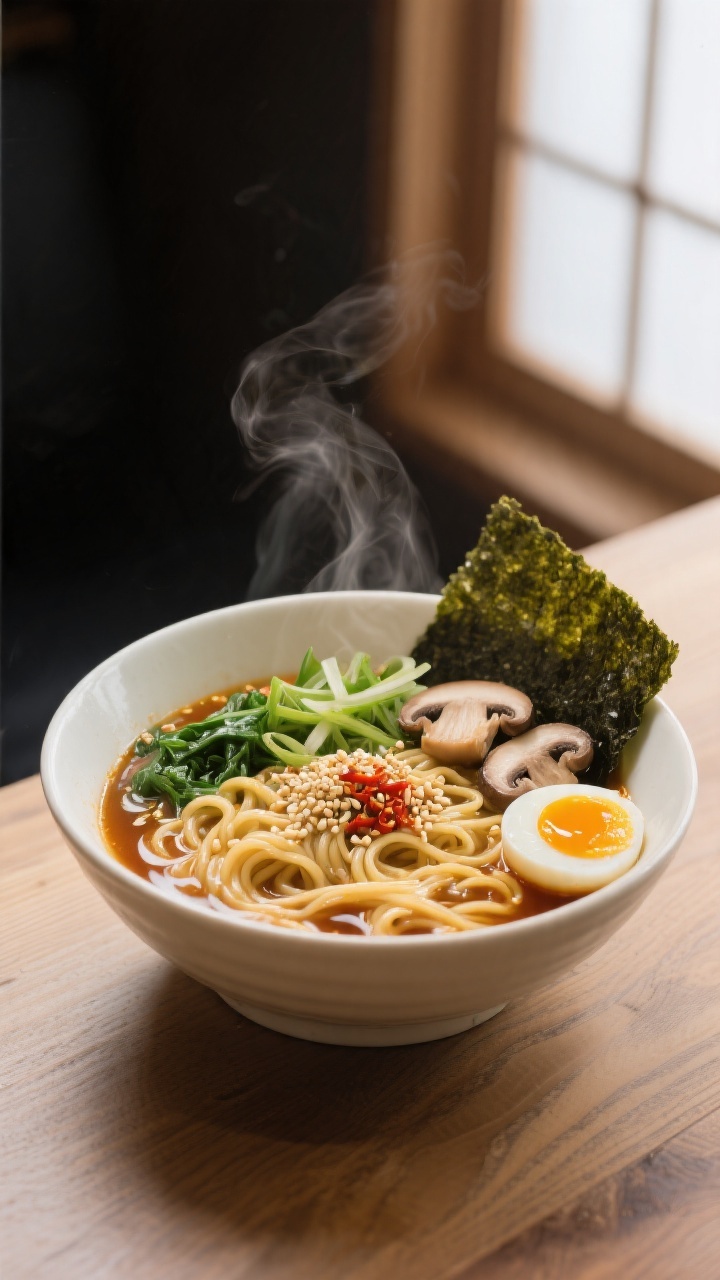
- Assemble the bowls. Divide noodles into bowls. Ladle the hot miso broth over them. Top with your protein, halved soft-boiled eggs, greens, corn, and bean sprouts.
Finish with scallions, nori, sesame seeds, and a drizzle of chili oil.
- Finish and serve. Add a squeeze of lime or a splash of vinegar if you like contrast. Serve immediately while the noodles are springy and the broth is steaming.
Keeping It Fresh
– Store broth and noodles separately to avoid soggy strands. The broth keeps in the fridge for 3–4 days and freezes well for up to 2 months. – Keep toppings like eggs, greens, and corn in individual containers.
Add them fresh when reheating. – Reheat broth gently over low heat so the miso doesn’t turn harsh. A quick simmer is fine; avoid a rolling boil. – Cook noodles right before serving. If you must store cooked noodles, toss them lightly in oil and reheat by dunking in hot water for 30 seconds.
Health Benefits
– Miso adds probiotics that can support gut health, especially if you don’t overboil the broth after adding it. – Ginger and garlic offer anti-inflammatory and antioxidant compounds that may support immune function. – Leafy greens and sprouts bring fiber, vitamins A and C, and a fresh crunch that balances richer elements. – Lean proteins or tofu provide staying power without making the bowl heavy. – Sesame and chili oils contribute healthy fats, which can help you absorb fat-soluble vitamins and carry flavor.
Pitfalls to Watch Out For
– Boiling the miso. High heat can dull miso’s fragrance and make the broth taste flat.
Keep it at a low simmer once miso is in. – Overcooking noodles. They go from perfect to mushy fast. Undercook by 10–20 seconds if you like extra bite. – Salt creep. Soy sauce, miso, and chili pastes are salty. Start with low-sodium stock and season in stages. – One-note heat. Too much chili without balance can overwhelm.
Add sweetness (mirin or corn) and acidity (vinegar or lime) to round it out. – Grease overload. A little fat equals silky broth. Too much turns heavy. Measure oils and butter instead of pouring by eye.
Recipe Variations
– Vegan Spicy Miso Ramen: Use vegetable stock, vegan butter, and tofu or mushrooms.
Need More Easy Dinner Ideas?
Get my FREE 7-Day Easy Dinner Reset and enjoy a full week of healthy dinners without the meal-planning stress.
Add a dash of white miso for softer sweetness. – Tantanmen-Inspired: Stir in 2 tablespoons tahini or Chinese sesame paste with the miso for nutty, creamy depth. Top with chili oil–crisped ground pork. – Seafood Twist: Simmer shrimp shells in the broth for 10 minutes, strain, and add seared shrimp as a topping. – Roasted Corn and Butter: Char corn in a skillet with butter until smoky-sweet, then finish the bowl with an extra pat of butter Hokkaido-style. – Extra-Creamy: Whisk in a splash of unsweetened soy milk or oat milk after the miso for a velvety, milky broth.
FAQ
Can I use instant ramen noodles?
Yes. Discard the seasoning packet and cook the noodles in plain water.
They’re thinner and cook fast, so watch the timing to keep them springy.
What miso should I buy?
Red or mixed miso brings deeper, saltier umami that stands up to spice. White miso is milder and slightly sweet. You can blend them to taste.
How do I make it less spicy?
Use less chili paste and skip the chili oil.
Add a bit more miso and a splash of milk alternative or tahini for a gentler, creamier finish.
Can I make the broth ahead?
Absolutely. The broth tastes even better the next day. Store it separately from noodles and toppings, and reheat gently before serving.
Why is my broth gritty?
Miso can clump if added directly.
Whisk it with hot broth in a separate bowl first, then add it back to the pot. Strain if needed.
What if I don’t have gochujang or doubanjiang?
Use a mix of chili paste and a little soy sauce, plus a teaspoon of sugar to mimic the fermented depth. Chili crisp adds a nice punch too.
How do I get jammy eggs?
Boil large eggs for 6.5–7 minutes, transfer to an ice bath, then peel gently.
Marinate in a mix of soy sauce, water, and mirin for extra flavor.
Can I keep leftovers with noodles in the broth?
You can, but the noodles will soften. If that’s fine by you, go ahead. Otherwise, store noodles and broth separately for the best texture.
In Conclusion
Spicy miso ramen is comfort food with character—bold, savory, and customizable.
With a smart miso-chili base and simple toppings, you can make a bowl that feels special any night of the week. Keep the miso gentle, the noodles bouncy, and the heat tuned to your taste. Once you nail the fundamentals, the variations are endless, and every pot will feel like your best one yet.
Enjoy the slurp.
Printable Recipe Card
Want just the essential recipe details without scrolling through the article? Get our printable recipe card with just the ingredients and instructions.
Loved This Recipe?
If you're looking for more simple, healthy dinners your family will actually eat, grab my FREE 7-Day Easy Dinner Reset. You'll get 7 easy dinner recipes, simple grocery lists, and a done-for-you plan that takes the stress out of mealtime.