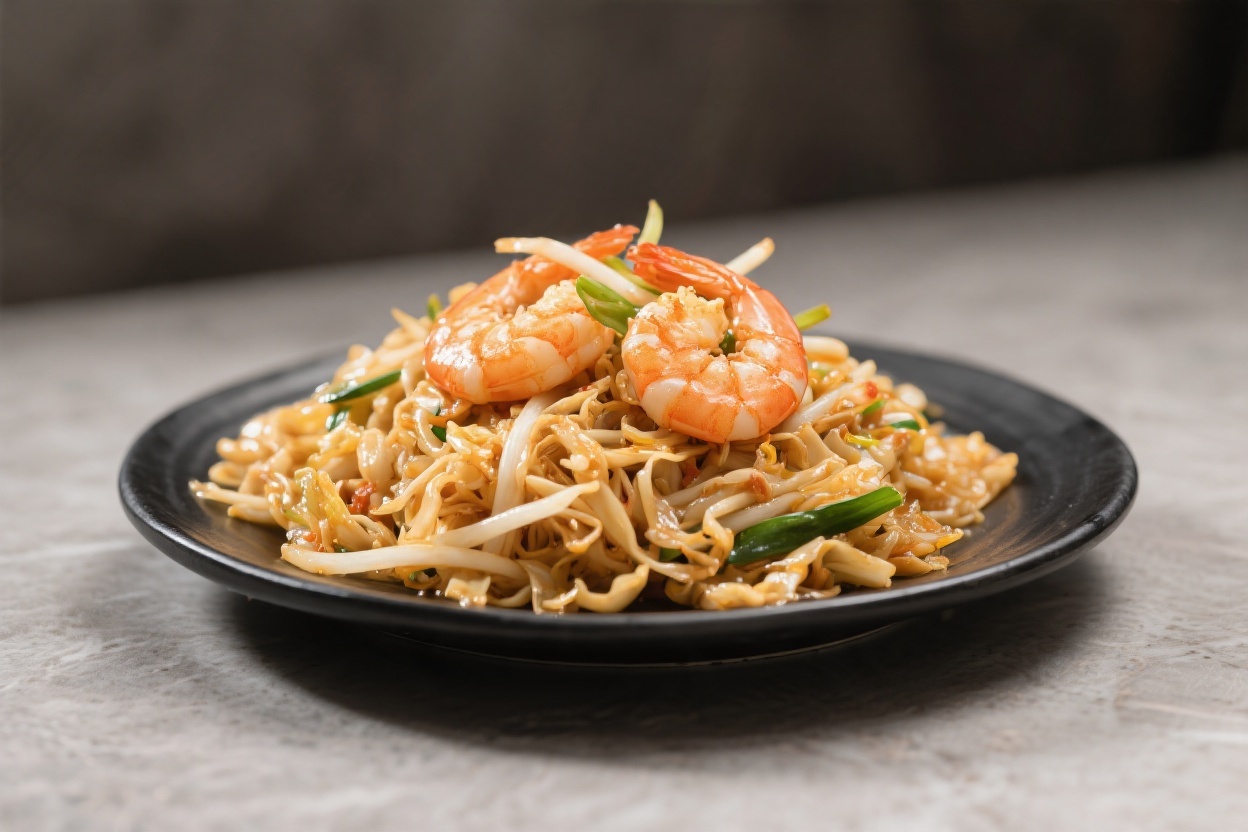
Shrimp Pad Thai – A Bright, Savory Weeknight Favorite
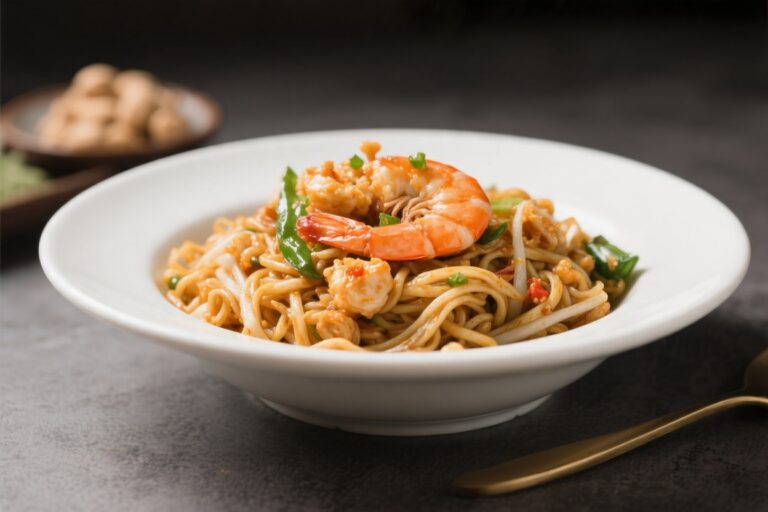
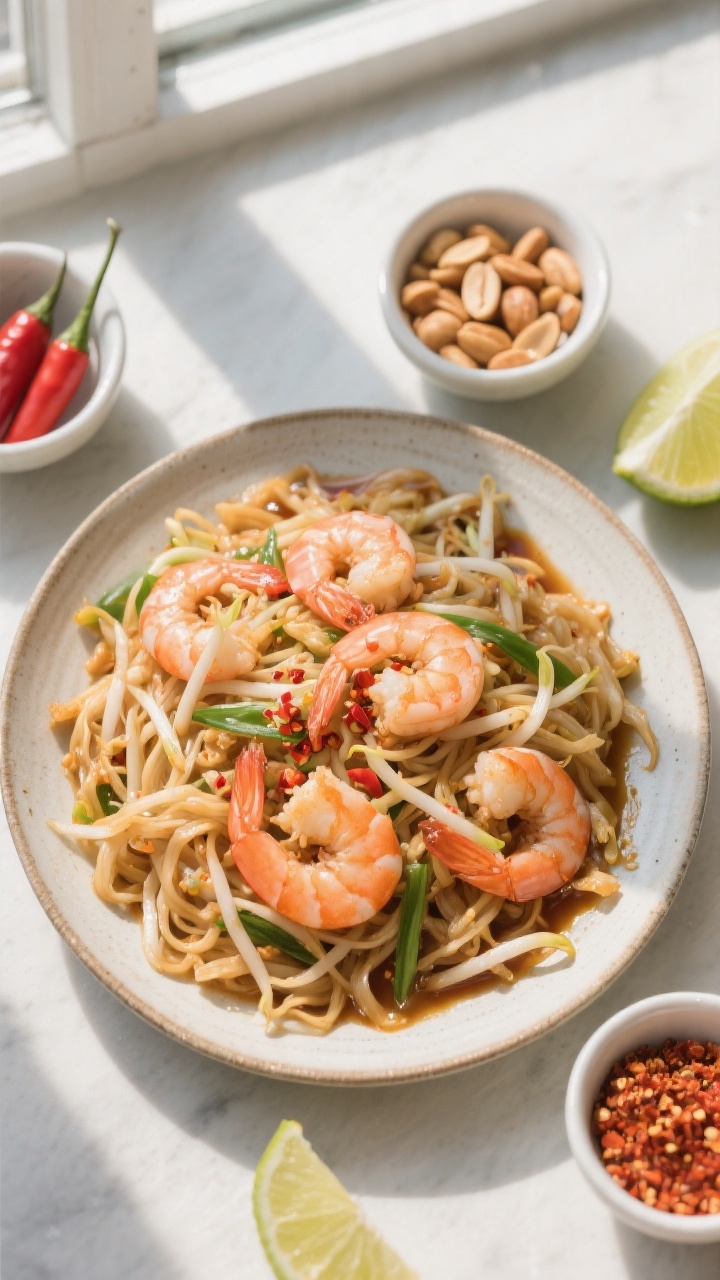
Pad Thai is one of those dishes that hits all the right notes—sweet, salty, tangy, and a little spicy. Shrimp Pad Thai brings that flavor mix together with tender rice noodles, juicy shrimp, and crunchy peanuts. It’s quick to make, and it feels special enough for company while still being simple for a weeknight.
FREE 7-Day Easy Dinner Reset
Save time, eat healthier, and take the stress out of dinner. Get a full week of easy healthy dinners delivered straight to your inbox.
If you’ve only had Pad Thai in restaurants, you’ll be surprised how doable it is at home. With the right sauce balance and a hot pan, you’ll get that signature glossy, slightly caramelized finish.
Ingredients
Method
- Soak the noodles: Place rice noodles in warm water for 20–30 minutes until pliable but not fully soft. Drain and set aside. They’ll finish cooking in the pan.
- Mix the sauce: In a small bowl, whisk tamarind, fish sauce, sugar, chili, and a splash of water. Taste and adjust. You’re aiming for a bold, tangy-sweet-salty balance.
- Prep your add-ins: Mince garlic, slice green onions, and chop peanuts. Pat the shrimp dry and season lightly with a pinch of salt.
- Heat the pan: Use a large wok or wide skillet over medium-high heat. Add 1–2 tablespoons oil until shimmering.
- Cook the shrimp: Add shrimp in a single layer. Sear 1–2 minutes per side until just pink. Transfer to a plate; they’ll finish with the noodles.
- Sauté aromatics: Add a touch more oil if needed. Stir-fry garlic and the white parts of the green onions for 20–30 seconds until fragrant, not browned.
- Add noodles and sauce: Toss in the drained noodles. Pour in most of the sauce. Stir-fry 2–3 minutes, lifting and turning the noodles so they absorb the sauce. Add a splash of water if the pan looks dry.
- Push aside and scramble eggs: Move noodles to one side. Add a little oil, crack in the eggs, and scramble just until set. Fold into the noodles.
- Finish with shrimp and sprouts: Return shrimp to the pan with bean sprouts and the green parts of the onions. Add remaining sauce if needed. Stir-fry 30–60 seconds to warm through while keeping sprouts crisp.
- Plate and garnish: Serve hot, topped with peanuts, cilantro (optional), and lime wedges. Squeeze lime over each serving for brightness.
What Makes This Special
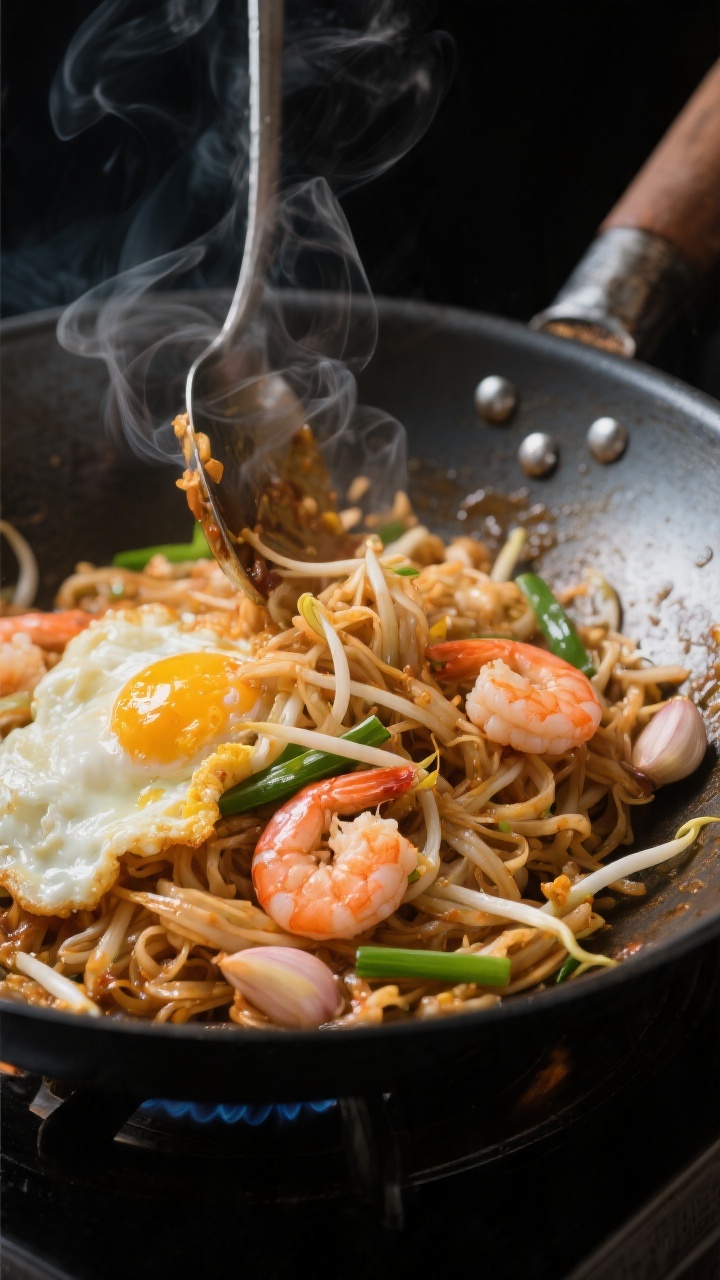
This version focuses on balance and speed without sacrificing flavor. The sauce leans classic: tamarind for tang, fish sauce for savoriness, palm or brown sugar for sweetness, and a touch of chili heat.
Shrimp cooks in minutes, keeping the dish light and fresh. Fresh lime, roasted peanuts, and crunchy bean sprouts add contrast at the end, so every bite pops.
- Balanced sauce: Tangy tamarind, salty fish sauce, and just enough sweetness.
- Fast-cooking shrimp: Ready in a few minutes, perfect for busy nights.
- Great texture: Tender noodles, crisp sprouts, and crunchy peanuts.
- Flexible heat level: Adjust the chili to suit your taste.
What You’ll Need
- Rice noodles: 8 ounces (about 225 g) flat rice noodles, size medium or “Pad Thai” width.
- Shrimp: 12–16 ounces (340–450 g), peeled and deveined, medium to large size.
- Eggs: 2 large.
- Garlic: 3 cloves, minced.
- Green onions: 3–4, sliced (whites and greens separated).
- Bean sprouts: 2 cups, rinsed.
- Roasted peanuts: 1/3 cup, roughly chopped.
- Cooking oil: Neutral, like peanut or canola.
- Lime: 1–2, cut into wedges.
- Cilantro: A small handful, chopped (optional).
For the sauce:
- Tamarind paste or concentrate: 2–3 tablespoons (start with 2 for mild tang).
- Fish sauce: 3 tablespoons.
- Palm sugar or light brown sugar: 2–3 tablespoons, to taste.
- Rice vinegar: 1 tablespoon (optional, for extra brightness).
- Chili element: 1–2 teaspoons Thai chili flakes, chili paste, or sriracha (adjust to taste).
- Water: 2–3 tablespoons to loosen the sauce if needed.
Optional add-ins:
- Dried shrimp: 1 tablespoon, rinsed and chopped, for depth.
- Firm tofu: 4 ounces, cubed and pan-seared, for extra protein.
- Radish (preserved/salted): 1–2 tablespoons, chopped, for a classic touch.
How to Make It
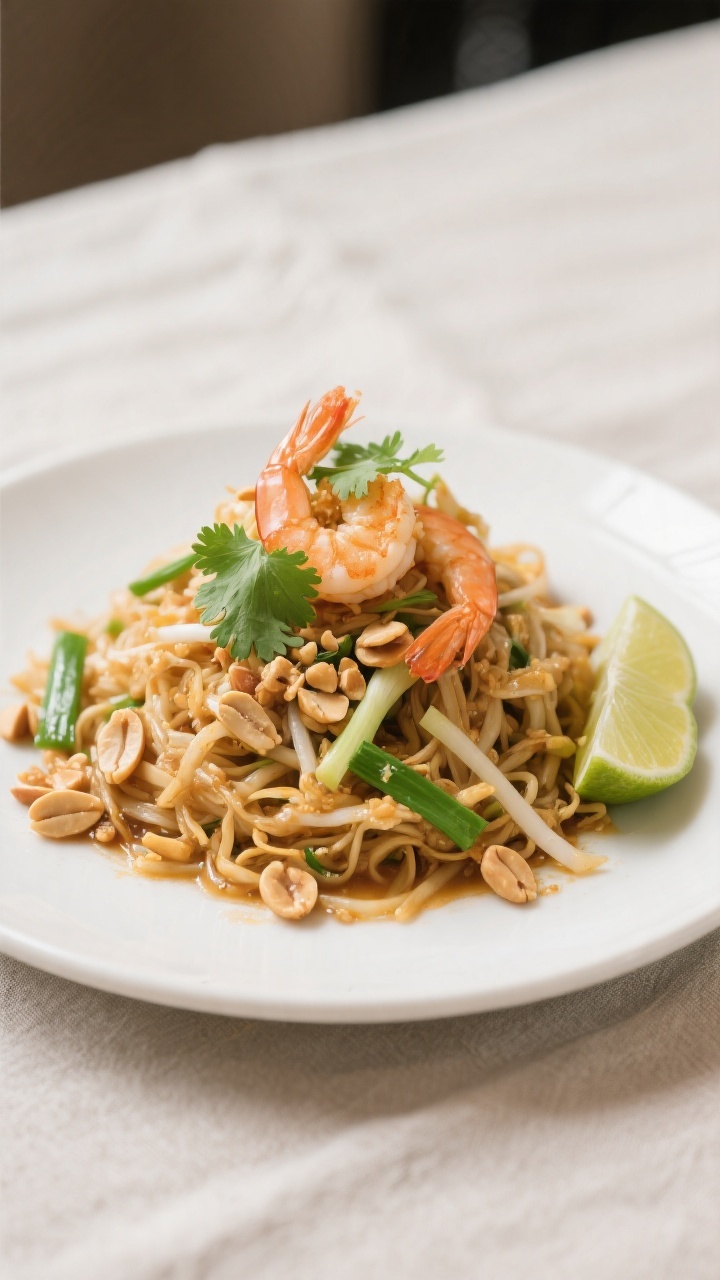
- Soak the noodles: Place rice noodles in warm water for 20–30 minutes until pliable but not fully soft. Drain and set aside.
They’ll finish cooking in the pan.
- Mix the sauce: In a small bowl, whisk tamarind, fish sauce, sugar, chili, and a splash of water. Taste and adjust. You’re aiming for a bold, tangy-sweet-salty balance.
- Prep your add-ins: Mince garlic, slice green onions, and chop peanuts.
Pat the shrimp dry and season lightly with a pinch of salt.
- Heat the pan: Use a large wok or wide skillet over medium-high heat. Add 1–2 tablespoons oil until shimmering.
- Cook the shrimp: Add shrimp in a single layer. Sear 1–2 minutes per side until just pink.
Transfer to a plate; they’ll finish with the noodles.
- Sauté aromatics: Add a touch more oil if needed. Stir-fry garlic and the white parts of the green onions for 20–30 seconds until fragrant, not browned.
- Add noodles and sauce: Toss in the drained noodles. Pour in most of the sauce.
Stir-fry 2–3 minutes, lifting and turning the noodles so they absorb the sauce. Add a splash of water if the pan looks dry.
- Push aside and scramble eggs: Move noodles to one side. Add a little oil, crack in the eggs, and scramble just until set.
Fold into the noodles.
- Finish with shrimp and sprouts: Return shrimp to the pan with bean sprouts and the green parts of the onions. Add remaining sauce if needed. Stir-fry 30–60 seconds to warm through while keeping sprouts crisp.
- Plate and garnish: Serve hot, topped with peanuts, cilantro (optional), and lime wedges.
Squeeze lime over each serving for brightness.
Storage Instructions
- Refrigerate: Cool completely, then store in an airtight container for up to 3 days.
- Reheat: Warm in a skillet over medium heat with a splash of water to loosen the noodles. Stir gently to avoid breaking them.
- Freezing: Not recommended. Rice noodles get mushy and shrimp can turn rubbery after thawing.
- Make-ahead tip: Mix the sauce and prep toppings in advance.
Cook noodles and shrimp just before serving for the best texture.
Benefits of This Recipe
- Quick and fresh: From prep to plate in about 30–35 minutes.
- Balanced nutrition: Lean protein from shrimp, carbs from rice noodles, and fresh veggies.
- Customizable: Adjust heat, sweetness, and add vegetables or tofu to suit your taste.
- Restaurant flavor at home: The tamarind-fish sauce combo brings authentic depth without complicated steps.
Pitfalls to Watch Out For
- Over-soaking noodles: If they’re fully soft before hitting the pan, they’ll turn mushy. Aim for pliable but still a bit firm.
- Overcooking shrimp: They finish fast. Remove early and add back near the end.
- Too little heat: A hot pan helps the sauce caramelize slightly and keeps noodles from sticking.
- Skipping lime: That final squeeze brightens everything and balances the sweetness.
- Heavy hand with sauce: Add gradually.
You can always pour in more; it’s hard to take it back.
Recipe Variations
Need More Easy Dinner Ideas?
Get my FREE 7-Day Easy Dinner Reset and enjoy a full week of healthy dinners without the meal-planning stress.
- Extra veggie: Add quick-cooking vegetables like shredded carrots, bell peppers, or snap peas. Stir-fry before adding noodles.
- Shrimp and tofu: Use half shrimp, half crisped tofu for a heartier plate and mixed textures.
- Peanut-forward: Stir a spoonful of peanut butter into the sauce for a creamier, nutty twist.
- Spicy garlic: Bloom a teaspoon of chili-garlic paste with the aromatics for a kick.
- Gluten-friendly: Use a gluten-free fish sauce and check chili pastes. Rice noodles are naturally gluten-free.
- No tamarind on hand: Try a mix of lime juice and a touch of rice vinegar with extra brown sugar.
It’s not the same, but it’s tasty.
FAQ
Can I use frozen shrimp?
Yes. Thaw completely under cold running water, then pat very dry so they sear instead of steaming. Dry shrimp brown better and keep a springy texture.
What if I can’t find tamarind paste?
Use a mix of lime juice and a little rice vinegar with extra brown sugar as a stand-in.
Start small and adjust to taste. Tamarind has a unique tang, but this gets you close.
How do I keep noodles from clumping?
Don’t over-soak, and toss frequently once they hit the pan. A splash of water or sauce loosens them, and cooking in batches helps if your pan is small.
Is fish sauce necessary?
It gives classic depth.
If you need a substitute, use soy sauce with a little anchovy paste, or a mushroom-based vegan fish sauce for a similar savory note.
Can I make it vegetarian?
Yes. Swap shrimp for tofu or extra vegetables, use a vegetarian “fish” sauce or soy sauce, and keep the rest the same. The technique doesn’t change.
How spicy should Pad Thai be?
It’s flexible.
Start mild and add chili flakes or sriracha to taste. Serve extra chili on the side so everyone can adjust their bowl.
What’s the best pan to use?
A carbon steel wok is ideal, but a large nonstick or stainless skillet works. The key is high heat and enough room to toss the noodles.
Why does my Pad Thai taste too sweet?
Add more tamarind or a squeeze of lime and a little fish sauce.
Salt and acid balance sweetness quickly. Taste as you go.
In Conclusion
Shrimp Pad Thai is a fast, flavorful dish that rewards a few smart steps: soak noodles just right, keep the pan hot, and balance the sauce. With fresh lime, crunchy peanuts, and just-cooked shrimp, it feels bright and satisfying.
Once you make it at home, you’ll see how easy it is to tune the flavors to your liking. Keep the sauce ingredients on hand and this becomes a dependable go-to any night of the week.
Printable Recipe Card
Want just the essential recipe details without scrolling through the article? Get our printable recipe card with just the ingredients and instructions.
Loved This Recipe?
If you're looking for more simple, healthy dinners your family will actually eat, grab my FREE 7-Day Easy Dinner Reset. You'll get 7 easy dinner recipes, simple grocery lists, and a done-for-you plan that takes the stress out of mealtime.