Sweet and Sour Chicken – A Bright, Tangy Weeknight Favorite
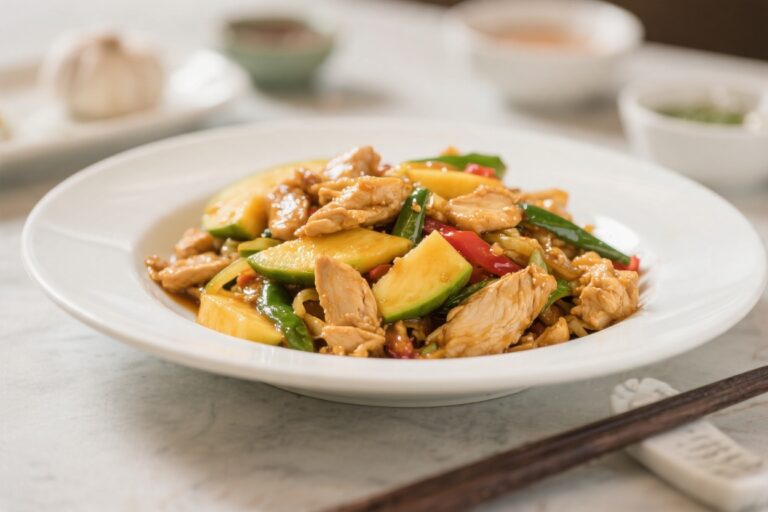
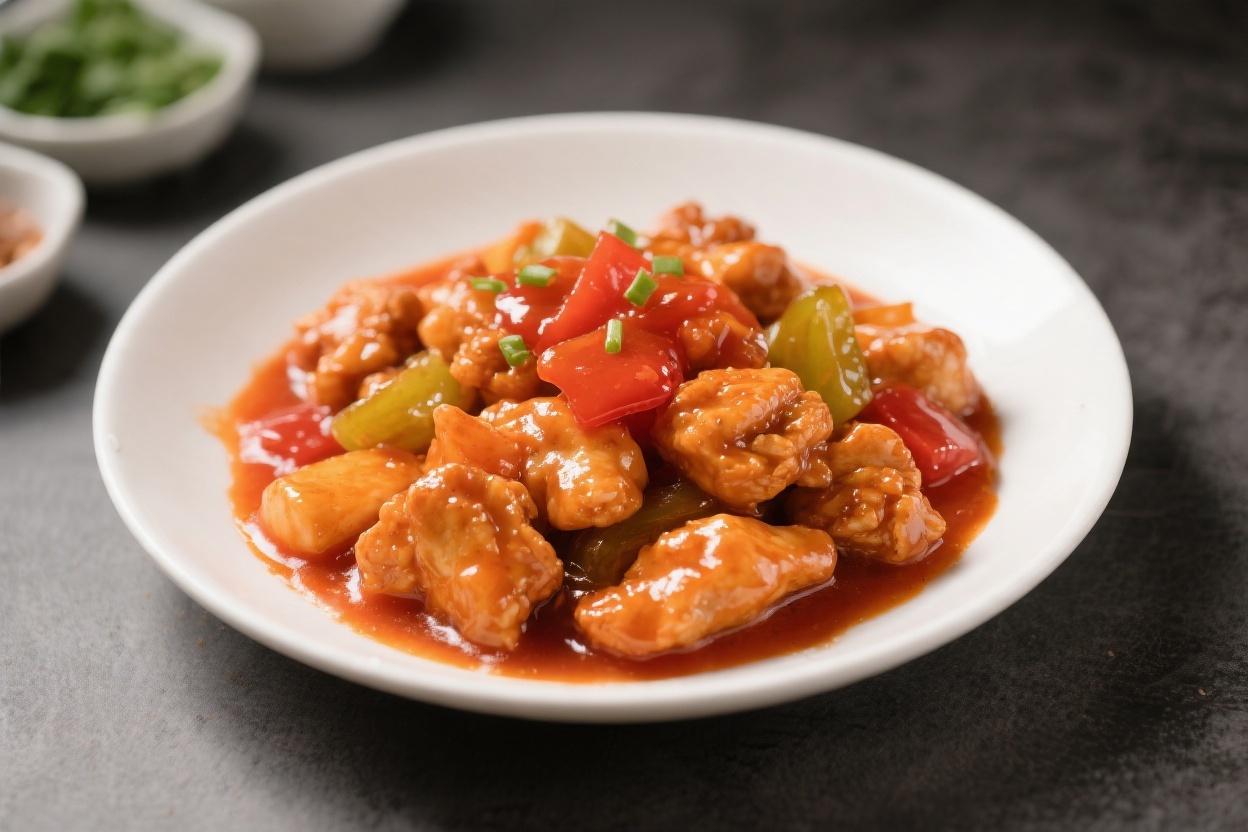
Sweet and Sour Chicken is one of those dishes that always hits the spot—crispy bites of chicken, glossy sauce, and colorful peppers that make the plate pop. It’s familiar, comforting, and surprisingly easy to make at home. This version balances tang and sweetness without being cloying.
FREE 7-Day Easy Dinner Reset
Save time, eat healthier, and take the stress out of dinner. Get a full week of easy healthy dinners delivered straight to your inbox.
You’ll get a light, shatter-crisp coating and a sauce that clings to every bite. If you’re craving takeout but want something fresher and lighter, this is a great place to start.
Ingredients
Method
- Prep the chicken. Pat the chicken dry with paper towels. In a bowl, mix soy sauce, Shaoxing wine, sesame oil, egg white, salt, and white pepper. Add chicken and toss to coat. Let it marinate for 15 minutes while you prepare the vegetables and sauce.
- Make the sauce. In a small bowl or measuring cup, whisk ketchup, rice vinegar, sugar, soy sauce, oyster sauce, pineapple juice, and cornstarch until smooth. Set aside.
- Chop the veggies. Cut the bell peppers and onion into 1-inch pieces. Mince the garlic and grate the ginger. Keep the pineapple chunks ready and drained if using canned.
- Coat the chicken. In a shallow bowl, combine cornstarch and flour. Add the marinated chicken pieces, letting excess marinade drip off. Toss to coat evenly. Shake off extra starch so the coating is light, not cakey.
- Heat the oil. Pour about 1 inch of oil into a deep skillet or wok. Heat over medium-high until it reaches 350°F (175°C). If you don’t have a thermometer, dip a wooden chopstick—the oil should bubble steadily around it.
- Fry in batches. Add chicken in a single layer, leaving space between pieces. Fry 4–5 minutes, turning once, until golden and cooked through. Transfer to a wire rack or paper towels. Repeat with remaining chicken.
- Stir-fry the vegetables. Discard all but 1 tablespoon of the frying oil. Return the pan to medium-high heat. Add onion, bell peppers, and a pinch of salt. Stir-fry 2–3 minutes until crisp-tender. Add garlic and ginger; cook 30 seconds until fragrant.
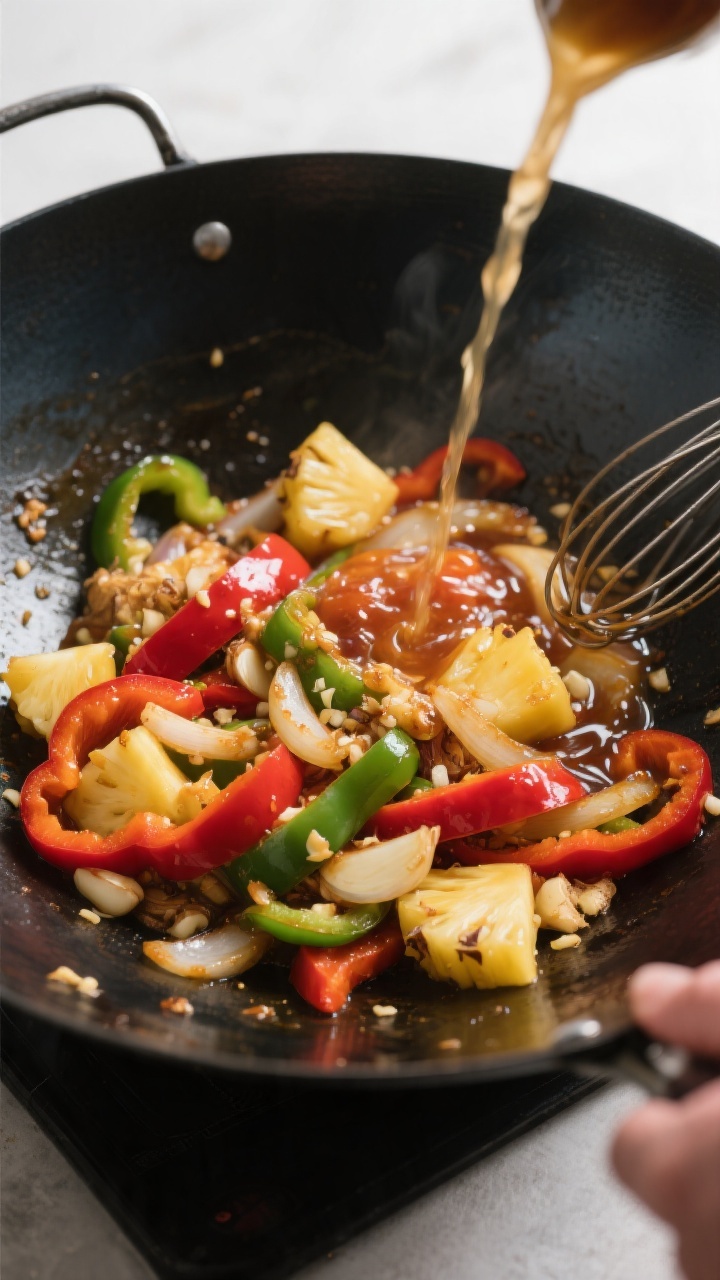
- Add pineapple and sauce. Stir in pineapple chunks. Whisk the sauce again (the cornstarch settles), then pour it into the pan. Cook, stirring, until the sauce thickens and turns glossy, about 1–2 minutes.
- Toss with chicken. Add fried chicken to the pan and toss to coat every piece. If the sauce gets too thick, splash in a tablespoon of water to loosen. Taste and adjust with a pinch of salt or an extra dash of vinegar if you like it tangier.
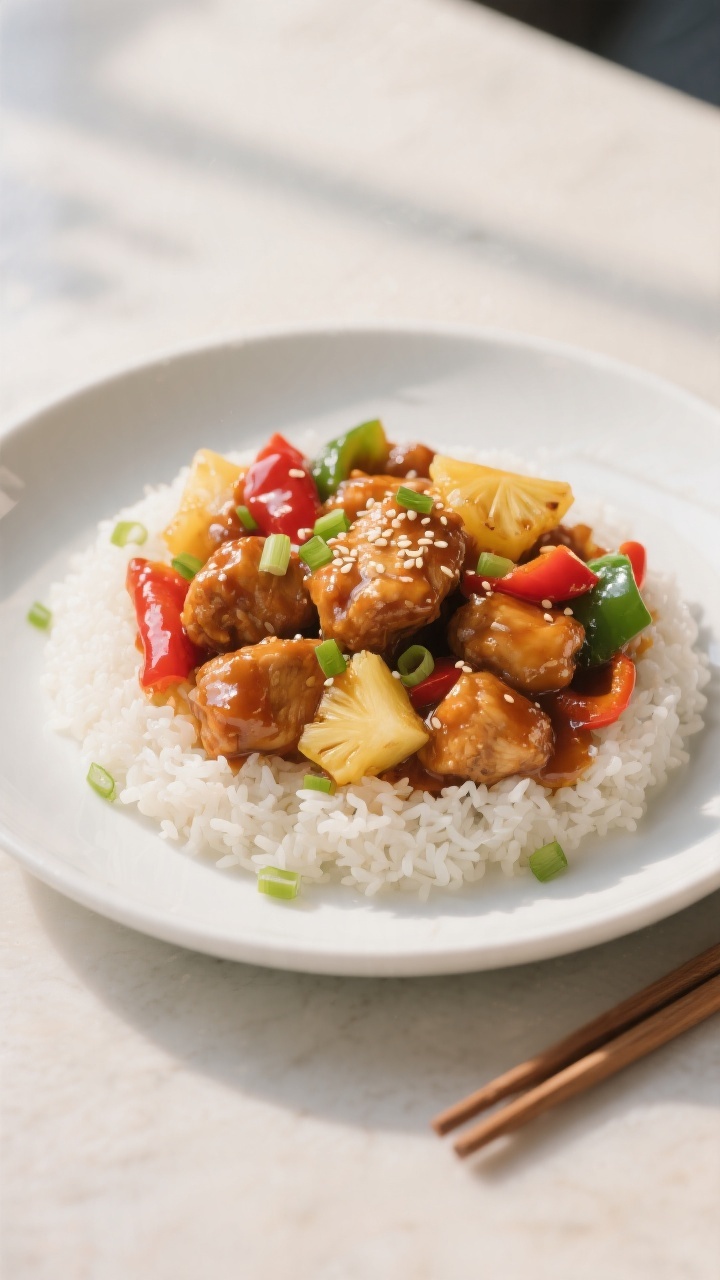
- Serve. Spoon over hot rice. Garnish with sesame seeds and scallions if you want a little crunch and color. Serve immediately for the best texture.
Why This Recipe Works
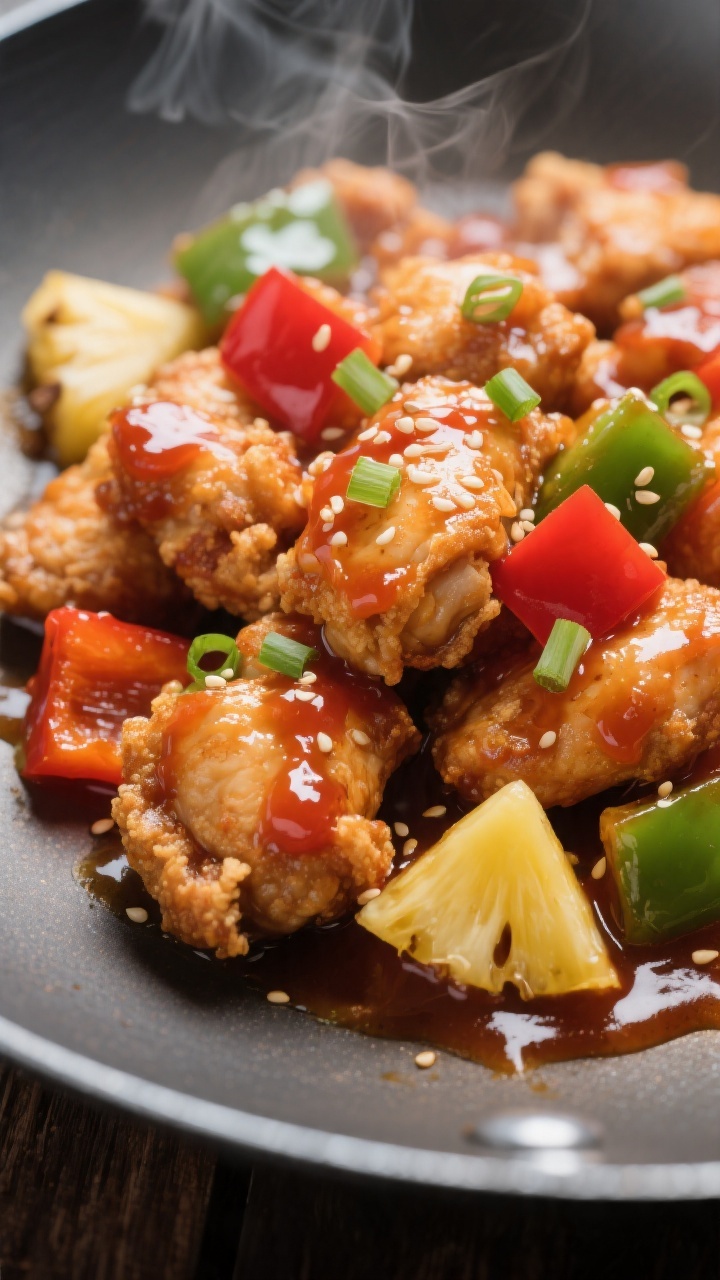
This recipe delivers crisp chicken that stays crunchy long enough to soak up just the right amount of sauce. The cornstarch coating creates a thin, airy crust that fries up fast.
The sauce blends pantry staples—ketchup, vinegar, and sugar—for a classic flavor without a long list of specialty items. Tossing the chicken with peppers and pineapple at the end adds texture and brightness. You’ll get a clean, restaurant-style finish using simple techniques you can repeat anytime.
Shopping List
- Chicken: 1.5 pounds boneless, skinless chicken breast or thighs, cut into 1-inch pieces
- For the marinade: 1 tablespoon soy sauce, 1 tablespoon Shaoxing wine or dry sherry (optional), 1 teaspoon sesame oil (optional), 1 egg white, 1/2 teaspoon salt, 1/2 teaspoon white pepper
- Coating: 3/4 cup cornstarch, 1/4 cup all-purpose flour
- Vegetables and fruit: 1 red bell pepper, 1 green bell pepper, 1 small yellow onion, 1 cup pineapple chunks (fresh or canned, drained)
- Aromatics: 2 cloves garlic, 1 teaspoon grated fresh ginger (optional)
- Sweet and sour sauce: 1/2 cup ketchup, 1/3 cup rice vinegar (or apple cider vinegar), 1/3 cup sugar, 1 tablespoon soy sauce, 1 tablespoon oyster sauce (optional), 1/2 cup pineapple juice or water, 2 teaspoons cornstarch
- For frying: Neutral oil (such as vegetable, canola, or peanut oil)
- To serve: Cooked white rice or fried rice; sesame seeds and sliced scallions (optional)
Instructions
- Prep the chicken. Pat the chicken dry with paper towels.
In a bowl, mix soy sauce, Shaoxing wine, sesame oil, egg white, salt, and white pepper. Add chicken and toss to coat. Let it marinate for 15 minutes while you prepare the vegetables and sauce.
- Make the sauce. In a small bowl or measuring cup, whisk ketchup, rice vinegar, sugar, soy sauce, oyster sauce, pineapple juice, and cornstarch until smooth.
Set aside.
- Chop the veggies. Cut the bell peppers and onion into 1-inch pieces. Mince the garlic and grate the ginger. Keep the pineapple chunks ready and drained if using canned.
- Coat the chicken. In a shallow bowl, combine cornstarch and flour.
Add the marinated chicken pieces, letting excess marinade drip off. Toss to coat evenly. Shake off extra starch so the coating is light, not cakey.
- Heat the oil. Pour about 1 inch of oil into a deep skillet or wok.
Heat over medium-high until it reaches 350°F (175°C). If you don’t have a thermometer, dip a wooden chopstick—the oil should bubble steadily around it.
- Fry in batches. Add chicken in a single layer, leaving space between pieces. Fry 4–5 minutes, turning once, until golden and cooked through.
Transfer to a wire rack or paper towels. Repeat with remaining chicken.
- Stir-fry the vegetables. Discard all but 1 tablespoon of the frying oil. Return the pan to medium-high heat.
Add onion, bell peppers, and a pinch of salt. Stir-fry 2–3 minutes until crisp-tender. Add garlic and ginger; cook 30 seconds until fragrant.
- Add pineapple and sauce. Stir in pineapple chunks.
Whisk the sauce again (the cornstarch settles), then pour it into the pan. Cook, stirring, until the sauce thickens and turns glossy, about 1–2 minutes.
- Toss with chicken. Add fried chicken to the pan and toss to coat every piece. If the sauce gets too thick, splash in a tablespoon of water to loosen.
Taste and adjust with a pinch of salt or an extra dash of vinegar if you like it tangier.
- Serve. Spoon over hot rice. Garnish with sesame seeds and scallions if you want a little crunch and color. Serve immediately for the best texture.
How to Store
Let leftovers cool to room temperature, then refrigerate in an airtight container for up to 3 days.
The coating will soften, but the flavors deepen. Reheat gently in a skillet over medium heat with a splash of water to loosen the sauce. You can also use the oven: 350°F for 10–12 minutes, covered with foil, to prevent drying.
Freezing isn’t ideal because the sauce can separate and the chicken may turn mushy after thawing.
Benefits of This Recipe
- Balanced flavor: Sweet, sour, and savory notes hit all the right spots without overwhelming your palate.
- Weeknight-friendly: Simple prep and fast frying keep total time manageable, even on busy nights.
- Customizable: Easy to tweak for spice, sweetness, or produce you already have on hand.
- Better than takeout: Fresher ingredients, less grease, and a brighter, cleaner sauce.
- Kid-approved: Familiar flavors and a fun, colorful mix make it easy to serve to a crowd.
Pitfalls to Watch Out For
- Soggy coating: Overcrowding the pan drops oil temperature and softens the crust. Fry in batches and keep the oil hot.
- Gluey sauce: Cornstarch clumps if added unevenly. Whisk the sauce before pouring and stir continuously as it thickens.
- Too sweet or too sour: Taste and adjust.
Add a teaspoon of vinegar for more tang or a teaspoon of sugar for more sweetness.
- Overcooked veggies: Bell peppers should be crisp-tender. High heat and short cooking time keep their color and snap.
- Dry chicken: Bite-size pieces cook quickly. Pull them as soon as they’re golden and firm.
Variations You Can Try
- Air-fryer method: Toss coated chicken with 1 tablespoon oil.
Air-fry at 400°F for 10–12 minutes, shaking halfway, until crisp. Toss with sauce as directed.
- Baked version: Arrange coated chicken on a lightly oiled rack over a sheet pan. Spray lightly with oil.
Bake at 425°F for 15–18 minutes until crisp and cooked through.
- Spicy kick: Add 1–2 teaspoons sriracha or chili-garlic sauce to the sweet and sour sauce. A pinch of red pepper flakes works too.
- Gluten-free: Use tamari or a certified gluten-free soy sauce and skip the flour—use all cornstarch for the coating.
- No pineapple: Swap in orange segments or extra bell peppers and a splash of orange juice in the sauce.
- Veggie swap: Try snap peas, carrots (thinly sliced), or zucchini. Keep the quick-cook, high-heat approach.
- Tofu twist: Press extra-firm tofu, cut into cubes, coat in cornstarch, and pan-fry or air-fry.
Toss with the same sauce and veggies.
FAQ
Need More Easy Dinner Ideas?
Get my FREE 7-Day Easy Dinner Reset and enjoy a full week of healthy dinners without the meal-planning stress.
Can I use chicken thighs instead of breasts?
Yes. Thighs stay juicy and are more forgiving. Trim excess fat, cut into 1-inch pieces, and cook as directed.
The timing is nearly the same.
Do I have to deep-fry the chicken?
No. A shallow fry in 1 inch of oil works, or use an air fryer or oven method from the variations. You’ll get a slightly different texture but still great flavor.
What if I don’t have rice vinegar?
Use apple cider vinegar or white vinegar.
Start with a little less and adjust to taste since they can be sharper.
How do I keep the chicken crispy after saucing?
Have the sauce hot and ready, then toss the chicken right before serving. If you’re feeding a crowd, keep the chicken and sauce separate and combine on plates.
Can I make the sauce ahead?
Yes. Mix it up to 3 days in advance and store in the fridge.
Whisk before using and cook it in the pan until thickened, then add chicken and veggies.
Is the sugar necessary?
The sweetness balances the vinegar and gives the sauce body. You can reduce it slightly or use honey, but the classic profile relies on some sugar.
What oil is best for frying?
Use a neutral, high-heat oil like canola, vegetable, or peanut oil. Olive oil isn’t ideal here due to its lower smoke point and flavor.
Can I double the recipe?
Absolutely.
Fry in more batches so the oil stays hot, and use a large wok or skillet to sauce everything evenly. Keep cooked chicken warm in a 250°F oven between batches.
Wrapping Up
Sweet and Sour Chicken is all about balance—crisp chicken, bright sauce, and fresh crunch. With a few pantry staples and simple steps, you can make a takeout favorite that tastes cleaner and livelier at home.
Keep the heat high, the batches small, and the sauce ready. Once you’ve nailed the rhythm, this becomes a go-to weeknight win you’ll make again and again.
Printable Recipe Card
Want just the essential recipe details without scrolling through the article? Get our printable recipe card with just the ingredients and instructions.
Loved This Recipe?
If you're looking for more simple, healthy dinners your family will actually eat, grab my FREE 7-Day Easy Dinner Reset. You'll get 7 easy dinner recipes, simple grocery lists, and a done-for-you plan that takes the stress out of mealtime.