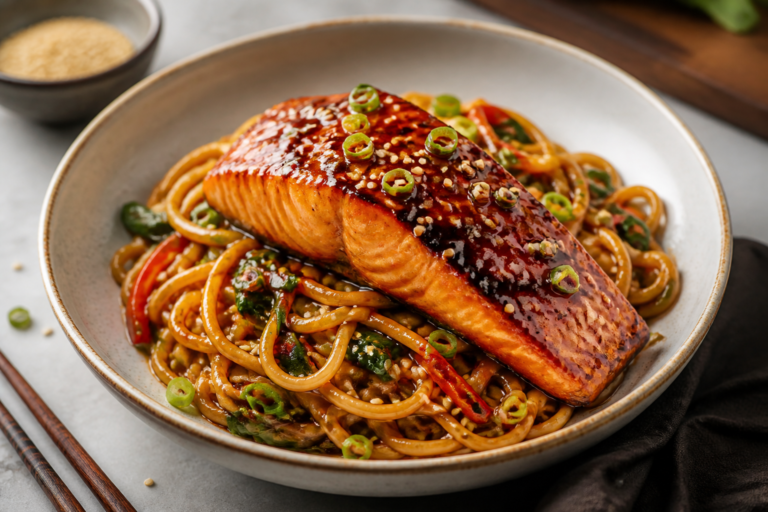
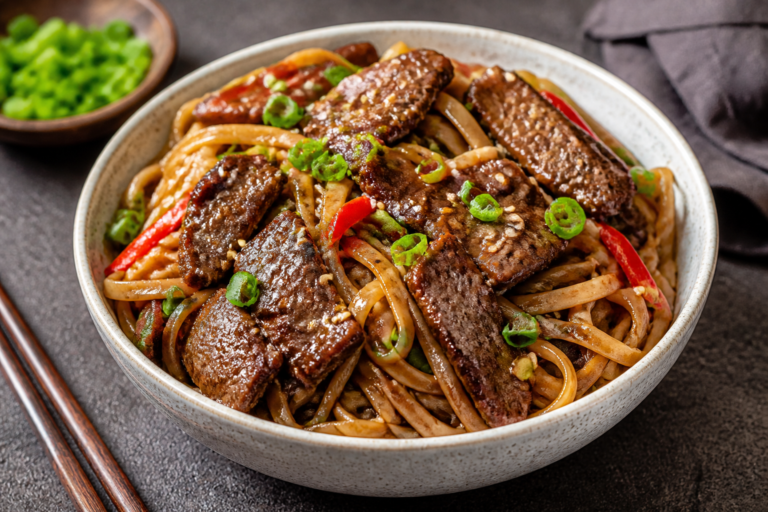
Korean BBQ Beef Noodles – Fast, Flavor-Packed Comfort Food
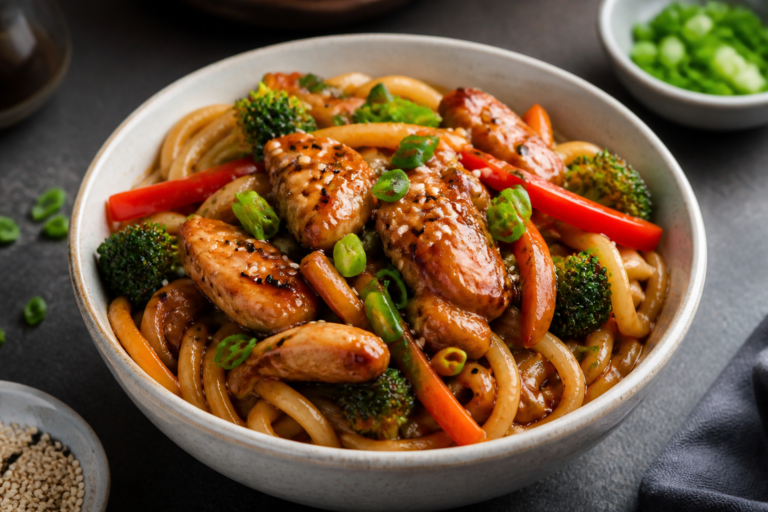
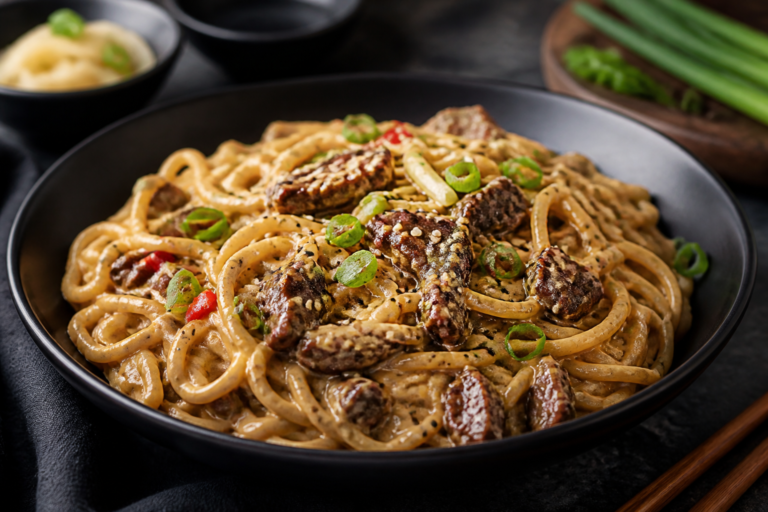
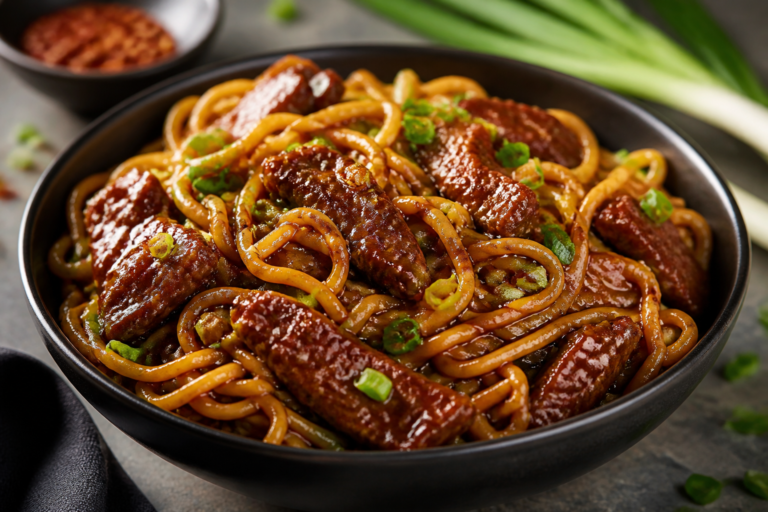
If you love the sweet-salty char of Korean BBQ and the comfort of a big bowl of noodles, this dish brings both to the table in one pan. The noodles soak up a glossy, savory sauce while thin slices of beef stay tender and juicy. A quick marinade adds punch without hours of waiting, and the whole thing cooks fast.
FREE 7-Day Easy Dinner Reset
Save time, eat healthier, and take the stress out of dinner. Get a full week of easy healthy dinners delivered straight to your inbox.
It’s weeknight-friendly, easy to customize, and feels special enough for guests. Expect big flavor, a little heat, and that satisfying slurp.
Ingredients
Method
- Slice the beef thin. For easy slicing, chill the beef in the freezer for 20–30 minutes. Slice against the grain into very thin strips. Thin slices cook quickly and stay tender.
- Whisk the marinade. In a bowl, combine soy sauce, brown sugar or honey, gochujang, rice vinegar, mirin (if using), garlic, ginger, sesame seeds, and sesame oil. If you want a glossier, thicker sauce, whisk in 1 teaspoon cornstarch.
- Marinate the beef. Toss the beef with half the marinade. Let it sit 10–20 minutes while you prep vegetables. If using grated pear or apple, mix it into the marinade for extra tenderness and subtle sweetness.
- Cook the noodles. Boil according to package directions until just shy of done. Drain and rinse briefly (especially if using udon or rice noodles) to prevent sticking. Toss with a splash of oil and set aside.
- Prep the veggies. Slice onion and bell pepper thin. Shred Napa cabbage or bok choy. Slice green onions. Keep them ready by the stove; this cooks fast.
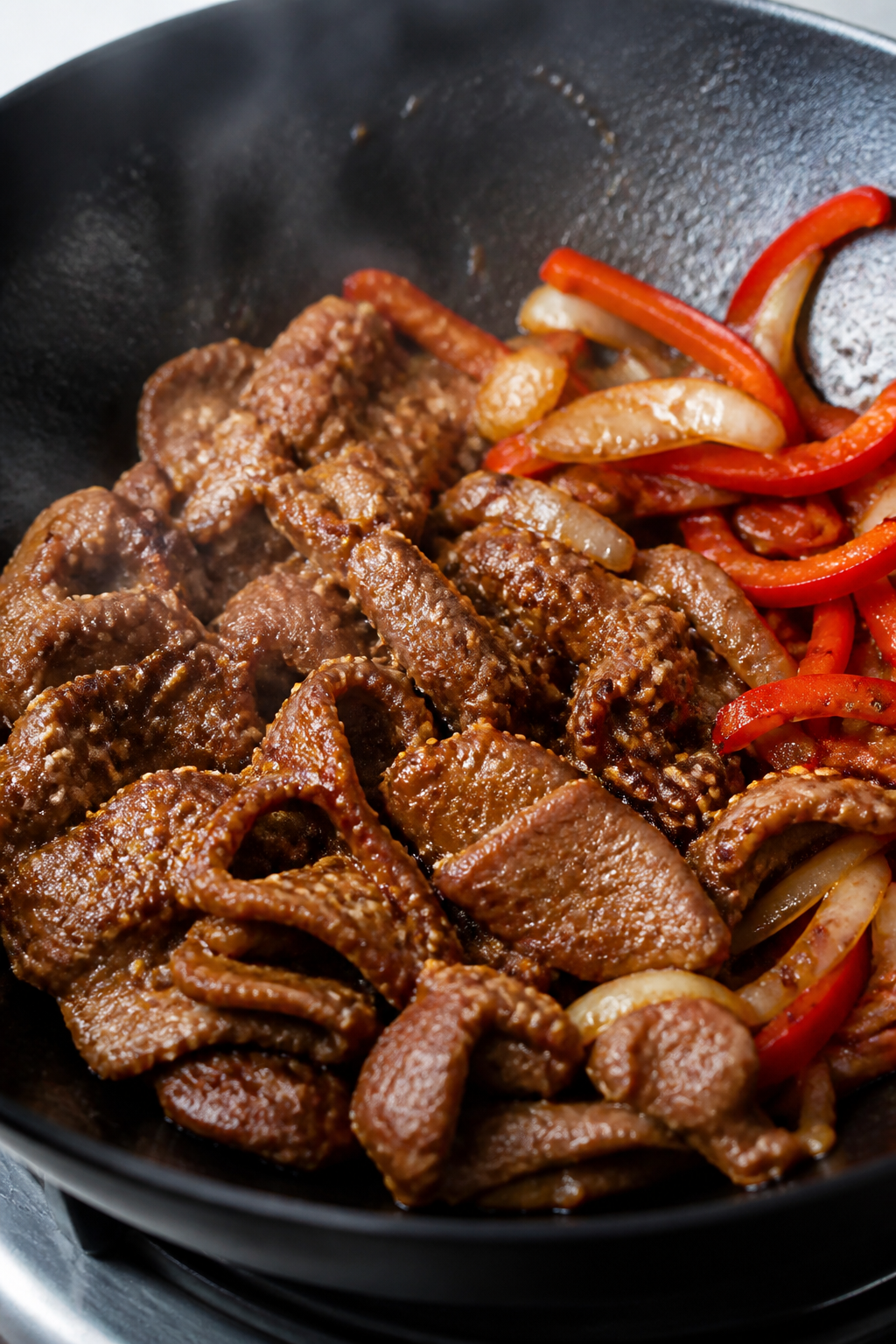
- Sear the beef in batches. Heat 1 tablespoon oil in a large skillet or wok over high heat until shimmering. Add half the beef in a single layer. Cook 1–2 minutes per side until browned with some caramelized edges. Remove to a plate and repeat with remaining beef, adding more oil if needed. Do not overcook.
- Stir-fry the vegetables. In the same pan, add a bit more oil if dry. Add onion and bell pepper; stir-fry 2–3 minutes until crisp-tender. Add cabbage or bok choy; cook 1–2 minutes until just wilted.
- Add noodles and sauce. Return beef (and any juices) to the pan. Add cooked noodles and the remaining half of the marinade. Toss over medium-high heat for 1–2 minutes until the noodles are coated and glossy. If the sauce looks tight, splash in 2–3 tablespoons water.
- Finish and garnish. Taste and adjust: more soy for salt, a pinch of sugar for balance, or more gochujang for heat. Top with green onions and extra sesame seeds. Serve hot.
What Makes This Special
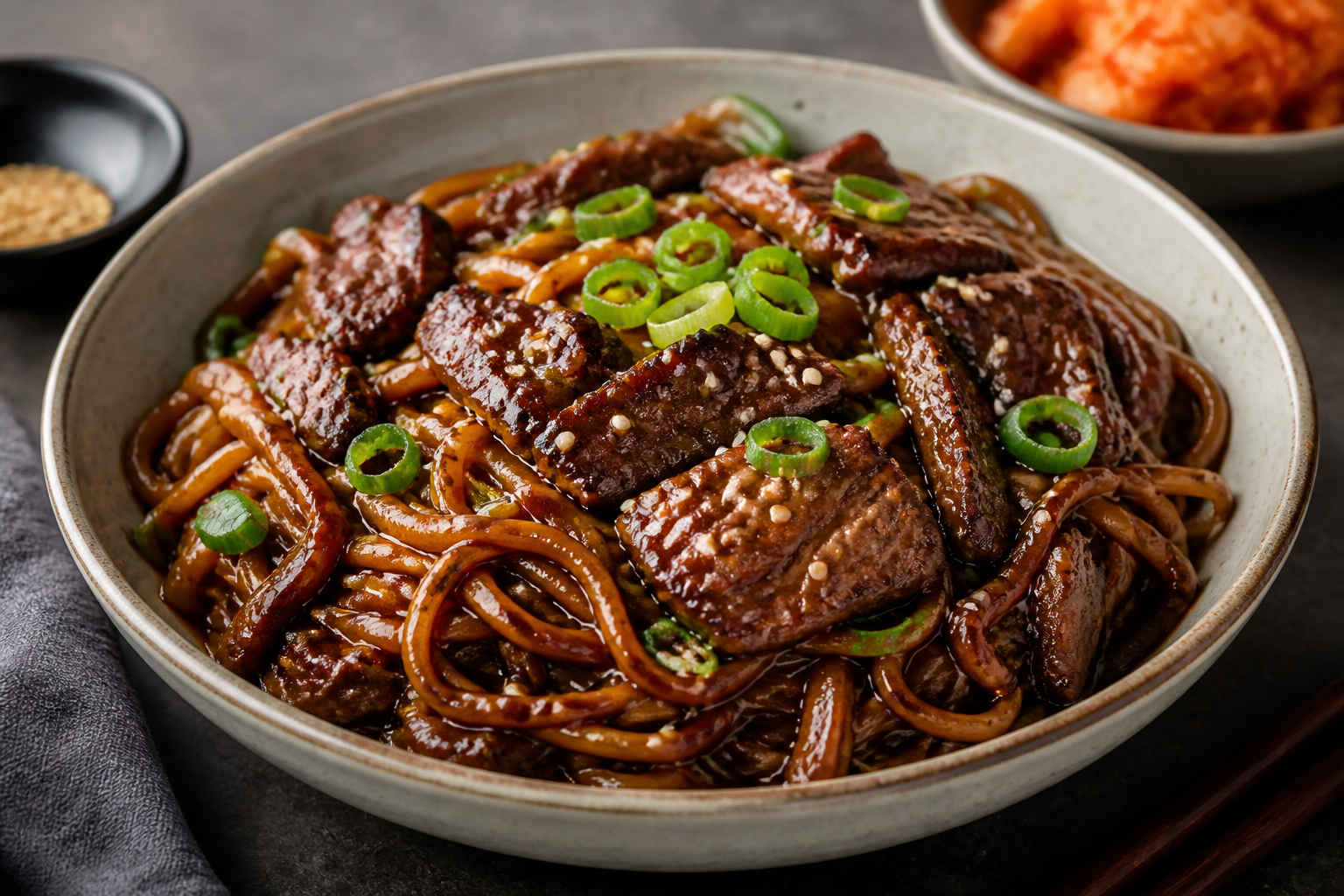
This bowl blends the caramelized edges of Korean BBQ with the chew of noodles for a complete, one-pan meal. The sauce uses classic Korean-inspired staples—soy, sesame, garlic, and a hint of gochujang—for a balance of sweet, savory, and mild heat.
You get restaurant vibes without complicated steps. Best of all, it’s flexible: use what you have, swap in different noodles, or scale the spice to your taste.
Shopping List
- Beef: 1 pound (450 g) thinly sliced beef (ribeye, sirloin, or flank)
- Noodles: 10–12 ounces dried noodles (udon, lo mein, ramen, or rice noodles)
- Aromatics: 4 cloves garlic (minced), 1 tablespoon fresh ginger (grated)
- Vegetables: 1 medium onion (sliced), 1 red bell pepper (sliced), 2 cups Napa cabbage or bok choy (shredded), 2 green onions (sliced)
- Oil: 2 tablespoons neutral oil (canola, avocado, or peanut), plus 1 teaspoon sesame oil
- Marinade/Sauce Base:
- 1/3 cup low-sodium soy sauce
- 2 tablespoons brown sugar or honey
- 1–2 tablespoons gochujang (Korean chili paste), to taste
- 1 tablespoon rice vinegar or apple cider vinegar
- 1 tablespoon mirin (optional, for extra sweetness and gloss)
- 1 tablespoon toasted sesame seeds
- Optional Boosters: 1 Korean pear or half an Asian pear (grated) or 1/2 small apple (grated) for tenderness and sweetness; 1 teaspoon cornstarch for a thicker sauce
- Garnishes: Extra sesame seeds, chopped cilantro or green onions, lime wedges (optional)
Instructions
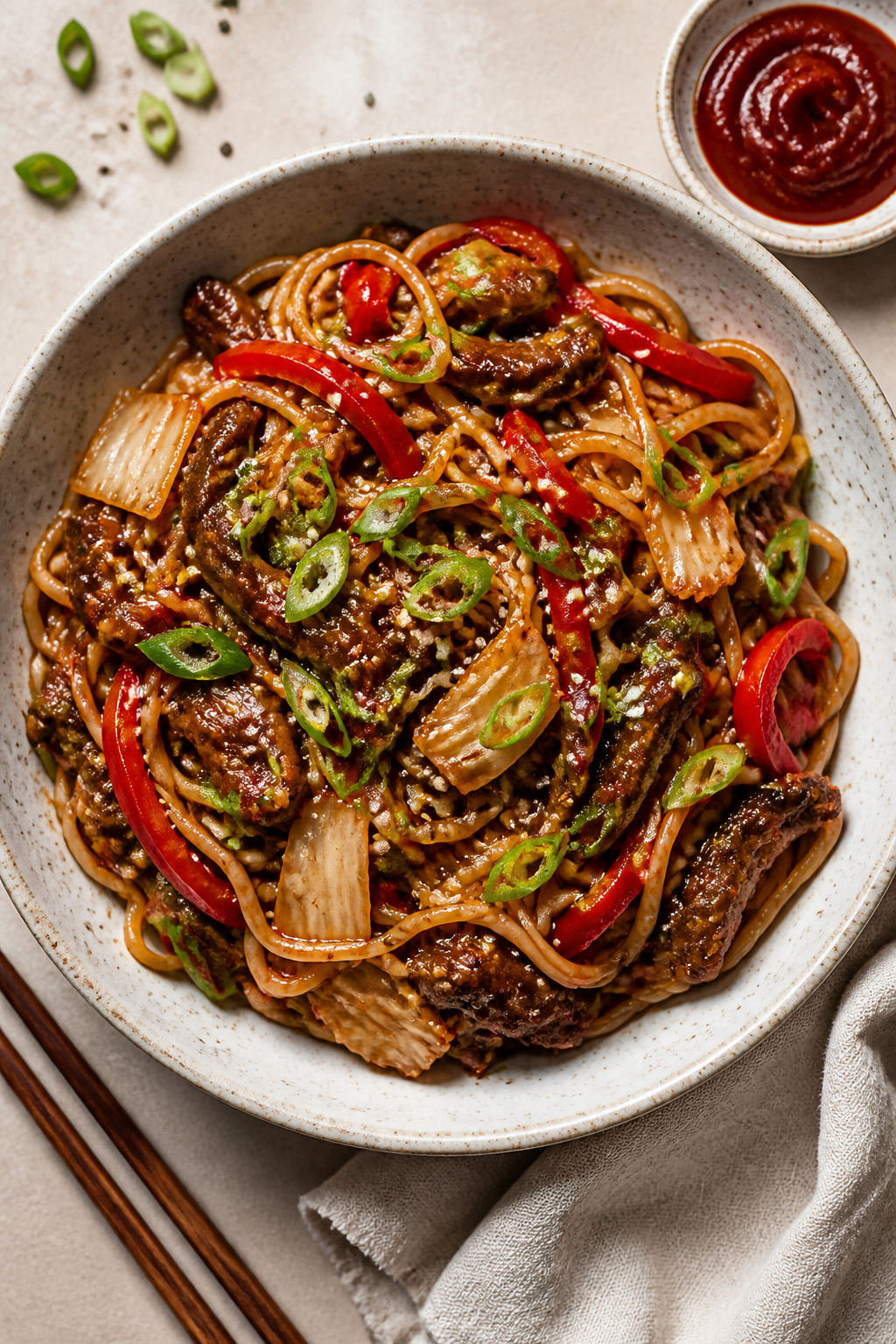
- Slice the beef thin. For easy slicing, chill the beef in the freezer for 20–30 minutes. Slice against the grain into very thin strips.
Thin slices cook quickly and stay tender.
- Whisk the marinade. In a bowl, combine soy sauce, brown sugar or honey, gochujang, rice vinegar, mirin (if using), garlic, ginger, sesame seeds, and sesame oil. If you want a glossier, thicker sauce, whisk in 1 teaspoon cornstarch.
- Marinate the beef. Toss the beef with half the marinade. Let it sit 10–20 minutes while you prep vegetables.
If using grated pear or apple, mix it into the marinade for extra tenderness and subtle sweetness.
- Cook the noodles. Boil according to package directions until just shy of done. Drain and rinse briefly (especially if using udon or rice noodles) to prevent sticking. Toss with a splash of oil and set aside.
- Prep the veggies. Slice onion and bell pepper thin.
Shred Napa cabbage or bok choy. Slice green onions. Keep them ready by the stove; this cooks fast.
- Sear the beef in batches. Heat 1 tablespoon oil in a large skillet or wok over high heat until shimmering.
Add half the beef in a single layer. Cook 1–2 minutes per side until browned with some caramelized edges. Remove to a plate and repeat with remaining beef, adding more oil if needed. Do not overcook.
- Stir-fry the vegetables. In the same pan, add a bit more oil if dry.
Add onion and bell pepper; stir-fry 2–3 minutes until crisp-tender. Add cabbage or bok choy; cook 1–2 minutes until just wilted.
- Add noodles and sauce. Return beef (and any juices) to the pan. Add cooked noodles and the remaining half of the marinade.
Toss over medium-high heat for 1–2 minutes until the noodles are coated and glossy. If the sauce looks tight, splash in 2–3 tablespoons water.
- Finish and garnish. Taste and adjust: more soy for salt, a pinch of sugar for balance, or more gochujang for heat. Top with green onions and extra sesame seeds.
Serve hot.
How to Store
Cool completely, then store in an airtight container in the fridge for up to 3 days. Reheat in a skillet over medium heat with a splash of water to loosen the sauce. Microwaving works in a pinch—cover and heat in short bursts, stirring between intervals.
For freezing, it’s best to freeze the cooked beef and sauce separately from noodles; thaw overnight and cook fresh noodles for the best texture.
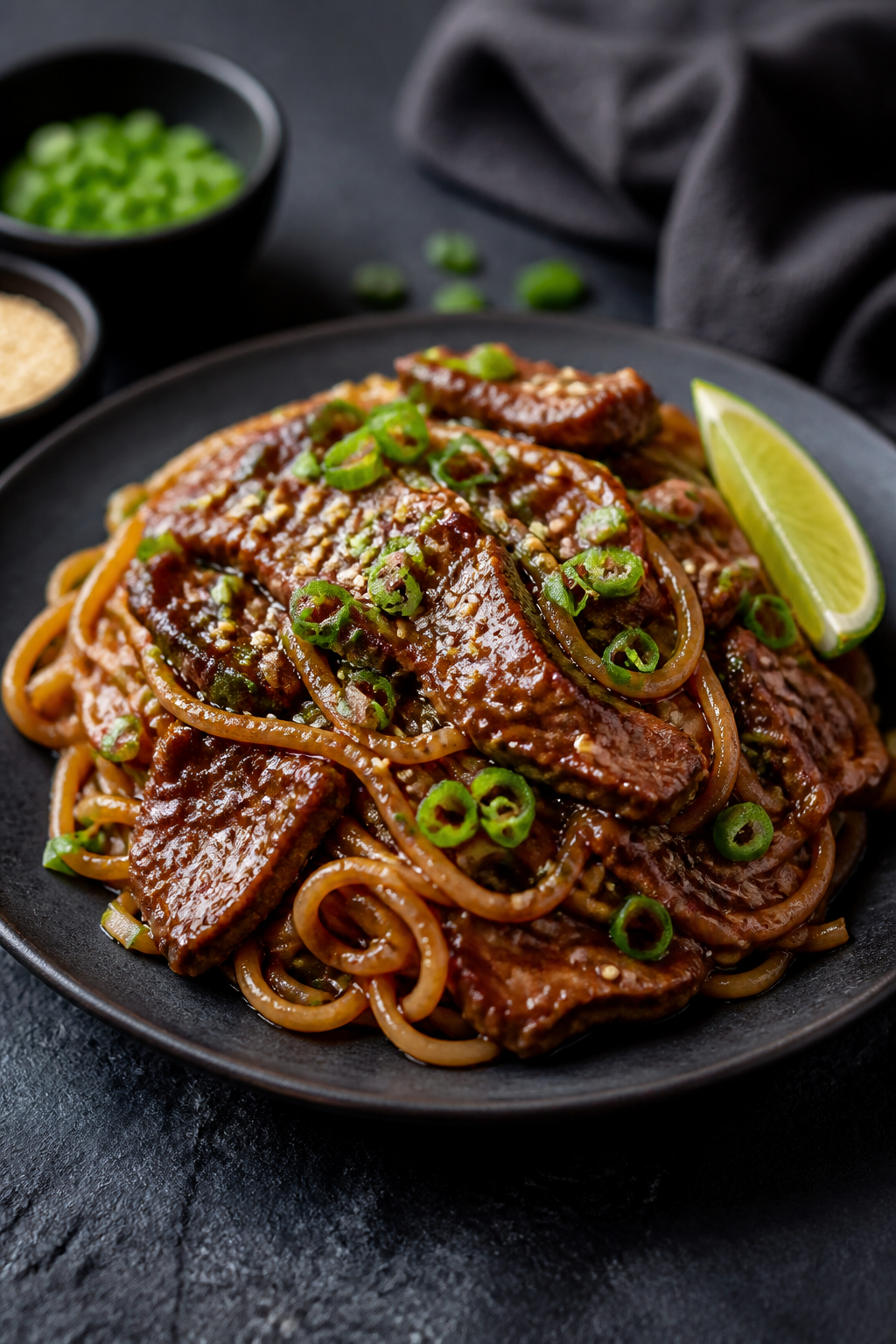
Why This is Good for You
- Protein-rich: Lean beef supports muscle repair and keeps you full.
- Balanced carbs: Noodles provide quick energy; pair with veggies for fiber to keep blood sugar steadier.
- Micronutrients: Cabbage, peppers, and green onions bring vitamin C, K, and antioxidants.
- Healthy fats: Sesame oil and seeds add flavor with heart-friendly unsaturated fats.
- Customizable: You control sodium, sugar, and spice by adjusting the sauce.
Pitfalls to Watch Out For
- Overcrowding the pan: This steams the beef instead of searing it. Cook in batches for caramelized edges.
- Overcooking noodles: They’ll turn mushy once tossed with sauce. Stop at just shy of al dente.
- Too salty sauce: Use low-sodium soy and taste before adding extra salt.
Balance with a pinch of sugar or a squeeze of lime if needed.
- Sticky noodles: Rinse briefly (if using wheat udon or rice noodles) and toss with a little oil. Add a splash of water when reheating.
- Flat flavor: Finish with acid (rice vinegar or lime) and fresh green onions to brighten the dish.
Alternatives
- Protein swaps: Use chicken thighs, thin pork shoulder, tofu, or mushrooms. For tofu, press, slice, and pan-sear before saucing.
- Noodle options: Udon for chew, lo mein or spaghetti for convenience, ramen for springiness, or rice noodles for gluten-free.
- Spice level: Reduce gochujang for mild, or add gochugaru (Korean chili flakes) or chili oil for extra heat.
- Sugar choices: Brown sugar, honey, maple syrup, or grated pear/apple all work.
Pear is classic for bulgogi-style tenderness.
- Veggie add-ins: Snow peas, carrots, broccoli, zucchini, or spinach. Keep pieces thin so they cook fast.
- No gochujang? Mix miso with a little chili paste or sriracha and honey. It won’t be the same, but it’ll hit similar notes.
Need More Easy Dinner Ideas?
Get my FREE 7-Day Easy Dinner Reset and enjoy a full week of healthy dinners without the meal-planning stress.
FAQ
Can I make this without a wok?
Yes.
A large skillet or sauté pan works well. The key is high heat and not crowding the pan so the beef sears instead of steams.
What cut of beef is best?
Ribeye is rich and tender, sirloin is leaner but flavorful, and flank works if sliced very thin against the grain. Shortcuts like thin-sliced “shabu shabu” or “hot pot” beef are perfect.
Do I have to marinate the beef?
Even 10–20 minutes helps.
If you have time, 1–2 hours in the fridge is great. Avoid overnight if using pear or pineapple, which can over-tenderize and change the texture.
How do I keep noodles from clumping?
Cook to just shy of done, rinse briefly if needed, and toss with a teaspoon of oil. When you add them to the pan, loosen with a splash of water or broth and toss quickly.
Is there a gluten-free option?
Use gluten-free tamari or coconut aminos instead of soy sauce, and choose rice noodles.
Check gochujang labels, as some brands contain wheat.
What if I don’t like spicy food?
Use 1 teaspoon gochujang or skip it and add a little ketchup plus extra soy and honey for body and color. You’ll still get a savory-sweet profile.
Can I meal prep this?
Yes. Store the cooked beef and sauce separately from the noodles for the best texture.
Reheat the beef and sauce, then toss with freshly cooked noodles and quick-sautéed veggies.
Final Thoughts
Korean BBQ Beef Noodles deliver big flavor with little fuss. It’s a quick sear, a fast toss, and dinner is on the table with glossy noodles and juicy beef. Keep the pantry staples handy and you can riff on this any night of the week.
Once you dial in your ideal heat and sweetness, this will be a repeat favorite.
Printable Recipe Card
Want just the essential recipe details without scrolling through the article? Get our printable recipe card with just the ingredients and instructions.
Loved This Recipe?
If you're looking for more simple, healthy dinners your family will actually eat, grab my FREE 7-Day Easy Dinner Reset. You'll get 7 easy dinner recipes, simple grocery lists, and a done-for-you plan that takes the stress out of mealtime.