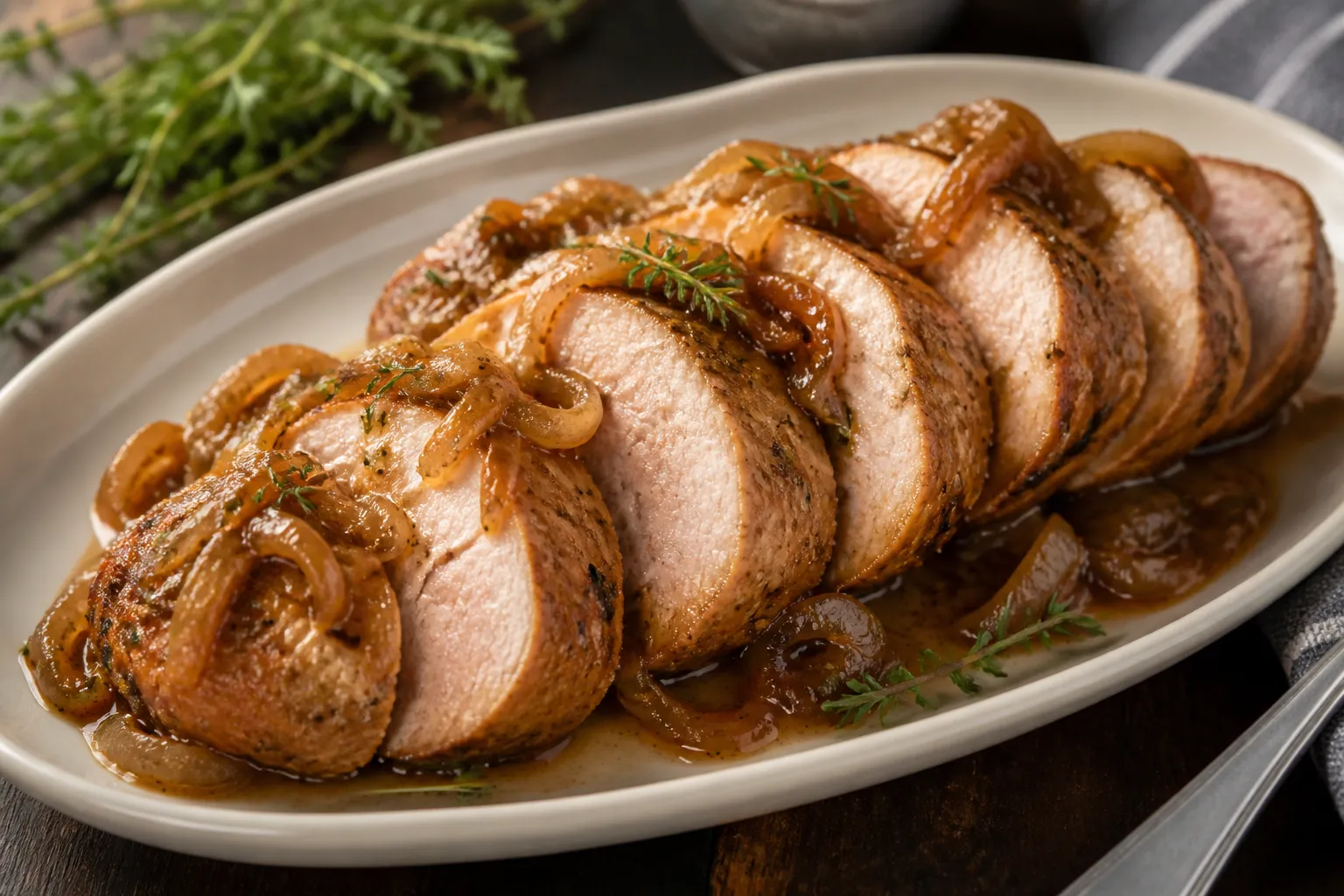
Preheat and prep: Heat the oven to 400°F (200°C). Pat the pork tenderloin dry with paper towels.
Trim any silvery membrane so seasoning can penetrate and the meat stays tender.
Season the pork: Rub with 1 tablespoon olive oil. Sprinkle generously with salt, black pepper, and a pinch of smoked paprika or mustard powder if using. Let it sit at room temperature while you start the onions.
Start the onions: Heat a large oven-safe skillet over medium heat.
Add 1 tablespoon olive oil and the butter. Add sliced onions and a pinch of salt. Cook slowly, stirring occasionally, until soft and golden, about 18–25 minutes.
If the pan dries out or onions scorch, lower the heat and add a splash of water.
Flavor boost: Stir in the garlic and thyme during the last minute of cooking. Add the balsamic vinegar to brighten and deepen the onion flavor. Transfer the onions to a plate and keep the skillet on the stove.
Sear the pork: Increase heat to medium-high.
Add another drizzle of oil if needed. Sear the pork on all sides until browned, about 6–8 minutes total. Don’t rush this step—color equals flavor.
Deglaze: Pour in the chicken broth or water and scrape up the browned bits.
Nestle the caramelized onions around and slightly over the pork.
Finish in the oven: Transfer the skillet to the oven. Roast 10–15 minutes, or until the thickest part of the tenderloin reaches 140–145°F (60–63°C) on an instant-read thermometer. The exact time depends on size and your oven.
Rest, then slice: Move the pork to a cutting board and rest 5–10 minutes.
This keeps it juicy. Slice into 1/2-inch medallions. Spoon the onions and pan juices over the top.
Serve: Pair with mashed potatoes, polenta, roasted vegetables, or a crisp green salad.
A squeeze of lemon over the onions can brighten the final dish.