Season the chicken: Pat the thighs dry with paper towels. Sprinkle both sides with salt, pepper, and Italian seasoning.
Dry skin means better browning and crispier edges.
Sear to build flavor: Heat olive oil in a large skillet over medium-high. Place chicken skin-side down and cook 6–8 minutes, until deep golden and crisp. Flip and cook another 4–6 minutes.
Transfer to a plate; the chicken will finish in the sauce.
Sauté aromatics: Reduce heat to medium. Add butter to the skillet. When melted, stir in garlic and shallot.
Cook 1–2 minutes until fragrant, scraping up any browned bits—those are pure flavor.
Thicken the base: Sprinkle in flour and stir for 30 seconds. This quick roux helps the sauce cling to the chicken without becoming gluey.
Deglaze and simmer: Pour in chicken broth, stirring to smooth out any lumps. Bring to a gentle simmer for 2–3 minutes until slightly thickened.
Add cream and flavor boosters: Stir in the heavy cream, Dijon, and red pepper flakes if using.
Keep the heat to a gentle simmer; don’t let it boil hard.
Melt in the Parmesan: Lower the heat and add the Parmesan gradually, stirring until smooth. If it seems too thick, splash in a bit more broth.
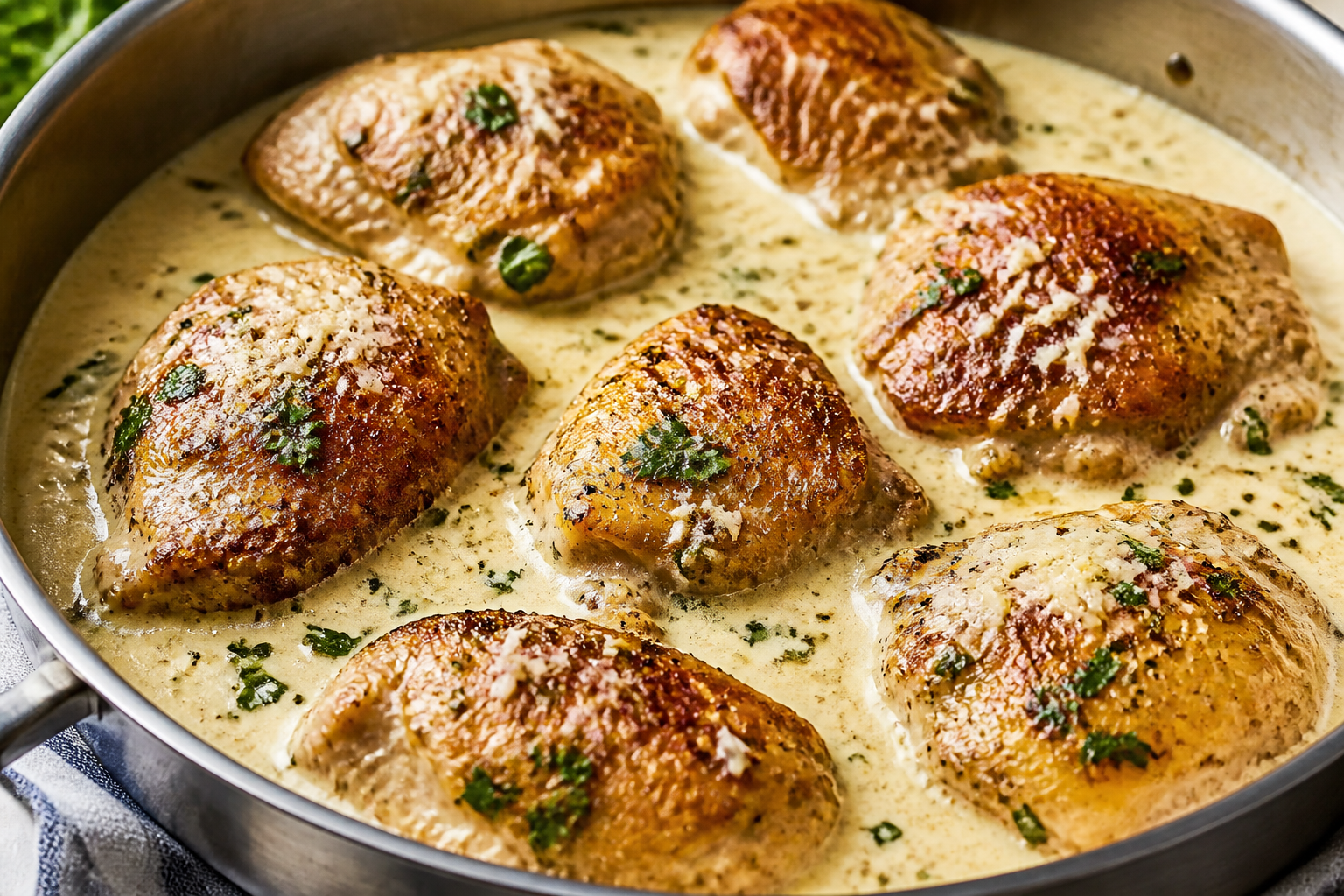
Finish cooking the chicken: Nestle the chicken back into the pan, skin-side up. Simmer 8–12 minutes, uncovered, until the thighs reach 165°F (74°C) at the thickest part.
Brighten it up: Stir in lemon juice.
Taste and adjust with salt and pepper. The lemon lifts the richness and balances the sauce.
Garnish and serve: Sprinkle with parsley and extra Parmesan. Serve over pasta, rice, or potatoes, with a green veggie or salad on the side.