Sweet & Spicy Korean Ramen Pasta – A Fast, Flavor-Packed Weeknight Meal
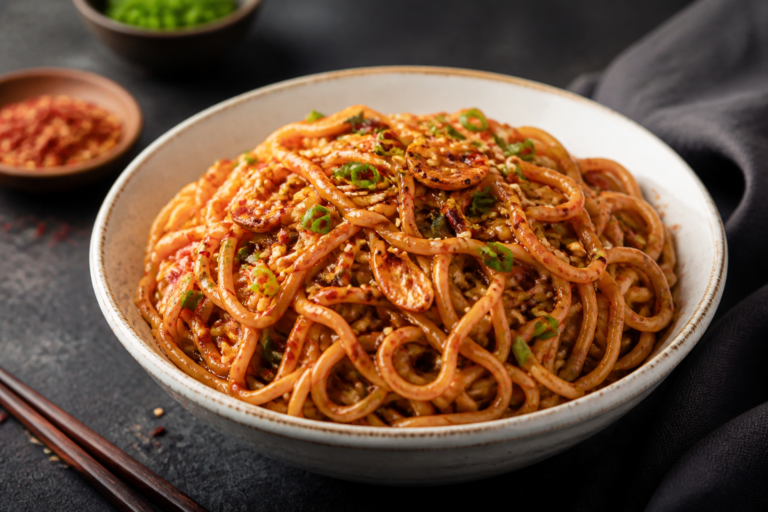
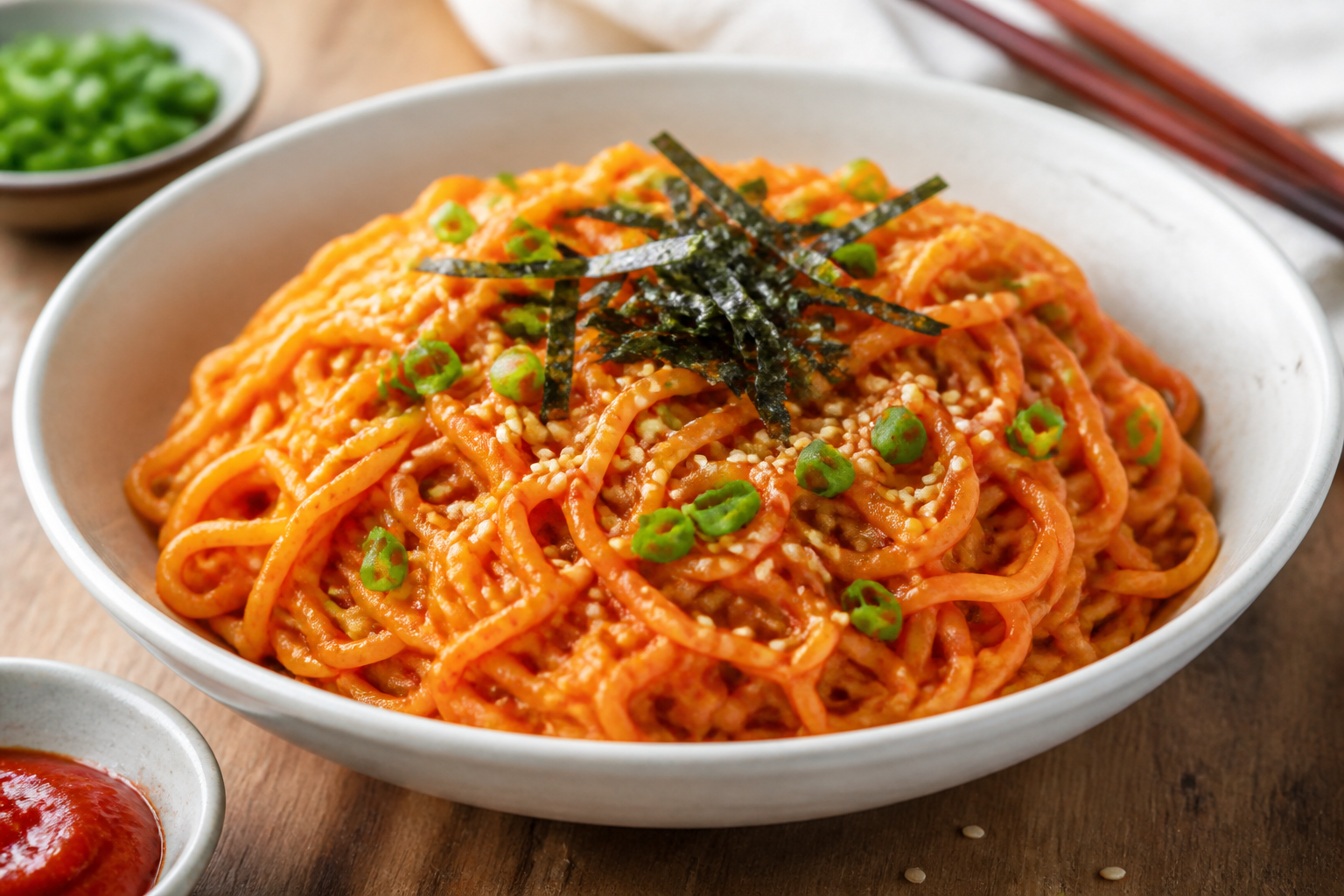
This dish brings the comfort of ramen and the indulgence of pasta together in one bowl. It’s sweet, spicy, saucy, and wildly satisfying without being fussy. If you love the heat of gochujang and the chew of ramen noodles, you’ll be hooked.
FREE 7-Day Easy Dinner Reset
Save time, eat healthier, and take the stress out of dinner. Get a full week of easy healthy dinners delivered straight to your inbox.
Everything cooks in under 25 minutes, and the ingredients are easy to find. It’s the kind of recipe you can make after work and still feel like you treated yourself.
Ingredients
Method
- Boil the noodles. Bring a pot of water to a boil. Cook ramen according to package directions until just shy of tender. Reserve 1 cup of starchy cooking water, then drain.
- Prep your aromatics. Mince the garlic and ginger. Slice the scallions, separating whites and greens.
- Stir together the sauce base. In a small bowl, mix 2 tablespoons gochujang, 1 tablespoon soy sauce, 1 tablespoon brown sugar (or honey), and 1–2 teaspoons rice vinegar. Add 1 teaspoon sesame oil. Adjust to taste—more gochujang for heat, more sugar for sweet, more vinegar for tang.
- Sauté aromatics. In a large skillet over medium heat, melt 1 tablespoon butter. Add garlic, ginger, and scallion whites. Cook 30–60 seconds until fragrant, not browned.
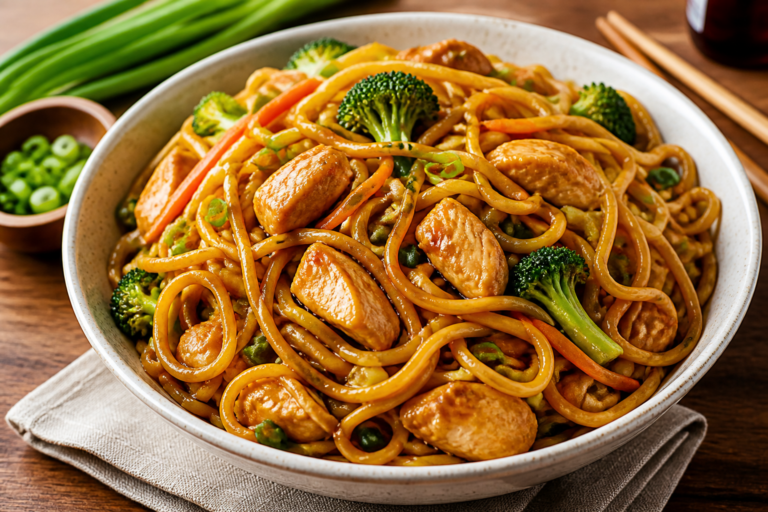
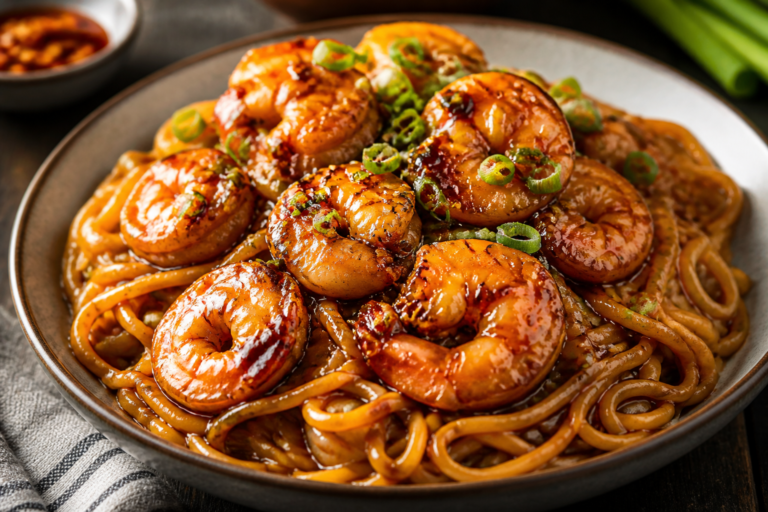
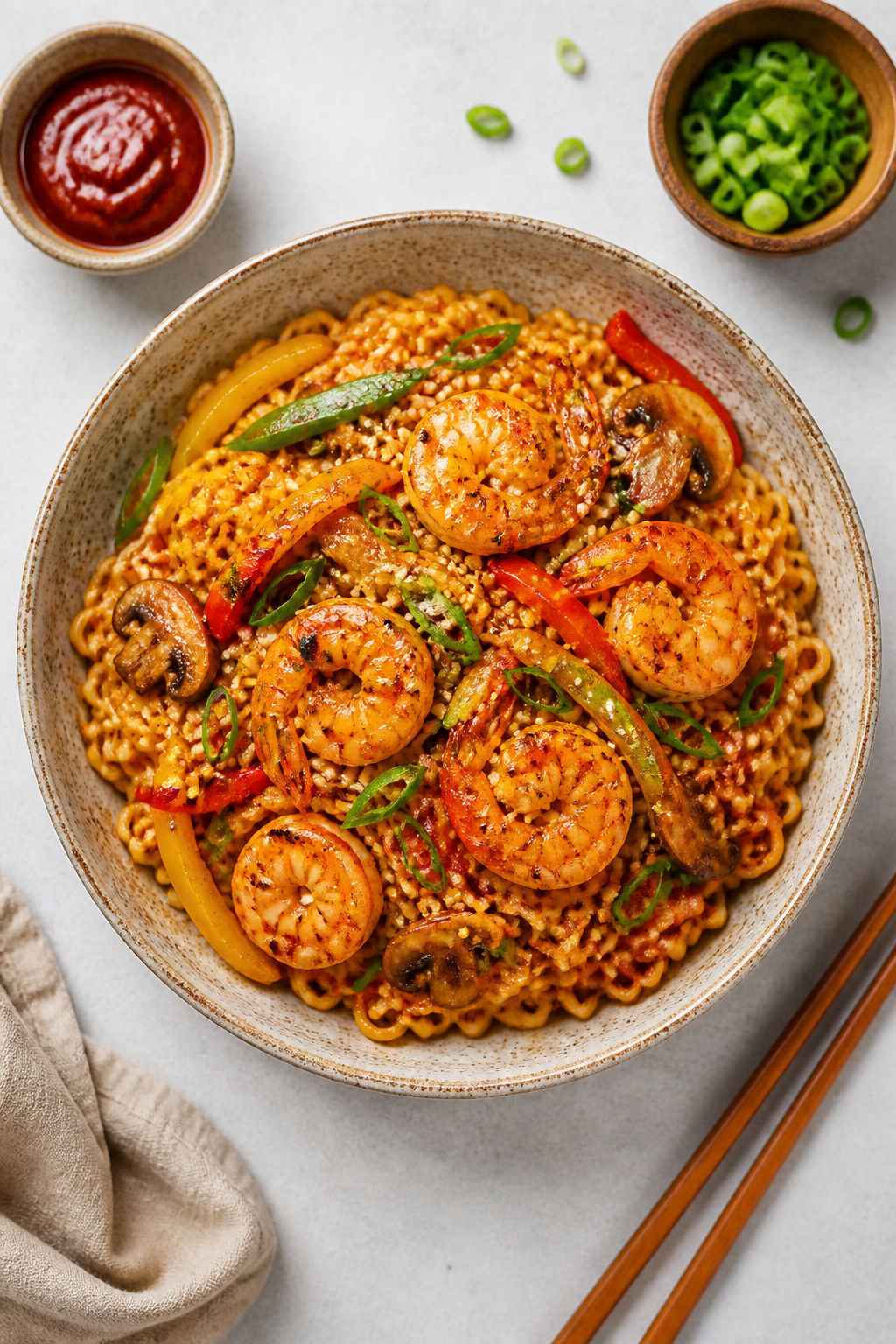
- Optional protein and veg. If using chicken, shrimp, tofu, or veggies, add them now. Sauté until just cooked. Season lightly with salt and pepper.
- Build the sauce. Pour in the sauce base and 1/3 cup reserved noodle water. Stir until smooth and slightly thickened, about 1–2 minutes. If it tightens too much, splash in more noodle water.
- Toss in the noodles. Add the drained ramen to the skillet. Toss vigorously so every strand gets coated. Add another small knob of butter or a drizzle of sesame oil for extra gloss if you like.
- Finish and taste. Add scallion greens. Taste and adjust: a touch more soy for salt, brown sugar for balance, or vinegar for brightness. For more heat, sprinkle gochugaru or red pepper flakes.
- Plate and garnish. Top with sesame seeds. Add a soft-boiled egg, lime squeeze, or extra scallions if desired. Serve hot.
Why This Recipe Works
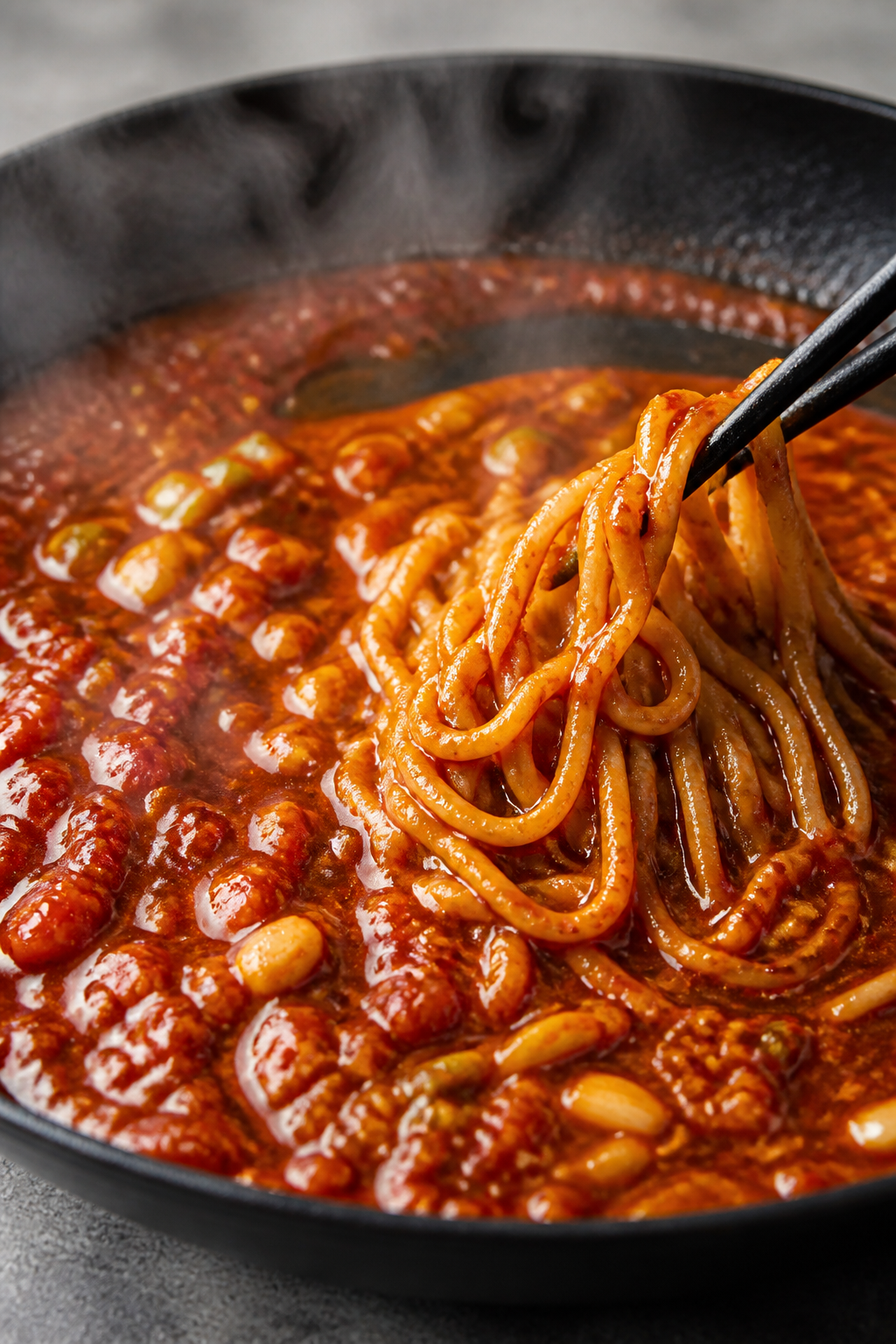
This recipe layers bold Korean flavors over a creamy, silky pasta-style sauce. Gochujang brings gentle heat and deep umami, while soy sauce adds saltiness and body. Brown sugar or honey balances the spice, and a quick splash of rice vinegar keeps everything bright. Butter and a bit of pasta water turn the sauce glossy and clingy, so it coats every noodle.
The result is a craveable sweet-and-spicy bowl that feels both cozy and exciting.
Shopping List
- Ramen noodles (2 standard bricks or 6–7 oz fresh ramen; discard seasoning packets)
- Gochujang (Korean chili paste)
- Soy sauce (low-sodium preferred)
- Brown sugar or honey
- Rice vinegar (or apple cider vinegar in a pinch)
- Toasted sesame oil
- Unsalted butter (or neutral oil if dairy-free)
- Garlic (2–3 cloves)
- Ginger (1-inch piece, optional but recommended)
- Scallions (green onions)
- Protein (optional: sliced chicken, shrimp, tofu, or a soft-boiled egg)
- Vegetables (optional: thinly sliced bell pepper, mushrooms, spinach, or snap peas)
- Sesame seeds (for garnish)
- Red pepper flakes or gochugaru (optional for extra heat)
- Lime or lemon (optional, for a bright finish)
How to Make It
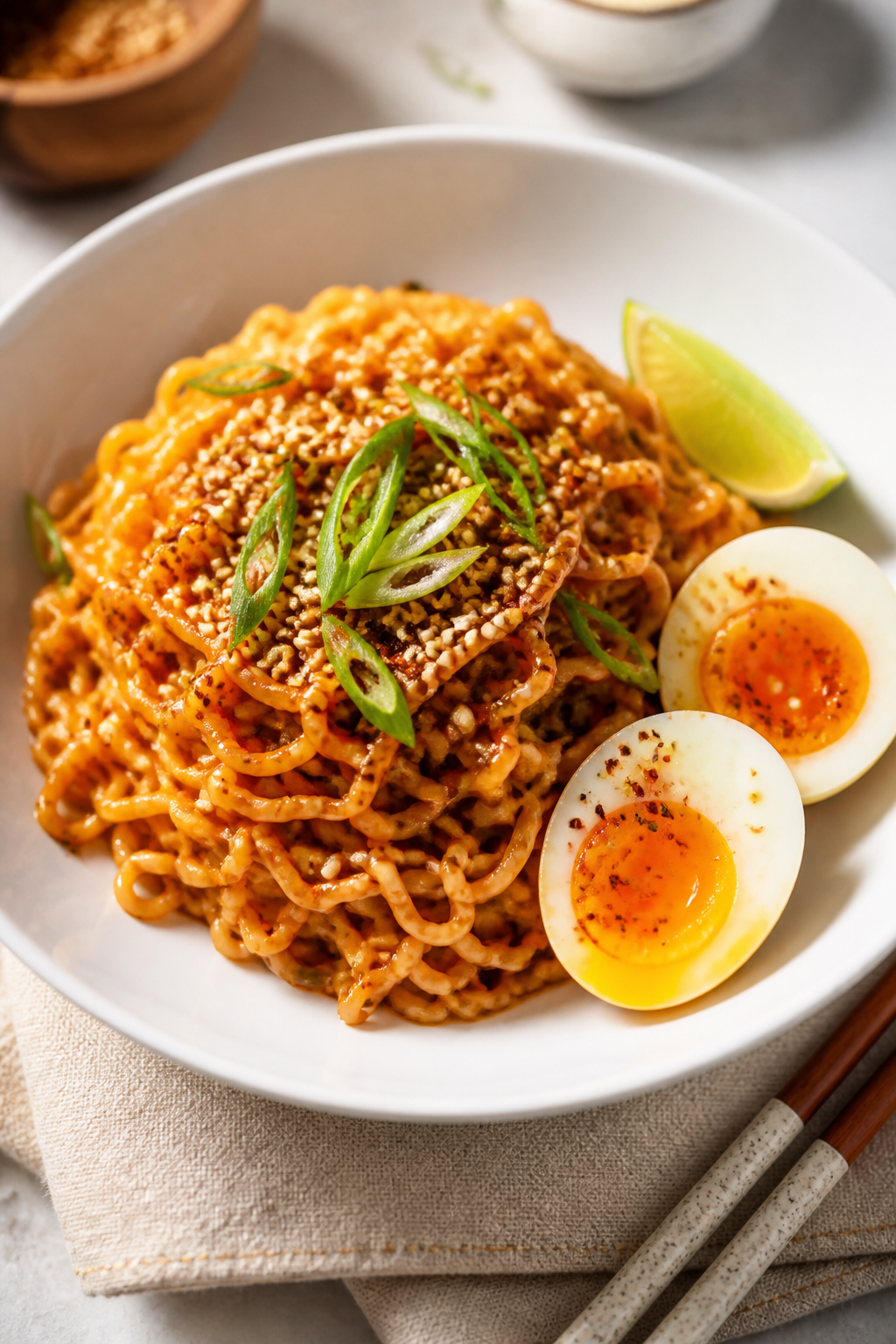
- Boil the noodles. Bring a pot of water to a boil. Cook ramen according to package directions until just shy of tender. Reserve 1 cup of starchy cooking water, then drain.
- Prep your aromatics. Mince the garlic and ginger. Slice the scallions, separating whites and greens.
- Stir together the sauce base. In a small bowl, mix 2 tablespoons gochujang, 1 tablespoon soy sauce, 1 tablespoon brown sugar (or honey), and 1–2 teaspoons rice vinegar.
Add 1 teaspoon sesame oil. Adjust to taste—more gochujang for heat, more sugar for sweet, more vinegar for tang.
- Sauté aromatics. In a large skillet over medium heat, melt 1 tablespoon butter. Add garlic, ginger, and scallion whites.
Cook 30–60 seconds until fragrant, not browned.
- Optional protein and veg. If using chicken, shrimp, tofu, or veggies, add them now. Sauté until just cooked. Season lightly with salt and pepper.
- Build the sauce. Pour in the sauce base and 1/3 cup reserved noodle water.
Stir until smooth and slightly thickened, about 1–2 minutes. If it tightens too much, splash in more noodle water.
- Toss in the noodles. Add the drained ramen to the skillet. Toss vigorously so every strand gets coated.
Add another small knob of butter or a drizzle of sesame oil for extra gloss if you like.
- Finish and taste. Add scallion greens. Taste and adjust: a touch more soy for salt, brown sugar for balance, or vinegar for brightness. For more heat, sprinkle gochugaru or red pepper flakes.
- Plate and garnish. Top with sesame seeds.
Add a soft-boiled egg, lime squeeze, or extra scallions if desired. Serve hot.
Keeping It Fresh
Leftovers keep well for 2–3 days in an airtight container in the fridge. Stir in a splash of water before reheating to bring the sauce back to life.
Reheat gently on the stovetop over low heat or in the microwave in short bursts, stirring in between. If you’re meal-prepping, store noodles and sauce separately and combine when reheating for the best texture.
Benefits of This Recipe
- Fast and flexible: Ready in under 25 minutes, and adaptable to what you have on hand.
- Big flavor, simple method: Gochujang’s depth makes the dish taste slow-cooked without the time.
- Budget-friendly: Pantry staples plus affordable ramen keep costs low.
- Balanced profile: Sweet, spicy, salty, and tangy all in one bowl.
- Customizable heat: Easy to dial up or down based on your preference.
Common Mistakes to Avoid
- Overcooking the noodles: They continue to cook in the sauce. Pull them just shy of done.
- Skipping the noodle water: It makes the sauce silky and helps it cling to the noodles.
- Burning the aromatics: Garlic and ginger go bitter fast.
Keep the heat moderate and stir.
- Unbalanced sauce: Taste as you go. Adjust sugar, vinegar, and soy for harmony.
- Too much heat at once: Start with less gochujang or flakes, then add more after tasting.
Variations You Can Try
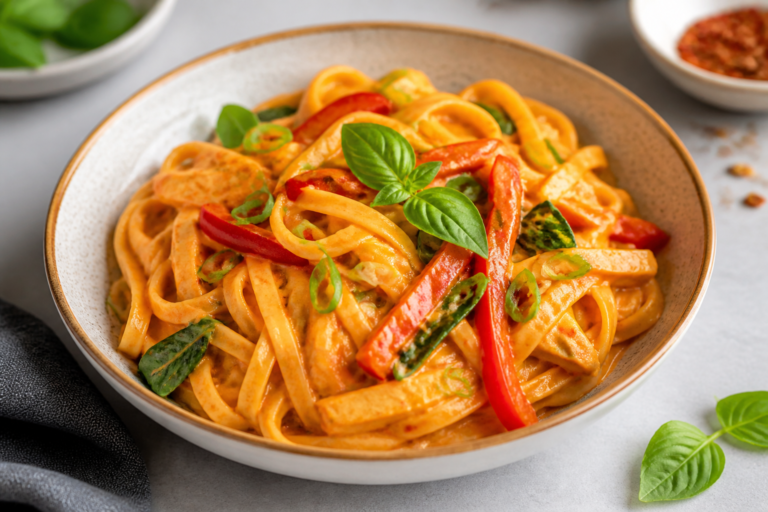
- Creamy gochujang: Stir in 2–3 tablespoons of heavy cream, half-and-half, or coconut milk for a silky finish.
- Cheesy ramen pasta: Toss in a handful of shredded mozzarella or parmesan for a stretchy, fusion twist.
- Veg-forward: Add sautéed mushrooms, spinach, shredded carrots, or roasted broccoli for color and crunch.
- Protein swap: Try crispy tofu, leftover rotisserie chicken, or quick-seared shrimp.
- Citrus lift: Finish with lime zest and juice for a bright, fresh edge.
- Nutty boost: Add a spoon of peanut butter or tahini to the sauce for subtle richness.
- Cold version: Chill the noodles and sauce, then toss with cucumbers and sesame for a refreshing take.
FAQ
Can I use instant ramen?
Yes. Use the noodles and discard the seasoning packet.
Cook slightly under the package time so they don’t get mushy when tossed in the sauce.
Need More Easy Dinner Ideas?
Get my FREE 7-Day Easy Dinner Reset and enjoy a full week of healthy dinners without the meal-planning stress.
What can I substitute for gochujang?
You can try chili-garlic sauce or sriracha mixed with a little miso or tomato paste to mimic depth. The flavor won’t be the same, but it will still be tasty.
Is this dish very spicy?
It’s medium heat as written. Reduce the gochujang to 1 tablespoon and skip extra chili flakes if you prefer mild.
Add more sugar to balance if needed.
Can I make it gluten-free?
Use gluten-free ramen or rice noodles and choose gluten-free soy sauce or tamari. Check your gochujang label, as some brands contain wheat.
How do I add a soft-boiled egg?
Simmer eggs for 6–7 minutes, then chill in ice water and peel. Halve and place on top of the finished noodles with a sprinkle of salt and sesame.
What if I don’t have rice vinegar?
Use apple cider vinegar or a squeeze of lemon or lime.
Start small and adjust to taste—acidity should brighten, not overpower.
Can I make it dairy-free?
Yes. Swap butter for neutral oil or vegan butter. The dish will still be glossy if you use enough noodle water and a touch of sesame oil.
How can I make it higher in protein?
Add sautéed chicken, shrimp, tofu, or edamame.
A couple of soft-boiled eggs also boost protein without extra prep time.
Will udon or spaghetti work instead of ramen?
Absolutely. Udon gives extra chew, and spaghetti holds the sauce well. Cook to al dente and save some pasta water for the sauce.
How do I store and reheat leftovers?
Refrigerate in an airtight container for up to 3 days.
Reheat gently with a splash of water on the stove or in the microwave, stirring often.
Wrapping Up
Sweet & Spicy Korean Ramen Pasta is quick, flexible, and full of personality. A few pantry staples turn into a glossy, flavor-packed sauce that clings to chewy noodles. Keep it simple on a weeknight or add toppings when you want to impress.
Either way, you’ll get a bowl that hits sweet, spicy, salty, and tangy in perfect balance. Make it once, and it’ll become part of your regular rotation.
Printable Recipe Card
Want just the essential recipe details without scrolling through the article? Get our printable recipe card with just the ingredients and instructions.
Loved This Recipe?
If you're looking for more simple, healthy dinners your family will actually eat, grab my FREE 7-Day Easy Dinner Reset. You'll get 7 easy dinner recipes, simple grocery lists, and a done-for-you plan that takes the stress out of mealtime.