Sticky Teriyaki Salmon Noodles – A Flavor-Packed Weeknight Favorite
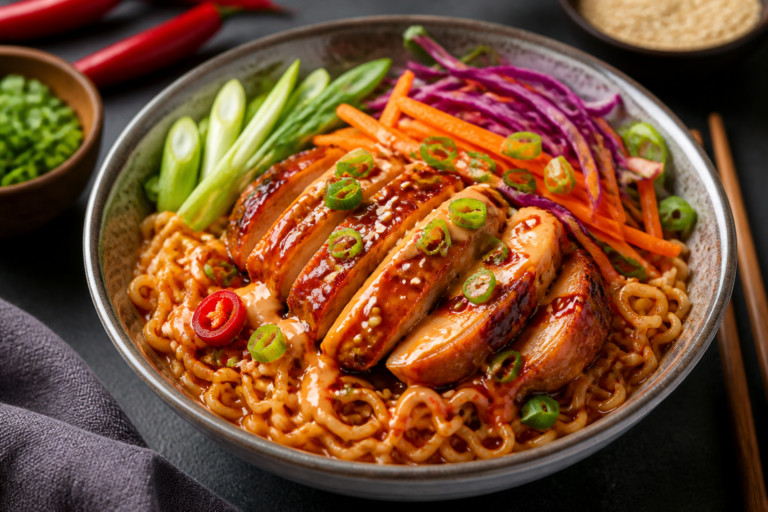
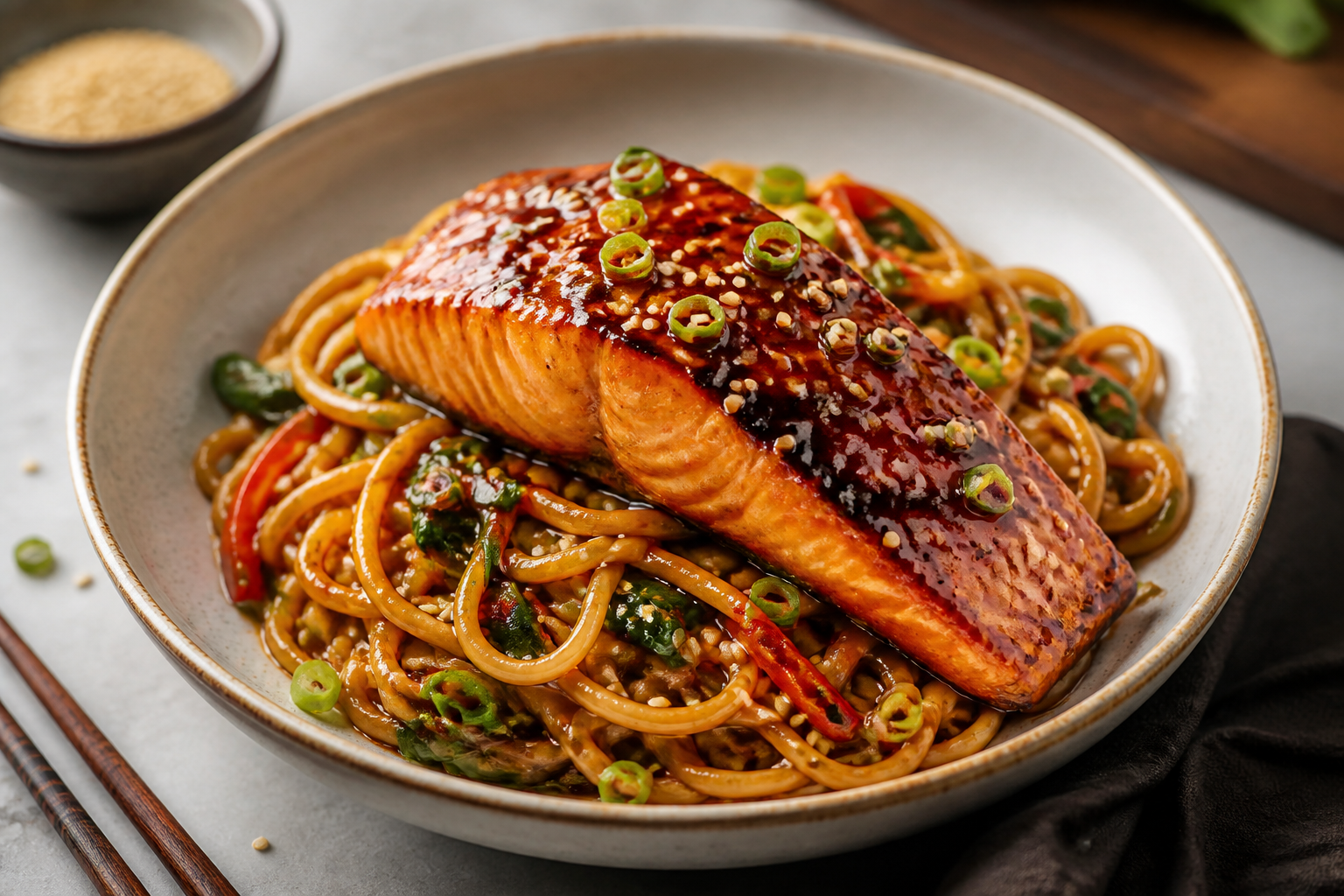
You know those meals that feel special but don’t take much effort? This is one of them. Tender salmon glazed in a glossy teriyaki sauce, tossed with springy noodles and crisp veggies, hits all the right notes—sweet, savory, and just a little sticky.
FREE 7-Day Easy Dinner Reset
Save time, eat healthier, and take the stress out of dinner. Get a full week of easy healthy dinners delivered straight to your inbox.
It’s fast, it’s colorful, and it tastes like takeout in the best way, without the wait. Whether you’re cooking for one or feeding a family, these noodles are simple to pull together and easy to love.
Ingredients
Method
- Prep the sauce: In a small bowl, whisk soy sauce, mirin, brown sugar (or honey), and rice vinegar until the sugar dissolves. In another small bowl, stir together cornstarch and water to make a slurry. Set both aside.
- Cook the noodles: Boil noodles according to package directions until just tender. Drain and rinse briefly with cool water to stop cooking. Toss with a few drops of sesame oil to prevent sticking.
- Prep the salmon: Pat salmon dry and season lightly with salt and pepper. Cut into 1-inch pieces so they cook quickly and stay moist.
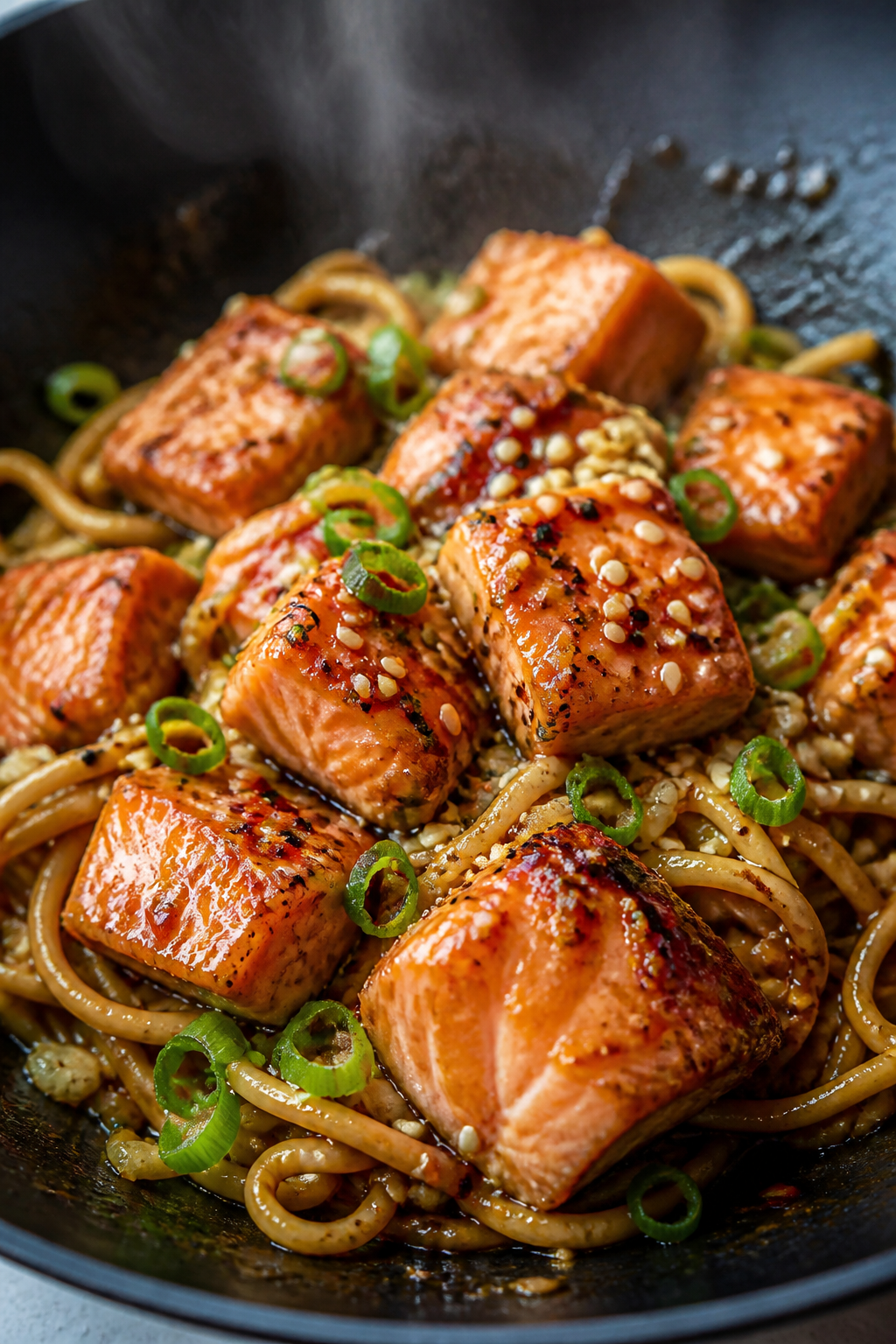
- Sear the salmon: Heat a large skillet or wok over medium-high heat. Add 1 tablespoon oil. Place salmon pieces in a single layer and sear 2–3 minutes per side until just cooked through and lightly browned. Remove to a plate.
- Stir-fry the veggies: In the same pan, add a splash more oil if needed. Add broccoli (or snap peas), bell pepper, and carrot. Stir-fry 2–3 minutes until crisp-tender.
- Add aromatics: Add garlic and ginger. Stir for 30 seconds until fragrant. Don’t let them brown.
- Build the sauce: Pour in the teriyaki mixture and bring to a gentle simmer. Stir in the cornstarch slurry and cook 30–60 seconds until glossy and thick enough to coat a spoon.
- Toss noodles and salmon: Add the noodles to the pan and toss to coat. Gently return the salmon and fold it in so it stays flaky but intact. If the sauce feels too thick, splash in a tablespoon of water.
- Finish: Turn off the heat. Stir in scallions and a drizzle of toasted sesame oil. Taste and adjust with more soy for salt, a pinch of sugar for sweetness, or a squeeze of lime for brightness.
- Serve: Plate the noodles and salmon. Sprinkle with sesame seeds and optional red pepper flakes. Serve with lime wedges.
What Makes This Recipe So Good
- Balanced flavors: Sweet, salty, and umami-rich teriyaki coats every strand and flake of salmon for a big, satisfying taste.
- Fast cook time: Most of the work happens in under 30 minutes, especially if you prep the sauce ahead.
- Flexible ingredients: Swap noodles, veggies, or proteins to fit what you have on hand.
- Great texture: Soft noodles, flaky salmon, and crisp-tender vegetables make each bite interesting.
- Better-than-takeout feel: Just as satisfying, fresher, and you can control the sweetness and salt.
Shopping List
- Salmon: 12–16 oz skinless salmon fillet, cut into bite-size chunks
- Noodles: 8–10 oz soba, udon, ramen, or rice noodles
- Vegetables: 1 red bell pepper (thinly sliced), 1 small carrot (julienned), 2 cups broccoli florets or sugar snap peas, 3–4 scallions (sliced)
- Aromatics: 2–3 cloves garlic (minced), 1-inch piece ginger (grated)
- Teriyaki sauce base: 1/3 cup low-sodium soy sauce or tamari, 3 tablespoons mirin, 2 tablespoons brown sugar or honey, 1 tablespoon rice vinegar
- Thickener: 1 teaspoon cornstarch mixed with 1 tablespoon water
- Oil: 1–2 tablespoons neutral oil (canola, avocado, or peanut)
- Finishers: 1–2 teaspoons toasted sesame oil, 1 tablespoon sesame seeds, lime wedges (optional)
- Heat (optional): Red pepper flakes or a little sriracha
Instructions
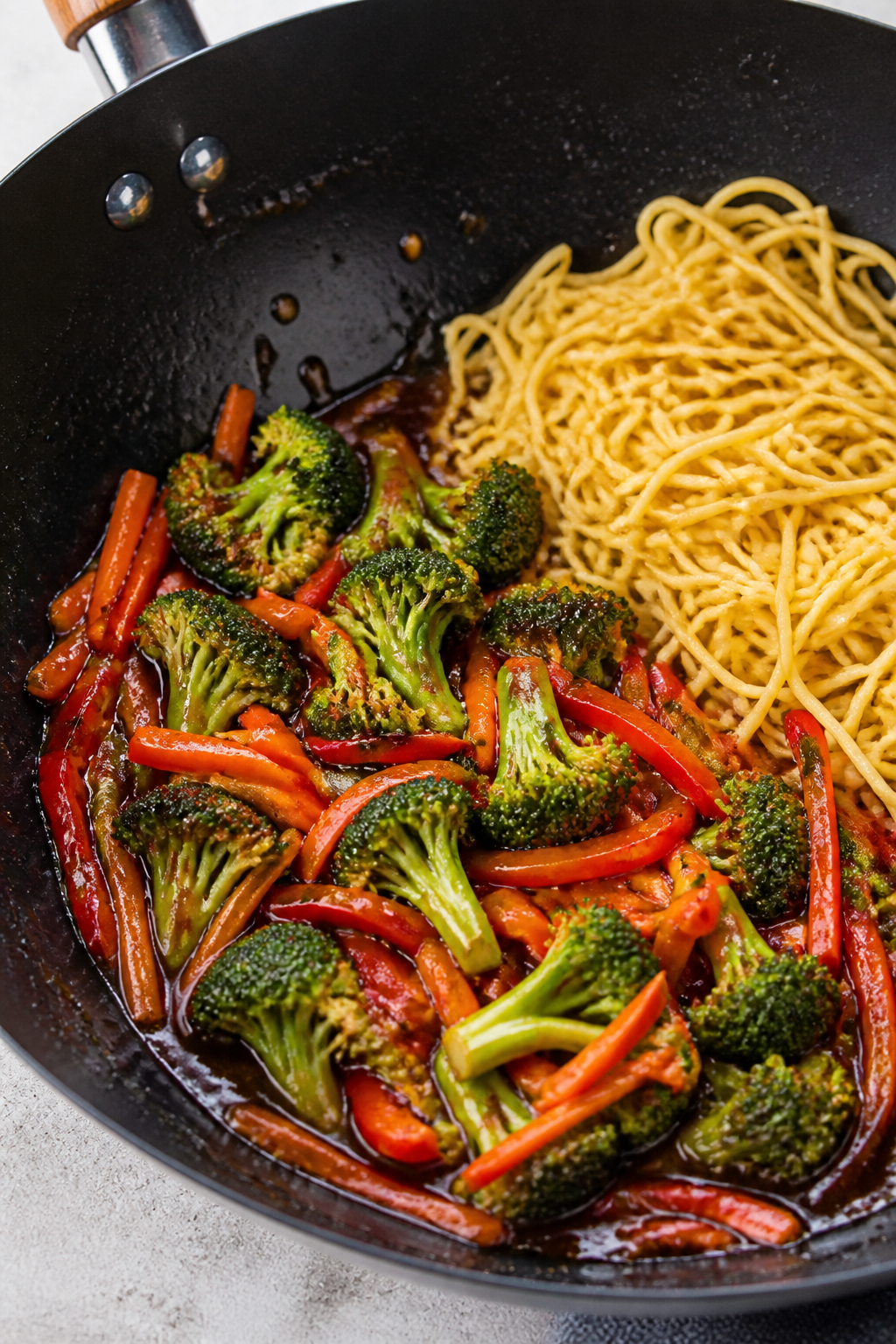
- Prep the sauce: In a small bowl, whisk soy sauce, mirin, brown sugar (or honey), and rice vinegar until the sugar dissolves. In another small bowl, stir together cornstarch and water to make a slurry.
Set both aside.
- Cook the noodles: Boil noodles according to package directions until just tender. Drain and rinse briefly with cool water to stop cooking. Toss with a few drops of sesame oil to prevent sticking.
- Prep the salmon: Pat salmon dry and season lightly with salt and pepper.
Cut into 1-inch pieces so they cook quickly and stay moist.
- Sear the salmon: Heat a large skillet or wok over medium-high heat. Add 1 tablespoon oil. Place salmon pieces in a single layer and sear 2–3 minutes per side until just cooked through and lightly browned.
Remove to a plate.
- Stir-fry the veggies: In the same pan, add a splash more oil if needed. Add broccoli (or snap peas), bell pepper, and carrot. Stir-fry 2–3 minutes until crisp-tender.
- Add aromatics: Add garlic and ginger.
Stir for 30 seconds until fragrant. Don’t let them brown.
- Build the sauce: Pour in the teriyaki mixture and bring to a gentle simmer. Stir in the cornstarch slurry and cook 30–60 seconds until glossy and thick enough to coat a spoon.
- Toss noodles and salmon: Add the noodles to the pan and toss to coat.
Gently return the salmon and fold it in so it stays flaky but intact. If the sauce feels too thick, splash in a tablespoon of water.
- Finish: Turn off the heat. Stir in scallions and a drizzle of toasted sesame oil.
Taste and adjust with more soy for salt, a pinch of sugar for sweetness, or a squeeze of lime for brightness.
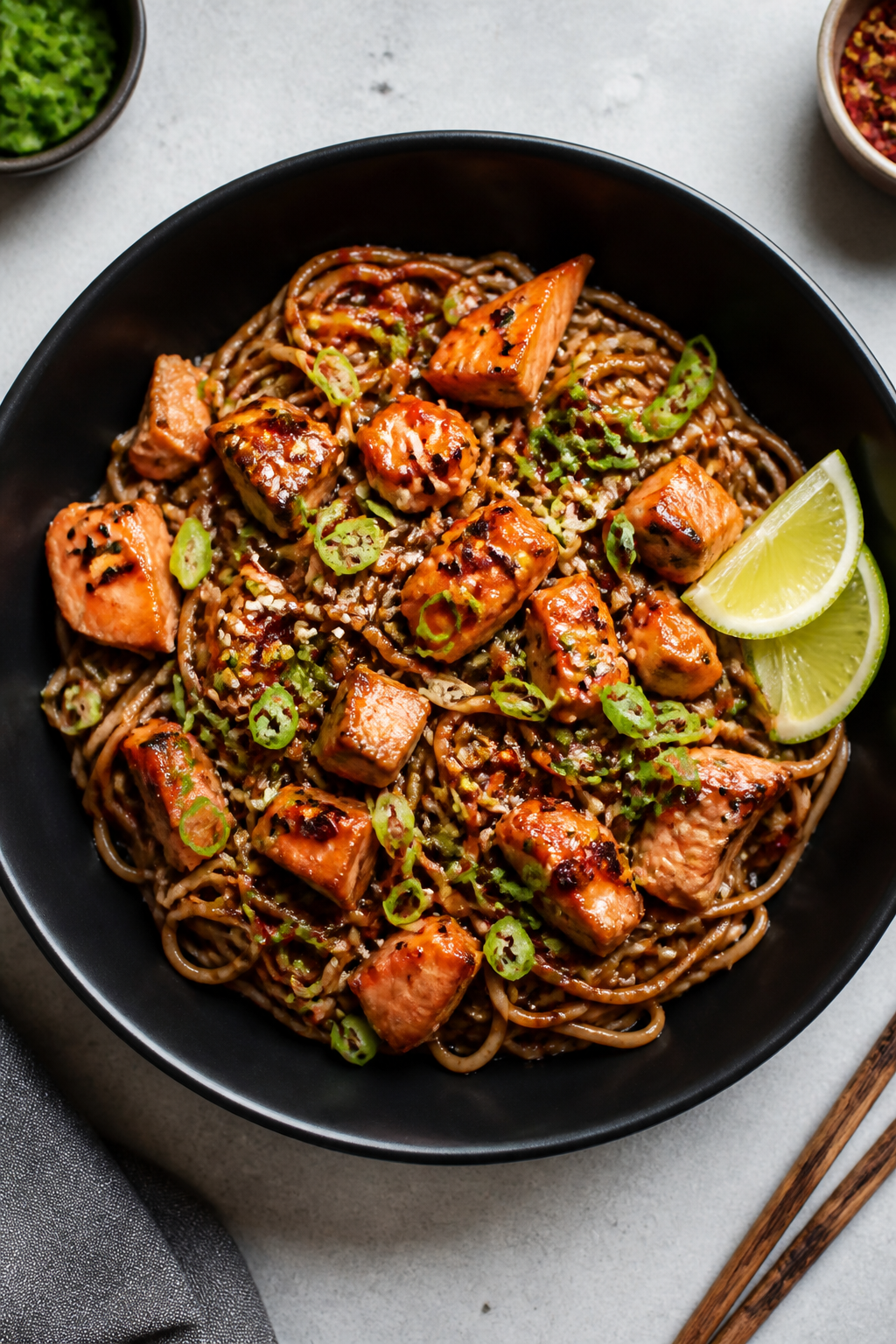
- Serve: Plate the noodles and salmon. Sprinkle with sesame seeds and optional red pepper flakes. Serve with lime wedges.
Storage Instructions
- Refrigerate: Cool completely, then store in an airtight container for up to 2 days.
- Reheat: Warm gently in a skillet over low heat with a splash of water to loosen the sauce.
Avoid microwaving on high, which can overcook the salmon.
- Freezing: Not ideal. The noodles and sauce can get mushy, and salmon may dry out.
Benefits of This Recipe
- Protein-rich: Salmon offers high-quality protein and omega-3s.
- Veggie-forward: Plenty of vegetables add fiber, color, and crunch.
- Customizable: Works with what’s in your fridge, from the noodle type to the greens you choose.
- Quick cleanup: One pan plus a pot for the noodles keeps dishes minimal.
- Meal-prep friendly: The sauce can be made in advance and stored for up to a week.
What Not to Do
- Don’t overcook the salmon: It goes from tender to dry fast. Pull it as soon as it flakes.
- Don’t skip the cornstarch slurry: It’s key for that glossy, sticky finish.
- Don’t overcrowd the pan: Sear salmon in batches if needed so it browns instead of steaming.
- Don’t overboil noodles: Slightly underdone is best since they’ll finish in the sauce.
- Don’t add sesame oil too early: Use it at the end for aroma; high heat can dull its flavor.
Alternatives
- Protein swaps: Use shrimp, chicken thigh strips, or extra-firm tofu (pressed and pan-fried) instead of salmon.
- Noodle options: Try udon for chew, soba for nutty depth, ramen for a classic feel, or rice noodles for a gluten-free choice.
- Veggie variations: Bok choy, mushrooms, edamame, baby corn, or cabbage all work well.
- Sauce tweaks: Add a teaspoon of grated orange zest for brightness, or a teaspoon of gochujang for gentle heat.
- Low-sugar version: Reduce brown sugar to 1 tablespoon and add a splash more mirin for balance.
FAQ
Can I use store-bought teriyaki sauce?
Yes.
Need More Easy Dinner Ideas?
Get my FREE 7-Day Easy Dinner Reset and enjoy a full week of healthy dinners without the meal-planning stress.
Choose a low-sodium version so it doesn’t overpower the dish. You may still want to add a cornstarch slurry to thicken it to that sticky, clingy consistency.
How do I know the salmon is cooked?
It should turn opaque and flake easily with a fork. Aim for medium doneness; the center can be slightly translucent.
Residual heat will finish it off.
What if I don’t have mirin?
Use a mix of rice vinegar and a bit more sugar or honey. White wine or dry sherry with a pinch of sugar can also stand in. Keep tasting and adjust for sweetness and acidity.
Can I make this gluten-free?
Yes.
Use tamari or a certified gluten-free soy sauce and swap in rice noodles or gluten-free soba. Double-check any bottled sauce or vinegar for hidden gluten.
How can I make it spicier?
Add red pepper flakes to the pan with the aromatics or stir in a little sriracha or chili crisp at the end. Start small and build up.
What’s the best pan to use?
A large nonstick skillet or a well-seasoned wok works best.
You want enough space to toss noodles without breaking the salmon apart.
Can I bake the salmon instead?
Absolutely. Roast at 400°F (200°C) for 8–10 minutes, then flake and toss into the noodles and sauce right before serving.
How do I prevent the noodles from clumping?
Rinse briefly after cooking and toss with a little sesame oil. Add them to the sauce while it’s still hot to help separate and coat them evenly.
Is there a way to reduce sodium?
Use low-sodium soy sauce, taste before salting, and add a squeeze of lime or a splash of water to balance flavors without extra salt.
Final Thoughts
Sticky Teriyaki Salmon Noodles deliver big flavor with simple steps and flexible ingredients.
The glossy sauce, tender salmon, and crisp veggies hit that sweet spot between comforting and fresh. Keep the sauce components on hand, and you can pull this together any night of the week. It’s the kind of recipe that quickly becomes a standby—reliable, satisfying, and always a little impressive.
Printable Recipe Card
Want just the essential recipe details without scrolling through the article? Get our printable recipe card with just the ingredients and instructions.
Loved This Recipe?
If you're looking for more simple, healthy dinners your family will actually eat, grab my FREE 7-Day Easy Dinner Reset. You'll get 7 easy dinner recipes, simple grocery lists, and a done-for-you plan that takes the stress out of mealtime.