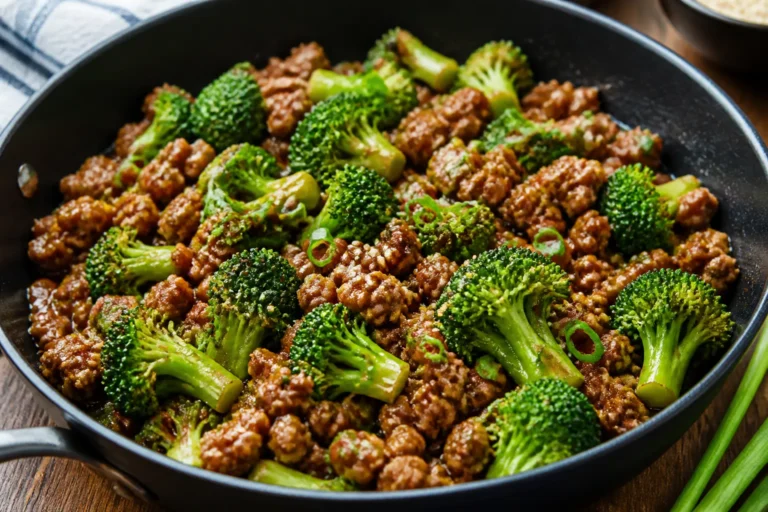
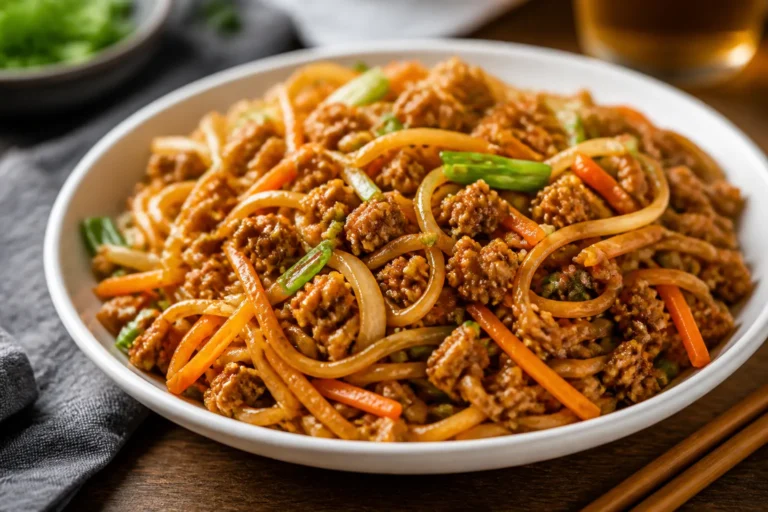
Korean Ground Chicken Rice Bowls – Fast, Flavorful, and Weeknight-Friendly
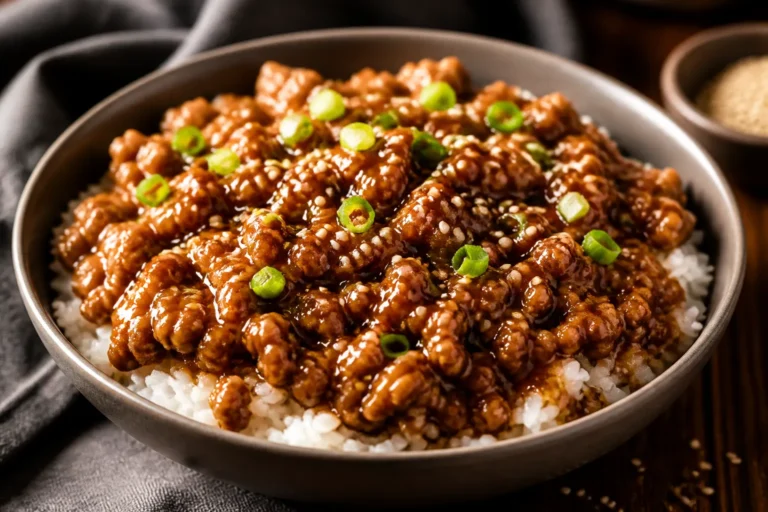
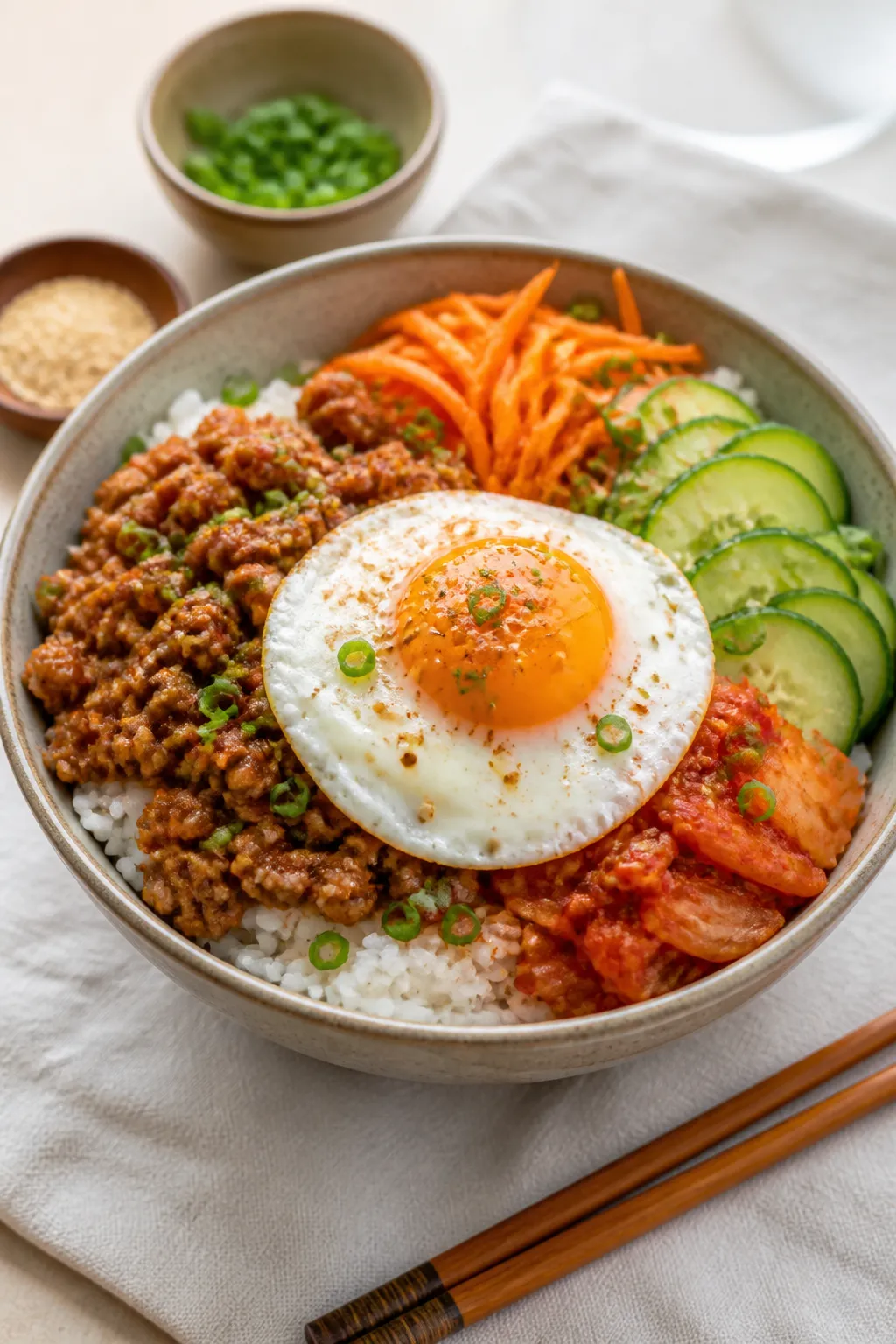
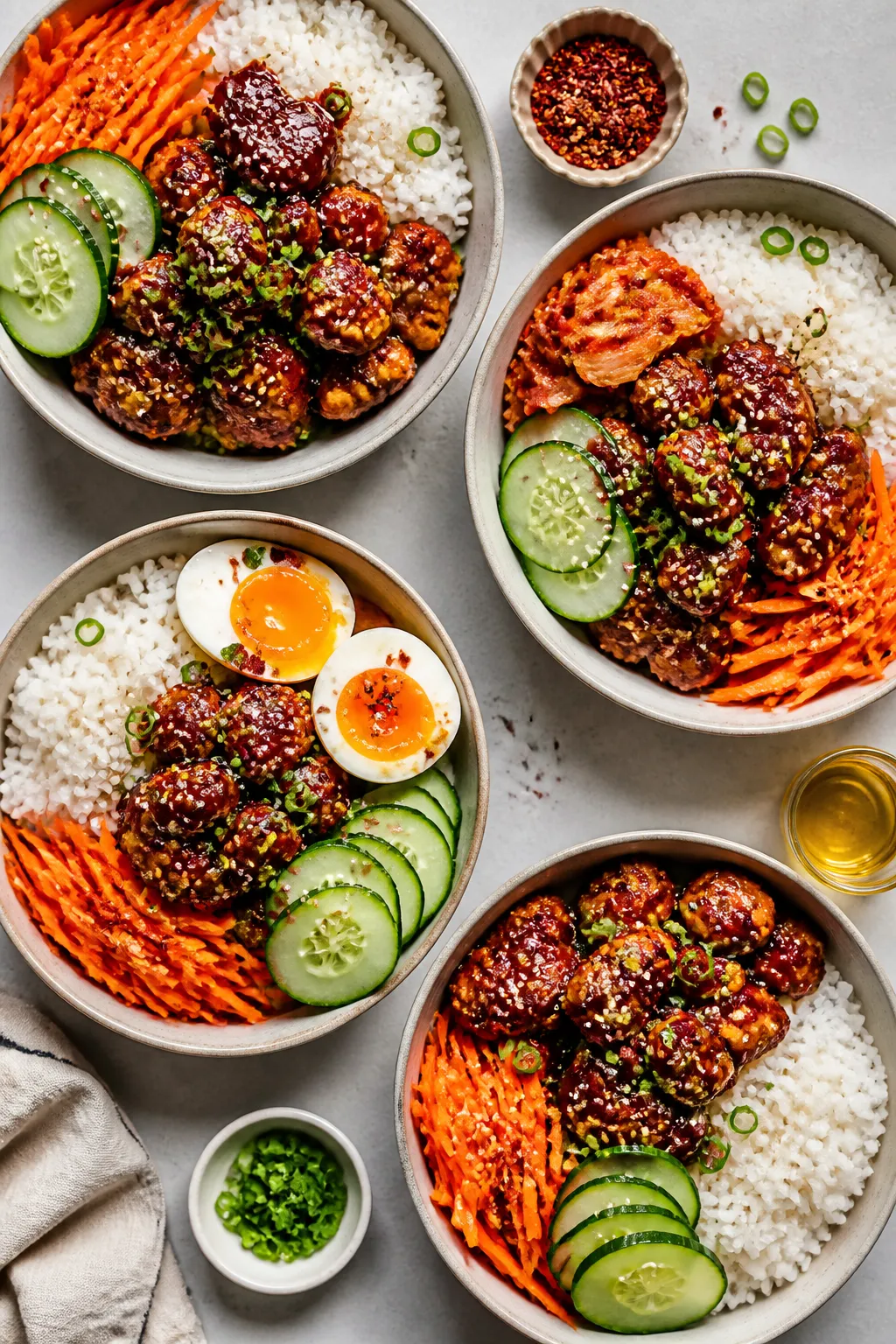
If you love big flavor with minimal fuss, these Korean Ground Chicken Rice Bowls are about to become a go-to dinner. They’re savory, slightly sweet, and just the right amount of spicy—comforting without being heavy. Everything cooks in one skillet, so cleanup is easy.
FREE 7-Day Easy Dinner Reset
Save time, eat healthier, and take the stress out of dinner. Get a full week of easy healthy dinners delivered straight to your inbox.
The sauce clings to the ground chicken and seeps into warm rice, making every bite satisfying. Add crunchy veggies and a scattering of scallions, and you’ve got a balanced meal in under 30 minutes.
Ingredients
Method
- Prep your base. Make sure your rice is cooked and warm. Leftover rice reheats well and holds its texture, especially jasmine or short-grain.
- Stir together the sauce. In a small bowl, mix gochujang, soy sauce, rice vinegar, brown sugar or honey, water or broth, and black pepper. Taste and adjust sweetness or heat. You want a balance of salty, sweet, and spicy.
- Heat the pan. Set a large skillet over medium-high heat. Add neutral oil. When it shimmers, add onions and cook 2–3 minutes until softened.
- Build the aromatics. Add garlic and ginger. Cook 30–45 seconds, stirring, until fragrant. Don’t let them brown too much.
- Brown the chicken. Add ground chicken, breaking it up with a spatula. Cook 5–7 minutes until no longer pink. Keep the pieces small so the sauce coats evenly.
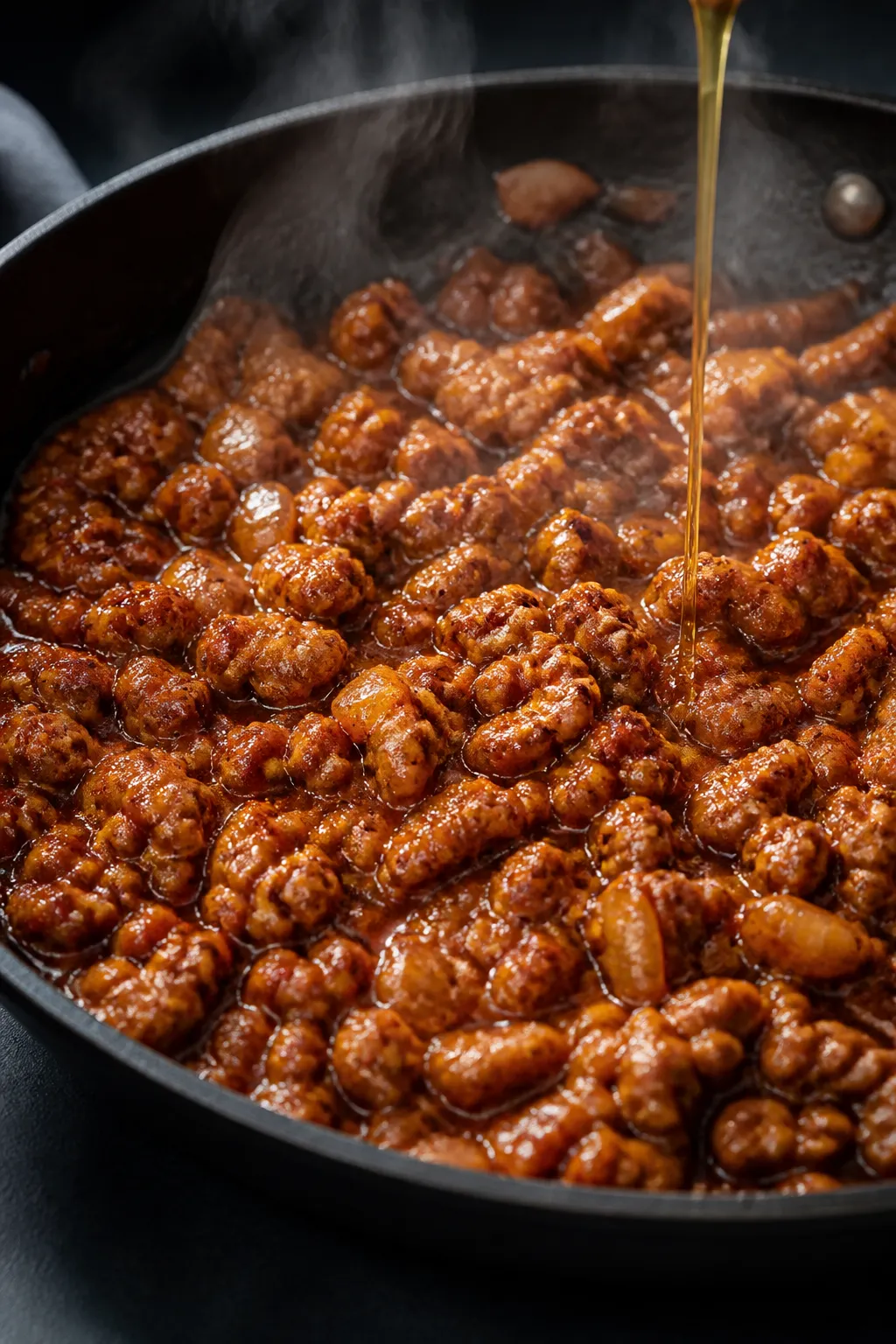
- Add the sauce. Pour in the sauce and reduce heat to medium. Simmer 2–3 minutes, stirring, until slightly thickened and glossy. If it gets too thick, splash in a bit more water.
- Finish with sesame oil. Drizzle in 1–2 teaspoons of sesame oil for nutty aroma. Stir to coat.
- Prep the veggies. While the chicken simmers, slice cucumbers and scallions and shred carrots. Keep them crisp for contrast.
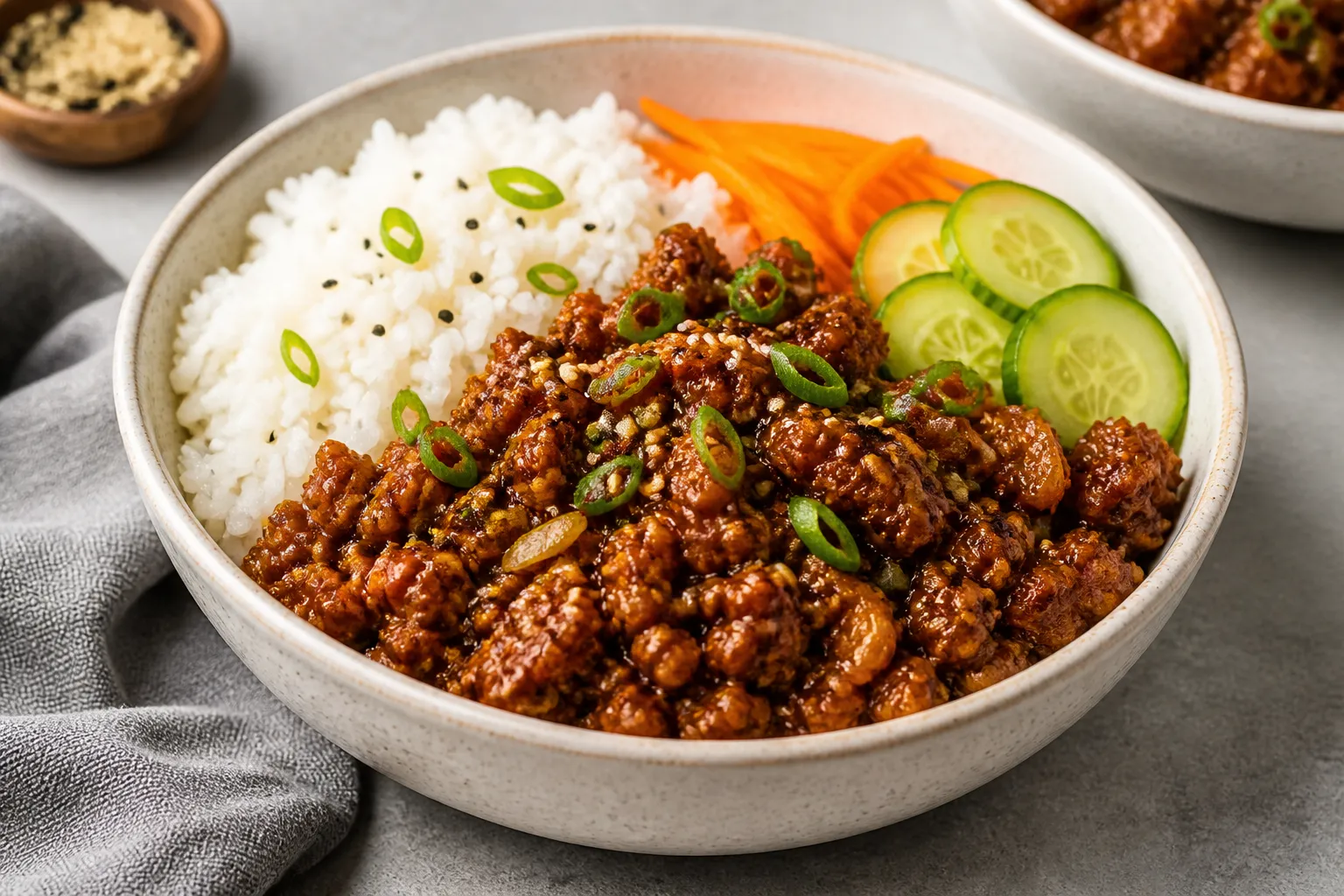
- Build the bowls. Add warm rice to bowls. Top with the saucy ground chicken. Add carrots, cucumbers, and a handful of scallions.
- Garnish and serve. Sprinkle sesame seeds. Add kimchi for tang and a fried egg if you want extra richness. Serve immediately.
What Makes This Special
This bowl hits that sweet spot between takeout-style flavor and home-cooked freshness. The sauce is built on classic Korean-inspired elements—gochujang, soy sauce, garlic, and ginger—so it’s bold without being complicated.
Ground chicken cooks quickly and stays juicy if you don’t overdo it. Plus, the recipe is endlessly customizable. You can adjust heat, swap vegetables, and choose your favorite base: rice, cauliflower rice, or even noodles.
What You’ll Need
- Ground chicken (1 lb / 450 g)
- Cooked rice (about 4 cups), white or brown; jasmine is great
- Sesame oil (2 tsp), divided
- Neutral oil (1 tbsp), like canola or avocado
- Yellow onion (1 small), finely diced
- Garlic (4 cloves), minced
- Fresh ginger (1 tbsp), grated
- Gochujang (2–3 tbsp), Korean red chili paste
- Soy sauce (3 tbsp), low-sodium preferred
- Rice vinegar (1 tbsp)
- Brown sugar or honey (1–2 tbsp), to taste
- Water or low-sodium chicken broth (1/4 cup)
- Black pepper (1/4 tsp)
- Red pepper flakes (optional, for extra heat)
- Carrots (1 cup), julienned or shredded
- Cucumber (1 cup), thinly sliced
- Scallions (3), thinly sliced
- Toasted sesame seeds (1–2 tsp)
- Kimchi (optional), for topping
- Fried eggs (optional), 1 per bowl
Instructions
- Prep your base. Make sure your rice is cooked and warm.
Leftover rice reheats well and holds its texture, especially jasmine or short-grain.
- Stir together the sauce. In a small bowl, mix gochujang, soy sauce, rice vinegar, brown sugar or honey, water or broth, and black pepper. Taste and adjust sweetness or heat. You want a balance of salty, sweet, and spicy.
- Heat the pan. Set a large skillet over medium-high heat.
Add neutral oil. When it shimmers, add onions and cook 2–3 minutes until softened.
- Build the aromatics. Add garlic and ginger. Cook 30–45 seconds, stirring, until fragrant.
Don’t let them brown too much.
- Brown the chicken. Add ground chicken, breaking it up with a spatula. Cook 5–7 minutes until no longer pink. Keep the pieces small so the sauce coats evenly.
- Add the sauce. Pour in the sauce and reduce heat to medium.
Simmer 2–3 minutes, stirring, until slightly thickened and glossy. If it gets too thick, splash in a bit more water.
- Finish with sesame oil. Drizzle in 1–2 teaspoons of sesame oil for nutty aroma. Stir to coat.
- Prep the veggies. While the chicken simmers, slice cucumbers and scallions and shred carrots.
Keep them crisp for contrast.
- Build the bowls. Add warm rice to bowls. Top with the saucy ground chicken. Add carrots, cucumbers, and a handful of scallions.
- Garnish and serve. Sprinkle sesame seeds.
Add kimchi for tang and a fried egg if you want extra richness. Serve immediately.
Storage Instructions
- Refrigerate: Store chicken and rice separately in airtight containers for up to 4 days. Keep veggies separate to maintain crunch.
- Reheat: Warm chicken and rice in the microwave or stovetop with a splash of water to loosen the sauce.
Add fresh toppings after reheating.
- Freeze: The cooked chicken freezes well for 2–3 months. Thaw overnight in the fridge and reheat gently. Skip freezing raw cucumbers or fresh carrots.
- Meal prep tip: Portion rice and chicken in containers, leaving space for fresh veggies added the day you eat.
Health Benefits
- Lean protein: Ground chicken is a lighter alternative to beef, helping you hit protein goals with less saturated fat.
- Balanced macros: With rice for carbs, chicken for protein, and sesame oil for healthy fats, you get steady energy and satiety.
- Veggie boost: Carrots and cucumbers add fiber, vitamins A and C, and hydration.
Add more colorful veggies for extra nutrients.
- Customizable sodium and sugar: Using low-sodium soy sauce and adjusting sweetener lets you control the overall profile without sacrificing flavor.
- Fermented foods option: Kimchi brings probiotics that can support gut health.
Pitfalls to Watch Out For
- Overcooking the chicken: It dries out fast. Once it’s no longer pink and the sauce clings, you’re done.
- Skimping on aromatics: Garlic and ginger are the backbone of flavor. Fresh is best—don’t skip them.
- Unbalanced sauce: If it tastes flat, add a touch more sweetness or a splash of vinegar.
If it’s too salty, thin with water and simmer briefly.
- Soggy veggies: Add fresh toppings right before serving to keep the crunch. Store them separately from hot components.
- Rice texture: Mushy rice drags the bowl down. Slightly dry, fluffy rice is ideal—day-old rice works great.
Variations You Can Try
- Swap the protein: Use ground turkey, pork, or extra-firm crumbled tofu.
For tofu, press well and pan-fry until golden before adding sauce.
- Add more veg: Toss in shredded cabbage, baby spinach, or snap peas during the last 2 minutes of cooking to soften slightly.
- Go grain-free: Serve over cauliflower rice or shredded cabbage slaw for a lighter bowl.
- Noodle bowl: Spoon the chicken over cooked ramen noodles, udon, or rice noodles. Loosen the sauce with a bit more broth.
- Extra heat: Add red pepper flakes or a drizzle of gochugaru oil. For mild heat, dial gochujang down to 1 tablespoon and add more at the table.
- Crunch factor: Top with roasted seaweed strips, crispy shallots, or crushed roasted peanuts for texture.
FAQ
What is gochujang, and can I substitute it?
Need More Easy Dinner Ideas?
Get my FREE 7-Day Easy Dinner Reset and enjoy a full week of healthy dinners without the meal-planning stress.
Gochujang is a Korean fermented chili paste with a deep, savory heat and a touch of sweetness.
It’s hard to replace exactly, but a quick stand-in is 1 tablespoon miso + 1–2 teaspoons sriracha + 1 teaspoon honey. The flavor won’t be identical, but it works in a pinch.
Can I make this gluten-free?
Yes. Use tamari or a certified gluten-free soy sauce, and double-check your gochujang label since some brands contain wheat.
Serve with plain rice or gluten-free noodles.
How spicy is this recipe?
It’s moderately spicy with 2–3 tablespoons of gochujang. For mild heat, start with 1 tablespoon and add more to taste. You can always stir in extra at the end or offer it on the side.
What kind of rice works best?
Jasmine or short-grain white rice is classic for a soft, sticky base.
Brown rice adds more chew and fiber. If using day-old rice, sprinkle with water before reheating to restore moisture.
Can I meal prep this for the week?
Absolutely. Portion rice and chicken in containers and refrigerate up to 4 days.
Pack cucumbers, carrots, and scallions separately and add them fresh after reheating for best texture.
Do I need sesame oil?
It’s optional but recommended. A small drizzle adds a toasty aroma that rounds out the sauce. If you don’t have it, the dish will still be tasty—just lean a bit more on scallions and sesame seeds to finish.
What can I use instead of brown sugar?
Honey, maple syrup, or coconut sugar all work.
Start with less and adjust to taste since some sweeteners are more intense.
Can I add eggs?
Yes. A fried or jammy soft-boiled egg on top adds richness and makes the bowl feel restaurant-worthy. Season the egg lightly with salt and pepper.
Wrapping Up
These Korean Ground Chicken Rice Bowls are simple, bold, and endlessly flexible.
The sauce comes together with pantry staples, and the toppings keep things fresh and colorful. Whether you’re feeding a crowd or stocking the fridge for busy days, this recipe delivers big flavor with little effort. Make it once, tweak it to your taste, and you’ll have a reliable, weeknight-friendly favorite on repeat.
Printable Recipe Card
Want just the essential recipe details without scrolling through the article? Get our printable recipe card with just the ingredients and instructions.
Loved This Recipe?
If you're looking for more simple, healthy dinners your family will actually eat, grab my FREE 7-Day Easy Dinner Reset. You'll get 7 easy dinner recipes, simple grocery lists, and a done-for-you plan that takes the stress out of mealtime.