Korean BBQ Beef Bowls (Bulgogi Style) – Weeknight-Friendly, Big Flavor
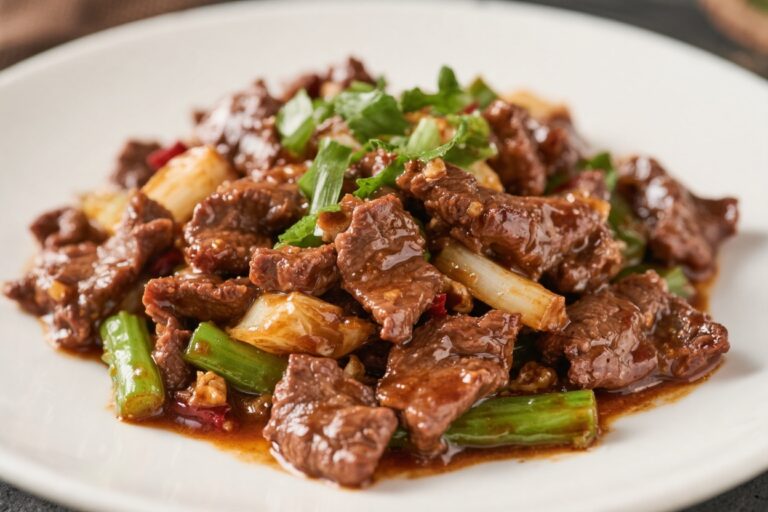
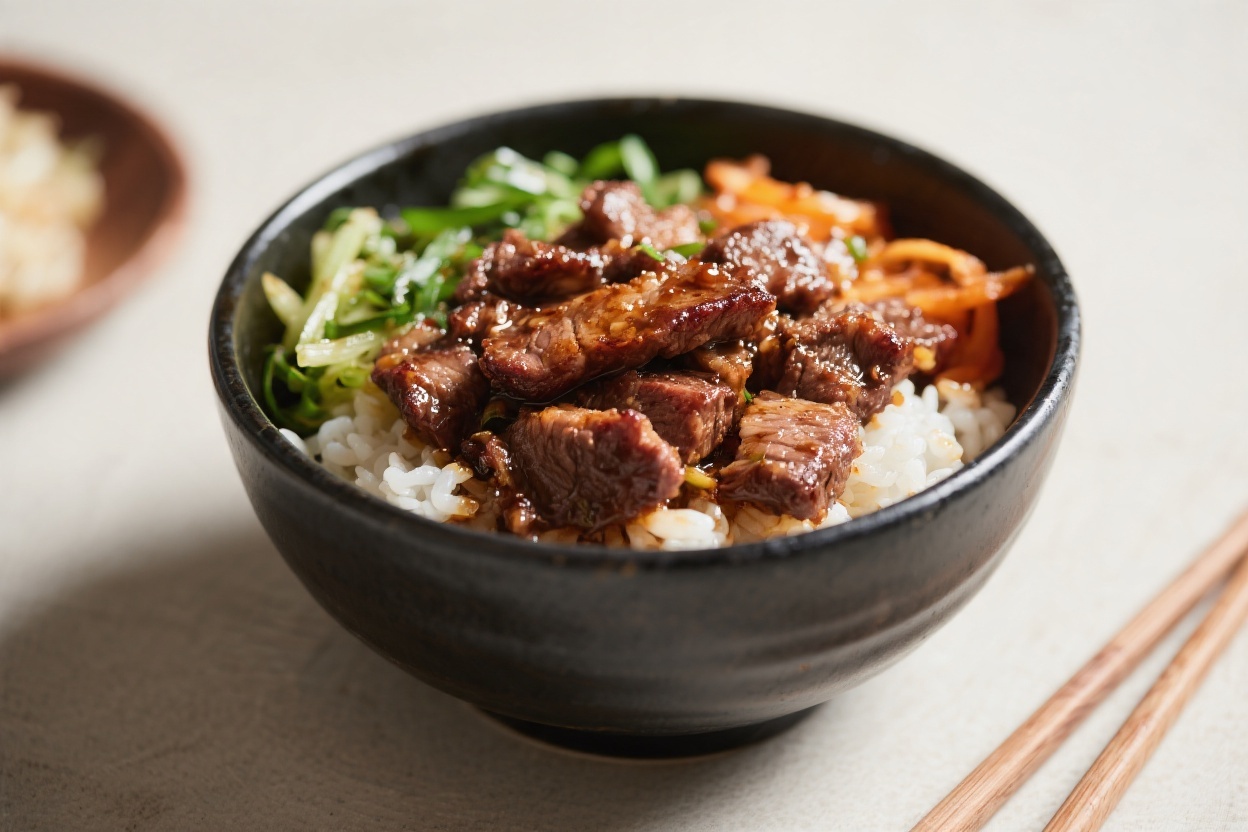
Sweet, savory, and a little smoky, these Korean BBQ beef bowls bring restaurant-style bulgogi flavor to your kitchen with minimal fuss. Thinly sliced beef gets a quick soak in a garlicky soy-sesame marinade, then cooks in minutes until caramelized and glossy. Serve it over warm rice with crunchy veggies and a drizzle of spicy mayo, and you’ve got a complete meal that hits every craving.
FREE 7-Day Easy Dinner Reset
Save time, eat healthier, and take the stress out of dinner. Get a full week of easy healthy dinners delivered straight to your inbox.
This is the kind of dinner that feels special but fits easily into a busy week. No special equipment, just bold flavor and simple steps.
Ingredients
Method
- Slice the beef: Freeze the steak for 20 to 30 minutes to firm it up. Slice very thinly against the grain. Aim for paper-thin pieces so they sear fast and stay tender.
- Make the marinade: In a bowl, whisk soy sauce, brown sugar, sesame oil, rice vinegar, garlic, ginger, grated pear or apple, and gochujang. Stir in the white parts of the green onions.
- Marinate: Add the beef to the marinade and toss to coat. Cover and chill for at least 20 minutes and up to 24 hours. The longer it sits, the deeper the flavor.
- Cook the rice and prep toppings: While the beef marinates, cook rice and prep veggies. Keep everything ready so you can serve immediately after cooking.
- Get the pan hot: Heat a large cast-iron skillet or wok over medium-high until very hot. Add 1 tablespoon of oil and swirl to coat.
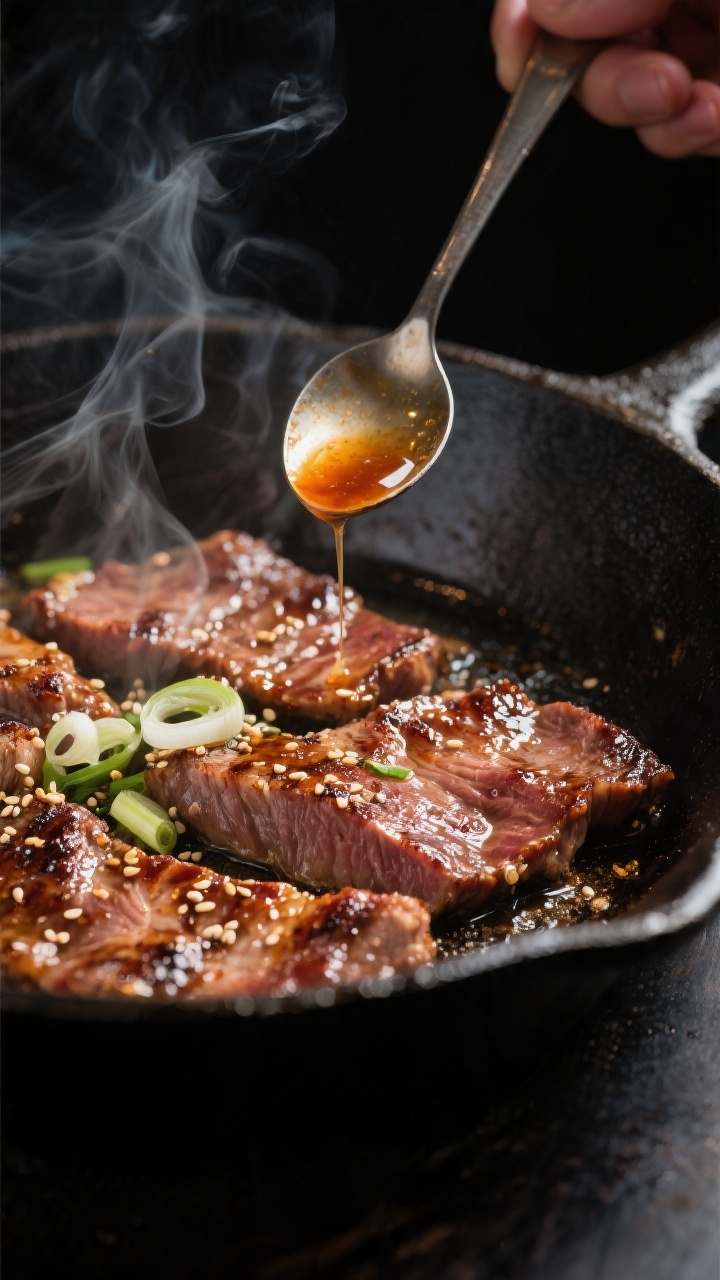
- Sear in batches: Working in batches, add a single layer of beef and let it sear for 1 to 2 minutes before stirring. Cook another 1 to 2 minutes until edges caramelize. Avoid crowding or the beef will steam instead of brown.
- Glaze and finish: As you cook each batch, spoon in a little of the leftover marinade (about 1 to 2 tablespoons) to create a glossy glaze. Don’t flood the pan. Transfer cooked beef to a plate and repeat with remaining beef.
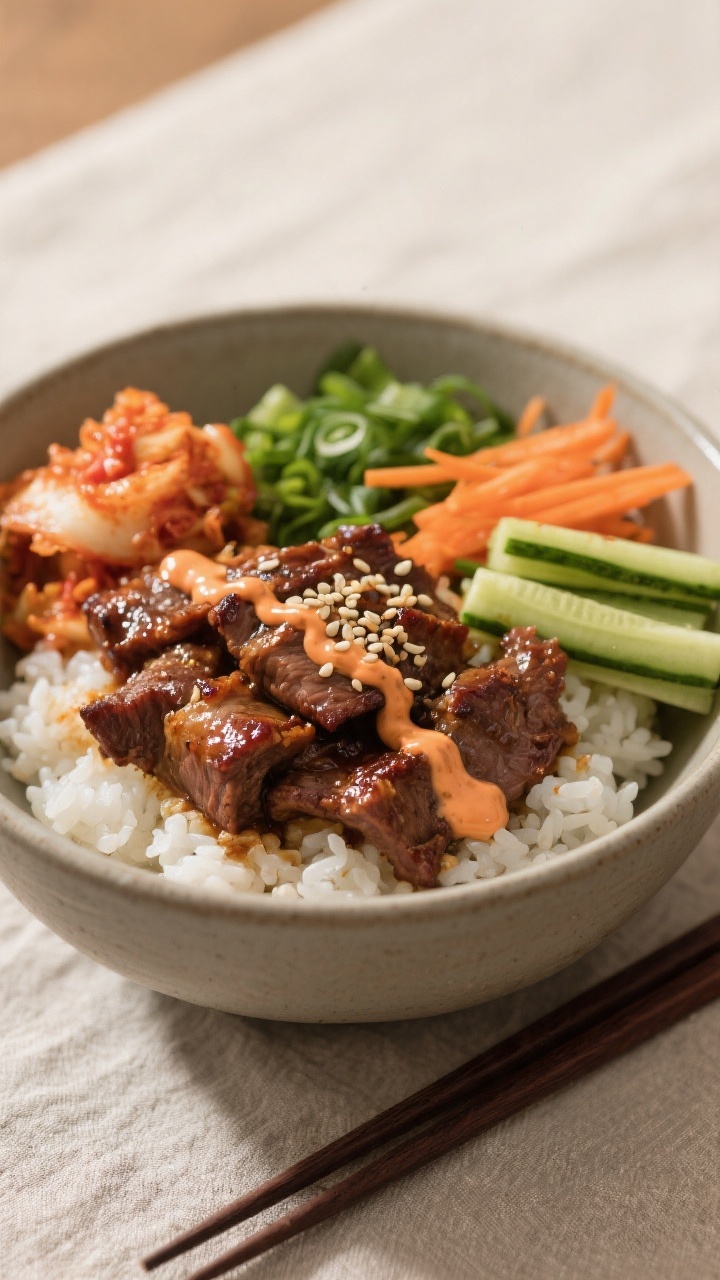
- Assemble bowls: Add warm rice to bowls. Top with bulgogi, a sprinkle of sesame seeds, and the green parts of the green onions. Add veggies, kimchi, and your favorite sauce.
- Taste and adjust: Finish with a splash of soy, a squeeze of lime for brightness, or an extra dab of gochujang if you like heat.
What Makes This Recipe So Good
- Fast and satisfying: Thin slices of beef cook quickly, so dinner lands on the table in about 30 minutes.
- Bold, balanced flavor: The marinade blends soy, brown sugar, sesame, garlic, and ginger for classic bulgogi taste—sweet, salty, and aromatic.
- Flexible: Pile the beef over rice, cauliflower rice, or noodles, and top with whatever crunchy veggies you like.
- Meal prep friendly: Marinate the beef the night before or cook a double batch to build easy bowls throughout the week.
- One-pan cooking: A hot skillet or wok delivers that lightly charred, caramelized edge without fuss.
What You’ll Need
- Beef: 1.5 pounds ribeye, sirloin, or flank steak, very thinly sliced against the grain
- Soy sauce: 1/3 cup (use low-sodium if you prefer)
- Brown sugar: 3 tablespoons (or use honey)
- Sesame oil: 1.5 tablespoons, toasted
- Rice vinegar: 1 tablespoon (or mirin for extra sweetness)
- Garlic: 4 cloves, minced
- Ginger: 1 tablespoon, freshly grated
- Asian pear or apple: 1/2 cup grated (optional but traditional for tenderizing and sweetness)
- Gochujang: 1 to 2 teaspoons, to taste (or a pinch of red pepper flakes)
- Neutral oil: 1 to 2 tablespoons (canola or avocado oil)
- Green onions: 4, thinly sliced (whites for cooking, greens for garnish)
- Sesame seeds: 1 tablespoon, toasted
- Rice: 4 cups cooked jasmine or short-grain rice
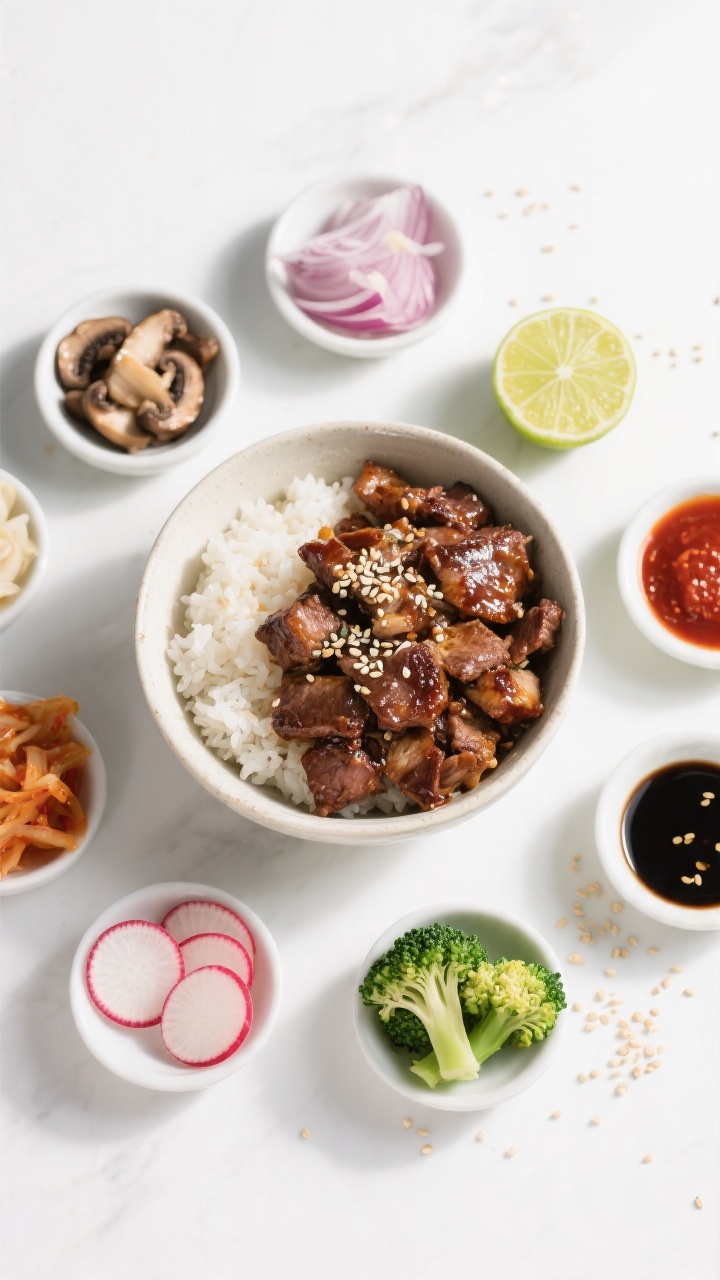
- Veggie toppings: Shredded carrots, cucumber matchsticks, kimchi, sliced radish, steamed broccoli, or sautéed mushrooms
- Optional sauces: Sriracha mayo, extra gochujang, or a drizzle of soy
Instructions
- Slice the beef: Freeze the steak for 20 to 30 minutes to firm it up. Slice very thinly against the grain.
Aim for paper-thin pieces so they sear fast and stay tender.
- Make the marinade: In a bowl, whisk soy sauce, brown sugar, sesame oil, rice vinegar, garlic, ginger, grated pear or apple, and gochujang. Stir in the white parts of the green onions.
- Marinate: Add the beef to the marinade and toss to coat. Cover and chill for at least 20 minutes and up to 24 hours.
The longer it sits, the deeper the flavor.
- Cook the rice and prep toppings: While the beef marinates, cook rice and prep veggies. Keep everything ready so you can serve immediately after cooking.
- Get the pan hot: Heat a large cast-iron skillet or wok over medium-high until very hot. Add 1 tablespoon of oil and swirl to coat.
- Sear in batches: Working in batches, add a single layer of beef and let it sear for 1 to 2 minutes before stirring.
Cook another 1 to 2 minutes until edges caramelize. Avoid crowding or the beef will steam instead of brown.
- Glaze and finish: As you cook each batch, spoon in a little of the leftover marinade (about 1 to 2 tablespoons) to create a glossy glaze. Don’t flood the pan.
Transfer cooked beef to a plate and repeat with remaining beef.
- Assemble bowls: Add warm rice to bowls. Top with bulgogi, a sprinkle of sesame seeds, and the green parts of the green onions. Add veggies, kimchi, and your favorite sauce.
- Taste and adjust: Finish with a splash of soy, a squeeze of lime for brightness, or an extra dab of gochujang if you like heat.
Storage Instructions
- Fridge: Store cooked beef in an airtight container for up to 4 days.
Keep rice and toppings separate for best texture.
- Freezer: Freeze marinated raw beef in a flat zip-top bag for up to 2 months. Thaw overnight in the fridge, then cook as directed.
- Reheating: Reheat beef in a hot skillet with a splash of water to loosen the glaze. Microwaving works, but a quick skillet reheat keeps the edges caramelized.
- Make-ahead: Cook rice ahead and reheat with a damp paper towel to restore moisture.
Why This is Good for You
- Protein-rich: Lean cuts like sirloin support muscle recovery and keep you fuller longer.
- Balanced plate: Pairing beef with rice and colorful veggies makes a satisfying mix of carbs, protein, and fiber.
- Flavor that encourages veggies: The bold, savory-sweet sauce makes raw or lightly cooked vegetables more appealing.
- Customizable for dietary needs: Swap in brown rice, cauliflower rice, or extra vegetables to lighten things up while keeping flavor high.
What Not to Do
- Don’t crowd the pan: Overloading the skillet stops browning and leads to tough, steamed meat.
- Don’t skip slicing against the grain: Thin, cross-grain slices are the key to tender results.
- Don’t drench with marinade: A little glaze is perfect; too much makes the pan watery and dulls the caramelization.
- Don’t use cold rice straight from the fridge: It will cool the bowl and dull flavors.
Warm it first.
- Don’t forget salt balance: Use low-sodium soy if you’re sensitive, and balance with a touch more sugar or pear if needed.
Recipe Variations
- Chicken bulgogi bowls: Use thinly sliced boneless chicken thighs. Cook until browned and cooked through, about 5 to 7 minutes.
- Ground beef shortcut: Use 1.25 pounds of lean ground beef. Brown, drain, then add the marinade and reduce until glossy.
- Spicy gochujang boost: Add 1 extra tablespoon gochujang to the marinade and finish with chili oil.
- Low-carb option: Serve over cauliflower rice and increase veggies like broccoli, mushrooms, and spinach.
- Vegetarian swap: Use extra-firm tofu or portobello mushrooms.
Press tofu well, slice, marinate, and sear until crisp at the edges.
- No pear on hand: Use grated apple, a splash of pineapple juice, or 1 teaspoon sugar plus 1 teaspoon rice vinegar.
FAQ
What cut of beef works best?
Ribeye is classic for tenderness and flavor, but sirloin and flank steak also work well. The real trick is slicing very thin against the grain. Slightly freezing the meat first makes this much easier.
Can I make this without gochujang?
Yes.
Need More Easy Dinner Ideas?
Get my FREE 7-Day Easy Dinner Reset and enjoy a full week of healthy dinners without the meal-planning stress.
Use a pinch of red pepper flakes or a small drizzle of sriracha for heat. You’ll miss a bit of that deep fermented chili flavor, but the bowls will still taste great.
How long should I marinate the beef?
At least 20 minutes for a quick weeknight version, and up to 24 hours for deeper flavor. If using very thin ribeye, avoid going much beyond a day to prevent mushiness.
What rice should I use?
Short-grain or medium-grain white rice gives the best sticky, fluffy texture.
Jasmine also works well. If you prefer whole grains, use brown rice and cook it until tender.
Can I grill the beef instead of pan-searing?
Absolutely. Thread the slices onto skewers or use a grill basket and cook over high heat for 1 to 2 minutes per side.
You’ll get a delicious smoky char.
Is this recipe gluten-free?
It can be. Use tamari or a certified gluten-free soy sauce, and check your gochujang label for wheat. Everything else is naturally gluten-free.
How do I keep the beef tender?
Slice thinly, marinate with pear or apple, use high heat, and cook quickly.
Overcooking makes it chewy, so pull it as soon as the edges caramelize.
What can I use instead of sesame oil?
Toasted sesame oil is unique, but you can add a little neutral oil and finish with sesame seeds for aroma. A few drops of roasted peanut oil can offer a different nutty note.
Can I meal prep these bowls?
Yes. Cook the beef and rice, portion into containers, and store toppings separately.
Reheat the base, then add fresh veggies and sauces right before eating.
What vegetables pair best?
Crunchy, fresh vegetables complement the rich beef. Try cucumber, carrots, radish, shredded cabbage, quick-pickled onions, sautéed mushrooms, or steamed broccoli.
Wrapping Up
These Korean BBQ Beef Bowls deliver the sweet-savory magic of bulgogi with simple steps and weeknight speed. A quick marinade, a hot pan, and a handful of fresh toppings turn thin slices of beef into a complete, crowd-pleasing meal.
Keep this recipe in your rotation for nights when you want big flavor without extra work, and customize the bowls to match your mood and what’s in your fridge. It’s comfort, color, and crunch in one easy bowl.
Printable Recipe Card
Want just the essential recipe details without scrolling through the article? Get our printable recipe card with just the ingredients and instructions.
Loved This Recipe?
If you're looking for more simple, healthy dinners your family will actually eat, grab my FREE 7-Day Easy Dinner Reset. You'll get 7 easy dinner recipes, simple grocery lists, and a done-for-you plan that takes the stress out of mealtime.