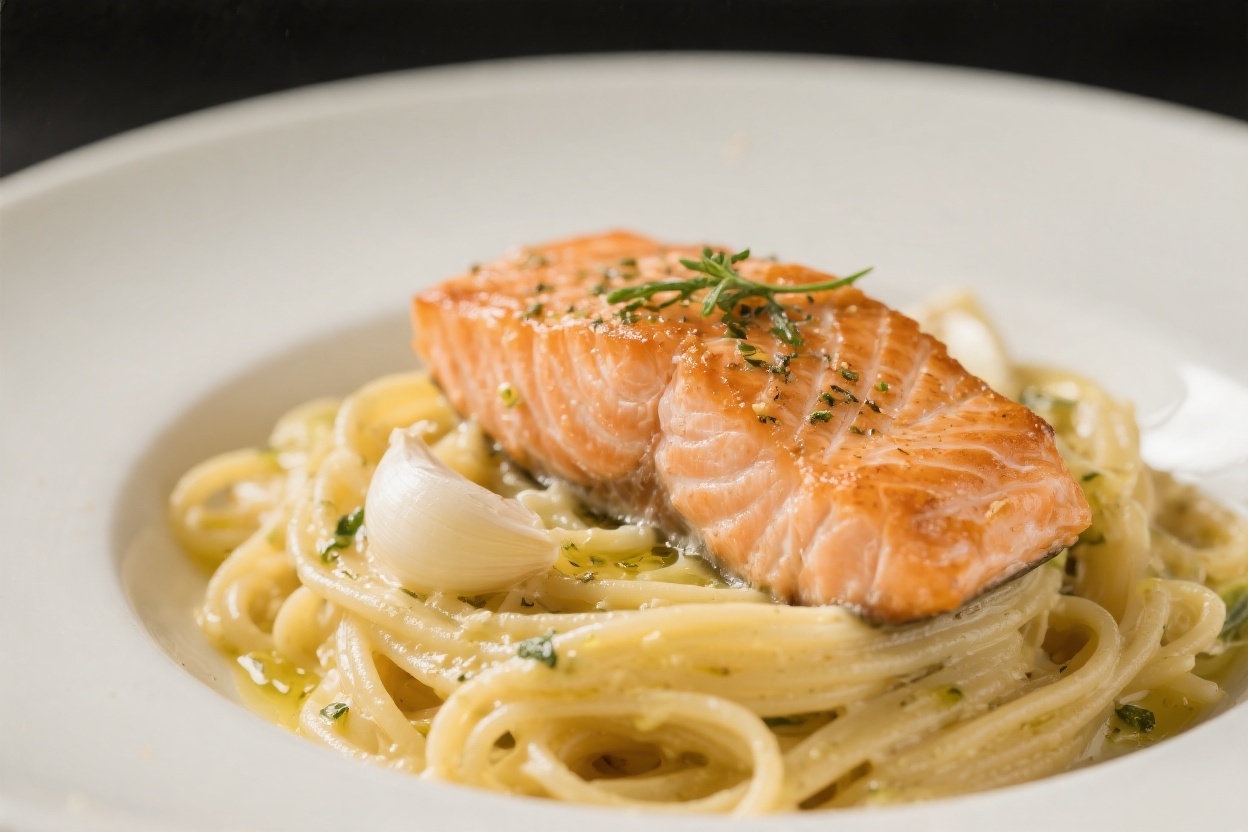
Garlic Butter Salmon Pasta – Comforting, Creamy, and Weeknight-Friendly
This Garlic Butter Salmon Pasta is the kind of recipe you keep in your back pocket for busy nights or cozy dinners. It’s rich without being heavy, simple to make, and full of comforting flavors. You get silky strands of pasta coated in garlicky butter sauce, tender flakes of salmon, and a squeeze of lemon to brighten everything up.
FREE 7-Day Easy Dinner Reset
Save time, eat healthier, and take the stress out of dinner. Get a full week of easy healthy dinners delivered straight to your inbox.
The best part? It comes together fast, and most of the steps happen in one pan.
Ingredients
Method
- Cook the pasta: Bring a large pot of salted water to a boil. Cook pasta until just shy of al dente (about 1 minute less than package directions). Reserve 1 cup of pasta water, then drain.
- Season the salmon: Pat the salmon dry. Season both sides with salt and pepper. If it’s a large fillet, cut it into two or three pieces for easier handling.
- Sear the salmon: Heat olive oil in a large skillet over medium-high. Place salmon skin-side down and cook 3–4 minutes until the skin crisps. Flip and cook another 2–3 minutes, depending on thickness, until just cooked through. Transfer to a plate and rest.
- Flake the salmon: When cool enough, peel off the skin and gently flake the fish into bite-size pieces. Avoid over-flaking so it doesn’t break down in the sauce.
- Make the garlic butter base: Reduce heat to medium. In the same skillet, add butter. When melted and foamy, add minced garlic and red pepper flakes. Cook 30–60 seconds until fragrant. Do not brown the garlic.
- Deglaze: Pour in white wine (if using). Scrape up browned bits. Simmer 1–2 minutes to reduce slightly. Add stock and simmer another minute.
- Create the sauce: Stir in lemon zest and juice. If using cream, add it now. Simmer gently for 1–2 minutes to marry flavors.
- Add pasta and Parmesan: Toss pasta into the skillet with the sauce. Add Parmesan and a splash of reserved pasta water. Toss until glossy and lightly thickened, adding more water as needed for a silky coating.
- Add greens (optional): Fold in spinach or peas. Cook 1–2 minutes until wilted or warmed through.
- Fold in salmon: Gently add the flaked salmon. Toss carefully to avoid breaking it up too much. Taste and adjust salt, pepper, and lemon.
- Finish and serve: Sprinkle with parsley. Serve hot with extra Parmesan and a squeeze of lemon.
What Makes This Special
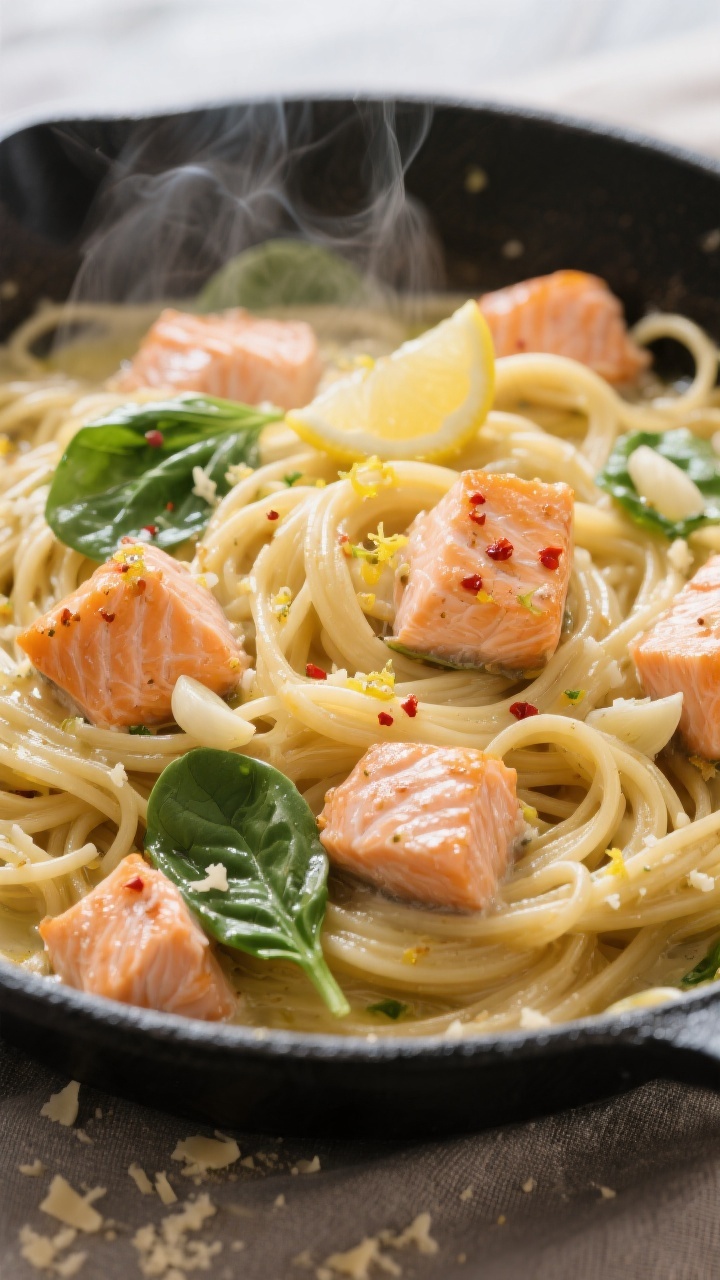
This dish balances richness and freshness in a way that feels effortless. The butter and garlic create a savory base, while lemon and parsley keep it lively.
Salmon adds protein and heart-healthy fats without much fuss. You don’t need fancy ingredients, just a few pantry staples and a fillet or two. It’s also versatile enough to adapt to what you have on hand.
- Quick and approachable: Ready in about 30 minutes with simple steps.
- Restaurant-level flavor: Garlic butter, lemon, and salmon make a classic trio.
- All-in-one meal: Protein, carbs, and a bit of greens if you toss in spinach or peas.
- Flexible: Works with fresh or frozen salmon, long or short pasta, and optional cream.
What You’ll Need
- Pasta: 12 ounces spaghetti, linguine, or fettuccine (short pasta works too)
- Salmon: 1 to 1.25 pounds skin-on fillet (or two smaller fillets)
- Butter: 4 tablespoons unsalted
- Olive Oil: 1 tablespoon, for searing
- Garlic: 4–5 cloves, finely minced
- Lemon: Zest of 1 lemon + 2 tablespoons juice (more to taste)
- White Wine (optional): 1/3 cup dry white wine (or extra stock)
- Chicken or Vegetable Stock: 1/2 cup, low sodium
- Heavy Cream (optional): 1/3 cup, for a silkier sauce
- Parmesan: 1/2 cup freshly grated, plus more for serving
- Red Pepper Flakes: A pinch, for gentle heat
- Fresh Parsley: 1/4 cup chopped
- Salt and Black Pepper: To season pasta water, salmon, and sauce
- Baby Spinach or Peas (optional): 2 cups spinach or 1 cup peas
Step-by-Step Instructions
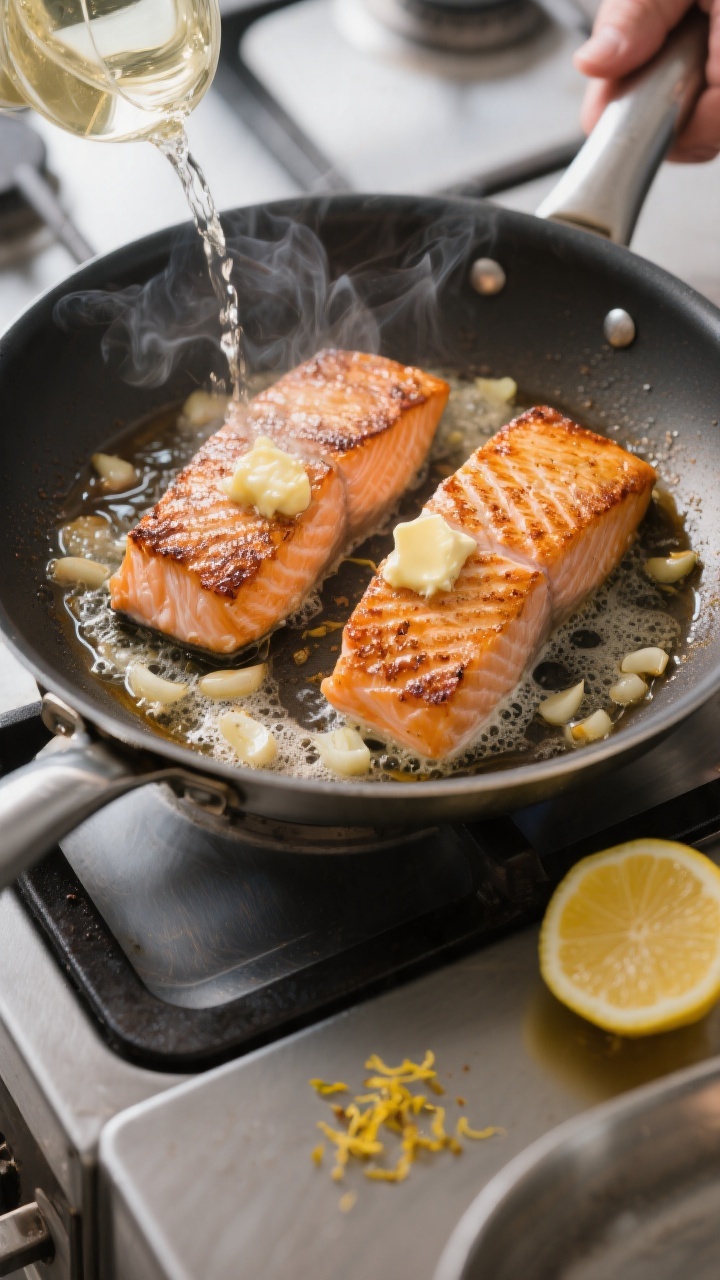
- Cook the pasta: Bring a large pot of salted water to a boil.
Cook pasta until just shy of al dente (about 1 minute less than package directions). Reserve 1 cup of pasta water, then drain.
- Season the salmon: Pat the salmon dry. Season both sides with salt and pepper.
If it’s a large fillet, cut it into two or three pieces for easier handling.
- Sear the salmon: Heat olive oil in a large skillet over medium-high. Place salmon skin-side down and cook 3–4 minutes until the skin crisps. Flip and cook another 2–3 minutes, depending on thickness, until just cooked through.
Transfer to a plate and rest.
- Flake the salmon: When cool enough, peel off the skin and gently flake the fish into bite-size pieces. Avoid over-flaking so it doesn’t break down in the sauce.
- Make the garlic butter base: Reduce heat to medium. In the same skillet, add butter.
When melted and foamy, add minced garlic and red pepper flakes. Cook 30–60 seconds until fragrant. Do not brown the garlic.
- Deglaze: Pour in white wine (if using).
Scrape up browned bits. Simmer 1–2 minutes to reduce slightly. Add stock and simmer another minute.
- Create the sauce: Stir in lemon zest and juice.
If using cream, add it now. Simmer gently for 1–2 minutes to marry flavors.
- Add pasta and Parmesan: Toss pasta into the skillet with the sauce. Add Parmesan and a splash of reserved pasta water.
Toss until glossy and lightly thickened, adding more water as needed for a silky coating.
- Add greens (optional): Fold in spinach or peas. Cook 1–2 minutes until wilted or warmed through.
- Fold in salmon: Gently add the flaked salmon. Toss carefully to avoid breaking it up too much.
Taste and adjust salt, pepper, and lemon.
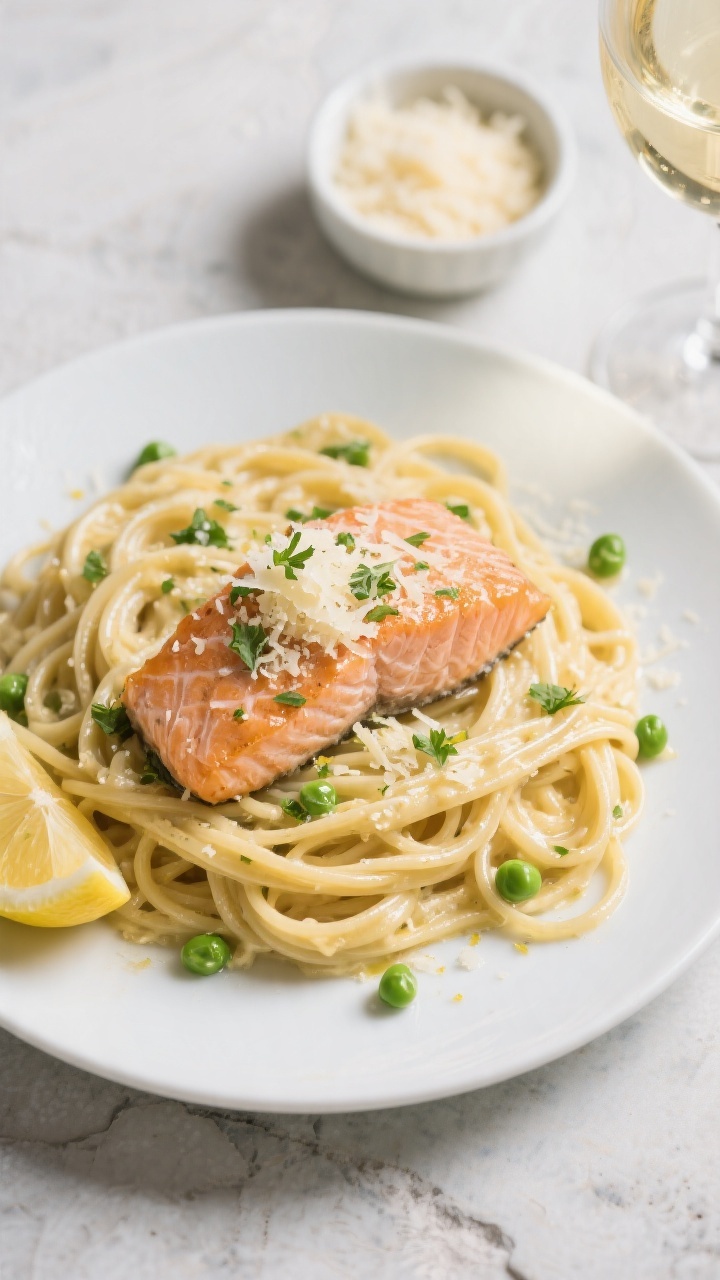
- Finish and serve: Sprinkle with parsley. Serve hot with extra Parmesan and a squeeze of lemon.
Storage Instructions
- Refrigerator: Store leftovers in an airtight container for up to 2 days.
- Reheating: Warm gently in a skillet over low heat with a splash of water, stock, or cream. Avoid high heat to prevent the salmon from drying out.
- Freezer: Not recommended.
The sauce can split, and the salmon may become tough.
- Make-ahead tips: You can cook the salmon up to a day ahead and flake it, then add it at the end when you reheat the sauce and pasta.
Health Benefits
- Omega-3 fats: Salmon is rich in EPA and DHA, which support heart and brain health.
- High-quality protein: Helps with satiety and muscle maintenance.
- Balanced meal: Carbs from pasta, protein from salmon, and healthy fats from olive oil and fish.
- Micronutrients: Salmon provides B vitamins and selenium; parsley and lemon add vitamin C and antioxidants.
- Customizable richness: Use less butter or swap some cream for reserved pasta water to lighten the dish while keeping it satisfying.
Common Mistakes to Avoid
- Overcooking the salmon: It should be just opaque and flake easily. Pull it off the heat a touch early; it will carry over cook.
- Skipping pasta water: The starchy water helps the sauce cling and become glossy. Keep at least 1 cup on hand.
- Burning the garlic: Bitter garlic can overpower the dish.
Keep the heat moderate and stir constantly.
- Adding lemon too early: Add zest and juice after deglazing so the flavor stays bright and fresh.
- Breaking up the salmon: Fold gently at the end so you get satisfying chunks in every bite.
- Over-salting: Parmesan and pasta water are salty. Season gradually and taste as you go.
Recipe Variations
- Herb-forward: Swap parsley for dill, chives, or basil for a different finish.
- Lighter version: Use 2 tablespoons butter and skip the cream. Add extra pasta water for body.
- Veggie boost: Add cherry tomatoes, asparagus tips, or sautéed mushrooms to the sauce.
- Spicy twist: Double the red pepper flakes or add a spoonful of Calabrian chili paste.
- Gluten-free: Use gluten-free pasta and confirm your stock is gluten-free.
- Dairy-free: Use a plant-based butter and skip Parmesan, or try a dairy-free Parmesan alternative.
- Smoked salmon shortcut: Fold in hot-smoked salmon at the end for a no-sear option.
- Lemon-caper: Add 1–2 tablespoons capers for briny pop alongside the lemon.
FAQ
Can I use canned salmon?
Need More Easy Dinner Ideas?
Get my FREE 7-Day Easy Dinner Reset and enjoy a full week of healthy dinners without the meal-planning stress.
Yes.
Choose boneless, skinless canned salmon and drain it well. Fold it in at the end just to warm through. The flavor is slightly different but still delicious and budget-friendly.
What pasta shape works best?
Linguine, spaghetti, or fettuccine are classic, but penne or fusilli are great for catching sauce.
Use what you have and cook to just shy of al dente.
Do I need the cream?
No. The butter, Parmesan, and pasta water make a beautiful emulsion on their own. Cream adds extra silkiness, but the dish is flavorful without it.
How do I know when salmon is done?
It should flake easily with a fork and be opaque throughout, with an internal temperature of about 125–130°F for medium.
Remove it from the pan before it looks fully cooked to account for carryover heat.
Can I make this with skinless salmon?
Yes. You won’t get crispy skin, but it cooks a little faster. Be gentle when flipping so it doesn’t stick or break apart.
What can I use instead of white wine?
Use more stock plus a teaspoon of white wine vinegar or a squeeze of extra lemon to mimic the brightness.
Let it reduce slightly before adding pasta.
How can I keep leftovers from drying out?
Reheat slowly with a splash of water, stock, or cream. Stir gently and stop heating as soon as it’s warm. Overheating is what makes salmon tough.
Is frozen salmon okay?
Absolutely.
Thaw it overnight in the refrigerator or under cold running water in its packaging. Pat very dry before searing to help it brown.
Wrapping Up
Garlic Butter Salmon Pasta delivers big flavor with minimal effort. With a handful of kitchen staples and a few easy steps, you get a creamy, bright, and satisfying meal that tastes like a treat.
Make it as rich or as light as you like, add your favorite veggies, and adjust the lemon to your taste. This is a weeknight winner you’ll come back to again and again—simple, comforting, and reliably delicious.
Printable Recipe Card
Want just the essential recipe details without scrolling through the article? Get our printable recipe card with just the ingredients and instructions.
Loved This Recipe?
If you're looking for more simple, healthy dinners your family will actually eat, grab my FREE 7-Day Easy Dinner Reset. You'll get 7 easy dinner recipes, simple grocery lists, and a done-for-you plan that takes the stress out of mealtime.