Air Fryer Maple Dijon Salmon – Fast, Flavorful, and Weeknight-Friendly
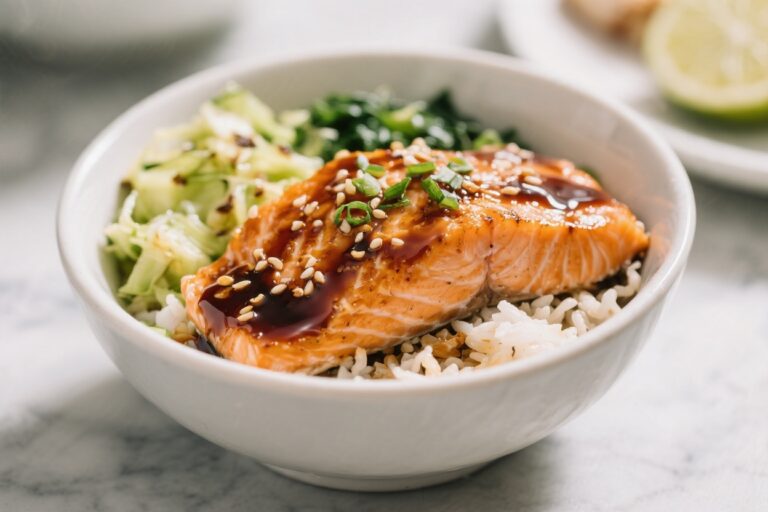
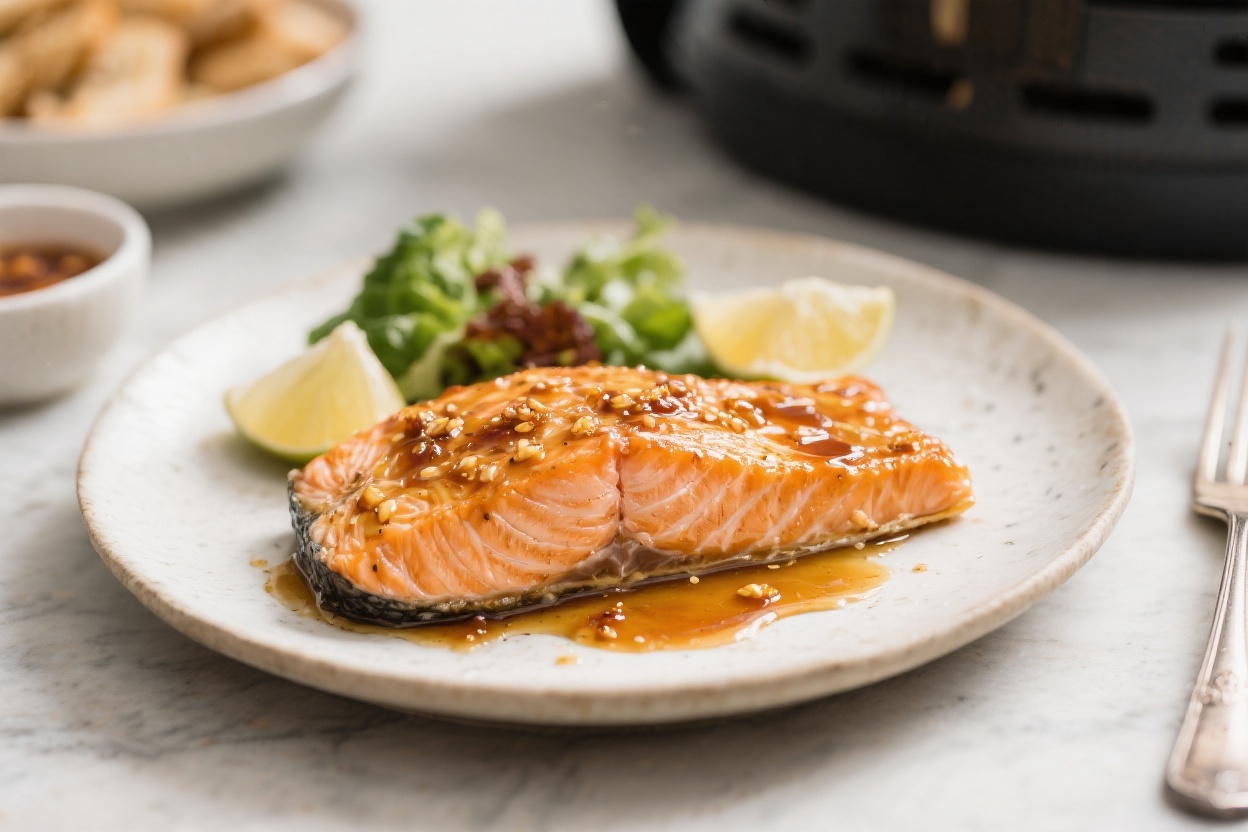
Sweet meets savory in the best way with this Air Fryer Maple Dijon Salmon. You get crisp edges, a glossy glaze, and tender, flaky fish in under 15 minutes. It’s the kind of recipe that turns a simple dinner into something that feels special, without a lot of work.
FREE 7-Day Easy Dinner Reset
Save time, eat healthier, and take the stress out of dinner. Get a full week of easy healthy dinners delivered straight to your inbox.
The marinade is just a handful of pantry staples, and the air fryer does all the heavy lifting. Make it on a busy weeknight or serve it to friends—either way, it never disappoints.
Ingredients
Method
- Preheat the air fryer. Set it to 400°F (200°C) for 3–5 minutes. A hot basket helps the glaze caramelize and prevents sticking.
- Make the glaze. In a small bowl, whisk maple syrup, Dijon, whole-grain mustard (if using), soy sauce, lemon juice, grated garlic, olive oil, salt, pepper, and smoked paprika. Taste and adjust salt or lemon as needed. It should be sweet, tangy, and slightly savory.
- Prep the salmon. Pat the fillets dry with paper towels. Dry fish browns better and helps the glaze stick. Lightly season with a pinch of salt and pepper.
- Glaze the top. Brush most of the maple Dijon mixture over the top and sides of the salmon. Reserve a tablespoon or two to brush on after cooking, if you like a glossy finish.
- Prep the basket. Lightly spray the air fryer basket with nonstick spray or use a perforated air fryer parchment liner. If your salmon has skin, place it skin-side down.
- Air fry. Cook at 400°F (200°C) for 7–10 minutes, depending on thickness. A 1-inch thick fillet usually needs about 8 minutes. The salmon should flake easily and reach an internal temperature of 125–130°F for medium or 140°F for fully cooked.
- Optional finish. Brush on the remaining glaze during the last minute for extra shine and flavor. If you like a deeper caramelized edge, cook 1 more minute.
- Rest and serve. Let the salmon rest for 2 minutes. Garnish with chopped parsley or chives and serve with lemon wedges. Plate with rice, roasted vegetables, or a simple green salad.
Why This Recipe Works
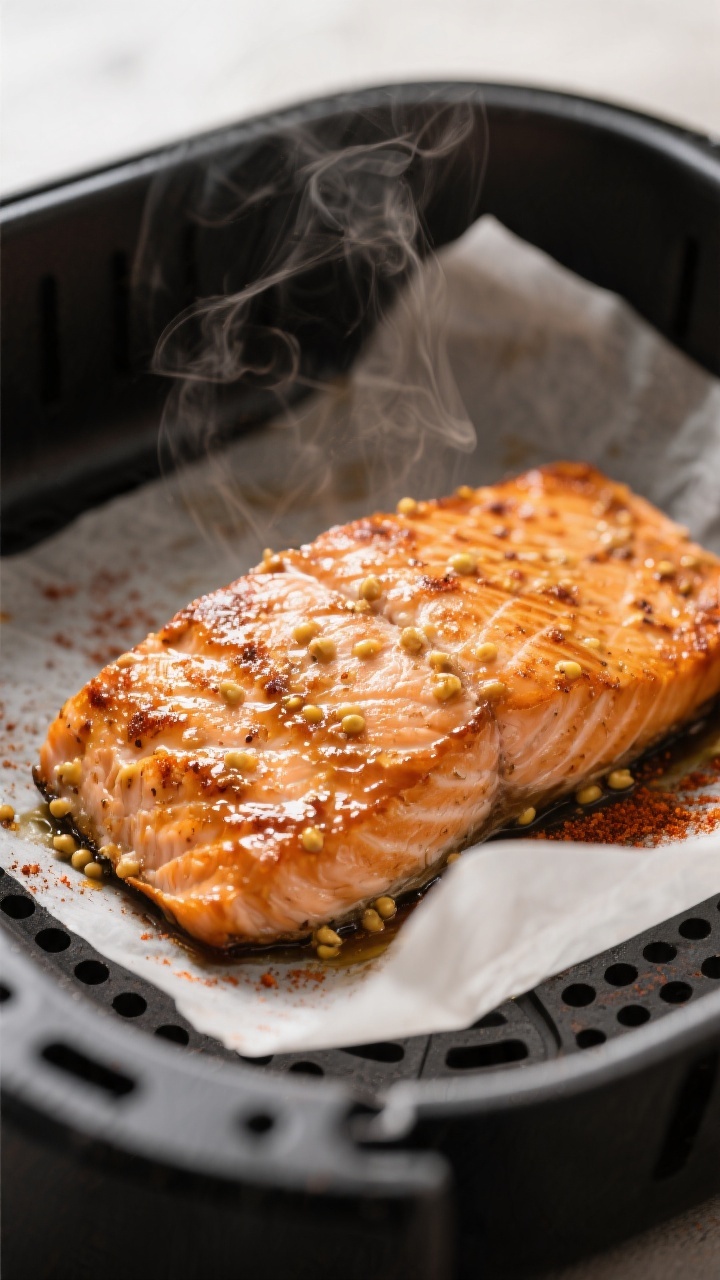
This recipe balances sweet maple syrup with tangy Dijon mustard and a touch of acidity for a craveable glaze. The air fryer cooks the salmon quickly and evenly, keeping the inside moist while lightly caramelizing the outside.
The glaze clings to the fish, so every bite has flavor without needing extra sauces. Plus, the ingredient list is short, and the method is simple enough for beginners.
What You’ll Need
- Salmon fillets (4 pieces, 5–6 ounces each), skin-on or skinless
- Pure maple syrup (2 tablespoons)
- Dijon mustard (1 tablespoon)
- Whole-grain mustard (optional, 1 teaspoon) for extra texture
- Soy sauce or tamari (1 teaspoon) for savory depth
- Lemon juice (2 teaspoons) or apple cider vinegar
- Garlic (1 small clove, finely grated) or 1/4 teaspoon garlic powder
- Olive oil (1 teaspoon)
- Salt (about 1/2 teaspoon) and black pepper to taste
- Smoked paprika (optional, 1/4 teaspoon) for a subtle smoky note
- Lemon wedges, to serve
- Fresh parsley or chives (optional), chopped for garnish
- Nonstick spray or a small piece of parchment designed for air fryers
Step-by-Step Instructions
- Preheat the air fryer. Set it to 400°F (200°C) for 3–5 minutes. A hot basket helps the glaze caramelize and prevents sticking.
- Make the glaze. In a small bowl, whisk maple syrup, Dijon, whole-grain mustard (if using), soy sauce, lemon juice, grated garlic, olive oil, salt, pepper, and smoked paprika.
Taste and adjust salt or lemon as needed. It should be sweet, tangy, and slightly savory.
- Prep the salmon. Pat the fillets dry with paper towels. Dry fish browns better and helps the glaze stick.
Lightly season with a pinch of salt and pepper.
- Glaze the top. Brush most of the maple Dijon mixture over the top and sides of the salmon. Reserve a tablespoon or two to brush on after cooking, if you like a glossy finish.
- Prep the basket. Lightly spray the air fryer basket with nonstick spray or use a perforated air fryer parchment liner. If your salmon has skin, place it skin-side down.
- Air fry. Cook at 400°F (200°C) for 7–10 minutes, depending on thickness.
A 1-inch thick fillet usually needs about 8 minutes. The salmon should flake easily and reach an internal temperature of 125–130°F for medium or 140°F for fully cooked.
- Optional finish. Brush on the remaining glaze during the last minute for extra shine and flavor. If you like a deeper caramelized edge, cook 1 more minute.
- Rest and serve. Let the salmon rest for 2 minutes.
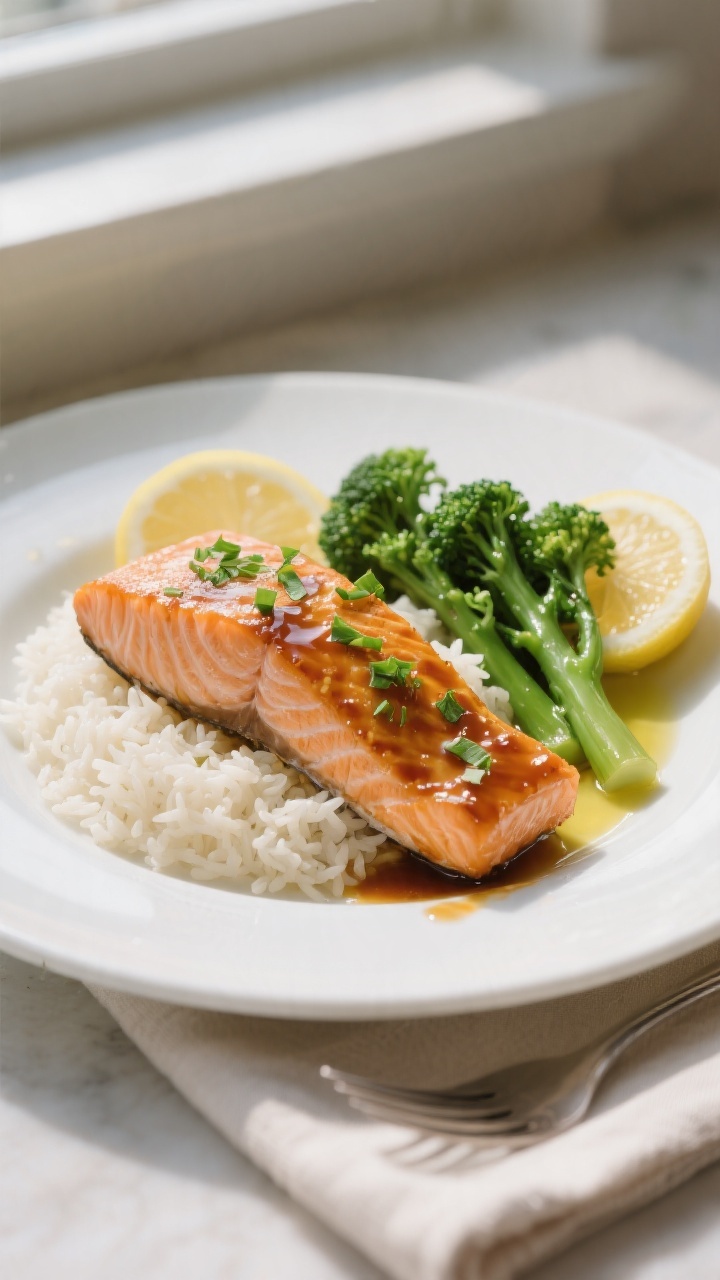
Garnish with chopped parsley or chives and serve with lemon wedges. Plate with rice, roasted vegetables, or a simple green salad.
How to Store
Cool the salmon completely, then store in an airtight container in the fridge for up to 3 days. For freezing, wrap individual fillets tightly and freeze for up to 2 months.
Reheat gently in the air fryer at 320°F (160°C) for 3–5 minutes or in the microwave at low power. Add a squeeze of lemon after reheating to brighten the flavor.
Benefits of This Recipe
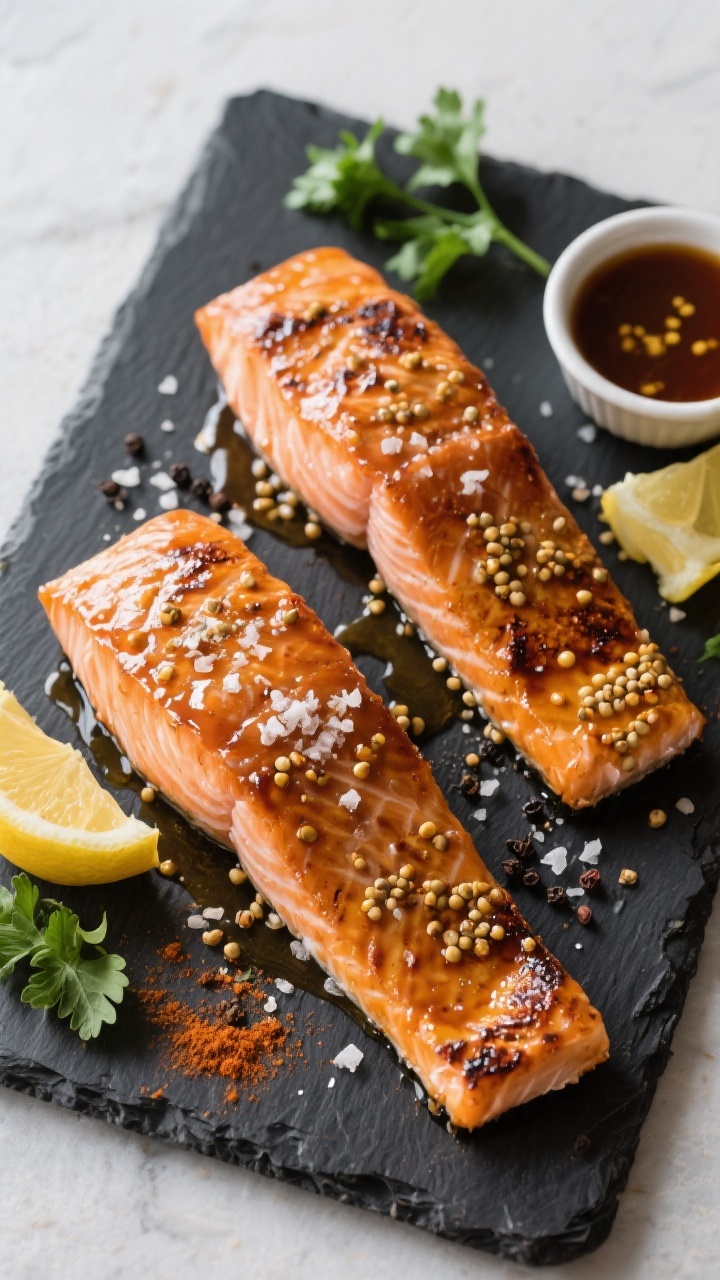
- Quick and reliable: From start to finish in about 15 minutes with minimal cleanup.
- Balanced flavor: Sweet, tangy, and savory notes that appeal to a wide range of tastes.
- Nutritious: Salmon is rich in omega-3s and protein, making this a heart-healthy option.
- Flexible: Works with fresh or thawed frozen salmon, and the glaze pairs well with other proteins.
- Beginner-friendly: Simple steps, short ingredient list, and forgiving cook time.
What Not to Do
- Don’t overcrowd the basket. Give each fillet space for air to circulate, or the fish may steam instead of crisp.
- Don’t skip drying the fish. Excess moisture prevents browning and dilutes the glaze.
- Don’t overcook. Salmon goes from perfect to dry quickly. Start checking at 7 minutes.
- Don’t use imitation maple syrup. Real maple syrup gives depth and a cleaner sweetness.
- Don’t add glaze to a cold basket. Preheating helps set the glaze and reduces sticking.
Alternatives
- Different fish: Try steelhead trout or arctic char with the same timing.
For cod or halibut, cook 1–2 minutes longer.
- Sugar swaps: Use honey or brown sugar if you don’t have maple syrup. Reduce by 1 teaspoon to avoid over-sweetening.
- Mustard options: Yellow mustard works in a pinch; add a little extra lemon to boost tang.
- Gluten-free: Use tamari or coconut aminos instead of soy sauce.
- Spice it up: Add 1/4–1/2 teaspoon red pepper flakes or a dash of hot sauce to the glaze.
- No air fryer: Bake at 425°F (220°C) for 10–12 minutes, or pan-sear skin-side down 4–5 minutes, then finish in a 375°F (190°C) oven for 4–6 minutes.
- Veggie add-ins: Air fry thin asparagus or broccolini tossed with olive oil and salt on a separate rack or before the salmon. They cook in 6–8 minutes.
FAQ
Need More Easy Dinner Ideas?
Get my FREE 7-Day Easy Dinner Reset and enjoy a full week of healthy dinners without the meal-planning stress.
Do I need to remove the skin?
No.
Skin-on fillets are easier to handle and help protect the fish from overcooking. After air frying, the skin peels away cleanly if you prefer not to eat it.
Can I use frozen salmon?
Yes, but thaw it first for even cooking and better texture. Pat dry thoroughly to remove excess moisture before applying the glaze.
How do I know when the salmon is done?
It should flake easily with a fork and appear opaque in the center with slight translucence for medium.
An instant-read thermometer reading of 125–130°F gives a moist, tender result.
Will the glaze burn in the air fryer?
Not if you follow the timing. The maple sugars can darken quickly, so check at 7 minutes and adjust as needed. Avoid setting the temperature higher than 400°F (200°C).
What sides go well with this?
Steamed rice, quinoa, roasted sweet potatoes, garlicky green beans, or a crisp cucumber salad all pair nicely.
A squeeze of lemon or a dollop of Greek yogurt makes a simple finishing touch.
Can I make this dairy-free or paleo?
Yes. The base recipe is dairy-free. For paleo, use coconut aminos in place of soy sauce and ensure your mustards are compliant.
How long should I marinate the salmon?
There’s no need to marinate.
The glaze works best applied right before cooking so it caramelizes rather than soaking in and making the fish watery.
What if my air fryer smokes?
Make sure the basket is clean and free of old oil. If using skin-on salmon, a parchment liner can help catch rendered fat. Cooking slightly below 400°F can also reduce smoking.
In Conclusion
Air Fryer Maple Dijon Salmon delivers big flavor with little effort.
The sweet-tangy glaze, quick cook time, and tender texture make it a dependable recipe for any night of the week. Keep a bottle of real maple syrup and a jar of Dijon on hand, and you can make a satisfying dinner in minutes. Serve it with simple sides, finish with a squeeze of lemon, and enjoy a meal that feels both easy and elevated.
Printable Recipe Card
Want just the essential recipe details without scrolling through the article? Get our printable recipe card with just the ingredients and instructions.
Loved This Recipe?
If you're looking for more simple, healthy dinners your family will actually eat, grab my FREE 7-Day Easy Dinner Reset. You'll get 7 easy dinner recipes, simple grocery lists, and a done-for-you plan that takes the stress out of mealtime.