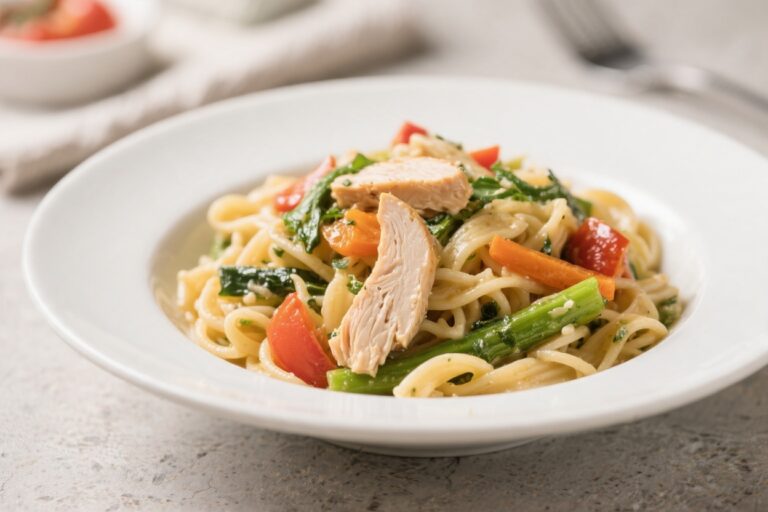
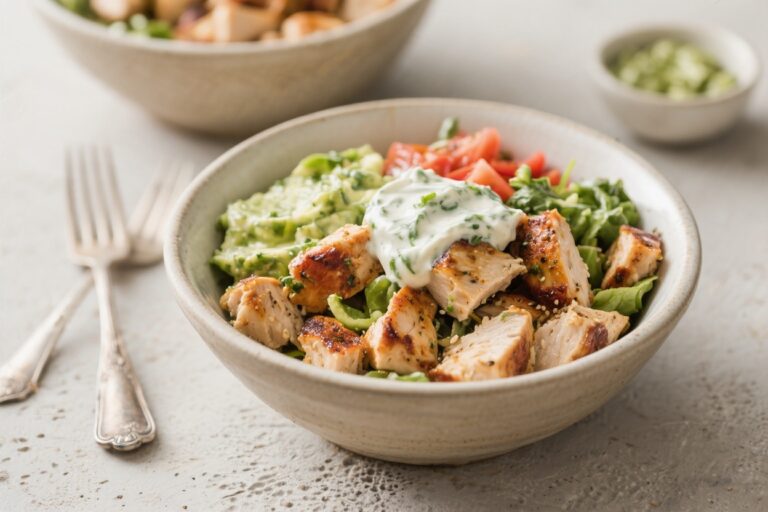
Healthy Chicken Stir Fry – Quick, Colorful, and Satisfying
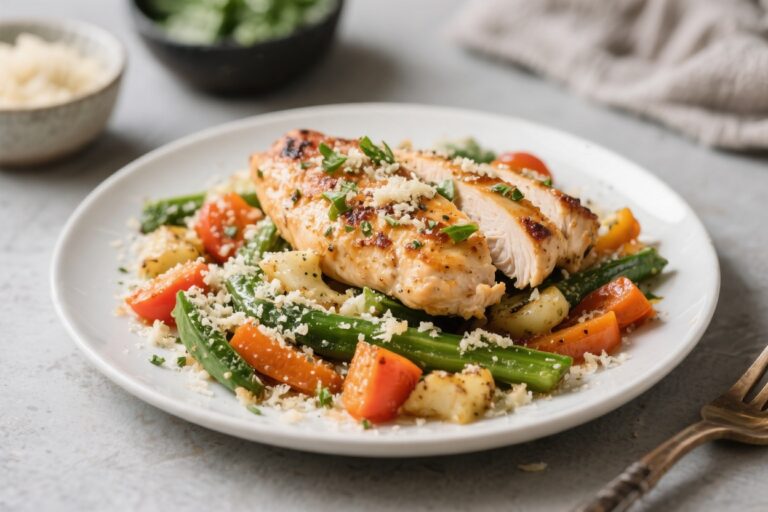
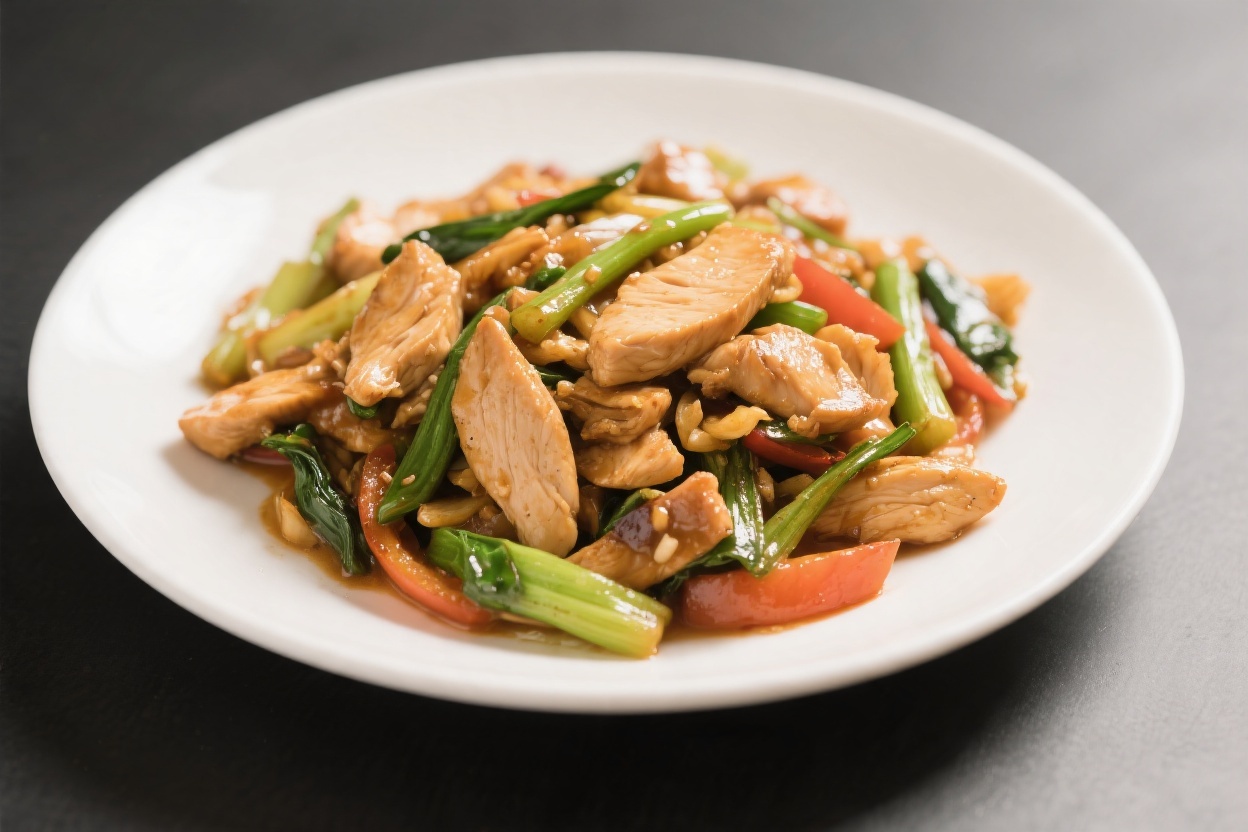
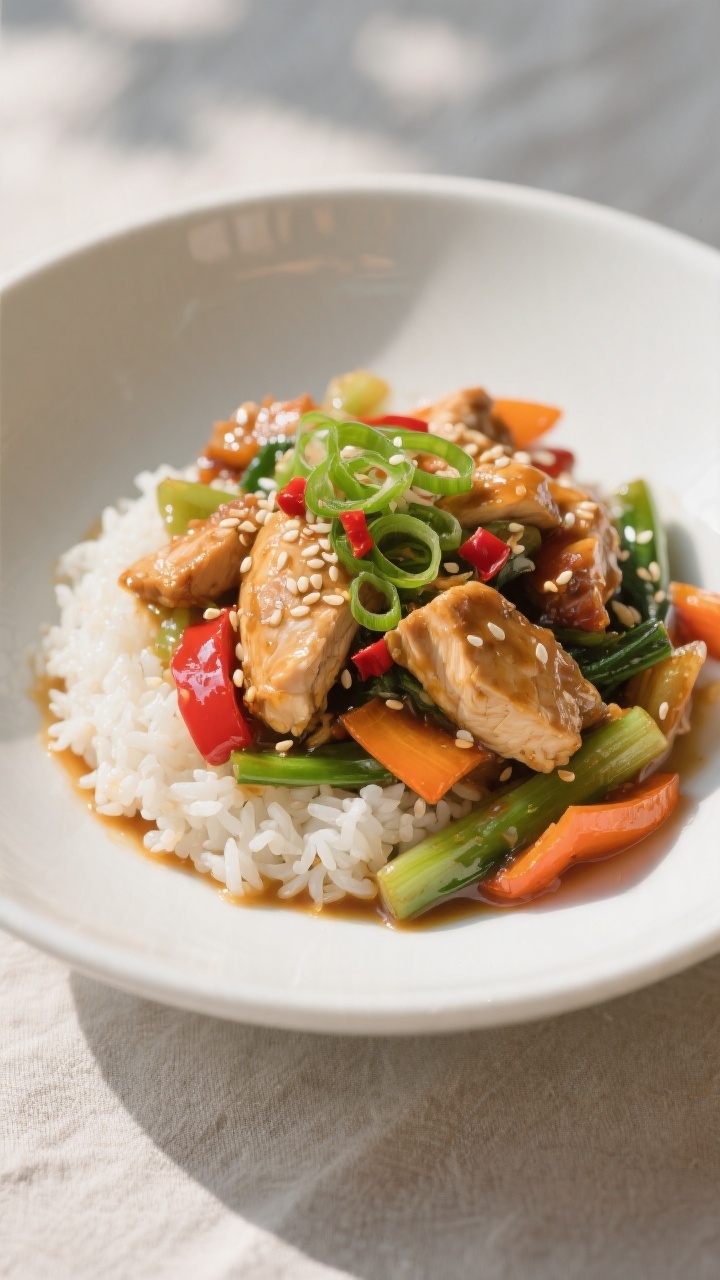
This Healthy Chicken Stir Fry is the kind of meal you make when you want something fresh, fast, and full of flavor. It’s loaded with crisp vegetables, lean protein, and a light, savory sauce that clings to every bite. You get that takeout-style satisfaction without the heavy oil or excess sugar.
FREE 7-Day Easy Dinner Reset
Save time, eat healthier, and take the stress out of dinner. Get a full week of easy healthy dinners delivered straight to your inbox.
It’s easy to customize, budget-friendly, and perfect for busy weeknights. If you’re craving something bright and wholesome, this one checks all the boxes.
Ingredients
Method
- Slice everything first. Cut the chicken into thin strips against the grain. Prep all your vegetables so they’re ready to go. Stir fry moves fast, and having everything ready makes it smooth.
- Whisk the sauce. In a small bowl, combine soy sauce, oyster or hoisin (if using), vinegar, honey, sesame oil, broth, cornstarch, and optional heat. Set aside.
- Marinate the chicken briefly. Toss the chicken with 1 tablespoon of the sauce and a pinch of pepper. Let it sit for 5–10 minutes while your pan heats.
- Heat the pan properly. Use a large skillet or wok over medium-high to high heat. Add 1 tablespoon oil and let it shimmer before adding anything.
- Sear the chicken in batches. Add half the chicken in a single layer. Cook 2–3 minutes per side until just cooked through and lightly golden. Remove to a plate. Repeat with remaining chicken, adding a bit more oil if needed.
- Stir fry the aromatics. Reduce heat slightly. Add garlic and ginger to the pan. Cook 20–30 seconds until fragrant, stirring constantly so they don’t burn.
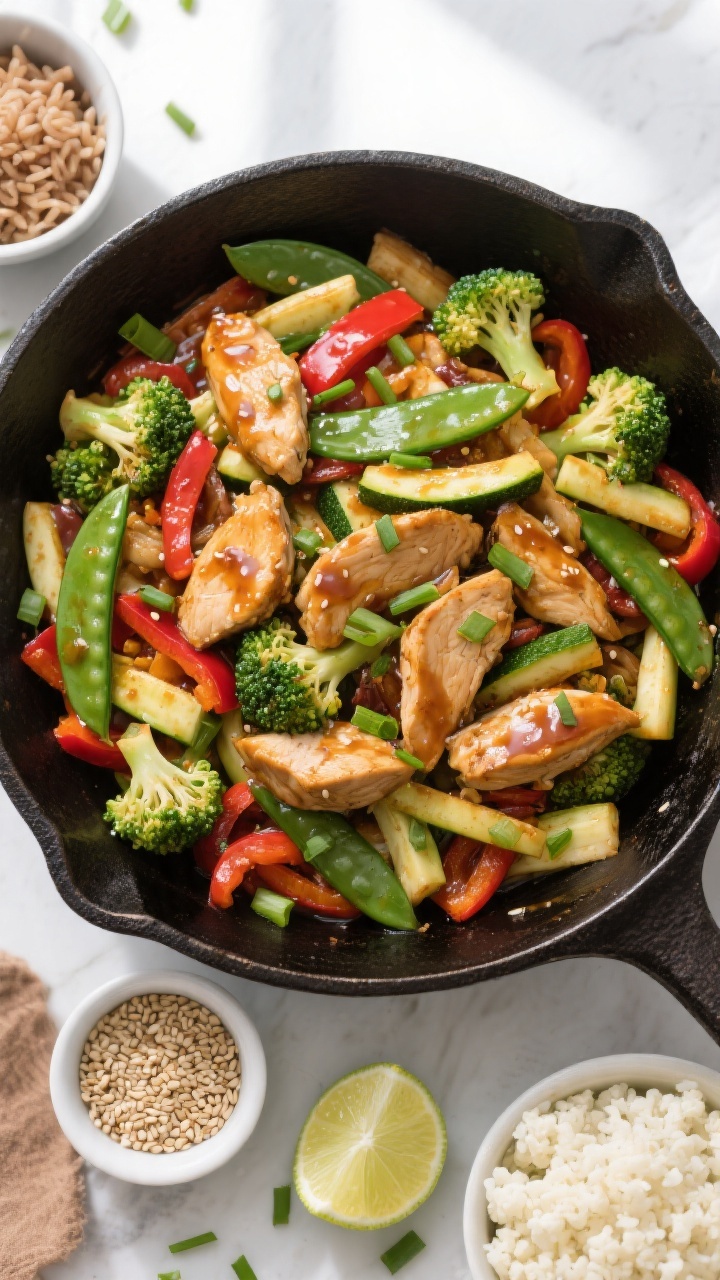
- Cook the vegetables by hardness. Add broccoli and carrots first. Stir fry 2 minutes. Then add bell pepper and snap peas for 2 more minutes. Finish with zucchini and most of the green onions for the last 1–2 minutes. You want crisp-tender, not mushy.
- Return chicken and add sauce. Put the chicken back in the pan with any juices. Give the sauce a quick stir (cornstarch settles), then pour it in. Toss everything for 1–2 minutes until the sauce thickens and glazes the chicken and veggies.
- Taste and adjust. Add a splash more soy for salt, vinegar for brightness, or honey for balance. If you like heat, sprinkle in red pepper flakes.
- Serve and garnish. Spoon over warm rice or cauliflower rice. Top with sesame seeds and the remaining green onions. Serve immediately for best texture.
What Makes This Special
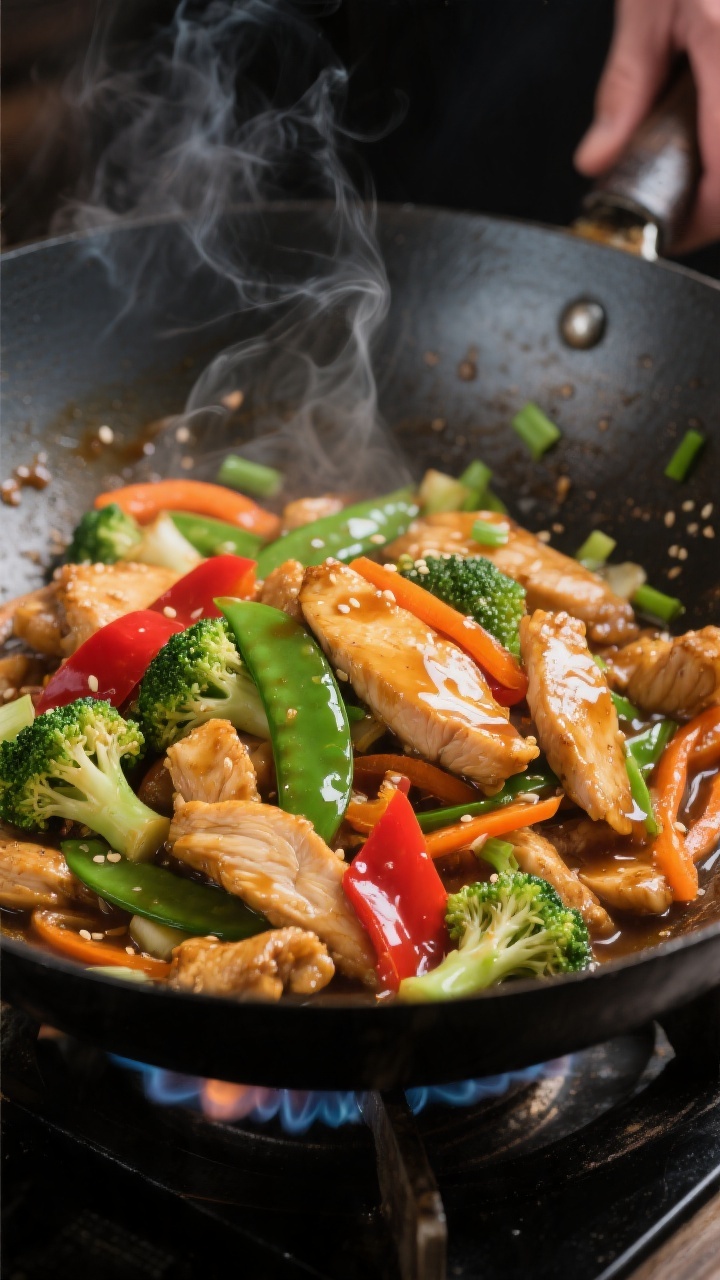
This stir fry keeps things simple while still feeling restaurant-worthy. The chicken stays tender thanks to a quick marinade, and the vegetables cook just long enough to keep their crunch.
The sauce balances salty, sweet, and tangy notes without being sticky or overly sweet. You can switch up the veggies based on what you have, which makes it great for using up produce. Best of all, it comes together in about 30 minutes from start to finish.
What You’ll Need
- Chicken: 1 pound boneless, skinless chicken breasts or thighs, thinly sliced
- Vegetables: 1 red bell pepper (sliced), 1 cup broccoli florets, 1 small carrot (thinly sliced), 1 small zucchini (matchsticks), 1 cup snap peas, 3 green onions (sliced), 2 cloves garlic (minced), 1 teaspoon fresh ginger (grated)
- Oil: 1–2 tablespoons avocado oil or light olive oil (for high-heat cooking)
- Sauce:
- 3 tablespoons low-sodium soy sauce or tamari
- 1 tablespoon oyster sauce or hoisin (optional for depth)
- 1 tablespoon rice vinegar or lime juice
- 1 tablespoon honey or maple syrup
- 1 teaspoon sesame oil
- 1/2 cup low-sodium chicken broth or water
- 1–2 teaspoons cornstarch or arrowroot (for thickening)
- Red pepper flakes or a dash of sriracha (optional for heat)
- Garnish: Sesame seeds and extra sliced green onions
- To serve: Steamed brown rice, jasmine rice, or cauliflower rice
How to Make It
- Slice everything first. Cut the chicken into thin strips against the grain.
Prep all your vegetables so they’re ready to go. Stir fry moves fast, and having everything ready makes it smooth.
- Whisk the sauce. In a small bowl, combine soy sauce, oyster or hoisin (if using), vinegar, honey, sesame oil, broth, cornstarch, and optional heat. Set aside.
- Marinate the chicken briefly. Toss the chicken with 1 tablespoon of the sauce and a pinch of pepper.
Let it sit for 5–10 minutes while your pan heats.
- Heat the pan properly. Use a large skillet or wok over medium-high to high heat. Add 1 tablespoon oil and let it shimmer before adding anything.
- Sear the chicken in batches. Add half the chicken in a single layer. Cook 2–3 minutes per side until just cooked through and lightly golden.
Remove to a plate. Repeat with remaining chicken, adding a bit more oil if needed.
- Stir fry the aromatics. Reduce heat slightly. Add garlic and ginger to the pan.
Cook 20–30 seconds until fragrant, stirring constantly so they don’t burn.
- Cook the vegetables by hardness. Add broccoli and carrots first. Stir fry 2 minutes. Then add bell pepper and snap peas for 2 more minutes.
Finish with zucchini and most of the green onions for the last 1–2 minutes. You want crisp-tender, not mushy.
- Return chicken and add sauce. Put the chicken back in the pan with any juices. Give the sauce a quick stir (cornstarch settles), then pour it in.
Toss everything for 1–2 minutes until the sauce thickens and glazes the chicken and veggies.
- Taste and adjust. Add a splash more soy for salt, vinegar for brightness, or honey for balance. If you like heat, sprinkle in red pepper flakes.
- Serve and garnish. Spoon over warm rice or cauliflower rice. Top with sesame seeds and the remaining green onions.
Serve immediately for best texture.
How to Store
Let leftovers cool, then store in an airtight container for up to 4 days in the fridge. Reheat gently on the stovetop over medium heat with a splash of water to loosen the sauce. The microwave works too—heat in 45-second bursts, stirring in between.
For freezing, portion the stir fry without rice and freeze up to 2 months. Thaw overnight in the fridge before reheating.
Why This is Good for You
- Lean protein: Chicken provides high-quality protein that supports muscle repair and keeps you full.
- Fiber and antioxidants: Colorful veggies like broccoli, peppers, and snap peas add fiber, vitamin C, and protective plant compounds.
- Lighter sauce: The sauce uses modest sodium and natural sweetness, avoiding heavy sugar-laden glazes.
- Healthy fats: A small amount of high-heat oil and a touch of sesame oil deliver flavor without excess calories.
- Balanced meal: Pairing protein, fiber, and smart carbs helps keep energy steady and cravings in check.
What Not to Do
- Don’t overcrowd the pan. Too much at once will steam the chicken and vegetables, leaving them pale and soggy.
- Don’t skip preheating. A hot pan gives you caramelization and quick cooking that keeps veggies crisp.
- Don’t overcook the chicken. Thin slices cook fast; pull them when just done to keep them tender.
- Don’t dump in cold sauce without stirring. Cornstarch sinks—whisk right before adding so it thickens evenly.
- Don’t forget to taste and adjust. A final splash of acid or pinch of salt can turn good into great.
Alternatives
- Protein swaps: Try shrimp, tofu, tempeh, or thin-sliced beef. For tofu, press it first and sear until golden before adding veggies.
- Gluten-free: Use tamari or coconut aminos instead of soy sauce, and check your oyster/hoisin labels.
- Lower carb: Serve over cauliflower rice or shirataki noodles.
Increase non-starchy veggies like broccoli and zucchini.
- Sauce variations: Add orange zest and juice for citrus notes, a spoon of chili-garlic sauce for heat, or a dab of miso for umami.
- Veggie swaps: Use mushrooms, baby corn, bok choy, cabbage, or asparagus based on season and what’s in your crisper.
- No cornstarch: Reduce the sauce longer or use arrowroot or tapioca starch instead.
Need More Easy Dinner Ideas?
Get my FREE 7-Day Easy Dinner Reset and enjoy a full week of healthy dinners without the meal-planning stress.
FAQ
How do I keep the vegetables crisp?
Use high heat, add vegetables in stages based on how quickly they cook, and avoid overcrowding. Stop cooking when they are just tender with a little snap. They’ll keep softening from residual heat.
Can I make this ahead?
Yes.
Slice the chicken and vegetables and mix the sauce up to 24 hours in advance. Store each separately. Cook fresh for the best texture, which takes about 10 minutes once your prep is done.
What’s the best pan to use?
A carbon steel wok is ideal, but a large, heavy skillet works well.
The key is high heat and enough surface area so ingredients sear instead of steam.
How can I reduce sodium further?
Use low-sodium tamari, skip the oyster/hoisin sauce, and thin the sauce with more broth or water. Finish with a squeeze of lime to boost flavor without extra salt.
Why is my sauce gummy or too thick?
Too much cornstarch or simmering too long can over-thicken it. Whisk in a splash of water or broth and toss until it loosens and coats evenly.
Can I use frozen vegetables?
Yes, but thaw and pat them dry first for better browning.
Add them after the aromatics and cook just until heated through to avoid mushiness.
How do I make it spicier?
Add red pepper flakes, sriracha, chili-garlic sauce, or sliced fresh chilies to the sauce. Taste as you go so the heat supports the flavors instead of overwhelming them.
Is chicken breast or thigh better?
Both work. Breast is lean and cooks quickly; thigh is more forgiving and stays juicy. Choose based on your preference and what you have on hand.
In Conclusion
This Healthy Chicken Stir Fry proves that fast food at home can be fresh, balanced, and full of flavor.
With a quick marinade, a simple sauce, and a smart order of cooking, you get tender chicken and vibrant vegetables every time. Keep the method, swap the produce, and make it your own. It’s an easy weeknight staple that feels good and tastes even better.
Printable Recipe Card
Want just the essential recipe details without scrolling through the article? Get our printable recipe card with just the ingredients and instructions.
Loved This Recipe?
If you're looking for more simple, healthy dinners your family will actually eat, grab my FREE 7-Day Easy Dinner Reset. You'll get 7 easy dinner recipes, simple grocery lists, and a done-for-you plan that takes the stress out of mealtime.