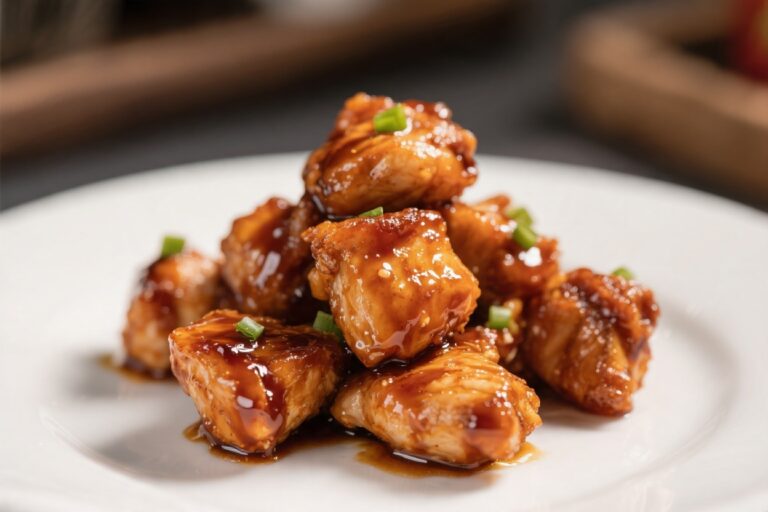
Orange Chicken – Crispy, Zesty, and Better Than Takeout
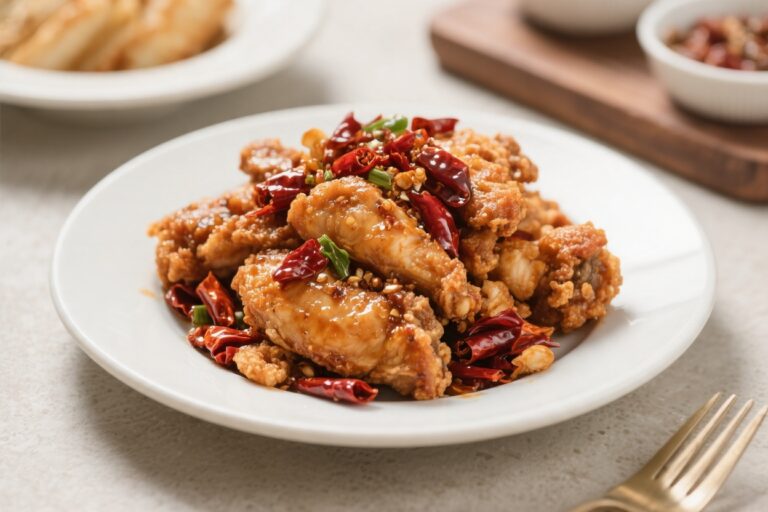
Orange chicken is the kind of meal that makes everyone excited for dinner. It’s crispy, sticky, sweet, and a little tangy, with bright citrus flavor in every bite. This version keeps the texture light and crunchy without being greasy, and the sauce strikes a nice balance—not too sugary, not too spicy.
FREE 7-Day Easy Dinner Reset
Save time, eat healthier, and take the stress out of dinner. Get a full week of easy healthy dinners delivered straight to your inbox.
It’s also weeknight-friendly if you prep a few parts ahead. Whether you’re feeding a crowd or cooking for two, this is a crowd-pleaser that tastes like a treat but is simple to make at home.
Ingredients
Method
- Prep the chicken: Pat the chicken dry with paper towels. Cut into bite-size pieces so they cook quickly and evenly.
- Set up the dredge: In a large bowl, whisk cornstarch, flour, baking powder, salt, and pepper. Toss the chicken to coat, pressing lightly so the mixture adheres. Shake off excess.
- Start the sauce base: In a small bowl, combine orange juice, orange zest, soy sauce, rice vinegar, and sugar or honey. Stir until the sugar dissolves. Mix the cornstarch slurry in a separate cup and keep nearby.
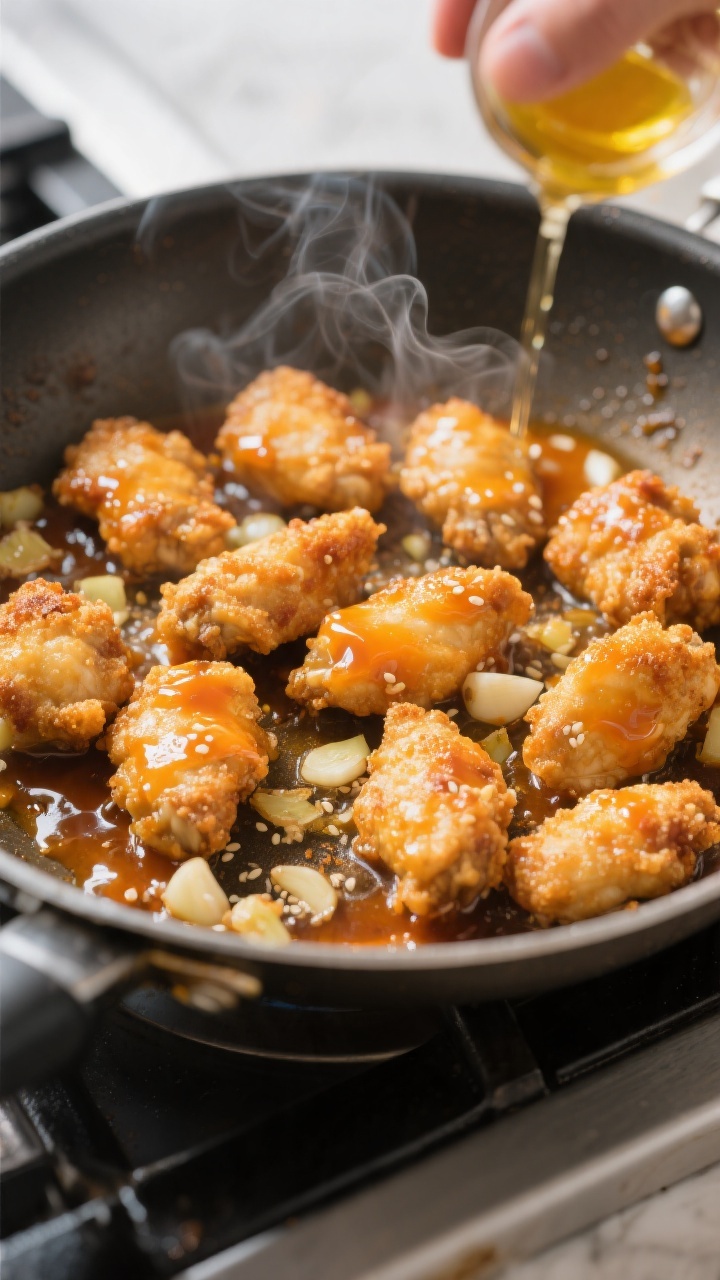
- Pan-fry the chicken: Heat 2 tablespoons oil in a large skillet over medium-high. Add chicken in a single layer without crowding. Cook 3–4 minutes per side until golden and cooked through. Work in batches, adding more oil as needed. Transfer to a wire rack or paper towel–lined plate.
- Sauté aromatics: Pour off excess oil, leaving about 1 teaspoon in the pan. Add garlic and ginger. Cook 30 seconds until fragrant, stirring so they don’t burn.
- Build and thicken the sauce: Pour in the orange mixture and bring to a simmer. Stir the cornstarch slurry, then add it while whisking. Simmer 1–2 minutes until glossy and slightly thick. Stir in chili paste if using and a splash of toasted sesame oil.
- Coat the chicken: Add the crispy chicken back to the pan. Toss to coat every piece. If the sauce seems too thick, splash in a tablespoon of water or more orange juice to loosen.
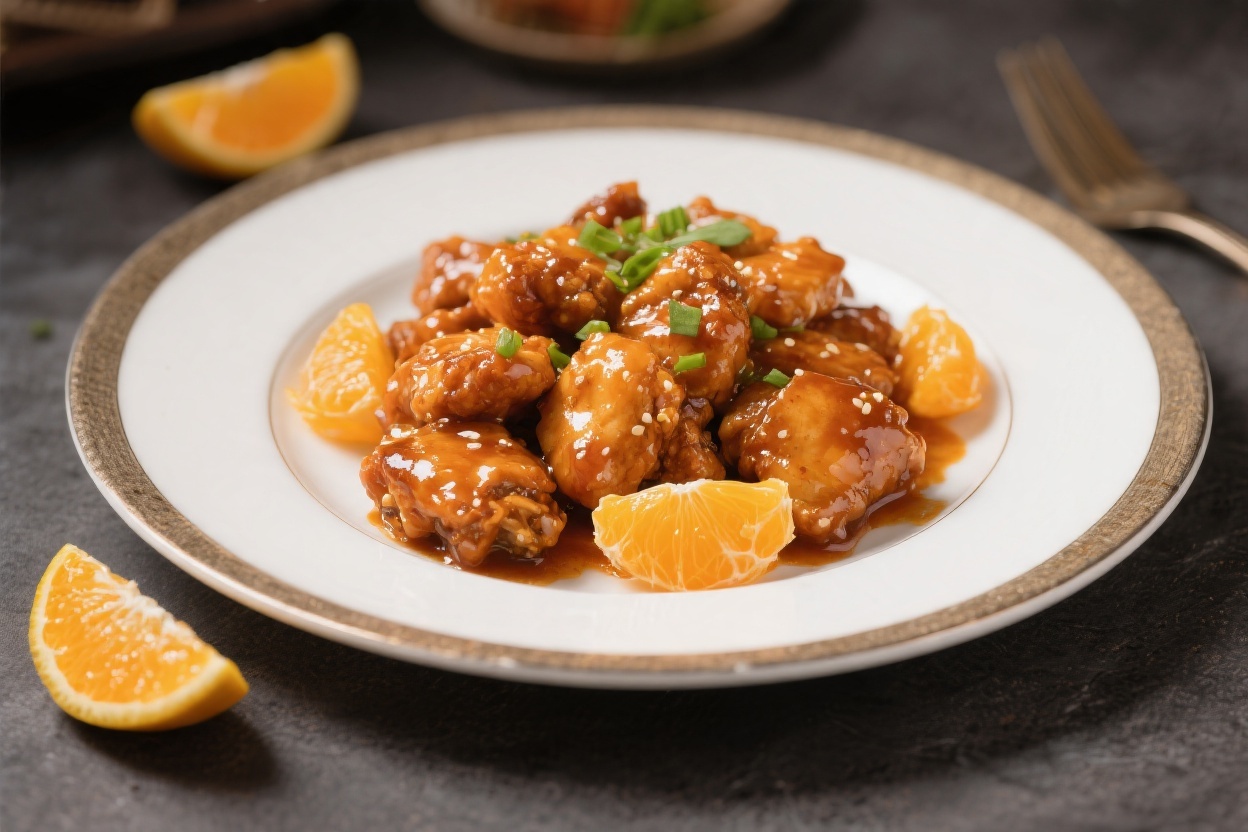
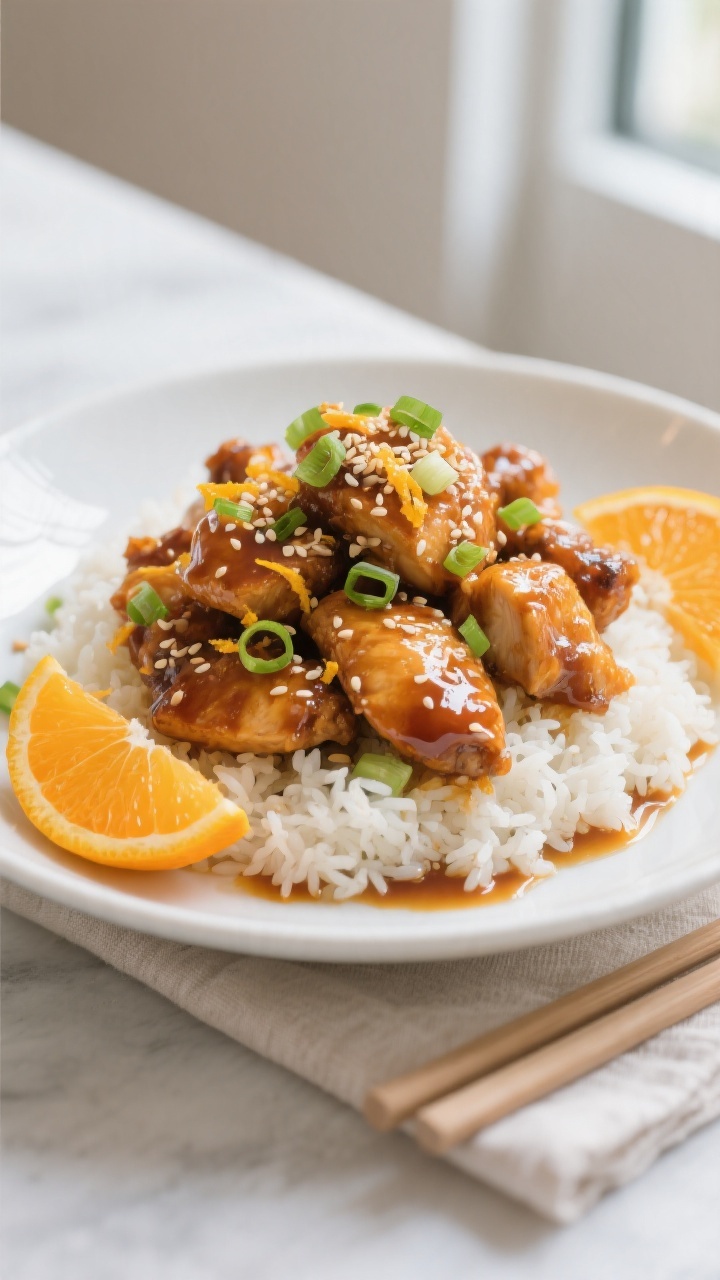
- Serve: Spoon over rice. Top with sliced scallions and sesame seeds. Garnish with orange wedges if you like a citrusy pop at the table.
Why This Recipe Works
This recipe leans on a quick cornstarch dredge to create a thin, shatteringly crisp crust that holds up to the sauce. The sauce is built from orange juice and zest for real citrus flavor, balanced with soy sauce for umami and rice vinegar for brightness.
A touch of ginger and garlic adds warmth without overpowering the orange. Instead of deep-frying, you can pan-fry in a shallow layer of oil for less mess and just as much crunch. Everything comes together fast once your ingredients are prepped, so dinner hits the table in under an hour.
Shopping List
- Chicken: 1.5 pounds boneless, skinless chicken thighs (or breasts), cut into 1-inch pieces
- For the dredge: 1 cup cornstarch, 1/2 cup all-purpose flour, 1 teaspoon baking powder, 1 teaspoon kosher salt, 1/2 teaspoon black pepper
- For the sauce: 3/4 cup orange juice (preferably fresh), 1 tablespoon orange zest, 3 tablespoons soy sauce (low-sodium if preferred)
- 2 tablespoons rice vinegar
- 3 tablespoons sugar or honey
- 1 tablespoon cornstarch mixed with 2 tablespoons water (slurry)
- 2 cloves garlic, minced
- 1 tablespoon grated fresh ginger (or 1/2 teaspoon ground ginger)
- 1–2 teaspoons chili paste (like sambal oelek) or 1/2 teaspoon red pepper flakes (optional for heat)
- 2–3 tablespoons neutral oil (canola, avocado, or peanut) for frying
- 1 teaspoon toasted sesame oil (optional but great for finish)
- For serving: Cooked rice, sliced scallions, sesame seeds, orange wedges (optional)
How to Make It
- Prep the chicken: Pat the chicken dry with paper towels.
Cut into bite-size pieces so they cook quickly and evenly.
- Set up the dredge: In a large bowl, whisk cornstarch, flour, baking powder, salt, and pepper. Toss the chicken to coat, pressing lightly so the mixture adheres. Shake off excess.
- Start the sauce base: In a small bowl, combine orange juice, orange zest, soy sauce, rice vinegar, and sugar or honey.
Stir until the sugar dissolves. Mix the cornstarch slurry in a separate cup and keep nearby.
- Pan-fry the chicken: Heat 2 tablespoons oil in a large skillet over medium-high. Add chicken in a single layer without crowding.
Cook 3–4 minutes per side until golden and cooked through. Work in batches, adding more oil as needed. Transfer to a wire rack or paper towel–lined plate.
- Sauté aromatics: Pour off excess oil, leaving about 1 teaspoon in the pan.
Add garlic and ginger. Cook 30 seconds until fragrant, stirring so they don’t burn.
- Build and thicken the sauce: Pour in the orange mixture and bring to a simmer. Stir the cornstarch slurry, then add it while whisking.
Simmer 1–2 minutes until glossy and slightly thick. Stir in chili paste if using and a splash of toasted sesame oil.
- Coat the chicken: Add the crispy chicken back to the pan. Toss to coat every piece.
If the sauce seems too thick, splash in a tablespoon of water or more orange juice to loosen.
- Serve: Spoon over rice. Top with sliced scallions and sesame seeds. Garnish with orange wedges if you like a citrusy pop at the table.
How to Store
Let leftovers cool completely, then store in an airtight container in the fridge for up to 4 days.
The sauce will thicken in the fridge, which is normal. For best results, reheat gently in a skillet over medium heat with a splash of water to loosen the sauce. You can also use the microwave in short bursts, stirring between intervals.
If you want to keep the chicken crisp for later, store the sauce and chicken separately and combine when reheating.
Benefits of This Recipe
- Fresher flavor: Real orange juice and zest give bright, natural citrus notes you don’t get from bottled sauces.
- Balanced sweetness: The mix of soy sauce, vinegar, and ginger keeps the dish savory and lively, not cloying.
- Flexible cooking method: Pan-frying saves oil compared to deep-frying, but you can air-fry or bake and still enjoy great results.
- Meal-prep friendly: The sauce can be made in advance, and the chicken cooks quickly when you’re ready to eat.
- Budget-smart: Uses pantry staples and affordable chicken thighs for a restaurant-style dinner at home.
Common Mistakes to Avoid
- Overcrowding the pan: This traps steam and softens the crust. Cook the chicken in batches for true crispiness.
- Skipping the slurry: The cornstarch slurry is key for a glossy, clingy sauce. Without it, the sauce stays thin.
- Letting aromatics burn: Garlic and ginger cook fast.
Keep the heat moderate and stir constantly for 30 seconds.
- Using only bottled juice: Fresh zest adds depth and aroma. Even if you use store-bought juice, don’t skip the zest.
- Adding chicken too early: Thicken the sauce first, then add the chicken. This keeps the coating crisp and prevents sogginess.
Variations You Can Try
- Baked or air-fried: Toss chicken with 2 tablespoons oil after dredging.
Bake at 425°F (220°C) on a rack for 18–22 minutes or air-fry at 390°F (200°C) for 12–15 minutes, flipping once. Sauce as directed.
- Extra orange: Add 1–2 tablespoons orange marmalade to the sauce for a thicker, fruit-forward glaze.
- Spicy orange chicken: Increase chili paste to 1 tablespoon or add a dash of hot sauce for more heat.
- Lighter version: Skip dredging and stir-fry cubed chicken with salt and pepper. The sauce will be lighter but still flavorful.
- Vegetarian swap: Use extra-firm tofu or cauliflower florets.
Press tofu well, dredge, and cook as you would the chicken.
- Gluten-free: Use tamari instead of soy sauce and replace the flour with more cornstarch or a 1:1 gluten-free blend.
FAQ
Need More Easy Dinner Ideas?
Get my FREE 7-Day Easy Dinner Reset and enjoy a full week of healthy dinners without the meal-planning stress.
Can I make the sauce ahead?
Yes. Mix everything except the cornstarch slurry and aromatics, and store in the fridge for up to 3 days. When cooking, sauté the garlic and ginger, add the premixed sauce, then whisk in the slurry to thicken.
Thighs or breasts—which is better?
Thighs are more forgiving and stay juicy, especially when pan-fried.
Breasts work too; just avoid overcooking by pulling them as soon as they’re golden and cooked through.
How do I keep the coating from falling off?
Pat the chicken dry before dredging, press the coating onto the pieces, and shake off excess. Let the coated chicken rest 5 minutes before frying so the starch hydrates and clings better.
What can I serve with orange chicken?
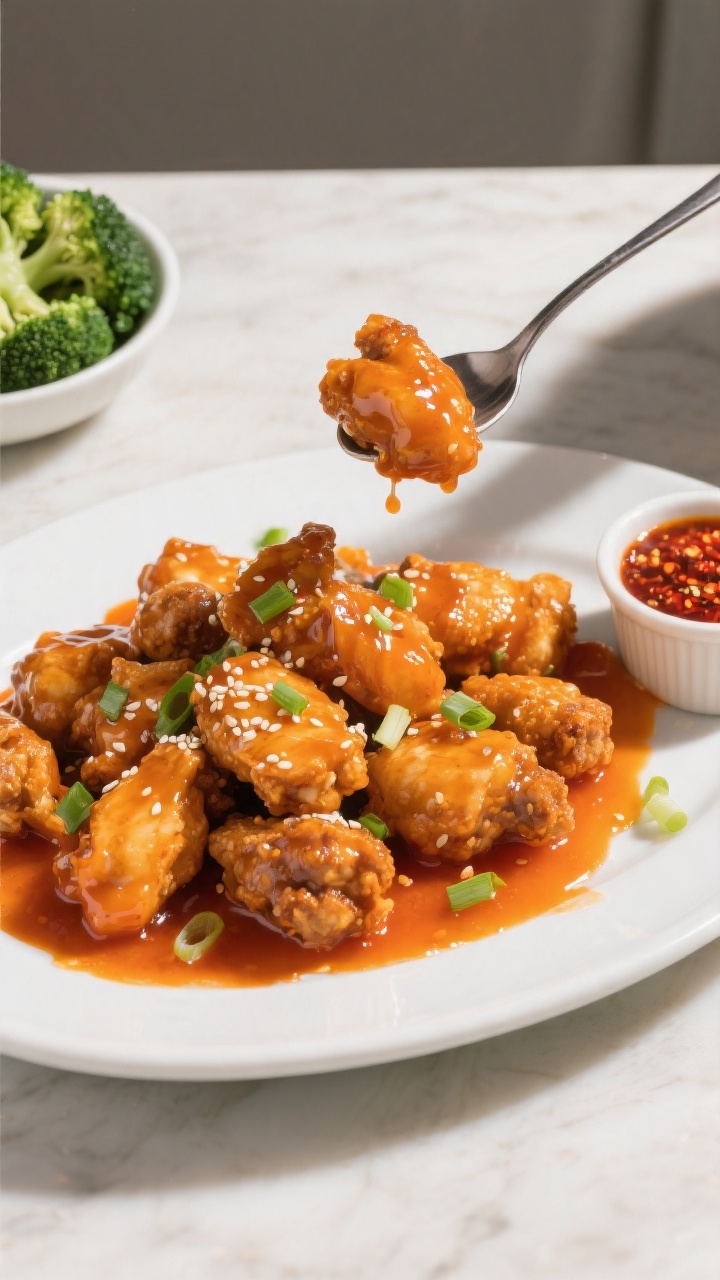
Steamed jasmine rice is classic. Add a quick side like stir-fried broccoli, snap peas, or bok choy.
Fried rice or cauliflower rice also work well.
Can I reduce the sugar?
Yes. Cut the sugar to 1–2 tablespoons or swap in honey. Keep the orange zest and vinegar to maintain balance, and taste as you go so the sauce doesn’t turn flat.
Why is my sauce cloudy or too thick?
Cloudiness usually comes from too much cornstarch or not whisking it in smoothly.
Add the slurry gradually while stirring, and thin the sauce with a splash of water or orange juice if it tightens too much.
Is deep-frying necessary?
No. Pan-frying in a shallow layer of oil creates a crisp exterior with less mess. If you want ultra-crunchy results for a party, deep-frying works, but it’s optional.
How do I re-crisp leftovers?
Spread the chicken on a sheet pan and warm at 375°F (190°C) for 8–10 minutes.
The coating won’t be as crisp as day one, but it will firm up nicely, especially if the sauce is separate.
In Conclusion
Orange chicken at home can be fresh, bright, and reliably crispy without being fussy. With a quick cornstarch coating, a lively orange sauce, and a few smart steps, you get a takeout favorite made your way. Keep the ingredients simple, cook in batches, and let the aromatics and zest do the heavy lifting.
The result is a weeknight win that feels special and tastes even better than the restaurant version.
Printable Recipe Card
Want just the essential recipe details without scrolling through the article? Get our printable recipe card with just the ingredients and instructions.
Loved This Recipe?
If you're looking for more simple, healthy dinners your family will actually eat, grab my FREE 7-Day Easy Dinner Reset. You'll get 7 easy dinner recipes, simple grocery lists, and a done-for-you plan that takes the stress out of mealtime.