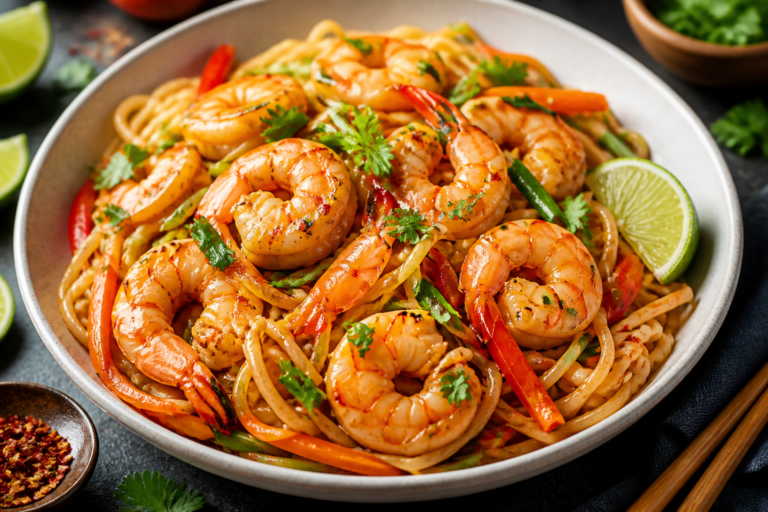
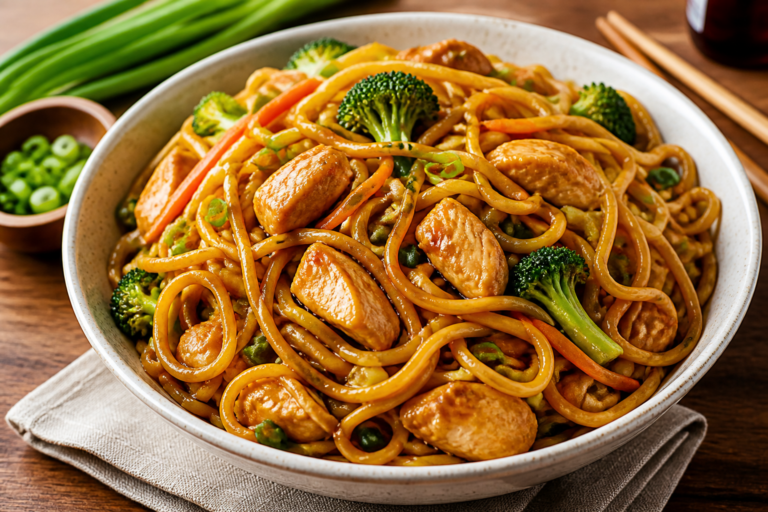
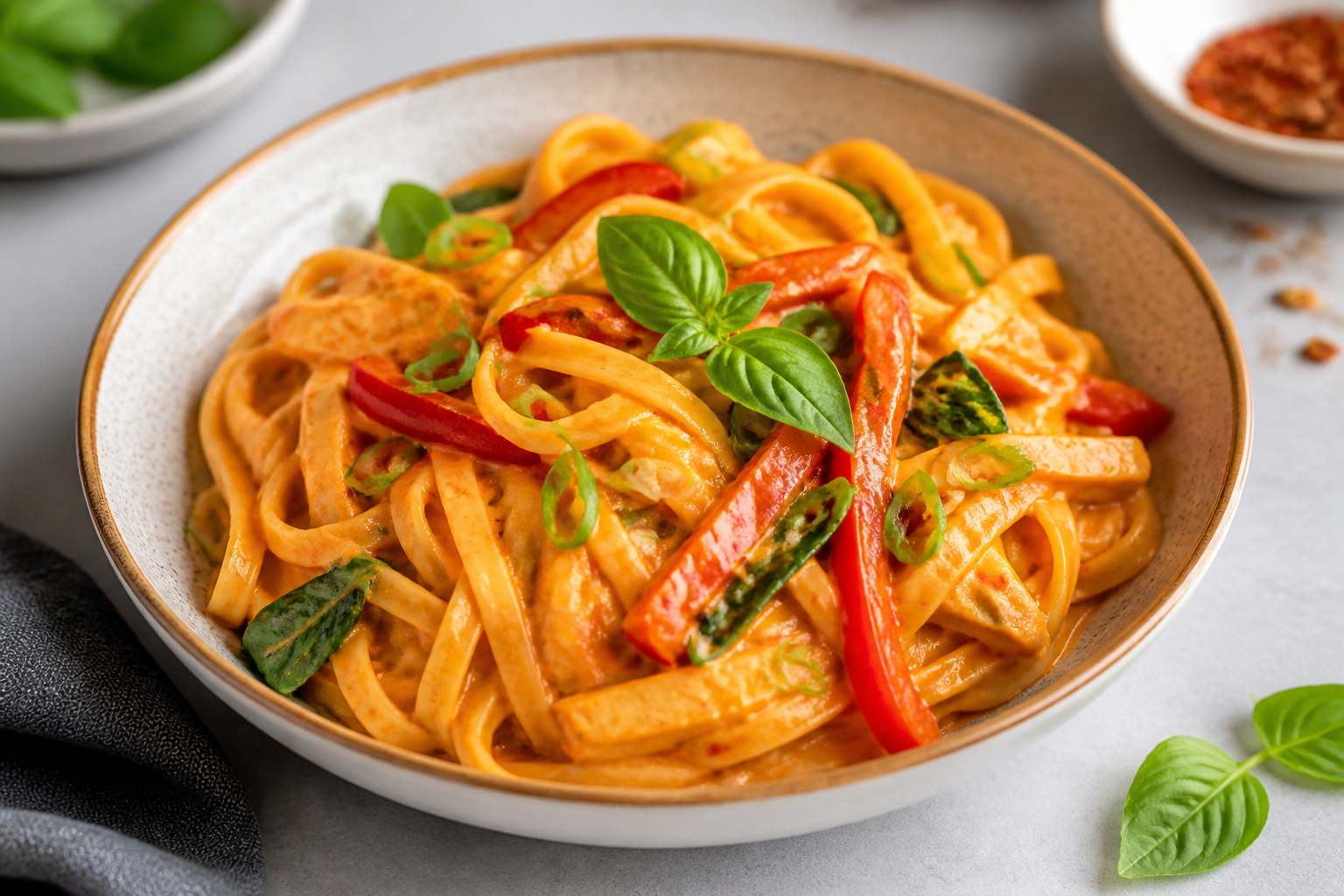
Creamy Thai Red Curry Pasta – Comforting, Spicy, and Weeknight-Friendly
If you love the warmth of Thai red curry and the cozy twirl of pasta, this recipe brings both worlds together in one creamy bowl. It’s bold, aromatic, and surprisingly easy to make on a busy night. The sauce is silky and rich without feeling heavy, and you can pack it with vegetables or your favorite protein.
FREE 7-Day Easy Dinner Reset
Save time, eat healthier, and take the stress out of dinner. Get a full week of easy healthy dinners delivered straight to your inbox.
Everything cooks in one pan (after boiling the pasta), and the flavors come together quickly. You get a restaurant-style dish with minimal fuss and maximum payoff.
Ingredients
Method
- Boil the pasta: Bring a large pot of salted water to a boil. Cook pasta until just shy of al dente (about 1 minute less than package directions). Reserve 1 cup of pasta water, then drain.
- Sauté aromatics: In a large skillet over medium heat, warm the oil. Add onion and cook 3–4 minutes until softened. Stir in garlic and ginger for 30 seconds until fragrant.
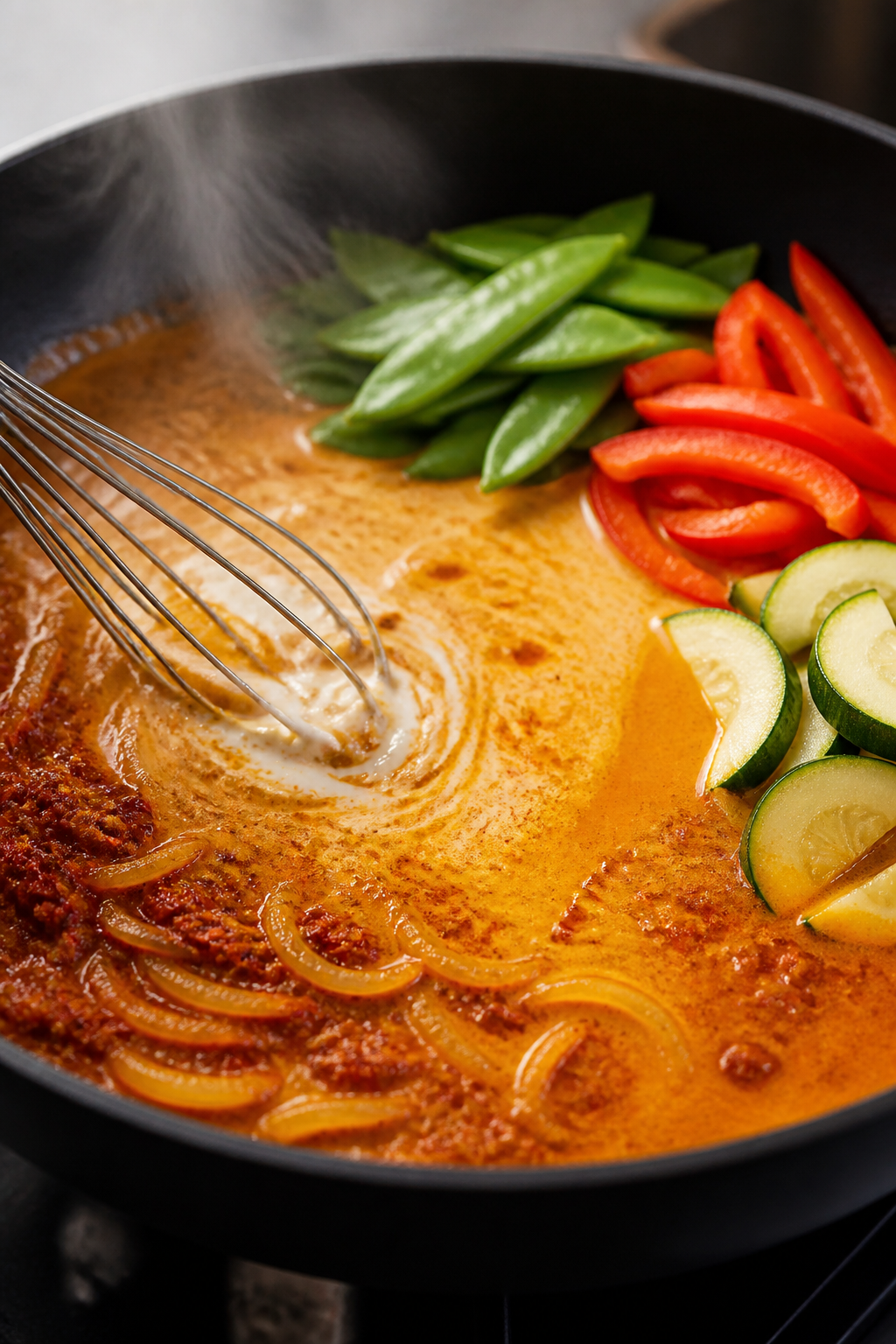
- Bloom the curry paste: Add Thai red curry paste to the pan. Cook 1–2 minutes, stirring, until it darkens slightly and smells toasty. This step makes the flavor round and deep.
- Build the sauce: Pour in coconut milk and broth, whisking to dissolve the paste. Add fish sauce (or soy), brown sugar, and a pinch of salt. Bring to a gentle simmer.
- Add vegetables: Stir in bell pepper, snap peas, and zucchini. Simmer 4–5 minutes until the vegetables are crisp-tender.
- Add protein (if using): For shrimp, simmer 2–3 minutes until pink. For thin chicken slices, simmer 5–6 minutes until cooked through. For tofu or chickpeas, warm through for 3–4 minutes.
- Toss with pasta: Add the drained pasta to the skillet. Toss to coat, adding reserved pasta water a splash at a time until the sauce clings silkily to the noodles.
- Finish with lime and herbs: Stir in lime zest and juice to taste. Season with salt and black pepper. Fold in chopped cilantro and Thai basil.
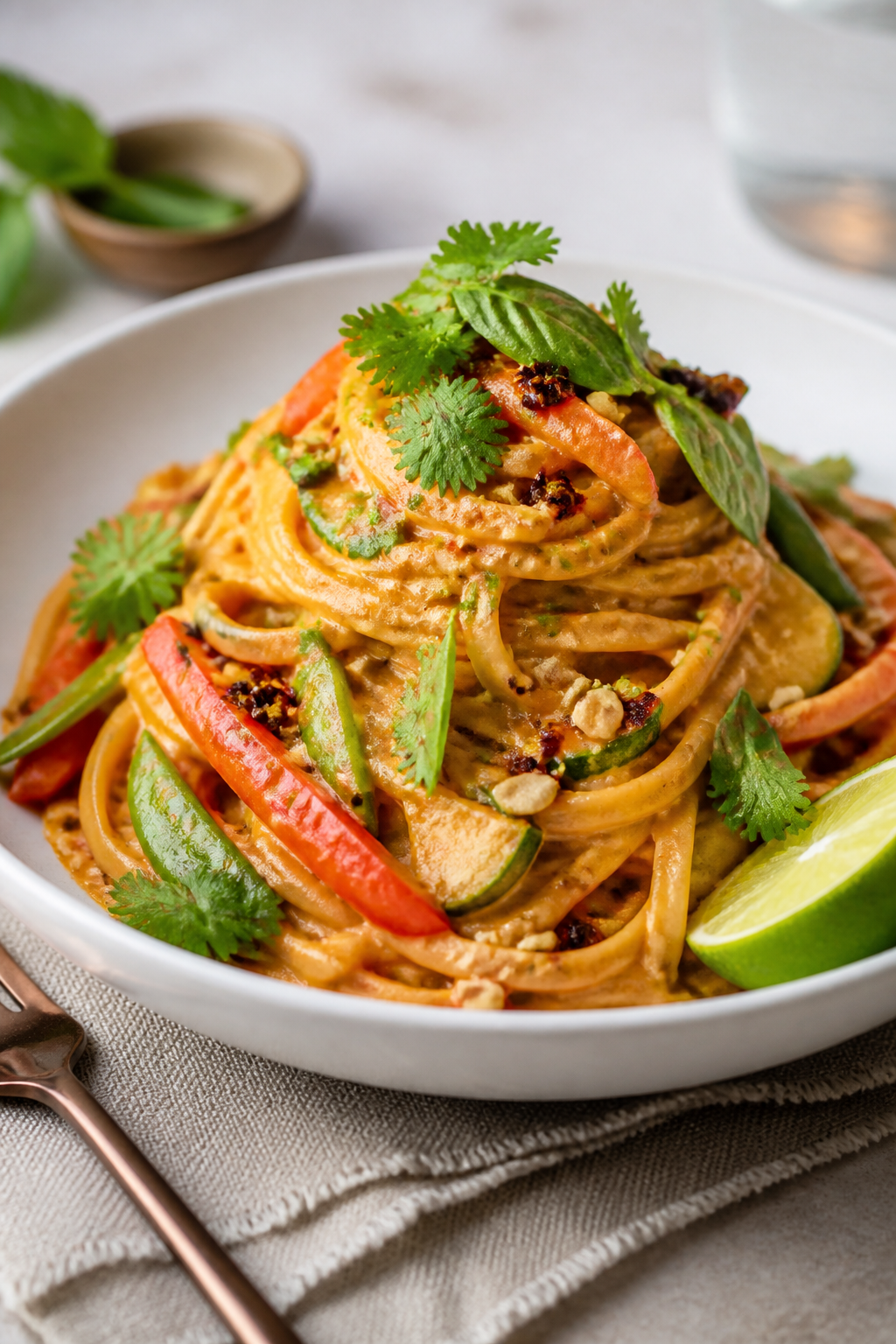
- Serve: Top with extra herbs, chili flakes or sliced chili, and crushed peanuts if you like. Taste and adjust lime, salt, and sweetness right before serving.
What Makes This Recipe So Good
- Balanced flavors: Spicy curry paste meets creamy coconut milk, bright lime, and a hint of sweetness. Every bite hits sweet, salty, sour, and spicy notes.
- Fast and flexible: It’s weeknight-friendly and easy to tailor.
Swap veggies, choose your protein, or make it fully plant-based.
- One-skillet sauce: The sauce builds in the same pan for easy cleanup and deep, layered flavor.
- Comfort with a twist: Familiar pasta, exciting Thai aromatics—comforting yet fresh.
- Meal-prep friendly: Reheats beautifully and thickens into an even creamier sauce by the next day.
Shopping List
- Pasta: 12 ounces linguine, fettuccine, or spaghetti (gluten-free if needed)
- Thai red curry paste: 2–3 tablespoons (adjust to heat preference)
- Coconut milk: 1 can (13.5–14 ounces), full-fat for best creaminess
- Vegetable or chicken broth: 1 cup
- Aromatics: 1 small yellow onion (thinly sliced), 3 cloves garlic (minced), 1 tablespoon fresh ginger (grated)
- Vegetables: 1 red bell pepper (thinly sliced), 1 cup snap peas or green beans (trimmed), 1 small zucchini (half-moons)
- Protein (optional): 12 ounces chicken breast (thinly sliced), shrimp, firm tofu, or chickpeas
- Lime: 1–2 limes for zest and juice
- Fish sauce or soy sauce: 1–2 tablespoons for salt and umami
- Brown sugar or maple syrup: 1–2 teaspoons
- Neutral oil: 1–2 tablespoons (avocado, canola, or coconut oil)
- Fresh herbs: Cilantro and/or Thai basil
- Red pepper flakes or sliced chili: Optional, for extra heat
- Salt and black pepper: To taste
- Optional add-ins: Crushed peanuts, toasted sesame seeds, or a drizzle of chili crisp
Instructions
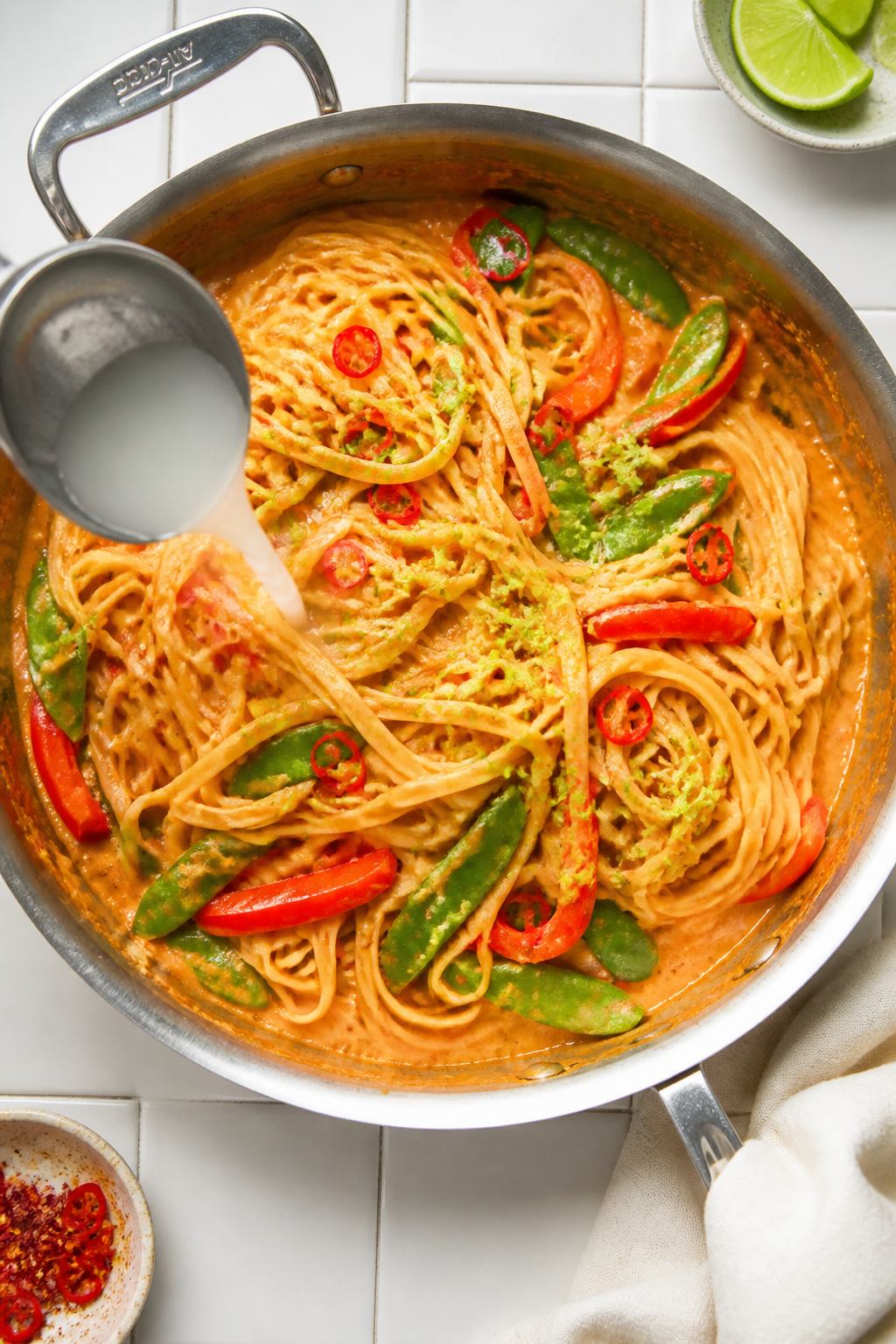
- Boil the pasta: Bring a large pot of salted water to a boil. Cook pasta until just shy of al dente (about 1 minute less than package directions). Reserve 1 cup of pasta water, then drain.
- Sauté aromatics: In a large skillet over medium heat, warm the oil.
Add onion and cook 3–4 minutes until softened. Stir in garlic and ginger for 30 seconds until fragrant.
- Bloom the curry paste: Add Thai red curry paste to the pan. Cook 1–2 minutes, stirring, until it darkens slightly and smells toasty.
This step makes the flavor round and deep.
- Build the sauce: Pour in coconut milk and broth, whisking to dissolve the paste. Add fish sauce (or soy), brown sugar, and a pinch of salt. Bring to a gentle simmer.
- Add vegetables: Stir in bell pepper, snap peas, and zucchini.
Simmer 4–5 minutes until the vegetables are crisp-tender.
- Add protein (if using): For shrimp, simmer 2–3 minutes until pink. For thin chicken slices, simmer 5–6 minutes until cooked through. For tofu or chickpeas, warm through for 3–4 minutes.
- Toss with pasta: Add the drained pasta to the skillet.
Toss to coat, adding reserved pasta water a splash at a time until the sauce clings silkily to the noodles.
- Finish with lime and herbs: Stir in lime zest and juice to taste. Season with salt and black pepper. Fold in chopped cilantro and Thai basil.
- Serve: Top with extra herbs, chili flakes or sliced chili, and crushed peanuts if you like.
Taste and adjust lime, salt, and sweetness right before serving.
Keeping It Fresh
Store leftovers in an airtight container in the fridge for up to 3 days. The sauce thickens as it chills, so add a splash of water or broth when reheating to bring it back to a glossy finish.
Reheat gently on the stovetop over low heat or in the microwave in short bursts, stirring between intervals. If you plan to make this ahead, cook the pasta one minute less than al dente so it doesn’t get too soft later.
For longer storage, freeze the sauce by itself (without pasta) for up to 2 months.
Thaw overnight in the fridge and toss with freshly cooked pasta when ready to eat.
Benefits of This Recipe
Need More Easy Dinner Ideas?
Get my FREE 7-Day Easy Dinner Reset and enjoy a full week of healthy dinners without the meal-planning stress.
- Customizable spice level: Use more or less curry paste and control heat with lime and sweetness.
- Nutrient-dense: Loads of veggies, lean protein options, and herbs add color, fiber, and freshness.
- Dairy-free comfort: Coconut milk delivers creaminess without dairy.
- Budget-friendly: Pantry staples plus a handful of produce create a restaurant-quality meal.
- Great for sharing: The flavors appeal to a wide crowd, and it scales up easily.
What Not to Do
- Don’t skip blooming the curry paste: Raw paste tastes flat. A quick sauté unlocks its aromatics.
- Don’t overcook the pasta: It will continue to absorb sauce. Keep it just under al dente.
- Don’t boil the coconut milk hard: A rolling boil can cause the sauce to split.
Keep it at a gentle simmer.
- Don’t forget acid and salt: Lime and fish sauce (or soy) make the flavors pop. Taste and adjust at the end.
- Don’t overload the pan: Add veggies that cook at similar speeds to avoid soggy or underdone bites.
Variations You Can Try
- Vegetarian or vegan: Use tofu or chickpeas and swap fish sauce for soy sauce or a vegan fish sauce.
- Gluten-free: Choose gluten-free pasta and tamari instead of soy sauce.
- Protein swaps: Try thinly sliced beef, rotisserie chicken, or sautéed mushrooms for a meaty bite without meat.
- Green curry version: Replace red curry paste with green curry paste. Add broccoli and baby spinach for a vibrant twist.
- Peanut butter upgrade: Whisk in 1–2 tablespoons of creamy peanut butter for body and a nutty undertone.
- Extra veggies: Add carrots, baby corn, or kale.
Just adjust cook times so everything stays crisp-tender.
- Lighter sauce: Use light coconut milk and a bit more broth, then finish with a small knob of butter or olive oil for silkiness.
Can I make this without coconut milk?
Yes. Use a mix of unsweetened cashew cream and broth, or half-and-half if you’re not dairy-free. The flavor will be slightly different, so add an extra squeeze of lime and a touch more curry paste to keep it bold.
How spicy is Thai red curry paste?
It varies by brand.
Start with 2 tablespoons, taste, and add more if you want. If you overshoot, balance with more coconut milk, a pinch of sugar, and extra lime juice.
What pasta shape works best?
Long strands like linguine, spaghetti, or fettuccine grab the sauce beautifully. Short shapes like penne or rigatoni also work if that’s what you have on hand.
Can I use pre-cooked chicken or shrimp?
Absolutely.
Stir it in during the final 2–3 minutes just to warm through. This keeps the protein juicy and tender.
How do I keep the sauce from separating?
Maintain a gentle
Printable Recipe Card
Want just the essential recipe details without scrolling through the article? Get our printable recipe card with just the ingredients and instructions.
Loved This Recipe?
If you're looking for more simple, healthy dinners your family will actually eat, grab my FREE 7-Day Easy Dinner Reset. You'll get 7 easy dinner recipes, simple grocery lists, and a done-for-you plan that takes the stress out of mealtime.