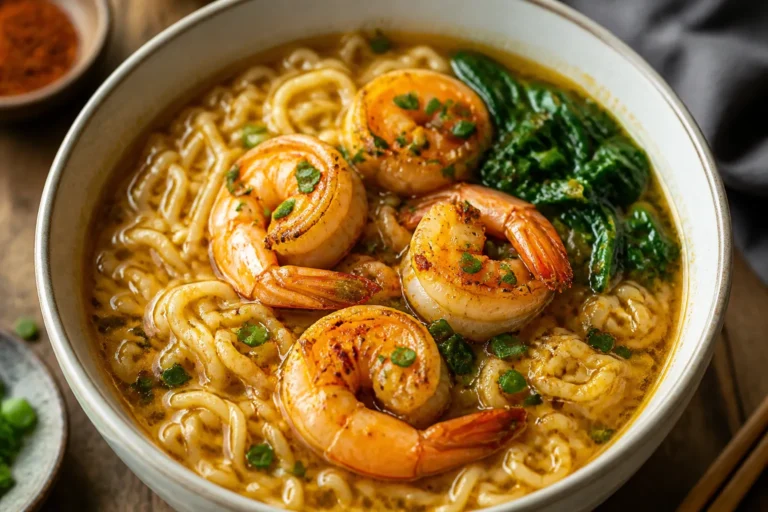
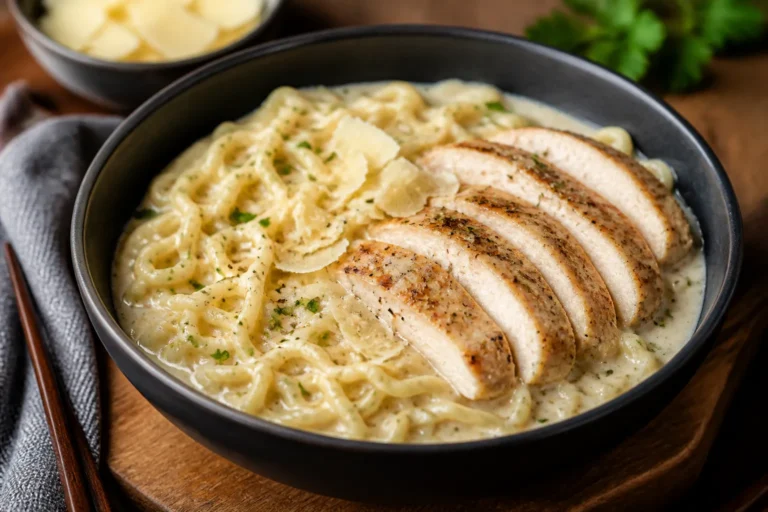
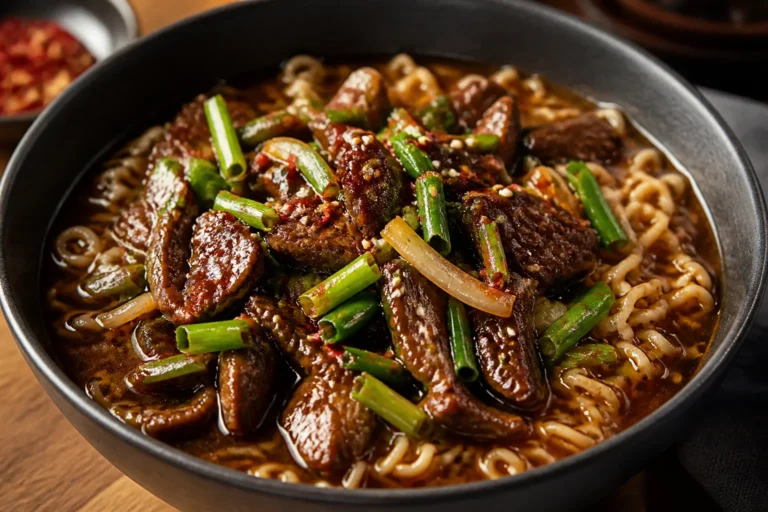
Better Than Takeout Ramen Noodles – Fast, Flavorful, and Comforting
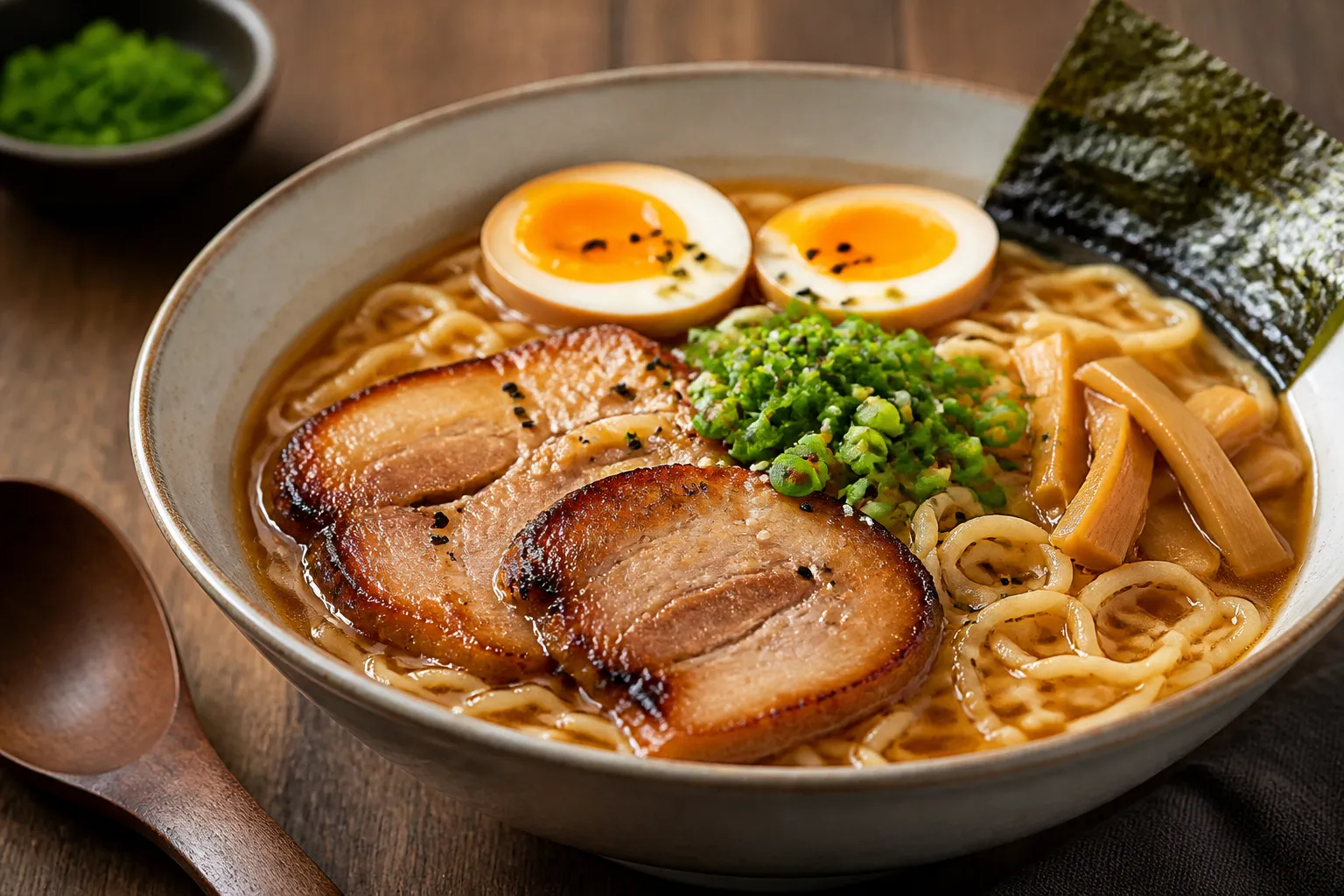
Skip the soggy takeout and make ramen at home that’s brighter, richer, and ready just as fast. This version layers savory broth with silky noodles, tender veggies, and a punchy, restaurant-style finish. It’s weeknight-friendly but still feels special.
FREE 7-Day Easy Dinner Reset
Save time, eat healthier, and take the stress out of dinner. Get a full week of easy healthy dinners delivered straight to your inbox.
No fancy tools, no endless simmering—just clean, bold flavor in one comforting bowl.
Ingredients
Method
- Make jammy eggs (optional): Bring a small pot of water to a boil. Gently lower in eggs and cook 6–7 minutes. Transfer to an ice bath, peel, and set aside.
- Prepare the tare: In a small bowl, stir together miso, chili-garlic sauce, and rice vinegar until smooth. This will season the broth fast and evenly.
- Sweat the aromatics: Heat neutral oil in a medium pot over medium heat. Add garlic, ginger, and the white parts of the scallions. Cook 30–60 seconds until fragrant, not browned.
- Build the broth: Add broth, soy sauce, mirin, and sesame oil. Whisk in the tare. Simmer gently for 5–8 minutes to meld flavors. Taste and adjust with soy for salt, vinegar for brightness, or a pinch of sugar if it tastes flat.
- Cook the protein: If using chicken or pork, add to the simmering broth and poach until just cooked, 3–5 minutes depending on thinness. For mushrooms or tofu, sauté in a skillet with a little oil and salt until golden, then reserve. For shrimp, add to the hot broth and cook 2–3 minutes until pink.
- Blanch the greens: Stir spinach or bok choy into the hot broth for 30–60 seconds until wilted but bright.
- Cook the noodles separately: Bring a second pot of water to a rolling boil. Add noodles and cook just to package directions—usually 2–3 minutes for fresh, 4–5 for dried. Drain well. This keeps your broth clear and prevents overcooking.
- Assemble: Divide noodles into bowls. Ladle hot broth, protein, and veggies over the top. Halve the jammy eggs and nestle them in. Finish with scallion greens, nori, sesame seeds, and a drizzle of chili oil.
- Serve immediately: Ramen shines when hot and slurpable. Add a squeeze of lime for a fresh pop.
Why This Recipe Works
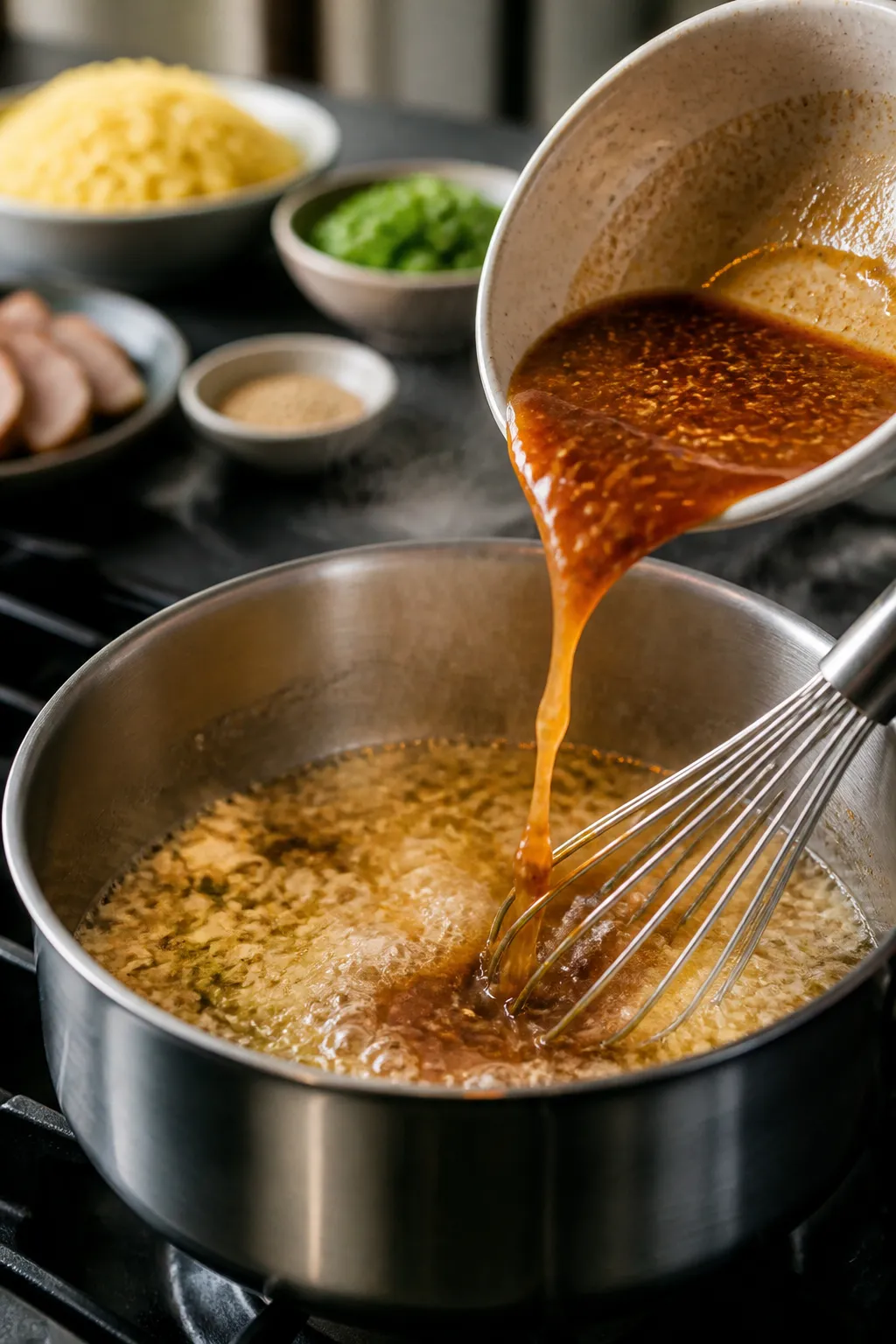
This ramen leans on a smart shortcut: a quick tare (flavor base) that wakes up store-bought broth. A mix of soy sauce, sesame, garlic, ginger, and a touch of miso or chili paste builds deep umami in minutes. Fresh aromatics bloom in hot oil to create that slurp-worthy richness you expect from a shop bowl.
Cooking the noodles separately prevents gummy soup, and a quick jammy egg on top makes it feel like takeout—but better.
Ingredients
- Broth Base: 4 cups low-sodium chicken or vegetable broth, 1 tablespoon soy sauce, 1 tablespoon mirin (or a pinch of sugar), 1 teaspoon toasted sesame oil
- Tare (Flavor Paste): 1 tablespoon white or red miso (optional but recommended), 1 tablespoon chili-garlic sauce or gochujang (adjust to heat), 2 teaspoons rice vinegar
- Aromatics: 1 tablespoon neutral oil, 3 cloves garlic (minced), 1 tablespoon fresh ginger (grated), 2 scallions (white and green parts separated, thinly sliced)
- Protein (choose one or mix): 8 ounces sliced mushrooms, 6 ounces thinly sliced chicken or pork, 8 ounces extra-firm tofu (patted dry, cubed), or 8–10 large shrimp (peeled)
- Vegetables: 1 cup baby spinach or bok choy, 1/2 cup corn kernels, 1/2 cup shredded carrots
- Noodles: 12–14 ounces fresh ramen noodles or 4 ounces dried ramen noodles per person (about 2 portions)
- Eggs (optional but great): 2 large eggs
- Toppings: Nori strips, sesame seeds, chili oil, lime wedges, extra scallion greens
- Salt and pepper to taste
How to Make It
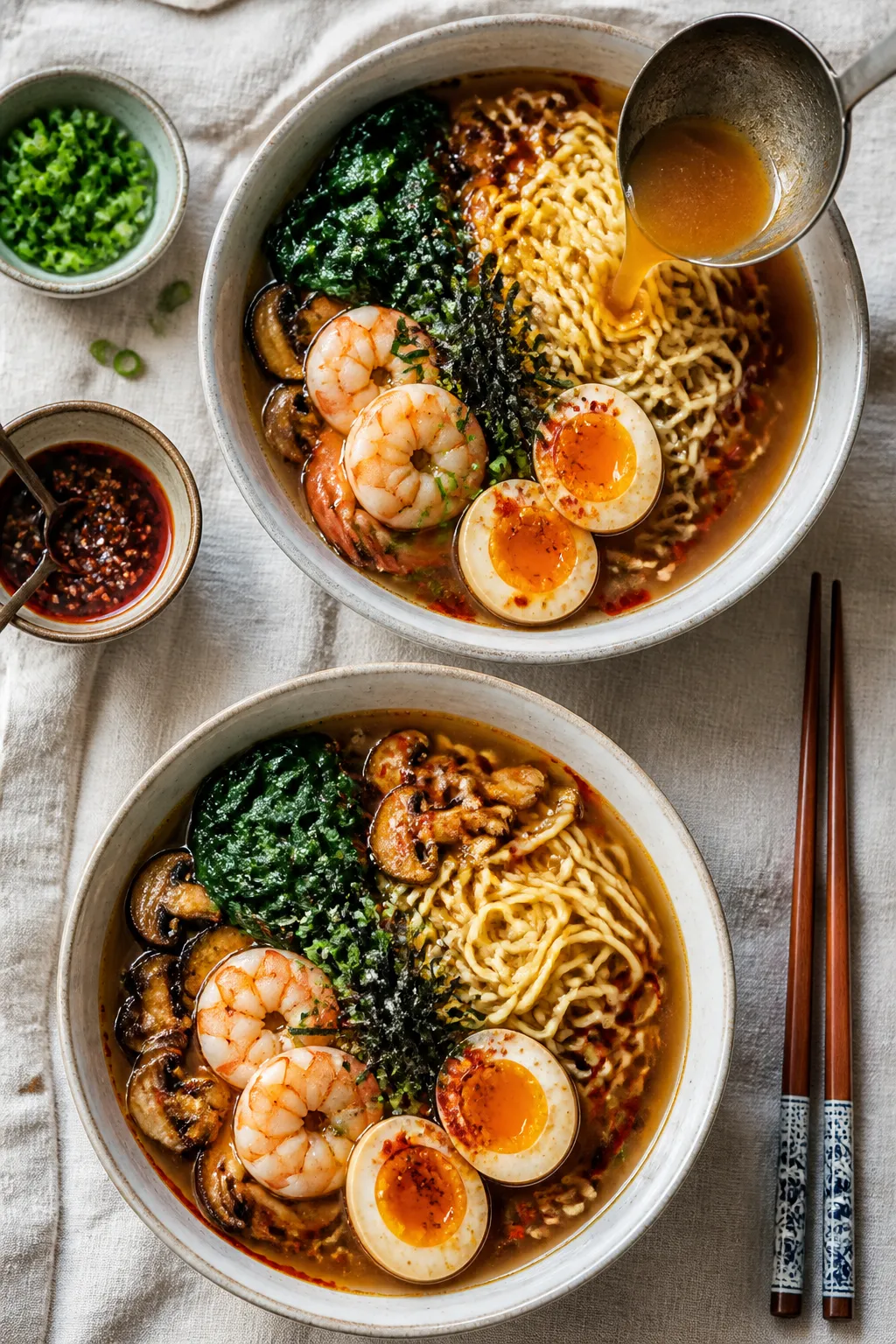
- Make jammy eggs (optional): Bring a small pot of water to a boil. Gently lower in eggs and cook 6–7 minutes. Transfer to an ice bath, peel, and set aside.
- Prepare the tare: In a small bowl, stir together miso, chili-garlic sauce, and rice vinegar until smooth.
This will season the broth fast and evenly.
- Sweat the aromatics: Heat neutral oil in a medium pot over medium heat. Add garlic, ginger, and the white parts of the scallions. Cook 30–60 seconds until fragrant, not browned.
- Build the broth: Add broth, soy sauce, mirin, and sesame oil.
Whisk in the tare. Simmer gently for 5–8 minutes to meld flavors. Taste and adjust with soy for salt, vinegar for brightness, or a pinch of sugar if it tastes flat.
- Cook the protein: If using chicken or pork, add to the simmering broth and poach until just cooked, 3–5 minutes depending on thinness.
For mushrooms or tofu, sauté in a skillet with a little oil and salt until golden, then reserve. For shrimp, add to the hot broth and cook 2–3 minutes until pink.
- Blanch the greens: Stir spinach or bok choy into the hot broth for 30–60 seconds until wilted but bright.
- Cook the noodles separately: Bring a second pot of water to a rolling boil. Add noodles and cook just to package directions—usually 2–3 minutes for fresh, 4–5 for dried. Drain well. This keeps your broth clear and prevents overcooking.
- Assemble: Divide noodles into bowls.
Ladle hot broth, protein, and veggies over the top. Halve the jammy eggs and nestle them in. Finish with scallion greens, nori, sesame seeds, and a drizzle of chili oil.
- Serve immediately: Ramen shines when hot and slurpable.
Add a squeeze of lime for a fresh pop.
Keeping It Fresh
Ramen is best enjoyed right away, but you can prep components. Store broth, noodles, and toppings separately to avoid mushy texture. The broth keeps in the fridge for 3–4 days or in the freezer for up to 2 months. Cooked noodles last 1–2 days in the fridge; toss with a few drops of sesame oil to prevent sticking.
Reheat broth until steaming, then pour over cold noodles to warm them gently without overcooking.
Health Benefits
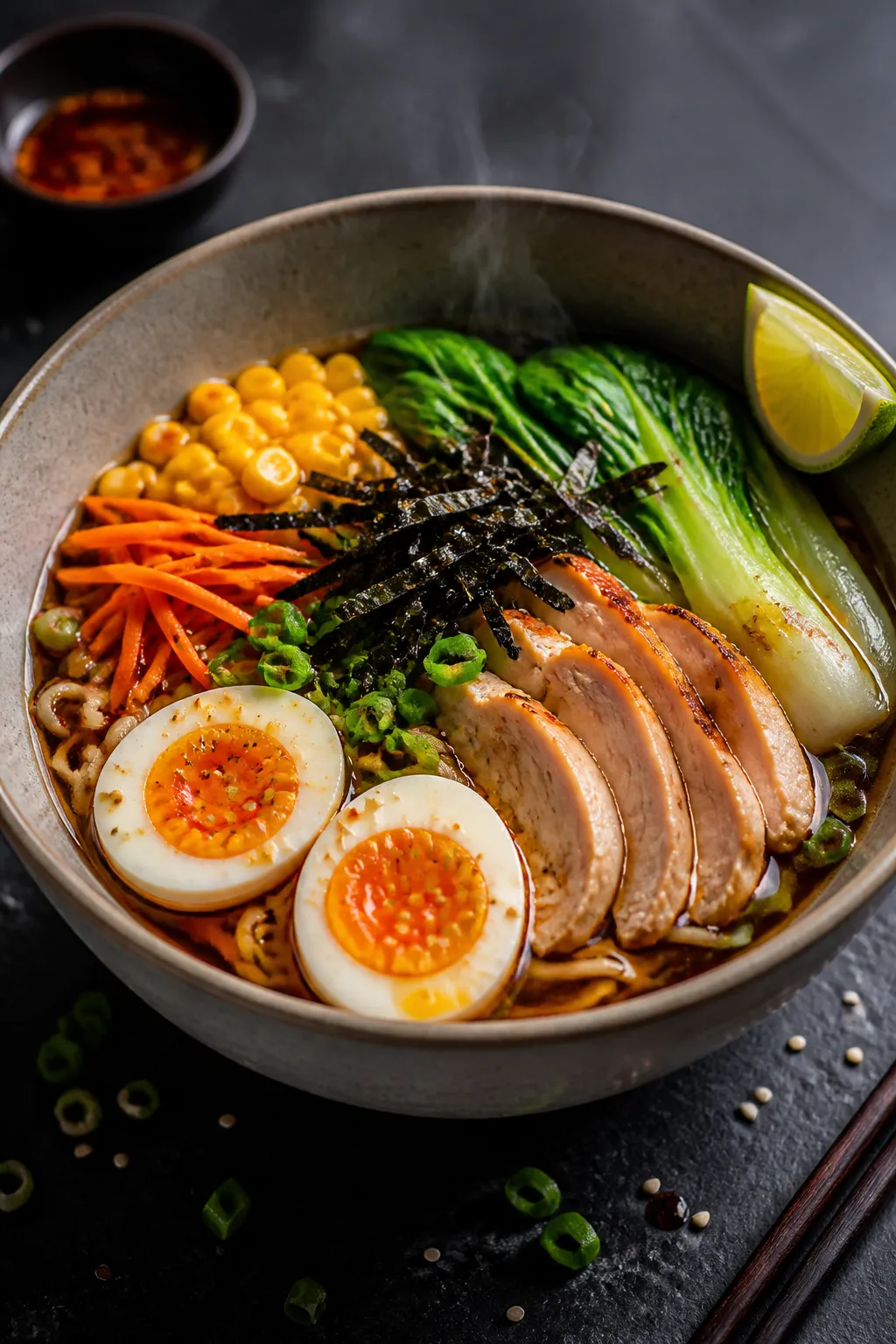
- Balanced bowl: You get protein, carbs, and fiber in one meal—easy to customize for your goals.
- Lower sodium control: Using low-sodium broth and seasoning to taste keeps salt in check compared to most takeout.
- Vegetable boost: Leafy greens, mushrooms, and carrots bring vitamins A, C, K, and minerals like iron and potassium.
- Healthy fats: A small drizzle of sesame oil delivers flavor and unsaturated fats without heaviness.
- Protein options: Choose lean meats, tofu, or shrimp to keep it light while still satisfying.
What Not to Do
- Don’t boil the noodles in the broth. It clouds the soup and leaves you with starchy, overcooked noodles.
- Don’t skip the aromatics. Garlic, ginger, and scallions are your fast track to depth and restaurant-level flavor.
- Don’t overcook eggs or shrimp. Jammy yolks and tender shrimp make the bowl feel luxe.
- Don’t let the broth roll hard. A gentle simmer keeps flavors clean and prevents bitterness.
- Don’t rely only on salt. Balance is key—use vinegar or lime for brightness and a touch of sugar for roundness.
Recipe Variations
- Shoyu-Style: Skip miso and chili. Add 1–2 more teaspoons soy sauce and a splash of sake if you have it. Keep it clean and savory.
- Spicy Miso: Double the miso and add extra chili-garlic sauce.
Finish with chili crisp for heat and texture.
- Creamy Tantan-Inspired: Whisk 2 tablespoons tahini or peanut butter into the tare, plus a bit more chili paste. Rich and nutty.
- Vegetarian: Use vegetable broth, mushrooms, and tofu. A dash of mushroom powder or a piece of kombu simmered in the broth boosts umami.
- Seafood: Use shrimp or a mix of seafood.
Add a splash of fish sauce and a squeeze of lime for a briny kick.
- Extra-Green: Load up bok choy, spinach, snow peas, and edamame. Finish with fresh cilantro and basil for a herby lift.
FAQ
Can I use instant ramen noodles?
Need More Easy Dinner Ideas?
Get my FREE 7-Day Easy Dinner Reset and enjoy a full week of healthy dinners without the meal-planning stress.
Yes. Toss the seasoning packet and cook the noodles in plain boiling water.
Drain well, then use them just like fresh noodles. The texture is a bit different, but the broth and toppings will carry the dish.
What’s the best broth to use?
Low-sodium chicken broth is the most versatile and tastes close to classic shoyu-style bowls. Vegetable broth works great for a meatless version.
If you find a good bone broth, it adds extra body and richness.
How do I make the eggs more jammy?
Six minutes in boiling water gives a very runny yolk; seven minutes gives jammy. Shock in ice water right away to stop cooking, then peel under running water for an easier time.
Can I make it gluten-free?
Use gluten-free tamari instead of soy sauce and pick gluten-free noodles like rice ramen or buckwheat soba labeled GF. Check your miso and chili paste labels, too.
How spicy is this?
It’s mild to medium as written.
For less heat, skip the chili-garlic sauce. For more, add extra chili paste, chili oil, or a spoon of chili crisp at the end.
Can I meal prep this?
Yes—store broth, cooked protein, and veggies together, and keep noodles separate. Reheat the broth and pour over noodles just before eating.
Add fresh toppings last for the best texture.
What if I don’t have miso?
Use an extra teaspoon of soy sauce and a small splash of fish sauce or a pinch of mushroom powder. It won’t taste exactly the same, but you’ll still get solid umami.
Why are my noodles gummy?
They probably overcooked or sat in hot broth too long. Cook to just tender, drain well, and add the broth right before serving.
Rinse briefly under hot water if they’re sticking.
Final Thoughts
Better Than Takeout Ramen Noodles delivers big flavor without the wait or the price tag. It’s flexible, fast, and endlessly customizable, so you can make it your own any night of the week. Keep the components simple, balance salty with bright, and treat the noodles with care.
One bowl and you’ll see—homemade really can beat takeout.
Printable Recipe Card
Want just the essential recipe details without scrolling through the article? Get our printable recipe card with just the ingredients and instructions.
Loved This Recipe?
If you're looking for more simple, healthy dinners your family will actually eat, grab my FREE 7-Day Easy Dinner Reset. You'll get 7 easy dinner recipes, simple grocery lists, and a done-for-you plan that takes the stress out of mealtime.