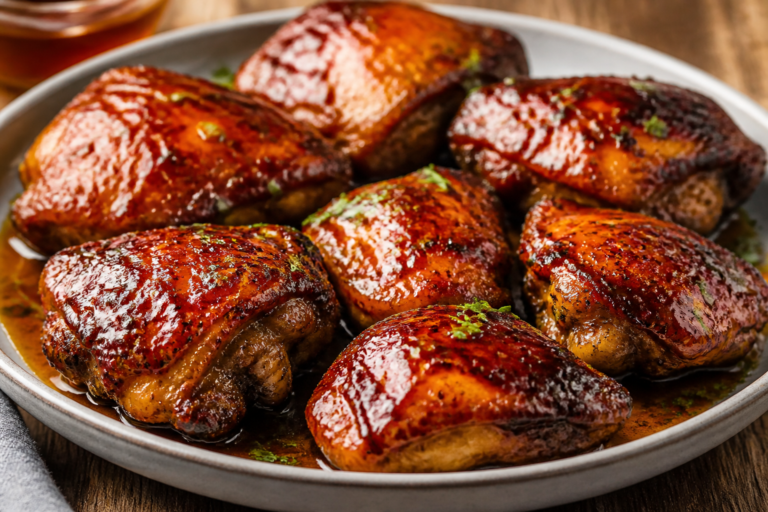
Maple Dijon Chicken Thighs – Sweet, Tangy, and Perfectly Tender
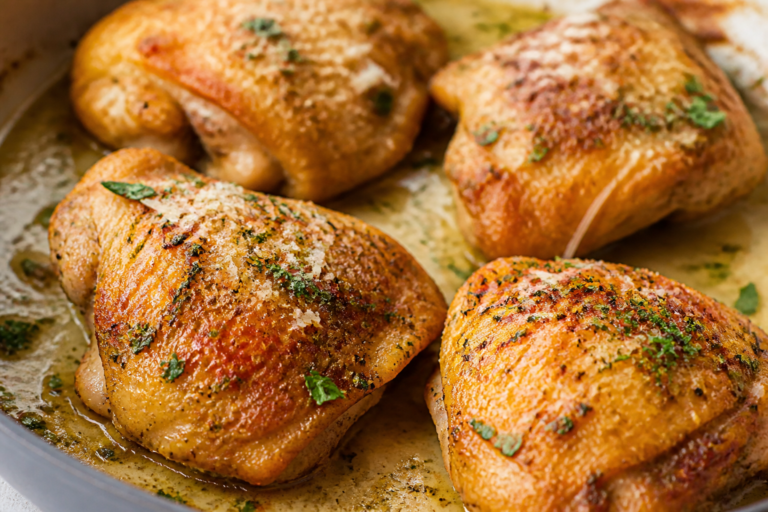
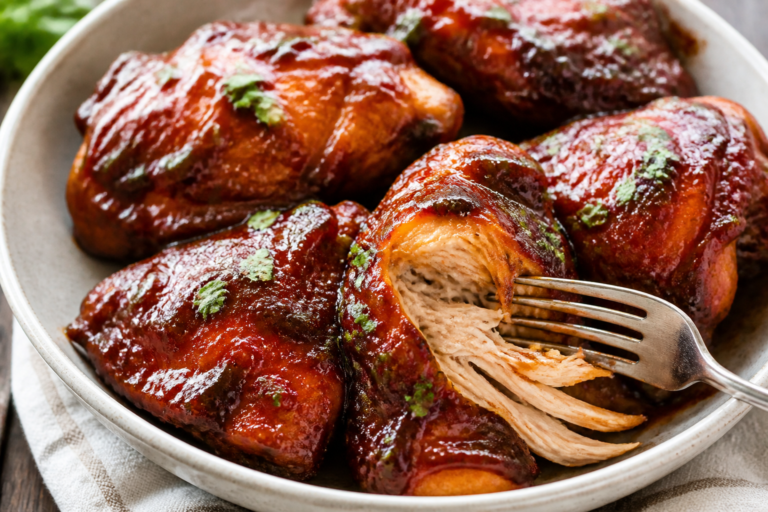
This is one of those weeknight recipes that tastes like you put in way more effort than you did. Maple Dijon chicken thighs are juicy, sweet, a little tangy, and full of rich, golden flavor. You whisk a quick sauce, roast (or pan-sear and finish in the oven), and dinner practically makes itself.
FREE 7-Day Easy Dinner Reset
Save time, eat healthier, and take the stress out of dinner. Get a full week of easy healthy dinners delivered straight to your inbox.
It’s crowd-friendly, good for meal prep, and pairs with almost anything you already have in the fridge. If you like crispy edges and a glossy, sticky glaze, you’re in the right place.
Ingredients
Method
- Prep the oven and pan. Heat the oven to 425°F (220°C). Line a sheet pan with foil for easy cleanup and top with a wire rack, or use a large oven-safe skillet.
- Mix the sauce. In a bowl, whisk maple syrup, Dijon, vinegar or lemon juice, garlic, olive oil, thyme, smoked paprika, red pepper flakes (if using), 1 teaspoon salt, and 1/2 teaspoon pepper until smooth.
- Season the chicken. Pat thighs dry with paper towels. Sprinkle both sides with salt and pepper. Dry skin equals better browning.
- Optional quick marinade. If you have time, toss the chicken in half the sauce and let it sit 20–30 minutes. Reserve the other half for basting. If not, move on.
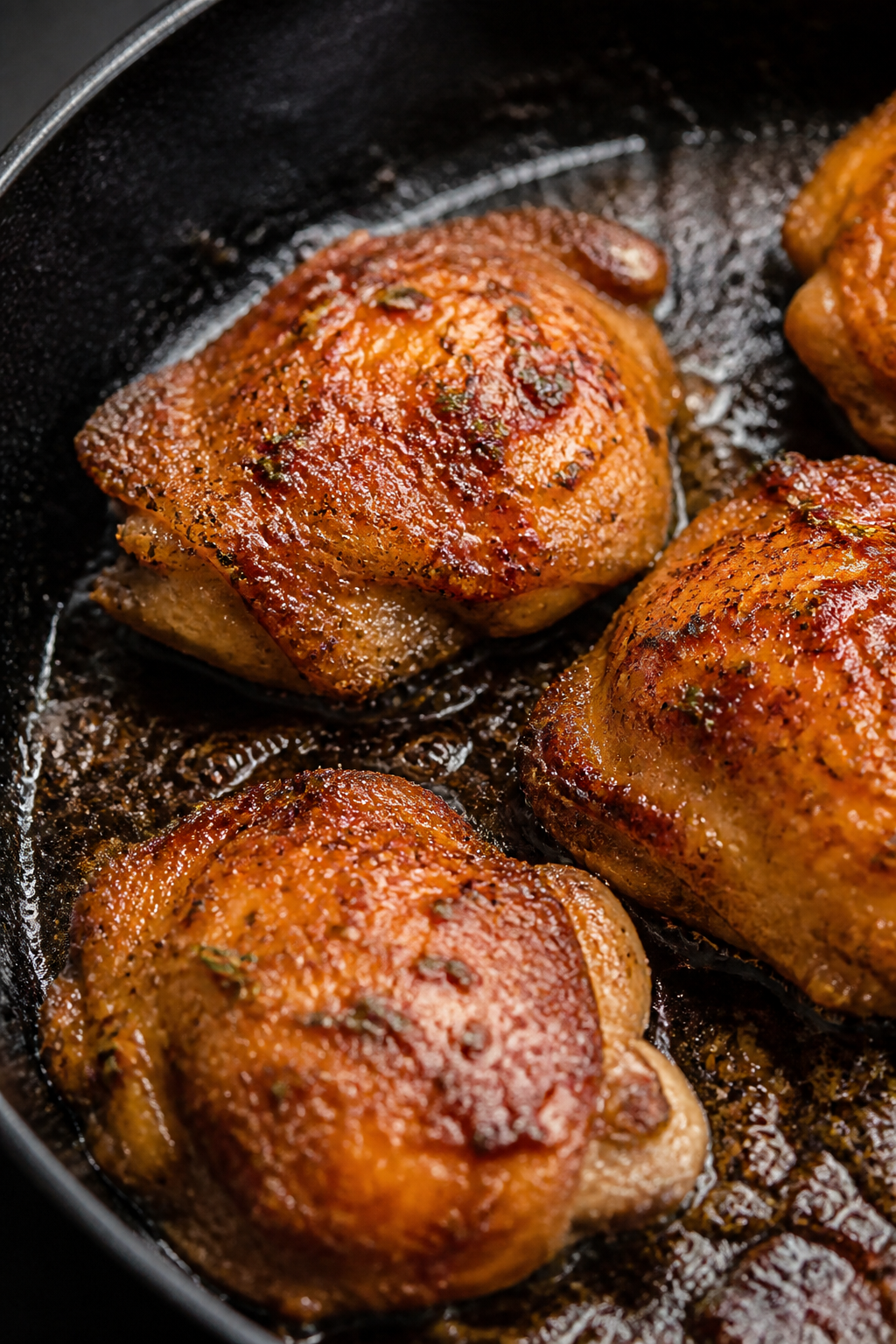
- For extra-crispy skin (stovetop start): Heat a film of oil in a large oven-safe skillet over medium-high. Place thighs skin side down and sear 5–7 minutes until deep golden. Flip, brush with sauce, then transfer the skillet to the oven.
- For sheet-pan roasting: Arrange thighs skin side up on the rack. Brush generously with sauce, keeping some for basting.
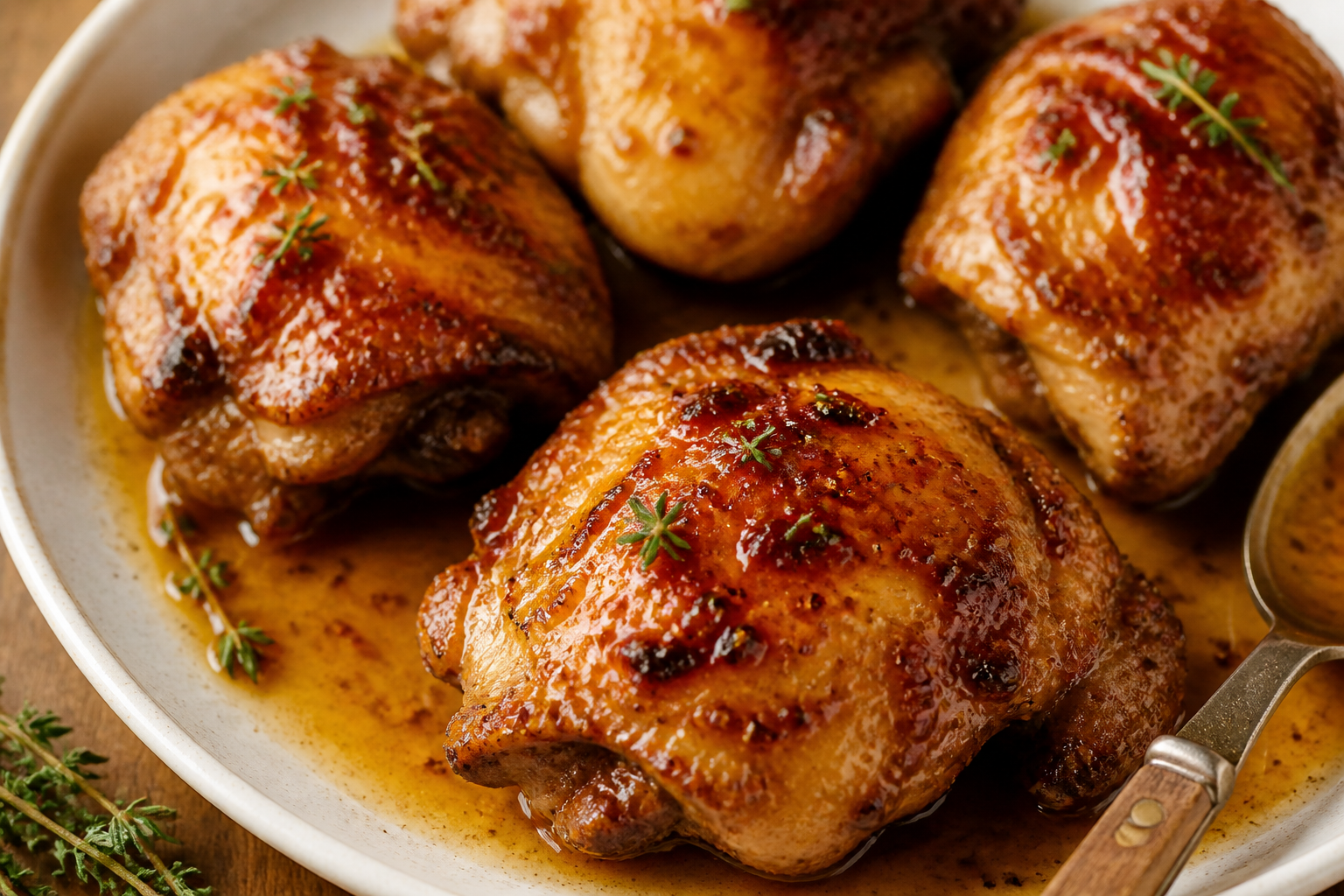
- Roast to perfection. Cook 25–35 minutes, basting once or twice with more sauce, until an instant-read thermometer reads 175–190°F in the thickest part and the skin is caramelized.
- Finish the glaze. Pour any remaining sauce into a small saucepan. Simmer 2–3 minutes until slightly thickened. Whisk in butter for a glossy finish.
- Rest and serve. Let the chicken rest 5 minutes. Spoon over the warm glaze, hit with lemon juice if you like, and sprinkle with parsley.
What Makes This Recipe So Good
- Flavor balance that works. Maple syrup brings gentle sweetness, Dijon adds tang and bite, and garlic ties everything together. A touch of acid brightens it up so it never tastes flat.
- Foolproof with chicken thighs. Thighs are forgiving and stay juicy.
Even if you cook them a few minutes longer, they won’t dry out like breasts can.
- Flexible cooking methods. Roast in the oven, pan-sear then finish in the oven, or cook on the grill. The sauce adapts beautifully.
- Quick prep, big payoff. The marinade whisks together in minutes. You can even mix it in the morning and let the flavors soak in all day.
- Great for leftovers. The glaze tastes even better the next day, and the chicken reheats well without turning tough.
What You’ll Need
- Chicken thighs: 6 bone-in, skin-on thighs (about 2 to 2.5 pounds).
Boneless works too; adjust cook time.
- Pure maple syrup: 1/3 cup. Use real maple syrup for the best flavor, not pancake syrup.
- Dijon mustard: 3 tablespoons. Smooth Dijon keeps the sauce silky; whole grain is a nice optional add-in.
- Apple cider vinegar or lemon juice: 1 tablespoon for brightness.
- Garlic: 3 to 4 cloves, minced.
- Olive oil: 1 to 2 tablespoons to help with searing and roasting.
- Fresh thyme or rosemary: 1 to 2 teaspoons chopped, or 1/2 teaspoon dried.
- Smoked paprika: 1 teaspoon for warmth and color (optional but recommended).
- Red pepper flakes: A pinch for subtle heat (optional).
- Kosher salt and black pepper: To season generously.
- Butter: 1 tablespoon to finish the glaze (optional, for extra gloss).
- Lemon wedges and chopped parsley: For serving (optional).
Step-by-Step Instructions
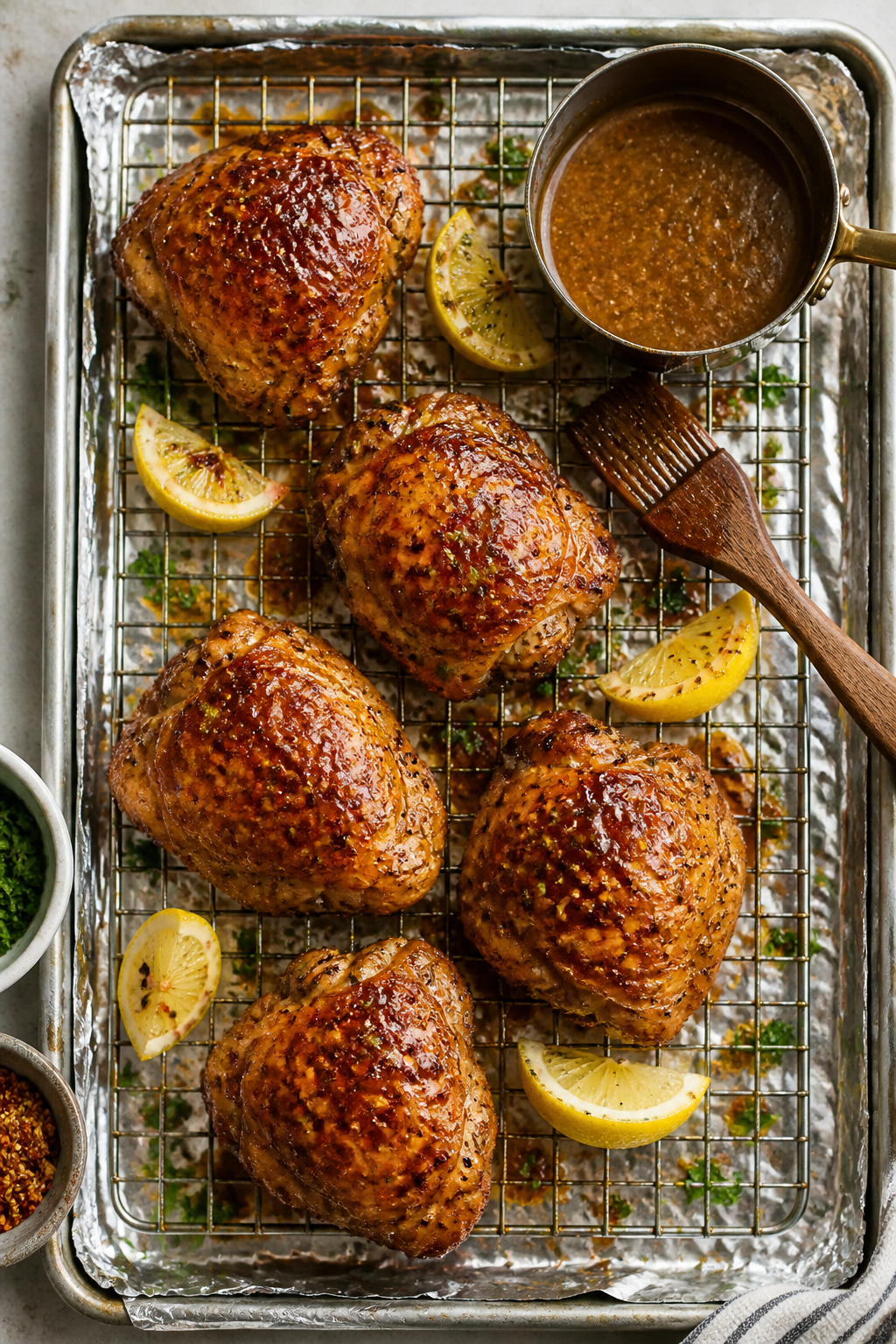
- Prep the oven and pan. Heat the oven to 425°F (220°C).
Line a sheet pan with foil for easy cleanup and top with a wire rack, or use a large oven-safe skillet.
- Mix the sauce. In a bowl, whisk maple syrup, Dijon, vinegar or lemon juice, garlic, olive oil, thyme, smoked paprika, red pepper flakes (if using), 1 teaspoon salt, and 1/2 teaspoon pepper until smooth.
- Season the chicken. Pat thighs dry with paper towels. Sprinkle both sides with salt and pepper. Dry skin equals better browning.
- Optional quick marinade. If you have time, toss the chicken in half the sauce and let it sit 20–30 minutes.
Reserve the other half for basting. If not, move on.
- For extra-crispy skin (stovetop start): Heat a film of oil in a large oven-safe skillet over medium-high. Place thighs skin side down and sear 5–7 minutes until deep golden.
Flip, brush with sauce, then transfer the skillet to the oven.
- For sheet-pan roasting: Arrange thighs skin side up on the rack. Brush generously with sauce, keeping some for basting.
- Roast to perfection. Cook 25–35 minutes, basting once or twice with more sauce, until an instant-read thermometer reads 175–190°F in the thickest part and the skin is caramelized.
- Finish the glaze. Pour any remaining sauce into a small saucepan. Simmer 2–3 minutes until slightly thickened.
Whisk in butter for a glossy finish.
- Rest and serve. Let the chicken rest 5 minutes. Spoon over the warm glaze, hit with lemon juice if you like, and sprinkle with parsley.
Keeping It Fresh
- Storage: Cool completely, then refrigerate in an airtight container for up to 4 days.
- Freezing: Freeze cooked, cooled thighs (without herbs on top) for up to 3 months. Thaw overnight in the fridge.
- Reheating: Warm in a 325°F oven, covered, for 12–15 minutes, then uncover for 3–5 minutes to re-crisp.
A quick skillet reheat over medium also works. Add a splash of water and a teaspoon of maple to refresh the glaze.
- Meal prep tips: Slice off the bone and pack with roasted veggies or grains. The sauce makes a great dressing for grain bowls when thinned with a little vinegar.
Health Benefits
- Protein-rich and satisfying. Chicken thighs provide high-quality protein that keeps you full and supports muscle health.
- Smart fats. Thighs contain more fat than breasts, but much of it is monounsaturated.
Skin-on cooking also helps lock in moisture, so you don’t need heavy sauces.
- Real-food sweetness. Maple syrup is a natural sweetener with trace minerals like manganese and zinc. It still counts as added sugar, but you get big flavor from a modest amount.
- Antioxidants from herbs and spices. Garlic, thyme, and paprika add compounds that support overall wellness while boosting flavor without extra sodium.
Common Mistakes to Avoid
- Skipping the dry-off. Wet skin won’t crisp. Pat chicken dry thoroughly before seasoning.
- Cooking too hot without watching. High heat is great for caramelization, but glaze can burn.
Keep an eye on the pan in the last 5–10 minutes.
- Undersalting. The sweetness needs enough salt to balance it. Season the chicken itself, not just the sauce.
- Using pancake syrup. It won’t reduce the same way as pure maple and can taste artificial.
- Not reserving sauce. If you marinate, set aside clean sauce for basting and finishing. Don’t reuse marinade unless you boil it.
Alternatives
- Boneless, skinless thighs: Cook faster, about 18–25 minutes at 425°F.
Sear quickly on the stovetop for color if you like.
- Chicken breasts: Use split, bone-in breasts for juicier results; start skin side down to crisp. Boneless breasts work too—reduce time and pull at 160–165°F.
- Mustard swap: Try half Dijon and half whole-grain mustard for texture, or a spoon of spicy brown for extra kick.
- Heat lovers: Add 1–2 teaspoons hot honey or a teaspoon of sriracha to the sauce.
- Herb variations: Rosemary, sage, or tarragon each bring a slightly different profile. Fresh is best here.
- Grill option: Grill over medium heat, covered, 20–30 minutes, basting with sauce and turning occasionally.
Move to indirect heat if the glaze darkens too quickly.
- Sheet-pan dinner: Roast chicken on a rack set over cubed sweet potatoes or Brussels sprouts. Drippings flavor the veg while the rack keeps skin crisp.
FAQ
Need More Easy Dinner Ideas?
Get my FREE 7-Day Easy Dinner Reset and enjoy a full week of healthy dinners without the meal-planning stress.
Can I make this ahead?
Yes. Mix the sauce up to 3 days in advance and store it chilled.
You can also marinate the chicken up to 12 hours. Cook right before serving for the best texture.
Is Dijon mustard the same as yellow mustard?
No. Dijon is sharper, creamier, and less vinegary than classic yellow mustard.
It gives the sauce a smooth, savory backbone that balances the maple.
How do I know the chicken is done?
Use an instant-read thermometer. For thighs, 175–190°F gives the best tenderness since the connective tissue breaks down more fully at that range.
Can I reduce the sugar?
You can cut the maple to 1/4 cup and add 1–2 teaspoons extra Dijon plus a splash more vinegar. The flavor stays balanced with less sweetness.
What sides go well with this?
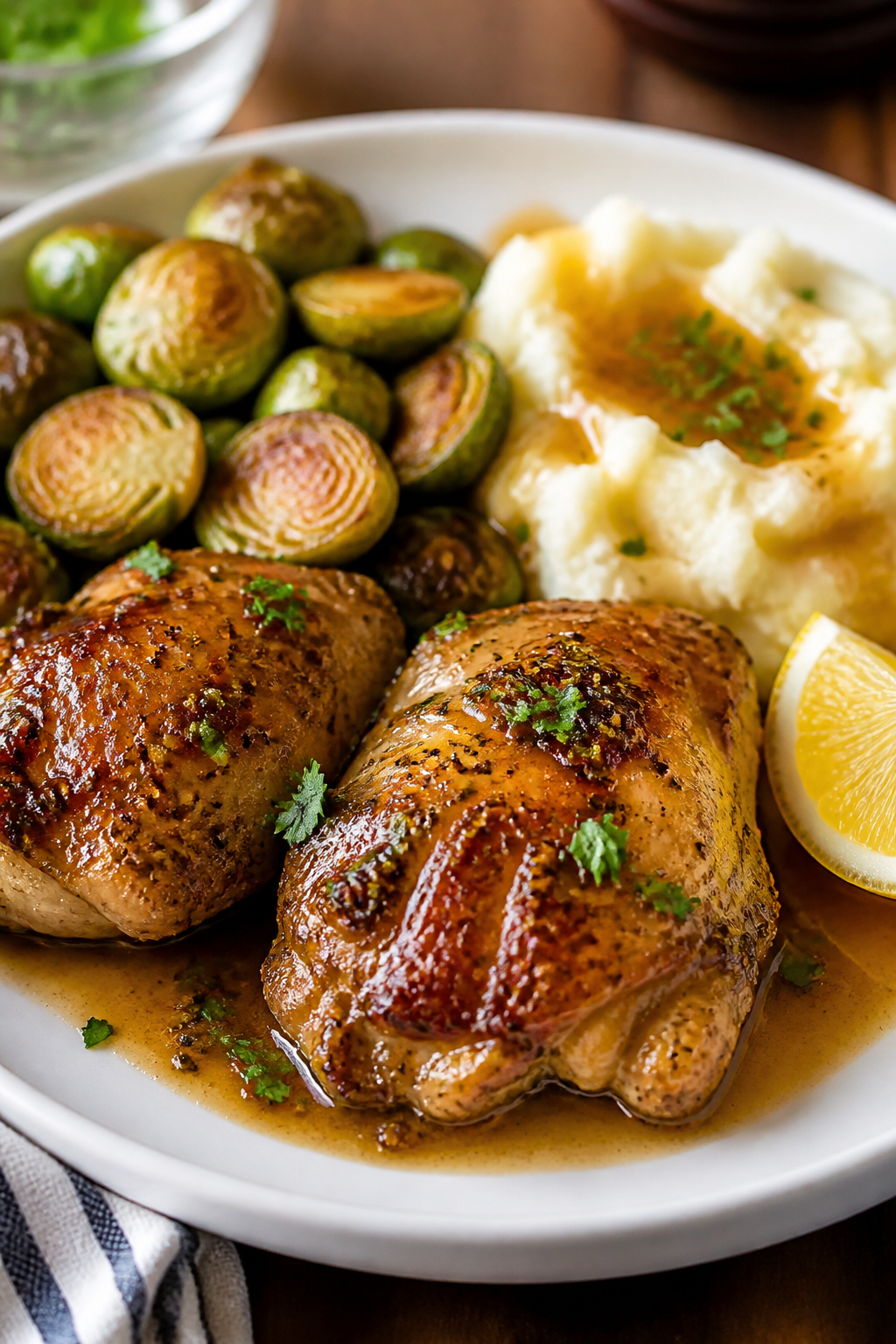
Roasted carrots, Brussels sprouts, or green beans are perfect.
Mashed potatoes, wild rice, or a simple arugula salad also pair nicely with the tangy-sweet glaze.
What if my glaze is too thin?
Simmer it in a small pan over medium heat for 1–3 minutes until it lightly coats a spoon. Whisk in a teaspoon of butter to help it cling to the chicken.
Can I use frozen chicken thighs?
Thaw them completely in the fridge before cooking for even results. Pat dry well, then proceed with the recipe.
Wrapping Up
Maple Dijon chicken thighs deliver big flavor with minimal fuss.
The sweet, tangy glaze caramelizes into a shiny coat, while the thighs stay juicy and tender. Keep a bottle of real maple syrup and a jar of Dijon on hand, and you’re never far from a dinner that feels special—even on a busy night. Serve it with your favorite veg, add a squeeze of lemon, and enjoy the kind of meal that quietly wins everyone over.
Printable Recipe Card
Want just the essential recipe details without scrolling through the article? Get our printable recipe card with just the ingredients and instructions.
Loved This Recipe?
If you're looking for more simple, healthy dinners your family will actually eat, grab my FREE 7-Day Easy Dinner Reset. You'll get 7 easy dinner recipes, simple grocery lists, and a done-for-you plan that takes the stress out of mealtime.